Dear Book Promotion Site: Nope, No Reason At All To Ask Me My Age

photo-1458175049065-aefb15b1b58b

I was on a book promotional site recently, cheerfully filling out the required information, when I got to a section that stopped me cold: they wanted to know my birthday. Not just the day and month, but even the year. And this was not something you had the option to keep private, as Facebook and other social media sites allow; they were going to post this information, big, bold and all “happy birthday to you,” as a requisite feature of your page.

My first thought was: What, are we in third grade? Do we get cupcakes? Are we sent coupons? My second thought was (and I realize that “first thought” was more than one): Really? In this day and age of rampant ageism and privacy invasion you’re going to require writers to share their birthdays on a public page?

It was an odd request all around, given that age has no relevance to the mission statement of the site, but, for whatever reasons (demographic research? marketing focus? nosy?), it was required and so I opted out. Beyond the reality that there are so many other similar sites of which to avail oneself, the more salient issue is that when even job applications are legally prohibited from asking age in the effort to preempt age discrimination, why would a book site make that clumsy request a requirement?

That I’m compelled to discuss this is actually kind of sad. Because, in a perfect world, we, particularly we women, would proudly state our age without a thought beyond its being an indication of our wisdom, our knowledge, our accrued years of experience. We would “come out,” so to speak, as vibrant, vital examples of whatever age we are, successfully debunking archaic, antiquated models of the same. In a perfect world, we would judge people – again, particularly women – based not on their youthfulness, weight, beauty, body shape, number of selfies, sexual allure, or the size of their upper or lower halves, but by the value of their work, their creativity, their contribution to society, their general excellence as members of the human race. In a perfect world we wouldn’t give one good f**k how old someone is.

We don’t live in a perfect world.

In the world in which we do live, people lose jobs, are refused opportunities, are downsized, or led firmly out the door of many a business simply because they’ve “aged out,” regardless of skill set or ability to do the job well. Professionals in any number of fields are dismissed or ignored, find they’re getting fewer auditions, even fewer jobs; perceived as “dated” simply because they’ve lived beyond the “desirable demographic,” rather than because their talent has diminished (in fact, talent typically deepens with age). Resumes are tossed because the human resources department can ascertain age-range from someone’s work experience and, well, too old is just not good for the company’s brand image.

Incorrect and clichéd presumptions are made about what learning skills a more mature person can handle and develop, the most prevalent being that those older than “fill in the blank” won’t/can’t keep up with changing technology. And women in positions of power are regularly denigrated, insulted, and attacked simply for moving out of their youthful, sexually attractive prime and into their more mature, matron years.

In a perfect world, this sort of age intolerance, discrimination, and bigotry would be unthinkable. Elders would be revered, as they once were, viewed as powerful sages to whom younger generations would look for guidance, wisdom, experience, and perspective. But in our very imperfect world, in our age-obsessed, terrified, fixated, panicked, confused world, ageism is so knee-jerk as to be the norm.

Which is ridiculous, particularly for those of ages considered “too old” who are there out climbing mountains, traveling the world, inventing innovative products, competing in marathons, negotiating peace treaties, writing bestsellers, and breaking barriers of every kind in every field. Humans live much longer than they used to; the smart people widen their perspective of “perceived value” to include those of any age offering skills, smarts, savvy, wisdom, and creativity of value to the culture, age be damned!

Until then… well, that brings us back to that book promotion site and my birthday.

It’s not vanity, it’s not shame; it’s about perception that can impact one’s ability to move forward unencumbered by stereotypes and limitations. Ideally, given what everyone in this day and age knows about the pervasiveness of age discrimination, the question shouldn’t be asked. It’s irrelevant. Or should be. And if it is relevant to whomever is asking, one can only question why. But regardless of who’s asking or their reason, you don’t have to give it to them.

Or if you have to, or choose to, pick a number that fits your soul, not the years of your body. Then again, if you are so moved to make a political stand for cultural disobedience, tell them your damn age and let the chips fall where they may. If you lose jobs, opportunities, or shots at career advancement because that number is used against you, write a bestseller about it…. and then run – without a damn walker – all the way to the bank!

But whatever the choice, how about we all just avail ourselves of work and art we like, vote for people we trust; hire those who seem best fit for the job, and judge anything we come upon based solely on merit, not the age of the person who created, invented, shared, or inspired it?

Because, really, “Don’t judge a book by its cover” seems apt not only for the book, but for the person who wrote it.

Photo by Anna Vander Stel @ Unsplash

LDW w glasses


Visit www.lorrainedevonwilke.com for details and links to LDW’s books, music, photography, and articles.

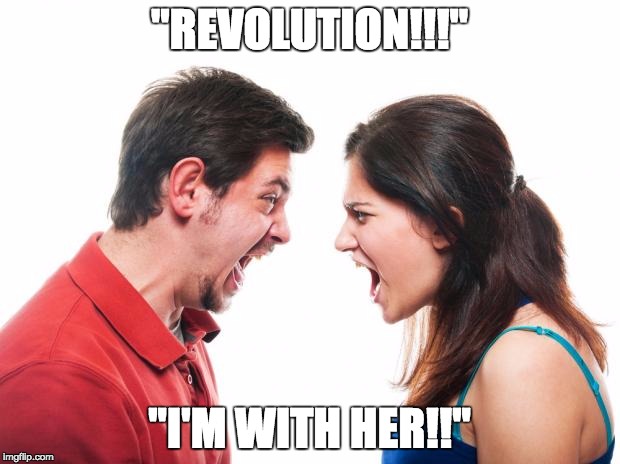
We’ve Reached That Point: This Election Is Like Fighting With Your Boyfriend

Or girlfriend. Or that customer service rep at the insurance company, your cable provider, or any one of those monolithic corporations that cyclically make your head explode.

You know that point in a fight:

You’ve exhausted all worthy material but you keep going just for the sake of “principle.” Every known argument has been made, debated or deflected to no avail, but you can’t keep yourself from hitting even lower below the belt. Any reasonableness or respectfulness of earlier has devolved into epic flinging of invectives and epithets, some you didn’t even know you knew. The mantra of “wait… just LISTEN!!” comes with increased decibels of volume and venom to the point that neighbors call, dogs bark; walls are up, minds are closed, stress chemicals flow, rational thought exits, and no one can possibly win because it’s a zero sum game. But still… you keep throwing that mud until someone finally collapses under the weight.

Welcome to Election 2016, the Democrats.

(I’m ignoring the Republicans until we settle this mess.)

We’re there, folks. We Democrats are at that point. It’s ugly and wounding and has absolutely no value, but still people are out there trying to draw blood any way they can. They’re posting propaganda, screaming “fuck yous” at opposition rallies, ripping up kids’ posters, sharing unsubstantiated slander and gossip, and acting like the very worst the worst has to offer… and couching it all in the nobility of “fighting for my candidate.”

Witnessing this insanity as a sane bystander — one hoping to stay politically involved without being sucked into the maelstrom — is as soul-killing as that awful road trip your sophomore year when the couple in the front seat screamed at each other from Redding to Lake Tahoe and later demanded that you take sides if you were “a true friend!”

That kind of soul-killing.

We Democrats probably reached the zero sum game months ago. Or at least after the New York primary. When the idea of trashing the winning candidate to aggrandize the other just made the entire ticket seems as nuts as the Republicans. Beyond the math, beyond arguing the math; beyond delusion and fanaticism and revolutions and glass ceilings and wishful thinking and slogans and hashtags and conspiracies and finger-pointing and idiotic celebrities and Westboro-style harassers and sexism and ageism and all of it, the jig is up. Whatever you think the ending is going to be isn’t the point. You can have hope, you can have faith, you can keep fighting the good fight, but fighting the bad fight gets us nowhere.

And we are fighting the bad fight. And it is getting us nowhere.

Let’s be honest: we’re deep enough into this thing that odds are good everyone’s taken their positions. They know where they stand, who they’re supporting and why, so preaching from here on out is only to the choir. As long as folks are happy with that harmony, keep on a’preachin’! But anyone who thinks there’s anything to be gained from the incessant posting of the most incendiary, salacious stuff they can find on the other candidate in hopes of — what? convincing someone to jump on their bandwagon? — has missed the trajectory of this narrative.

Even if — in the most random of circumstances — there really is anyone left who doesn’t feel informed enough to make a choice, that person has to know they aren’t going to get an unbiased, objective education from the posts of oppositional supporters. Let’s start with that truism.

So, given that, may I suggest to ALL who continue to post ridiculous things like videos screeching, “If you would still vote for Hillary Clinton after watching this 4-min video…,” or anonymous blog posts by someone who’s talked to someone who knows a doctor who says Sanders has Alzheimer’s, or scurrilous and slanderous propaganda from sites run by known Hillary-haters, or unsubstantiated dirt on Jane Sanders, or slimy posts about Chelsea Clinton’s mothering, or…STOP. JUST STOP.

It’s over. The fight is over. It no longer has any merit whatsoever and continuing it will only toxify any good thing that still exists between you and the other side and what’s the point of that? There’s still Trump out there.

If, despite the math, Sanders supporters want to continue to promote positive information about their guy as a way to keep the team going, great. If Clinton supporters want to shout their enthusiasm from the rooftops, they should be able to do that without enduring a gauntlet of verbal abuse. But beyond in-house, in-candidate, to-the-choir pumping up, there is no where else to go with this fight.

We’re at that point. It’s obvious, everyone knows, let’s not get the neighbors on their phones again.

When you hit the wall-of-no-return with your customer service rep, that call is terminated (either by you or them), services may be cancelled, grievances may be filed. When you reach that point with a significant other, one of you has to have the wherewithal to shut the f**k up, leave the room/house/apartment, walk off the adrenaline, and detach until both parties can manage rational conversation, sincere apologies, and a willingness to let go of past rancor (that’s a big one!).

And at that point in a party primary, everyone on oppositional sides has to put down the swords, eschew further debasement, and attempt to reframe the debate. There has to be a willingness to reconsider whatever indoctrination has been amassed or allowed to flow freely, to change the filter to look at the bigger picture, to see past preconceived ideas, and find a way back to party unity.

That’s what grown-ups do. That’s what this party needs to do. Now. Not later. Now. Whatever happens at the convention is another moment. This moment is the one where we acknowledge the zero sum game we’ve been fighting and step off this battlefield, to rejuvenate and rehabilitate to take on the bigger battle ahead.

Are Democrats and those in their camp willing and able to do that? I don’t know. I hope so. We’ll have our answer when the intra-party, click-bait, poop-throwing mud-fest on social media finally stops. That can’t happen soon enough… I swear I hear the phone ringing.

LDW w glasses


Visit www.lorrainedevonwilke.com for details and links to LDW’s books, music, photography, and articles.

The Mother Of My Reinvention… our continuing journey

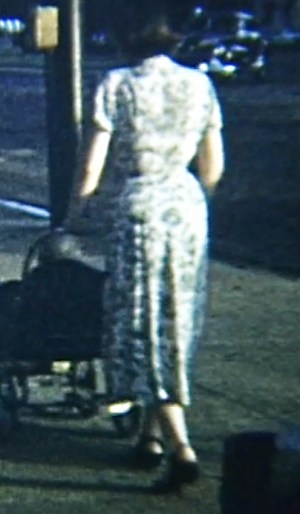
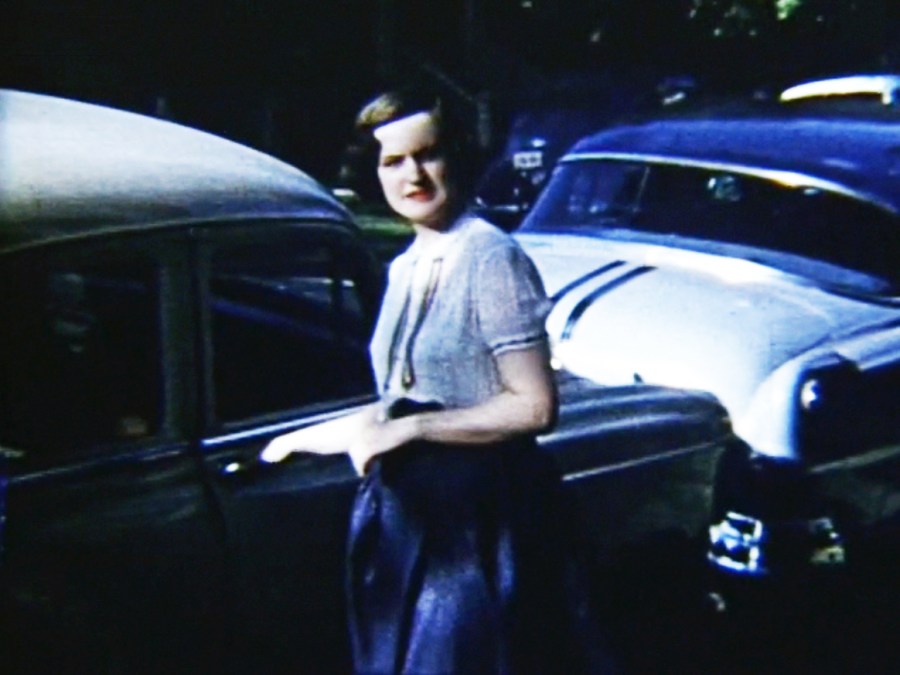
– my mother... Chicago, 1953
– my mother… Chicago, 1953

Tucked in her lift chair, chilled and uneasy, she waits for tea and dry toast to calm her daily quarrel between queasiness and hunger. With a raised eyebrow and sardonic grin, she remarks, “It ain’t easy gettin’ old.” I commiserate, but she dismisses my empathy; tells me I’m too young to understand. I don’t bother to correct her.

She’s tired, though she’s been in bed since breakfast. It’s a long day by two o’clock, and not necessarily a good one. Though there are good ones: days when she plays Bingo, sings along with glee, or gets to video Mass in the community room. She still relishes her three squares and always brightens at the sight of chocolate. She’s now in a wheelchair full-time but loves a roll around the park. She’s almost eighty-seven, a widow for seventeen years, and a diagnosed Alzheimer’s patient for six-and-a-half.

She is my mother.

Pensive Mom

I left home—and her—a long time ago. I left hard and fast, no quibbling or weepy boomeranging. My mother refers to this as, “when you ran away,” which isn’t far from the truth. It had been a challenging childhood.

I am a third child, the third girl in a family of eleven children. My two older sisters and I, by virtue of gender and birth order, became “little mommies” for smaller, younger siblings while we were still smaller, younger siblings ourselves. And though being in charge of an infant at six-years-old is, perhaps, too steep a learning curve, the responsibility did promote skills found useful later in life. I not only learned to change diapers, feed babies, and wrangle toddlers, I became adept at making meals, doing laundry, and running interference for a mercurial and confounding mother. And that was before I got to high school.

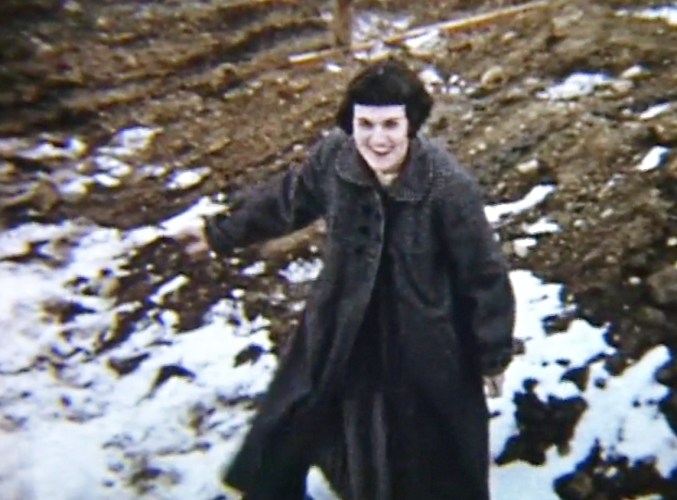
– her high school years
– her in high school

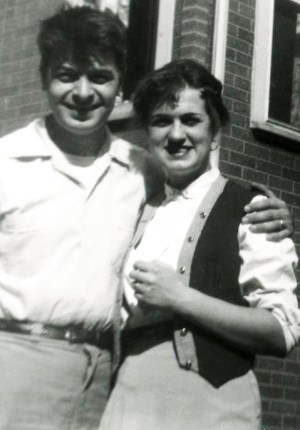
By the time I did get to high school I was bone-weary of family, and desperate to fly. Somewhere. Anywhere. Graduation couldn’t come quick enough and my departure for college was so swift high school friends claim I never even said good-bye. I don’t remember; I was moving too fast. I came home the summer after freshman year, but by the next I was gone for good. My first apartment was a hideous ninety-dollar-a-month single with lousy furniture and a stuttering landlady, but it may as well have been heaven.VirginiaAmandes_8_ w:Phil_early marrieds

It wasn’t just the weight of trading too much childhood for “little mommy-hood.” It wasn’t just the burden of my parents’ religion with its restrictive view of human interaction (anything related to boys and sex). It wasn’t even that one-on-one time in a big family was too spare to be satisfying. It was that I couldn’t find an honest way to consistently and compassionately tolerate my mother.

She was a paradox. One minute clever and creative, the next enraged and irrational. She was impossible to predict and easy to trigger. She loved music, did a mean jitterbug, and had a wildly romantic relationship with the handsome Greek/American who was my father. She could make any day a holiday, taught us that fun was our birthright, and, oh, she loved with a passion. All this provided the good that pushed against the other. Her dark side. The turbulent state that came with frenzied tears, cold silences, or rages that scattered us like terrified animals.

She tried; I believe she sincerely tried, but she was undeniably overwhelmed by a family too large to manage, a husband often too detached to meet her emotional needs, and a psyche too fragile to offer the flexibility and endurance required by the job.

So when I left, I stayed away and kept her away. She and my father didn’t meet my husband until years after we eloped and I’d already given birth to a son. They were that distant and I was that intractable.

But life is surprising. You grow older and live longer. You stumble on expectations not met, cringe at the sharp pangs of disappointment and heartache, and you learn some things. You learn that not all dreams come true, not all promises are kept. Life humbles and sometimes softens you. You accrue compassion for things you might not have previously understood, and that expands your view.

MDD_front porch_sm
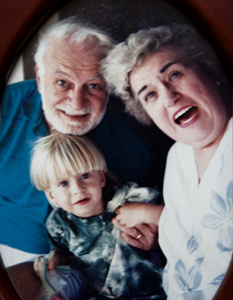
– grandparenting with my son

It wasn’t until years after I became a parent that I saw my mother beyond the filter of a child’s eye. When I attached to my own child, and learned the frustrations, passions, and struggles of parenting, I gained perspective on what she’d experienced, many times over, in her own role as a mother. When my marriage met challenges or I felt distanced by a sometimes distant husband, I realized her anguish at the hands of her own husband’s penchant for the same. Simply put, I began to see the human behind the mother. And I had empathy.

She is a third child herself; a brother and sister preceded her. Her mother died shortly after her birth, and her father abandoned all three to be raised by her mother’s extended Irish family, who loved, took good care, and kept kegs flowing in the dining room. She claims it was a happy life—I’m sure much of it was—but when my father died many years after that childhood, she wailed that she’d been “abandoned” by all the men in her life, asking through tears how a father could leave his children without a look back. I had no answer for her. But it seems, regardless of her rosy, revisionist narrative, she’d suffered for it all.

She suffered for growing up without the intimacy and guidance of a mother’s love, or the constancy of a father’s. She suffered for the raging alcoholism in her family. She suffered for being an orphan whose need for love could hardly be filled. And now I, as an adult, mother, wife, and family survivor myself, was beginning to understand her story. It made me ache for her. It made my heart open.

Countless people I know are caring, or have cared, for aging parents. It’s a rite of passage and a task like no other, requiring a depth of dedication I’d rarely felt for my mother and wasn’t sure I could conjure into being if required. But ten years after my father died, my aging, rudderless mother was in need.

Mom & me in buggyHer short-term memory was slipping away and she was often sick and in pain. Incapable of caring for herself responsibly, the family was running out of options. We needed a new plan and all eyes were on me. “Look away!” a voice inside my head hollered. “You don’t have to take it on. You left a lifetime ago for good reason; it’s not your job!” That voice was loud, but its mantra rang hollow. Because I knew, as clearly as I knew when it was time to leave home, that it was my turn. It was my job.

So I leapt, all-in. No turning back, no quibbling, no lack of conviction. Mother was coming to town. With the collaboration of my brilliant and indispensable brother, and our network of family and friends, I was going to manage the care and feeding of the woman I’d fled so many years ago. And so the Tour began.

But let’s be clear: I am not a saint. Far from it. Some days I suck at the job. Some days I hate it. I wake up and feel my teeth grinding, resentful that I have to debate faceless doctors who know little about her beyond her prescription protocol, or rifle through reams of redundant paperwork to get thorny insurance issues worked out. I don’t want to drive over to her facility to have the same conversations with the same people, listen to her ask “what’s new and exciting?” a hundred times, or play that infernal card game again. I sometimes feel real anger that I’m obligated to schedule my life around “care meetings” set at inconvenient times, or “run right out” to pick up items she’s lost or broken. I cringe when I see the name of the facility on my caller ID, wondering if she’s been taken to the hospital again, is being ornery with the night staff, or… God forbid… that call. And, yes, I sometimes feel, once again, like a “little mommy,” only this time the child I’m caring for is my mother. The irony is inescapable.

Mom @ the house

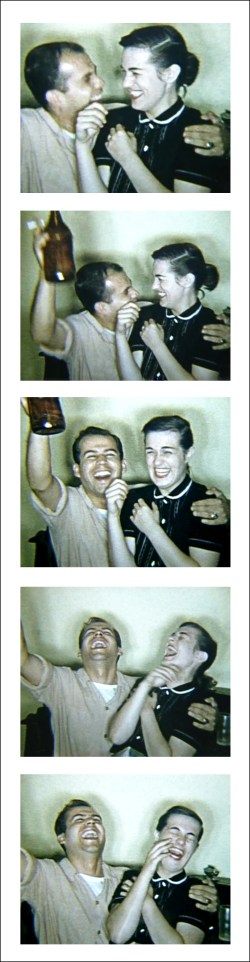
But there is another side to this: an awareness of some sprouting evolution, hers and mine. In her case, the dementia creeping into her personality has done a curious thing. It’s stripped away her anger and narcissism. It’s pared her down to the purest, most basic essence of who she is. A human being who can be grateful Mom & __ photo stripand appreciative, smile even through pain, or tell me how happy she is to see me walk through a door. A woman who can genuinely thank a son for a song played at the piano after lunch, or a daughter-in-law for a thoughtful gift. Who can find delight with grandsons who make her laugh or interview her for class projects. A person who can listen to and make note of someone in front of her… even if she can’t remember who they are or what they said moments earlier.

This is different woman. A different mother. And this different mother is allowing me to be a different daughter.

I look through photographs of her from time-to-time to remind myself that she was once as vibrant and appealing as any young girl finding her way in the world. She had sexy legs, a smashing sense of style, and an infectious grin. She was flirtatious and sought after, ultimately loved by a man who found her beautiful and exciting. She could laugh raucously (see left 🙂 ! ) and make others laugh as loud. I study those photographs and say to myself: “She was young once, just as you were. And you will become old, just as she is. We’re all in this together.”

And so my mother and I continue our Mutual Reinvention Tour. I have found patience; she’s become humble. I’m learning empathy, while gratitude is her new skill. The more of life she forgets, the more I’m there to remind her. We’re both evolving, transforming; that can’t be denied.

VirginiaAmandes_9_w:Phil Amandes_'70sShe looked at me recently and whispered, “I’m scared.” When I asked why, she said, “Because I’ve made so many mistakes in my life, especially with you kids.” She was concerned that, at the Gates of Heaven, she would be judged harshly, but mostly she wanted me to know she loved us all and was sorry for those mistakes.

I felt a tug. I’d been angry at her for so much of my life, the candor and vulnerability of the moment struck me. I took her hand and said, “Don’t worry, Mom; they say if you’re truly sorry, you’ve already been forgiven.”

And as I said it, I realized that, like St. Peter at the Gates and God in the Heavens, I, her third daughter, her runaway, her lost child, had forgiven her as well. And in the swirling eddy of emotions that accompanied that revelation, sweet and simple love could be found.

Precious and timely, as the Tour continues.

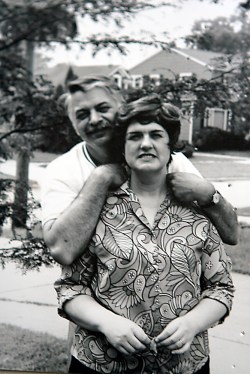
Mom & me_sm

Happy Mother’s Day to all who nurture, love, and exude tenderness and compassion for those in their care… that would be almost everyone I know. ❤

* * * * * * * *

The original version of this piece was published in 2011 at The Huffington Post, but as my mother’s life evolves, and hoping to keep this the most current reflection of our continuing journey, I update it from time-to-time. One of the more recent installments was submitted to The Maine Review in 2015, where it was awarded in their 2016 Rocky Coast Writing Contest. This weekend I’m posting the latest here again… in honor of Mother’s Day, in honor of mothers in general, and, very specifically, in honor of the mother in my own life… who helps me realize, year after year,  the sweetness of this closing chapter we’re writing together.

* * * * * * * * 

LDW w glasses


Visit www.lorrainedevonwilke.com for details and links to LDW’s books, music, photography, and articles.
No, America, Everything Is NOT a Conspiracy

– or is it?
– or is it?

Some days I sit back from my selective scan of the day’s news and shake my head at the persistent, perplexing perceptions of my fellow Americans. At a time when media coverage of events — any event, all events — is not only ubiquitous and never-ending but usually completely redundant by the 24-hour mark, we remain an epidemically suspicious and conspiracy-driven culture that either doesn’t believe anything or, paradoxically, believes anything.

Depending on one’s allegiances, one’s belief system; one’s depth of distrust or disdain, there seems little that happens that isn’t ultimately ascribed some nefarious intent, from matters large or small, absurd or provocative, profound or ridiculous. Two stories today struck me as emblematic of the trend on several sides of that swinging spectrum.

Jared Lee Loughner, the Arizona parking lot shooter who permanently injured Gabby Giffords and killed six people back in 2011, has now filed a $25 million lawsuit claiming that, not only is he innocent, but Giffords is a member of the Illuminati and her case against him has caused him “emotional distress,” warranting millions from the women into whose head he shot a bullet. Yes, he’s insane, but still… he’s actually put together the paperwork for this repugnant action and someone’s now going to have to spend their precious time dealing with it before it gets thrown into whatever trash bin it belongs.

Obviously that’s an extreme case, along with Loose Change, the Alex Jones-produced fever-film about a supposed 9/11 conspiracy, the Sandy Hook truthers, who believe the deaths of 27 people at Newtown were a hoax meant to further Obama’s anti-gun agenda (another “gift” from the heinous Mr. Jones), or even the generalized and persistent hysteria surrounding the moon landing or Elvis’ death.

Certainly there are some theories that persist due to a not-illogical incredulity with their “talking points” (Kennedy’s assassination the most prevalent of that category), but there’s undoubtedly a contingent of slightly unhinged humans who are prone to seeing dark secrets and dubious intent behind any events that don’t match their political or personal agendas, are complex or unusual enough to provoke suspicion, or happen to involve elements that lend credence to their preconceived beliefs. And some days it seems like that contingent is outnumbering the rest!

The other conspiracy angle I made note of today is related to the election (yes… the election), with a situation playing out in ways that is, frankly, disturbing, certainly from the standpoint of our ultimately having to find unity and solidarity as a country.

We currently exist in a political climate where Republicans are being bamboozled and bedazzled by a carnival barker charlatan, while Democrats are acting-out like Sharks and Jets over their two candidates, one of whom is a registered Independent, the other a woman. And while it doesn’t seem that anyone — even those trying — can sort out the three-ring circus over there on the right, we on the left are, unfortunately, having our own challenges.

It would be funny (well… sort of) if the stakes for this election were not so high, but we have Supreme Court justices to appoint, terrorism wreaking havoc on a regular basis; an immigration conundrum that requires serious and thoughtful solutions; civil, gender, and basic human rights that need immediate intervention. The list of heavy-hitting issues requiring focused attention is long, yet, instead of approaching this election like intelligent adults ascertaining who of the bunch is best equipped to deal with this prodigious and profound list, we’ve got one side cheering (and jeering) as their candidates insult each other’s wives, while the other, despite having two good candidates, is reduced to flinging insults at each other while some behave like cultists and hooligans.

I won’t speak to the GOP kerfuffle; personally, I think they’re all nuts and cannot fathom a world in which either of their two front-runners have anything at all to do with leading the country. But I’d be lying if I didn’t admit how disappointing and dispiriting it is to see those on the left behaving in ways that are equally counter-productive and fractious. I’d like to pass it off as “campaign fervor” (as some do), but when supporters of either Clinton or Sanders take to each other on Facebook like teeth-gnashing hyenas, when sexism becomes a defended tool of political “trash talk,” or when Sanders supporters frame every loss (either perceived loss of a debate or actual loss of a primary) as a conspiracy of malfeasance by the DNC, the media, the nebulous “establishment,” the Clinton campaign, or that ever-evil Debbie Wasserman Schultz, I have to take pause.

What is the point of all this finger-pointing and victim-mentality? Where is the integrity and intelligence we on the left are supposed to embody? Come on, people, we are better than that…right?!

When a line at a polling station is held up for hours, when other polling places run out of ballots; when any kind of shenanigans occur at any kind of polling place, we should all be deeply concerned. But why are those events immediately framed as conspiracies against Sanders specifically (a theme seen over and over again on social media)? Why are they not considered endemic failings of a system that is inefficient or poorly managed? Why on freakin’ earth would one Democratic campaign create a negative scenario that could impact their voters as much as the other candidate’s? There is no logic in the thinking, but then again, logic is rarely a factor for those who traffick in conspiracy theories.

I realize it doesn’t matter what I, or anyone, says about the way people comport themselves in this election. For whatever reason, and with whatever cultural explanation, this cycle seems hell-bent on being ornery, irascible, uncivil, and just plain nasty. Sure, all elections trip down some version of that rocky road, but this one has an edge of ugly with a stench all its own.

Maybe it’s because a woman is running and, much as Obama’s presence in the ’08 and ’12 races triggered the latent (or not so latent) racist tendencies of some, it seems possible a similar reaction is happening for those who get twitchy at the thought of a female president, particularly one called Hillary Clinton (that ball-busting, speech-screeching, non-cookie-baking harridan). I don’t know…but I’d guess that’s a good guess.

There are also many who blame the ugliness of this race on the “anger so many Americans feel,” but given my own observations of the most vitriolic amongst us (who are usually bouncing somewhere between the political spectrums of Sanders and Trump), they seem less angry about anything/something in particular and more immersed in the idea of being angry…and having a candidate who stokes and supports that anger. Call me cynical, but when comment threads can devolve into some of the most hateful speech you’ve ever heard over things as banal as pop stars or gluten, I suspect anger in this era doesn’t need much substance to create combustion.

But here’s the thing: for all the “Bernie or bust” cacophony, the campaign bullies; the fist-pumping “bros” (trashing Elizabeth Warren…really??); the “uneducated” mobs sucker-punching protesters, the sexist digs disguised as campaign rhetoric, the mud-slinging, misinformation-passing, lie-embracing, agenda-thrashing, conspiracy-theory’ing behaviors of far too many, there are millions out there who are quietly, sanely, smartly, and considerately supporting their candidates, doing their research, sharing perspective when asked, but, amazingly, not denigrating or demeaning those with another view. Those people? We don’t hear from them as much as the louder folks, but don’t think for a moment that the louder folks are running the show… they’re just louder. The rest of them are getting the job done with integrity and civility… and less volume.

We need more of that and less of the chaos. More action and less anger. More listening and a lot less yelling and screaming. More productive protest and less fisticuffs. More logic and less conspiracy theories. We need, at some point, to come together. How about we start now?

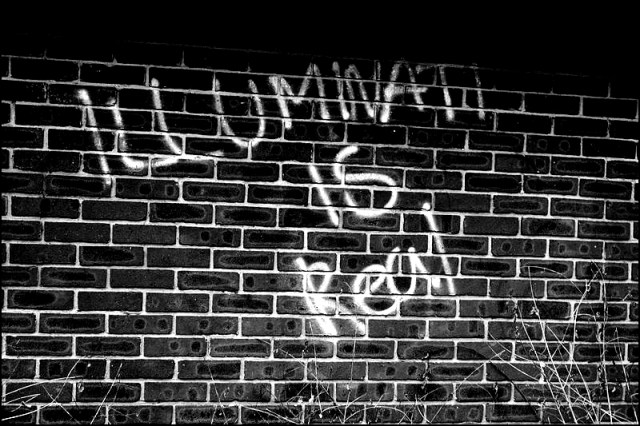
“Illuminati is real” by Peter Taylor @ Wikimedia Commons

LDW w glasses


Visit www.lorrainedevonwilke.com for details and links to LDW’s books, music, photography, and articles.

My Marketing Sabbatical and the Blog Merge

– where I am these days

At the end of 2015, after four-plus years of relentless and seriously focused book marketing and promotion, I took a step back to assess. I looked at the results of those many efforts — the sales stats, reviews, editorial coverage, contests, book shelves, etc. — to determine if they’d netted the desired results.

In some cases, they had; in others, not so much.

Now, I’m proud of my books, thrilled with the responses they’ve received, and, at least up to that moment of revelation, had been willing to do whatever it took to properly feed and nurture them into being. But I couldn’t deny it: something had changed. I wasn’t enjoying the process; the unceasing demand for self-promotion had become off-putting, making the books I created, the books I loved, feel like demanding children around which I ran ragged in the effort to keep happy.

Well, not them, but the great big world of book marketing, that swirling cauldron where hundreds of thousands of beloved creations go to get lost in the morass of self-published product. I’d lost my jones for that thing. Not the writing thing, the self-promotion thing.

While traditionally published writers have a team, a village, a circle-of-wagons —of agents, publicists, publishers, managers, etc.—the indie writer has… well, only themself. And “themself” has to do it all: the endless tweeting and Facebook posting, the free/bargain giveaways now demanded by readers; the listing on every indie book site one can find, the entering of countless (and not necessarily cheap) contests, the chasing after book stores, editorial reviewers, any reviewers; the exploring every which way to gain new and loyal readership, the—oh my God, it exhausted me just writing that!

It can be fun, yes; to some extent, and certainly in the beginning when you’re all positive and gleeful with certainty that you’re cracking the code and people are gonna LOVE what you’ve created. And surely it’s an education in the world of building a business, learning how and what works or what doesn’t. It’s a good practice to experience, to work, to absorb. But over time, at least for me, it can also become a slog.

And, I hate to say it, it’s become a slog.

I’ve also noticed this: people get tired of book promotions. They get desensitized to them. They don’t care after a while. Sometimes, they even find them annoying (as a few have mentioned while asking to be removed from my emailing list!). Because, unless you can can corral an endless supply of new readers via book tours, regular in-house readings at bookstores, book Meet-Ups, festivals, social media, etc. — the rest of ’em, the ones in your Facebook or Twitter circles, the ones who’ve already read your books or aren’t going to read your books, well, they’ve already heard about them. They’ve seen your posts, they’ve read about your promotional campaigns, they appreciate your efforts but they’ve grown tired of hearing about them. And not just mine…everyone’s. Because book promotions on social media have become RELENTLESS. And people have largely stopped paying attention.

I’ve not only heard this from quite a few writers who’ve experienced the same, but have noticed it as a tweeting, Facebooking, Pinteresting, Google+’ing person myself. It seems we indie writers come in such prodigious numbers that our bombardment of readers, other writers, and social media followers has ended up inuring them to the message. They see a book promotion — a “read my book,” a new book review, an interview with so-and-so — and other than the most loyal of fans, or the most commiserating of fellow-writers still paying attention, interest is less than one would hope. It’s gotten to the point that even some who’ve championed, say, Twitter as a go-to place to promote indie books have come to notice the downward trend. Derek Haines of Just Publishing Advice writes:

“My Twitter accounts that are directed more at readers have plummeted from around 120 new followers per day a year ago, to struggling to attract 20 to 40 now.

“What this means is that new self-published authors are still clearly flocking to Twitter to talk to each other, but general interest users and potential readers are not. While this can be blamed directly on Twitter failing to attract new active users, it could also be a signal that the supply side of the ebook market is now outweighing demand.” [Emphasis added.]

That’s kind of how I see it myself. Because, the truth is, as much as I read, I rarely find my books via Twitter or Facebook. I find them perusing Amazon, reading an article in Entertainment Weekly, or getting recommendations from friends. In fact, I tend to ignore most book promotions on Twitter or Facebook, weary, like everyone else, of bad cover art, unappealing quotes, and reviews that sound like Mom wrote them. Mostly, it’s just too much, the onslaught of book promotions… it makes one shut down rather than get inspired.

But I get it! We indies have no choice but to do it for ourselves. Unless we don’t. Unless we just decide to take a marketing and promotional sabbatical to reassess the marketplace, to carve out a little breathing room, maybe create a vacuum so interest can be re-stirred later. Maybe write another book. Maybe spend some time finishing that photography project or doing a play. Maybe just replenishing by reading some ozark trail cooler reviews to take with me while walking on the beach.

That’s what I’m doing right now, for those who’ve written wondering where I am and why I’m not posting much. I’m taking a sabbatical. Doing a few other things. Dealing with some life events, immersing myself in other projects, gently stirring my third novel, and generally NOT marketing and promoting my two already-published books.

Has it had an adverse impact? I don’t know… I’m not paying much attention at the moment; I’m hoping interest in the work will sustain while I’m living my life along other avenues for a bit. If not, they’ll have to wait until I’m ready to rumble again. In the meantime, oh, do I enjoy the feeling of not obeying the obligation! 🙂

And a last, related thought: I realized I had too many blogs. I’ve got one up at The Huffington Post, my AfterTheSuckerPunch.com blog related to publishing, and this one here. That’s at least one too many. So I’ve decided to close AfterTheSuckerPunch.com and merge it with Rock+Paper+Music, which has always had a fair amount of focus on the arts and other human interest and cultural focal points; publishing stories and book pieces will fit in there quite nicely.

So here we are now, fully merged. Having downsized my blogging world, I hope to be more active here. I hope you’ll join me when you can!

LDW w glasses


Visit www.lorrainedevonwilke.com for details and links to LDW’s books, music, photography, and articles.

Book Review: After the Sucker Punch (With Soundtrack)

ATSP_bulb&Bldg

After stepping away from book promotion for a while, I’d almost forgotten the process of getting reader feedback to my work: that anticipation of knowing a review has been written and wondering, “How did it hit them? Did they get my story? Did it move them, strike a chord?” So, to open my Facebook page this morning and find the link to this lyrical, poetic review of a book that meant so much to me to write is… well, it reminds me of WHY we write.

Thank you, Lisl Zlitni, for taking the time to read, to enjoy, and write your beautiful and deeply thoughtful review of my work. I cannot tell you how moved I am. I will float through the rest of my day!

Photo Art by Brenda Perlin

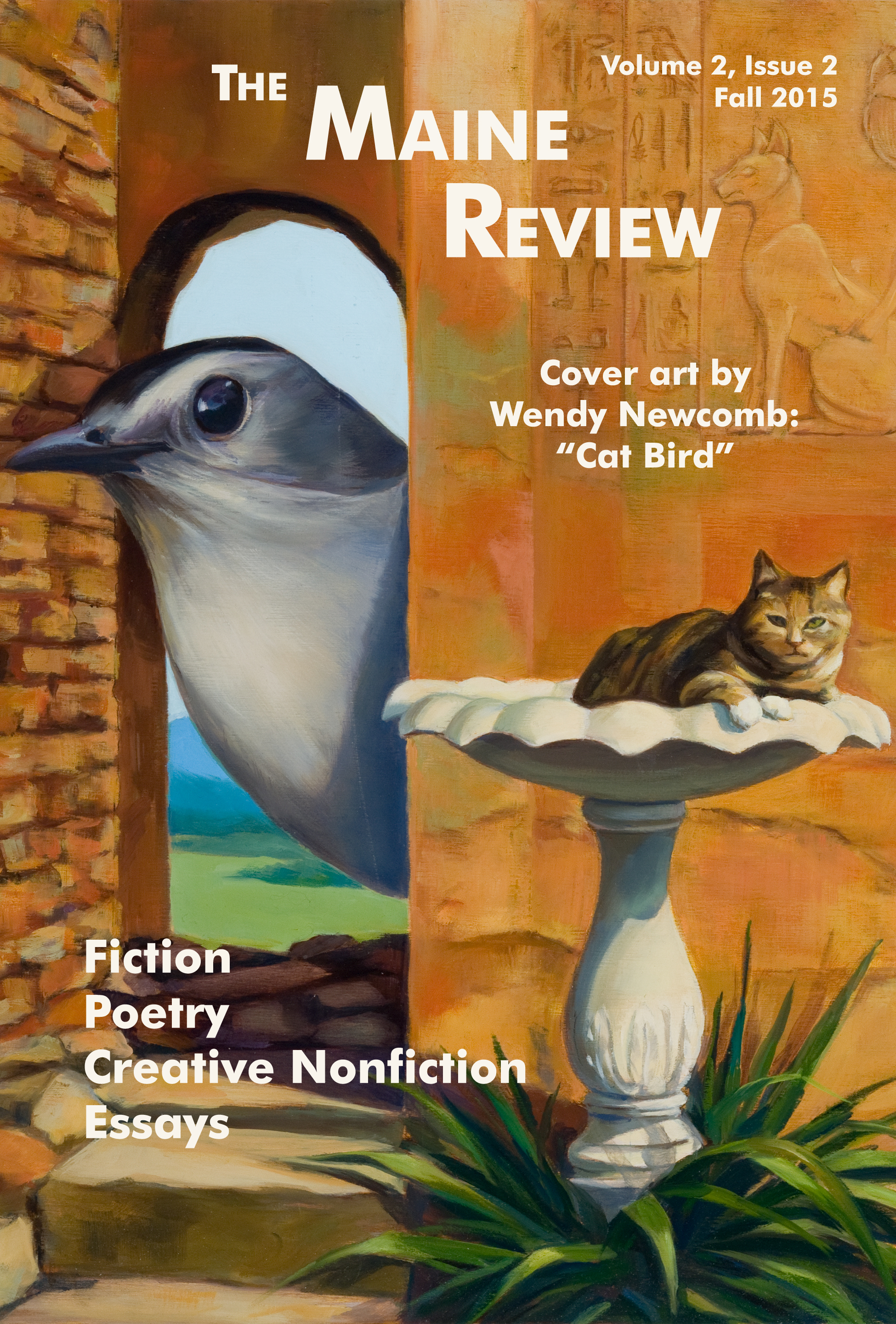
Honored By ‘Honorable Mention’ Win in THE MAINE REVIEW

Fall_Cover_The_Maine_Review

Literary journals are like boxes of treasure. Poems, essays, memoir pieces, fiction… the best of the best coming together to regale readers with myriad choices created by some of the most thoughtful, inventive writers around.

I entered a piece of mine, “The Mother of My Reinvention,” into the Rocky Coast Writing Contest sponsored by The Maine Review, and was honored to have it awarded as an “Honorable Mention” (or “the runner up,” as wonderful Maine Review editor, Katherine Mayfield, framed it!). Which, of course, truly is an honor, particularly given the number and quality of submissions made. 

Excerpt from “The Mother of My Reinvention”:

Tucked in her lift chair, chilled and uneasy, she waits for tea and dry toast to calm her daily quarrel with queasiness and hunger. With a raised eyebrow and sardonic grin, she remarks, “It ain’t easy gettin’ old.” I commiserate, but she dismisses my empathy; tells me I’m too young to understand. I don’t bother to correct her.

She’s tired, though she’s been in bed since breakfast. It’s a long day by two o’clock, and not necessarily a good one. Though there are good ones: days when she plays cards, sings along with glee, or gets to video Mass in the community room. She still relishes her three squares and always brightens at the sight of chocolate. She’s now in a wheelchair full-time but loves a roll around the park. She’s almost eighty-five, a widow for fifteen years, and a diagnosed Alzheimer’s patient for five.

She is my mother.

I left home—and her—a long time ago. I left hard and fast, no quibbling or weepy boomeranging. My mother refers to this as, “when you ran away,” which isn’t far from the truth. It had been a challenging childhood.

I am a third child, the third girl in a family of eleven children. My two older sisters and I, by virtue of gender and birth order, became “little mommies” for smaller, younger siblings while we were still smaller, younger siblings ourselves. And though being in charge of an infant at six-years-old is, perhaps, too steep a curve, the responsibility did promote skills found useful later in life. I not only learned to change diapers, feed babies, and wrangle toddlers, I became adept at making meals, doing laundry, and running interference for a mercurial and confounding mother. And that was before I got to high school.

By the time I did get to high school, I was bone-weary of family and desperate to fly. Somewhere. Anywhere. Graduation couldn’t come quick enough and my departure for college was so swift, high school friends claim I never even said good-bye. I don’t remember; I was moving too fast. I came home the summer after freshman year, but by next, I was gone for good. My first apartment was a hideous ninety-dollar-a-month single with lousy furniture and a stuttering landlady, but it may as well have been heaven.

It wasn’t just the weight of trading too much childhood for “little mommy-hood.” It wasn’t just the burden of my parents’ religion with its restrictive views of human interaction (i.e., boys and sex). It wasn’t even that one-on-one time in a big family was too spare to be satisfying. It was that I couldn’t find an honest way to consistently and compassionately tolerate my mother.

She was a paradox. One minute clever and creative, the next enraged and irrational. She was impossible to predict and easy to trigger. She loved music, did a mean jitterbug, and had a wildly romantic relationship with the handsome man who was my father. She could make any day a holiday, taught us that fun was our birthright, and, oh, she loved with a passion. All this provided the good that pushed against the other. Her dark side. The turbulent state that came with frenzied tears, cold silences, or rages that scattered us like terrified animals.  

As a child, I would tremble at the sound of her stomping down stairs to mete out punishments I could never seem to avoid. She would be physical, vocal, and unrelenting, and when control snapped and life got the best of her, everyone suffered.  

She tried; I believe she sincerely tried, but she was undeniably overwhelmed by a family too large to manage, a husband often too detached to meet her emotional needs, and a psyche too fragile to offer the flexibility and endurance required by the job.

So when I left, I stayed away and kept her away. She and my father didn’t meet my husband until years after we eloped and I’d already given birth to a son. They were that distant and I was that intractable.

But life is surprising….

[To continue reading, go HEREAnd THANK YOU!]

LDW w glasses


Visit www.lorrainedevonwilke.com for details and links to LDW’s books, music, photography, and articles.

Hopping On the indieBRAG Christmas Blog Hop: The Little Drummer Boy, Old and New

get-attachment

Growing up Catholic in a small midwestern town meant the traditions of our most universal holidays were a mix of sacred and secular. Easter came not only with the solemnity and pomp of Lent and Easter Mass, but the joy of bunnies and baskets of jelly beans and pastel boiled eggs. Halloween surely meant costumes and voluminous bags of treats, but the prayers and patronage of All Saints’ Day that followed were also demanded. And, of course, the big ticket item, Christmas, began with Advent calendars and candles lit during the four weeks before, to be accompanied later by a house festooned with Santas, reindeer, and every kind of snowman, snowflake, and Christmas tree.

Christmas also meant carols: the holy kind— “Oh, Come All Ye Faithful,” “Joy To the World,” “Oh, Holy Night”—and the not-so-holy—”Frosty the Snowman,” “Rudolf the Red-Nosed Reindeer,” “Jingle Bells,” and the rest. I loved them all. The lyrics inspired every range of holiday spirit, the harmonies evoked joy in shared vocal expression, and the melodies stirred emotion and nostalgia whenever heard. That remains true even now.

But there was one certain carol that touched my soul like no other. The almost mournful tone, the somber melody with its repetitive “pa rum pum pum pum.” When “The Little Drummer Boy” began playing in the rotation of stacked Christmas records, my siblings and I would respond almost universally: we’d stop whatever we were doing and start singing along, a chorus of voices in honor of Christmas and that little boy with a drum.

Why this one song over any other? I don’t know, but to this day it gives me a shiver of nostalgia.

So it was with great delight when, three years ago, long after record players were retired and we’d gone from albums to cassettes to CDs to iTunes to streaming music, my brother showed up at our holiday celebration with two vintage LPs of this beloved song; the original recordings, with the memorable album cover, sung by the Harry Simeone Chorale.

little-drummer-boy-album-cover

Just looking at that cover brought back so many poignant and visceral memories, but it was listening to it (on an accompanying CD!) that transported both my brother and I back to our little house in Illinois, with its warm rooms decked in Christmas finery and the gaggle of siblings leaping about, singing “pa rum pump pum pum” full throttle.

Starting that year, I began using one album cover as part of my own Christmas decorations; the other I brought to my mother’s room at the Alzheimer’s facility where she lives, bedazzling her room to remind her of family Christmases and the song that was a favorite throughout our growing up. When she saw the album cover tucked amongst the basket of her other decorations, she squinted her eyes and asked, “What is that picture there, the one behind the snowman?”

I pulled it out and showed it to her. “Tom found it; it’s the album cover for our favorite Christmas song, ‘The Little Drummer Boy.’ Do you remember?”

She said she didn’t, but, then, she doesn’t remember much of anything from the past these days. I just smiled and said, “No worries, Mom, maybe it’ll come to you later,” as she sat back in her wheelchair, enjoying her rather large chocolate Santa. Yet, as I was cleaning up, packing ribbons and red paper into my bag, I slowly started singing: “Come, they told me…” and in her scratchy, dissonant, but always-enthusiastic singing voice, she suddenly popped up in her chair, eyes bright, intoning loudly and in perfect time, “… pa rum pum pum pum!”

It seems some things never completely leave you.

Little Drummer Boy_mom room

Back at my own house, as I listen, once again, to those pitched voices and the vocal drumbeat droning rhythmically behind, I can’t help but be filled with the ache of nostalgia: remembering my father, who made backyard ice rinks, and “Bishop” punch, and every Christmas so special; remembering the excitement and creativity of my ten siblings, who turned every holiday into an event, and, mostly, remembering my once-vibrant mother, who loved music, loved Christmas, and loved hearing her children sing. My brother and I will be sure to get over to her room during the holiday to sing a few “pa rum pum pum pums” for her. In harmony, all the verses, as we always did… 

* * * * * * * * * * * * *

Being the contemporary girl I am, I wanted to share both my beloved original version, as well as a most modern one by a favorite group of mine. Enjoy… and Merry Christmas!

The original version:

The Pentatonix:

And for those who’d appreciate a little extra Drummer Boy trivia, there’s always its page at Wikipedia!

NOW STAY ONBOARD: The next stop on the indieBRAG Christmas Blog Hop is tomorrow, December 12 with Valerie Biel.

LDW w glasses


Visit www.lorrainedevonwilke.com for details and links to LDW’s books, music, photography, and articles.
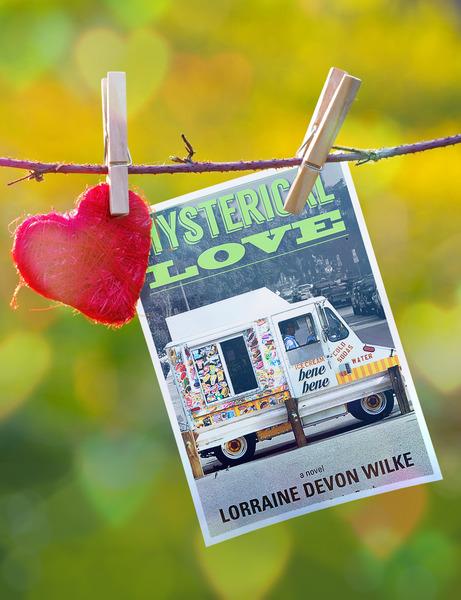
That Universal Yearning: How Finding Love Became the Theme of HYSTERICAL LOVE

Brenda_1

An interviewer asked me recently about the themes I most often employ in my writing, mentioning that love and family were central pivots around which both my novels spun. She wondered why those two themes so resonated with me, and I told her it was simply because they’re the most universal themes in all of life. Regardless of circumstance, ethnicity, social status, or any of the other qualifying ways in which we define and divide life, we all have family and we all want love. Even Edward longed for his Bella and he was a vampire!

When I started writing Hysterical Love, my second novel, the story evolved in a way that made it a companion piece to my first, After The Sucker Punch. While very different stories in terms of tone, plot, storyline, and protagonist, both involve thirty-something people reacting to the words of their fathers. But where Tessa, of my first novel, was most involved in rediscovering who she was—and who she was to her deceased father—Dan’s journey in Hysterical Love is all about love; sweet, elusive, maddening love.

And it’s an exploration of love on many levels: not just the heady lust and passion of new love that’s so often the driving force of drama, but the longer-term love of Dan’s three-year relationship with Jane (his very-soon-to-be-ex-fiancée); the lifetime love of his parents married for forty years; even the fleeting love of youth described in a fifty-year-old story written by his father. His roommate, Bob, revels in love’s abundance, his workmate, Zoey, can’t seem to find it, his sister, Lucy, is convinced it’s all about soul mates. But it’s when his father has a stroke and hovers near death, mumbling the name of the woman from the fifty-year-old story, that Dan is struck by the realization of another kind of love: love unrequited.

Given the strains and struggles of his parents’ cranky, utterly unromantic marriage, the story of his father’s aching first love of fifty years earlier overwhelms Dan’s imagination. And when he hears his comatose father mumble the name of the woman from the story, he’s struck by an unrestrainable urge to go find her, convinced she holds answers to his many questions about love.

So Dan sets off on an untimely and ill-conceived road trip to Oakland, CA, where the woman was last located, determined to change the course of his and his father’s lives. While on that tumultuous journey, he not only questions every aspect of his life, he’s faced with defining a whole new level of love when he meets the gorgeous, intriguing Fiona, a woman surely formed from someone’s fantasy. She appears as if sent from the gods to help in his quest and, in doing so, takes his breath away, forcing him to face his own definition of the elusive emotion.

But it’s the one-two punch of the plot’s unfolding—the reality of the woman he’s searching for, and Jane’s unexpected arrival to win his heart back, that forces love, an urgent pull both life-giving and soul shattering, to be most deeply examined.

For any adult who’s experienced the roller-coaster ride inherent in our human urge to connect and find affection, Dan’s story, and that of his parents, his fiancée, his workmates, his roommate, even Fiona, will surely resonate. He’s led to new thoughts, new realizations, and some painful, if undeniable, conclusions about the many faces love wears, and, in ways he couldn’t have imagined at the start of his story, he finds life altered accordingly.  

The true testament to the power of love… 

Photoart by Brenda Perlin

LDW w glasses


Visit www.lorrainedevonwilke.com for details and links to LDW’s books, music, photography, and articles.
Yes, We Are ALL Part of the ‘Truth In Media’ Equation

11947612_1698242277073835_1846506317033269189_n_article.jpg

As most sentient people have noticed, distrust in the media is at an all-time high. It’s not just conservatives who whine about the “lamestream media”; people on all sides of the divide are generally dissatisfied, unconvinced that “all the news that’s fit to print” is actually fit… or even news… and certainly most of it isn’t in print!

In the glory days of good old-timey journalism, the mandate was to report, to chronicle the events of the day, absent of opinion and rife in verifiable fact. Nowadays, as we march onward in our digital revolution to accrue ever-more 24/7 online news/media sources, the sheer demand for content is so relentless that any story, any opinion, any slant or perspective is granted the same status as actual news. Which means much of what we perceive as news is actually an unholy mix of bias, misinformation, rushed reporting, and facts twisted so precipitously as to resemble bias, misinformation, and rushed reporting.

This “news food” (like “cheese food”… as resemblant of real cheese as, well, you get the point) is then put through various delivery systems that render it digestible pseudo-news. And once that gets bleated about by cable/network talking heads, splayed across blogs and online news sites, written/covered/spun by writers (some posing as journalists), or printed in newspapers and magazines, it becomes TRUTH. It doesn’t matter if it isn’t; it’s been given the pedigree of pontification and publication, and, therefore, must be true. Sorta true? Even a little bit true? 

Oh, hell, it doesn’t matter. All that matters is that it’s believed to be true, that it supports someone’s point of view, and once it reaches that dubious bar, it then becomes “bandiable.” Spreadable. Ripe for sharing, posting, tweeting, blogging, slathering across the media landscape like so much warm butter (or, more accurately, congealed lard). Whatever greasy mess it is, it ain’t pretty.

And where does that leave us, those of us who do want “truth in media”? It’s become increasingly difficult, in a culture that readily serves up this pseudo-news cocktail, to know what, exactly, IS true. What is factual, verifiable, worthy of our viral attention… and what is not. And, sorry to have to say this, but we partakers have been, perhaps unwittingly, perhaps not, collaborators in the metastasizing of this regrettable phenomenon. Don’t think so?  

I bet we’ve all done/experienced some of this:

• We read an article posted by a friend, a family member, someone in our circle. It resonates, we “like” it, we express our outrage/support as appropriate; we might even share it… then we discover it’s a two-year-old article, the event is no longer relevant to the current conversation, or the reported “facts” have been discovered to be false, different, evolved, and therefore, the article is not useful. But, too late; we’ve sent it all over the place.

• Someone in our circle posts an article that is highly critical of some person, organization, political party, etc., they do not support. They even offer accompanying commentary to further fan the outrage. But as readers look a little closer, they discover the writer of the article works for a rabidly oppositional site, or is a fire-breather of known bias whose “reporting” could only be described as opinion, often faulty opinion teeming with dubious “truths.” But, again, it’s too late; it’s already been shared, “liked,” and commented upon as factual.

• A major event occurs somewhere in the world (terrorism, police brutality, plane crash, etc.). As the coverage tsunamis in, we rush to our TVs, our computers, and immediately begin sharing and commenting. Unfortunately, what often gets reported at the beginning of a news cycle, particularly as the facts are still being ascertained in the midst of chaos, is inaccurate and hazy, built on rumor and faulty witness reports. But those faulty reports and false rumors have now been thrown all over the media, social and otherwise, and unless those doing the throwing are quick to follow up with corrected, more accurate information, the misinformation exists online forever as fact, misleading many in the process.

• An incendiary, salacious, click-baity article is posted; it revs up the pitchfork throwers, sending commenters and trolls into a frenzy… only to have it pointed out that the site is a “satire site,” the article was tongue-in-cheek, the content was a joke, and so on. But before this is made clear, hordes of people have disseminated the information to be discussed and debated as fact.

• And, even in the most benign of circumstances, some of us are guilty of posting, say, notices of a celebrity death… only to have someone clarify that the person being mourned actually died months, even years, earlier. (A year or so ago, I—yes, I—posted a bittersweet piece about my favorite childhood DJ from Chicago having passed… only to be informed that he’d died three years prior! That’s the last time I posted something without first checking the date!)

And that’s the point. We gotta do a better job of checking what we post and share. We do have a role in this “truth in media” equation, an obligation even. Because we—the readers, listeners, sharers, commenters, posters, tweeters, bloggers—are like bees that spread pollen, birds that flit from flower to flower; Johnny Appleseeds with our bags of, well, apple seeds. We may not write the stories, but if we’re out there pollinating cyberspace with our shares, tweets, Facebook posts, blogs, comments, etc., we are participating in either informing or misinforming the reading public.

The fix? Simple: before you post or share anything, apply the following:

  1. Check the date. If it’s old, odds are good the information is as well. Either don’t post it, or—if it’s a topic/person/event you feel strongly about—find a more current source. Or at least make a point of alerting people that it’s an old article. 
  2. Check the site you’re sourcing from. If you’re sharing information from a far Right or far Left site, or any site known for a certain slant or opinion, odds are good the information being shared is biased toward that philosophy. Biased doesn’t necessarily mean not true, but it does mean one ought to share and read with a grain of circumspection. Even caution. Even cynicism. If you post something from such a site, be so kind as to make note of the political/philosophical penchant of the source so readers and sharers are aware and can judge accordingly.
  3. Check the veracity of what you’re posting. This one may be most important, particularly in regard to information that is incendiary, sensational, accusatory, insulting, potentially defaming; possibly not-true. Do us all a favor and get some fact-checking in before you post that sort of thing (or, really, anything). Between Snopes, Politifact, FactCheck, even Wikipedia, you can certainly do your own due diligence. In fact, it behooves us all to either refrain from posting slanderous-type material (particularly from a biased source), or be damn sure we’ve verified the truth of what we’re sharing. There’s enough misinformation and inaccurate propaganda out there without any of us contributing to the muckraking. 
  4. Be upfront when posting from satire sites. It’s all well and good to be so savvy, so culturally hip, that you know all the cool satire sites in the world, but presume not everyone else does. Posting a disclaimer like *SATIRE* is not only appreciated, it goes a long way toward keeping horrified folks from sharing as fact what is meant to be humor.
  5. Do your homework and figure out which news sources post the most neutral, most factual, most verifiable, least salacious news. Then share from those sites. This may take some time to sort out, and designated sites may go in and out of the category, but it’s worth it in the long run to get a decent list together, not only in terms of what to share from where, but what to reference for your own news information.

I’m sure there are other items that would be useful to the assignment (feel free to leave yours in the comments), but for now, these five, if vigilantly applied, would contribute mightily to the stanching of misinformation, and the propagating of more “truth in media.” I urge us all to do our part. Then, when we complain about the “media,” we can do so knowing that we, at least, have not further contributed to its “lameness.”

LDW w glasses


Visit www.lorrainedevonwilke.com for details and links to LDW’s books, music, photography, and articles.