Cultural Noise: Remember When It Was Quieter? It Still Is…

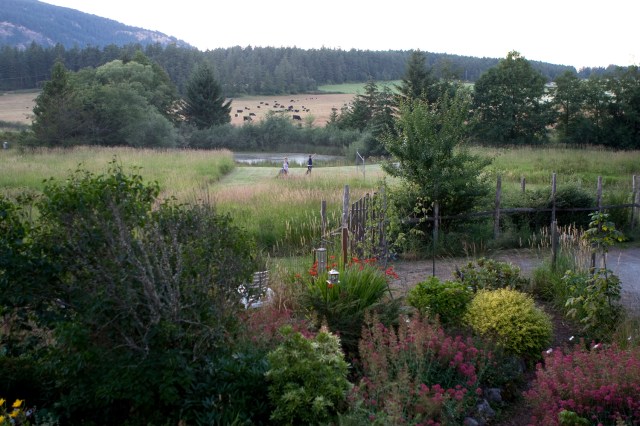
View from our deck

I just got back from a working vacation in parts of the northwestern USA that are so gorgeously bucolic and blessedly detached from the grind of urban life that one can’t help but be reminded of just how noisy things out there have gotten… and how quiet they can still be!

It is a noisy world we live in, isn’t it? Particularly when so many insist on being permanently tethered to news and media, with TV sets blaring all day, smart phones ever at the ready, the Internet in all its tabloid permutations bleating a litany of tragedies and travesties from one end of the globe to the other, those of us not living in war torn squalor, profound poverty, gangland violence, or insidious oppression, can almost feel guilty for our relatively unscathed lives. And even if we refrain from such misguided tendencies, we’re still spending too much of our time fending off anxiety, fear, worry, or seething commentary from the worst amongst us, discovering that just laying one’s head on the pillow is a trigger for loud, internal late night chatter.

I’ve seen more and more posts on social media from people bemoaning the vitriol and hissing ignorance of so many who have  somehow become “experts” on issues of the Middle East or the Ukraine. I’ve read head-shaking online conversations in which someone’s expression of gratitude for a good life is attacked by trolls who’ve decided expressing gratitude shows lack of compassion for the suffering (because trolls know all about compassion, right?). I’ve talked to people who are SO convinced that horror and dread is around every corner based on endless ticker-tape reporting of horror and dread worldwide, they can barely acknowledge a beautiful moment without waiting for the axe to fall.

Foggy Lighthouse_sm

NOISE. Noise couched in news. Noise that is so relentless that we begin to feel that war, violence, hate and poverty are all there is to the world… and that’s simply not true. It is, simply, all we hear about. Which creates the delusion of “darkness descending everywhere.” It’s not and we cannot immerse ourselves in every tragedy, every war, every historical feud, every horrifying injustice, without taking a toll on our mental and emotional health. Doing so is as unbalanced as eating nothing but dirt and expecting to be healthy.

We are now and forever so connected to the collective noise of the world-at-large that QUIET and SERENITY are almost an unfathomable concepts. But think about it: we didn’t used to have all this chatter around us. We used to be able to watch an hour or two of news, then get on with the business of living our lives. Now “living our lives” is composed of never-ending bouts of watching, reading, commenting, fearing, yelling, trolling, posting, defending, attacking and deleting, to the point that serenity and detachment is a lost art. We can blame the culture, blame the Internet, blame new technology, but it’s all about us. We have the power to turn it off and go find that lost art.

Do. Get it back. It’s essential. And it’s there to be had; you deserve to  — but WAIT, you yell! How selfish am I if I revel in my own good fortune, enjoy my own peace and serenity while people elsewhere are living in literal hell? I can’t put my head in the sand!! I have to be engaged, involved, immersed in the world around me, so I can be a good citizen or, hey, even just have enough information to be able to scream and yell on social media with other marginally informed people!!

Right. As my therapist used to say: “and is that working for you?” No.

Here’s the thing, and I’ve said this before… many times: Screaming and yelling at each other on Facebook, Twitter or Reddit is NOT activism. It’s screaming and yelling at each other. Spending countless hours watching and listening to profoundly biased anchors on cable news and talk radio is NOT getting informed; it’s being propagandized to. Stockpiling weapons, joining militia groups, being “anti-government” and stashing duct tape is NOT being pro-active; it’s being fear-based and paranoiac. Wringing hands and lying sleepless at night roiled in anxiety after endless articles on the very worst of people and the most catastrophic of life events is NOT being informed and involved; it’s being oversaturated and toxified. None, not one, of these things does one bit of good for the children in the Middle East, the Eastern Europeans in their battles with Russia, the starving children of Africa or elsewhere, or the beleaguered young women in repressive countries. None.

Sunrise On Whitefish_sm

I don’t know why any of us land where we do on this planet, how we end up in the families we do; why some of us are born in war-torn regions and others have parents with endless wealth. Depending on what you believe it’s either all random, dumb luck, or some kind of spiritual path set in motion in another realm. But whatever it is, you living in Van Nuys, California with a good job, a healthy family, a decent marriage and the chance to get out of town from time to time are NOT obligated to feel guilty, or not enjoy your abundance, because someone in Gaza is being blasted to hell by rockets. None of us knows why any of us ends up on the paths we do, but denying and negating your own is not the answer.

The answer is twofold. First: if you are so compelled, and it would be good if you were, do what you can for those for whom you feel concern by allotting appropriate attention and energy to sending money, volunteering, writing meaningful articles, doing honest due diligence upon which to base opinions, educating others, raising your consciousness, and promoting and exemplifying tolerance, peace, and sanity.

Then, when you’re done with all that, there’s the second step: go live and enjoy your good life with gratitude, acceptance, kindness and compassion. If every single person who could do that did, the positive energy swirling around this planet would surely raise the bar of humanity a notch or two… of this I’m convinced.

47a. The Blue Canoe

So in following my own prescription, my family and I take every opportunity to go to wherever we can to find stillness and beauty. To revel in peace, nature, and serenity –  “But I can’t afford it,” you holler. “Lucky you, but not everyone has that kind of time or opportunity,” you admonish.

That doesn’t hold water. Because no matter where you live or what your budget might be, every person can find some place of solitude, some corner of nature and beauty where they can lower the anxiety and feel the quiet that exists away from chattering humanity and its machines. I had a creekside oasis in my childhood hometown where I could ride my bike to climb into a tree and sing show tunes surrounded by long grass and dandelions (for some reason “Shall We Dance?” was a favorite! :). A friend of mine used to find her spot in a big city park where a grove of trees surrounded a bench where there was surprisingly little traffic, human or automotive, to disturb the sound of squirrels and swaying branches. Another friend makes it a pilgrimage to drive to the beach at every opportunity; another, to hike the Hollywood trails; yet another to prioritize funds to get out of town at least once or twice a year.

Whatever you have to do, whatever you can afford to do, find your quiet. It exists out there. I promise. It takes a willingness to detach from our addictive, mechanical informantst but, trust me… it’s worth it. There’s a beautiful, quiet, peaceful world out there just waiting to be heard.

All photographs by LDW.

LDW w glasses


Visit www.lorrainedevonwilke.com for details and links to LDW’s books, music, photography, and articles.

It’s Not Every Novel That Has Its Own Theme Song

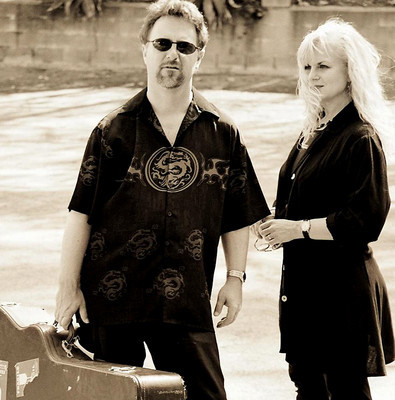
Rick Hirsch & me... after writing "My Search for You"
Rick Hirsch & me… shortly after writing “My Search for You”

There’s a song in my book, After the Sucker Punch, a song that comes in the epilogue and pulls a concluding plot point off the page into downloadable form. It seemed a very cool addition to the story and it is! Quite a few people have asked me about it – how it got there, did I write it for the book, who’s performing it, etc. – so I thought I’d tell the story:

I wrote the song a while back with a wonderful guitarist named Rick M. Hirsch; it’s called “My Search for You.” With Rick’s guitar tracks to inspire me, I came up with a set of lyrics from the perspective of a woman talking to her father, written a few years after my own father’s death, with a narrative based on the struggle he and I had throughout our lives relating to each other. I’d written, at that point, ten other songs with Rick for somewhere on the way, the album we were doing together at the time, most of which had something to do with love, heartache, or relationships, and I was compelled to explore a different theme with this one. It became the song it is, “My Search for You,” and while not necessarily one of the more explosive songs on the album, it has a certain singer/songwriter quality that appealed to many listeners.

Fast forward a few years… I’m writing my novel, After the Sucker Punch, a story about a woman finding her father’s journals on the night of his funeral and discovering he thought she was a failure. Based on a kernel of truth from within my family, extrapolated into the world of fiction with all its imagined characters and plotlines, the book started and remained a story largely focused on the particular vagaries, attachments, and longings that often exist between fathers and daughters. Which is key to how the song fits in.

At some point after the first or second (or tenth) draft, as I pulled out of the fog of writing to focus for a moment on interesting marketing ideas, the notion of including the song came to me. Given that the main protagonist is a former rock & roller for whom music remains an undercurrent throughout, I had the inspired idea to somehow get an actual CD of the song included as part of the book. Brilliant, I thought!

I read through the lyrics and realized I could easily, within the framework of the story I’d already created, work certain elements of those words into the dialogue and narrative so that the song made sense. Ultimately, “My Search For You” became the epilogue of the book, the song the protagonist, Tessa, writes for her father as a culmination of the journey she experiences after his death and the discovery of the journals.

Of course, including a CD with the book was a grand idea, but only possible if the book went down the traditional road with teams of high-profile players helping to publish and market it with a budget that allowed for such novel add-ons. That, as we all know, was not the road I traveled with After the Sucker Punch, and the parameters of self-publishing were not necessary amenable to the option!

But never one to give up easily, I just had to get clever about how to include this “theme song” as a tangible part of the book. And I did.

I set up a page on SoundCloud under the character’s name, Tessa Curzio, and input the song track there. I then included that link, along with the lyrics, in the epilogue of the book (an active link the Kindle version). Readers could click over the to Soundcloud page to hear “Tessa’s song,” even click from there to iTunes to download the track. I felt it was the perfect way to bring that musical plot point off the page into the real world of the reader… and readers are listening!

So if you haven’t yet gotten a copy of the book (and I hope you will), perhaps hearing the song will inspire you to do so. Following is a link to the SoundCloud page and the lyrics. Once you’ve listened and read, you just might want to know just how this piece of music fits into the story of After The Sucker Punch….

My Search For You

You were puzzled by my need for clarity
Maybe you thought I depended on language too much
But there were volumes you didn’t say or I never heard
I know you thought the way you loved was surely enough

So elusive, I wonder if you ever figured out?
How your silence always made me feel a little loud
So convinced if I sang and danced and jumped up and down
You would see me, just me, and maybe be a little proud
And sometimes I know that you heard me
Sometimes I know that you cried

CHORUS
But you left me in early December
You loved me but we both knew our time was through
Now I stand here and try to remember
The girl I discovered in my search for you

They say love doesn’t ask for more than what it gets
So why did I always need a bigger piece of you?
In the crush of life I felt sometimes lost in the crowd
Never sure if I ever came completely into view
But somehow I learned to be stronger
And somehow I’m certain you knew

CHORUS:
But you left me in early December
You loved me But we both knew our time was through
Now I stand here and try to remember
The girl I discovered in my search for you

BRIDGE:
You gave me the passion to find my way
You gave me the eyes to dream
If we squandered the time we had
You’ve got to know
That what I searched to find in you
I finally found in me

CHORUS
You left me in early December
You loved me but we both knew our time was through
Now I stand here and surely remember
The girl I discovered in my search for you

LDW w glasses


Visit www.lorrainedevonwilke.com for details and links to LDW’s books, music, photography, and articles.

Did You Know It’s Writers And Editors Who Are Most Honored On July 4th?

Teacher: “Where was the Declaration of Independence signed?”
Student: “On the bottom.”
From Top Ten Fourth of July Jokes For Kids

Flag Waver_by Lorraine Devon Wilke

As a writer, a grammarian of sorts, and certainly someone who edits and fine-tunes everything I write within an inch of its life, the 4th of July holds special meaning to me. Which may seem surprising. Why, you may ask, does this most iconic of American holidays, one celebrated with parades, picnics, flags and fireworks in honor of our country’s glorious state of independence, resonate with a writer and editor? Simple: the day is a celebration, of sorts, of our most noble profession.

Don’t believe me? If you do even the most cursory research on exactly why we’ve come to celebrate this exact date, what you’ll likely find is a myriad of hazily similar but often inaccurate facts, with at least one that’s indisputable: what actually happened on the fourth day of July in 1776:

It was the day the writers and editors of the document finally gave a thumbs-up to the final draft of the Declaration of Independence.

It wasn’t signed that day, it wasn’t declared as law that day; it was simply (or not so simply!) the day it passed muster with a fierce group of literary and legal minds who understood its importance and wanted to be certain every word, every pause, every piece of punctuation was exactly as intended. Historical website, ConstitutionFacts.com, confirms that on July 4, 1776, the Continental Congress – after much editing, tweaking, and rewriting of previous drafts – finally approved what would be the ultimate, accepted verbiage of this momentous document. And while certainly those of us who traffic in our own versions of such literary activities find the accomplishment meritorious of a firework or two, it was not widely seen at the time as worthy of celebration. In fact, it was a frustrated John Adams who stepped up years later to pop the day into the cultural zeitgeist. Well, maybe not the day itself, but the celebration of the day. And maybe he didn’t exactly pop it, but he did have something to do with kicking it into gear.

That celebrating the 4th needed to be kicked into gear is not all that surprising once you’re aware that the signing of the Declaration of Independence, that auspicious and momentous occasion memorialized by countless fine art paintings and stentorian expressions of oratory, actually occurred on August 2nd of 1776. Almost a month later. So how, you ask, did “July 4, 1776” come to be the “day of American independence”?

Likely in honor of those writers and editors who fine-tuned the document into its final form. The date “July 4, 1776” was affixed to the original handwritten copy they completed that was then signed by our most celebrated of Founding Fathers on August 2,1776, the copy that now hangs in the National Archive in Washington, D.C. The date “July 4, 1776” was also printed on the Dunlap Broadsides, the “original printed copies of the Declaration that were circulated throughout the new nation.” For those two obvious reasons, July 4, 1776 became the official date attributed to our Declaration of Independence.

And, really, after all these years and all our “4th of July” celebrations, doesn’t “the 2nd of August” just sound feeble?

But still, no attendant celebrations occurred until many years after 1776, the country and its citizens far too distracted by the demands of burgeoning democracy to party down at the time. It seems, much like today, that partisan divides between the various political factions were fierce and unrelenting, and much of the rancor had to do with the Declaration itself. Some, the Democratic-Republicans (can you imagine a party actually combining those two disparate political assignations?), supported Thomas Jefferson and the Declaration; the Federalists on the other side thought it was a bunch of pro-French/anti-British hooey. The only things missing from this colonial melee were cable news and blowharding talk show hosts!

And with that political rumble as a backdrop, as well as the War of 1812 to contend with, who had time to think about fireworks? At least the pretty kind that blew up in the sky? But despite these many distractions, the date was an important marker for the aforementioned – and very outspoken – John Adams. In 1817, this Founding Father and well known letter-writer is said to have written a missive expressing his frustration that, by ignoring the  momentousness of its historical milestones, America seemed “uninterested in its past.” The complaint apparently struck a chord:

As post-1812 War politics shifted, the “anti-Declaration” Federalists spun into disarray and by the 1820s and 1830s, the political parties that evolved from this seismic shift came to agree on at least one thing: that all Americans were “inheritors” of what Jefferson and his party had wrought: the glorious Declaration of Independence. National pride spiked, copies went flying around the nation as evidence of America’s greatness (all dated, as noted earlier, with “July 4, 1776”), and attitudes about the date and the importance of its celebration changed. Particularly when, in what can only be seen as a confluence of epic and cosmic perfection, both men so instrumental in establishing this profound document – John Adams and Thomas Jefferson – died within hours of each other on July 4th, 1826, forever anointing the date as one of monumental significance to the United States of America.

So between his signing of the Declaration, his grumbling letter of 1817, and his eerily well-timed denouement (giving Jefferson a nod for the same!), John Adams more than played his part in helping define this day as worthy of celebration. It took Congress almost 100 years after the initial signing to codify the date into American culture, but it was declared in 1870 that the “4th of July” was, indeed, and would always be, a national holiday.

Which in every community in America translates to warm, neighborly activities, the excitement of children waving sparklers against a star-lit sky, wonderful food shared with friends and family, fireworks to “ooh” and “ahh” over, and, of most importance, the sense of enduring community and national pride based on ideals – and a very well-written and edited document – of stellar and unassailable grandeur.

John Adams would be smiling. Certainly writers and editors across the land are!

LDW w glasses


Visit www.lorrainedevonwilke.com for details and links to LDW’s books, music, photography, and articles.
From INDIES UNLIMITED: The Persistence of Self-Publishing Stigmas and How To Transcend Them

Indies Unlimited

In the world of independent writing there exists an enormous pool of resources designed to guide, educate, inform, cheerlead and help independent writers. Indies Unlimited is one of the most popular of those sites, one that works hard to provide what authors, writers, and those working with them need to move constructively forward in a constantly changing industry. I was delighted to be invited to write a “guest post” for them.

In thinking about what salient issue to cover, I decided to throw some focus on the conundrum around “the quality of self-published books,” an ongoing discussion, even debate, that rages (OK, maybe rages is too harsh; how about persists?) amongst publishers, marketers, promoters, reviewers; magazines and newspapers, certainly readers and even writers, as the self-publishing trend continues to expand.

Those of us in the category are inevitably faced with a set of preconceived ideas and opinions about what a self-published author is and what that author provides by way of their independently published book, and while many of those notions are folly — or certainly non-applicable to the better writers — they DO, unfortunately, apply to far too many. This piece offers some rethinking about how to change that reality:

The Persistence of Self-Publishing Stigmas and How To Transcend Them:

We self-published writers are like the big kids Mom and Dad left at home with the baby; there’s a list of instructions on the refrigerator but we’re basically on our own. Which means we have no choice but to step up. To meet the challenge. To make sure the “baby” that is our book flourishes as well as the one down the street with the high-priced nanny…

… yet one [writer] remarked that most self-published writers can’t afford editors and cover designers and so they “do the best they can,” their books going out “as is.” Another told me, “Readers are less picky because ebooks are so cheap”….

 Click HERE to read full article at Indies Unlimited.

LDW w glasses


Visit www.lorrainedevonwilke.com for details and links to LDW’s books, music, photography, and articles.

The Scourge of Spam: Does This Nonsense Really Work?

spammer

“What other nonsense can I send to Rock+Paper+Music?” Spammer pondered.

My little blog here is not a high-traffic site. I wish it were, but given the demand to spread my attentions across a wide swath of creative endeavors in which I’m involved, I have not had the time (nor, unfortunately, the savvy) to pump this bad boy into the virally, chewy sensation I intended.

So I do what I can: I write for it with the same fervor and focus I put into anything I do; I keep it current and contemporary, dress it up to my satisfaction, and it remains a place where I speak my mind and share my thoughts without limitation. It’s my blog. I love Rock+Paper+Music.

It seems Spammers do, too.

I use the capital “S” because this contingent of online personality is simply impossible to put into lower case. They are everywhere, as ubiquitous as the omniscient “God/god,” and evermore diligent about spreading their word with all the passion and fire of snake-charming, tent-dwelling fundamentalists. How do I know? Because I hear from them by the hundreds every single day and their missives have flooded my spam filter by over 460,000.

Yes… you read that right: almost 500K comments from Spammers!!! That’s about 497,455 more than I’ve gotten from actual readers (clearly I’m not as under-the-radar as I thought, she says drily).

Keeping this horde at bay has been left to the ministrations of my hearty spam filters — thank God for them — but still… it’s amazing, the sheer number and variety of issues submitted and disguised as faux comments or requests. I’m in awe of the creativity. There is clearly a script that various groups use, one that gets altered just enough with each missive to suggest real communication, and, of course, these always contain links and trackbacks (interesting, isn’t it, how many random readers have those? :).

I’ve been told by, oh, so many “readers” how they just “stumbled upon my blog” and are so impressed by my skill and talent they had to write. Or how “my cousin told me I had to visit your site and boy, am I glad I did!” (Me too!). There are some that just leave trackbacks, others that leave LOOOOONG lists of links to pharmaceutical drugs or designer sites or sex services (do they really think I’m going to let those get by?). There are even some who clumsily offer critique and still think their posts will pass muster, things like: “You’re not the best writer on the web and your images upload slow”…neither of which I hope is true!

The scourge of spam is like locust, cockroaches, and posts about the Kardashians: never-ending, pointless, and seemingly unstoppable. According to one survey, at least 12% of those who receive spam either through email, comments, Facebook posts; whatever, actually do respond to them, and often to their own detriment. Earlier this year TechDirt reported the story of a woman on ChristianMingle.com who was looking for love in what one would assume was certainly a right place but being taken, instead, by some Turkish scammer for $500,000 of her hard-earned cash. Frightfully unChristian and clearly a trump of my 500K spam comments, but as long as those “profits” keep coming in, in whatever percentages, they’ll keep on spamming.

There seems to be consensus (see related articles below) that this scourge is one we will have to endure like disease and earthquakes, but, as with both of those burdensome realities, we are wise to do all we can to protect ourselves in response. Which I do. In fact, I bow down to my spam filters both here at Rock+Paper+Music and at my email address, impressed by their relentless ability to ferret crap from commentary. Long may they filter.

But still… I gotta say I’m just a little wistful that my biggest audience here is those wily, unscrupulous, indefatigable Spammers who just “stumbled upon” my blog and want me to know they think I’m really, really awesome. All I can say to that is: gosh, thanks, you guys! 🙂

Related Articles:

The Spam Battle Report 2014

Why The Spammers Are Winning

Stupid users respond to spam? Survey said… (ding) 12% do!

The reasons why you should never respond to spam email

LDW w glasses


Visit www.lorrainedevonwilke.com for details and links to LDW’s books, music, photography, and articles.

Sometimes The Best Story About a Book Isn’t About the Book At All

“If cookies be the food of love…munch on.”
-Dame Judi Dench

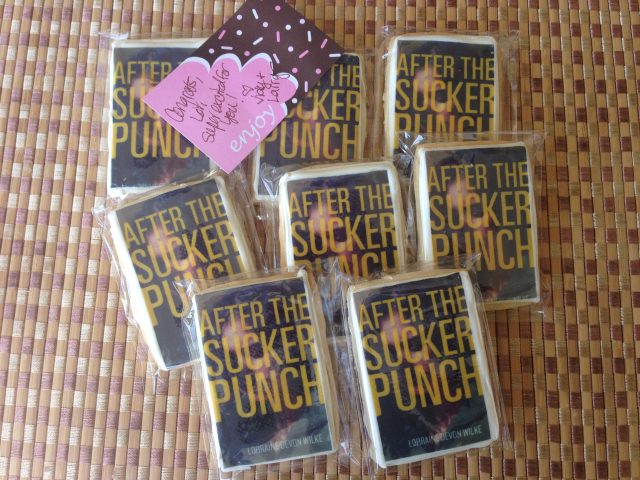
There are three things about the above quote that I adore: Dame Judi Dench, love and… cookies. If one combines cookies with love, well, that’s an explosion of wonderfulness that could only be topped by adding Dame Judi. Barring that option (and one assumes that’s a given), the combination of cookies and love is a mighty potent mix in itself. And today I had occasion to be the recipient of that marvelous brew:

This is a cookie… a very delicious (yes, I ate one) shortbread cookie designed with the cover of my book as the frosting top. I ask you: WHAT COULD BE BETTER THAN THAT??!

Not much.

The cookie came in a box of identical cookies, all of which were designed, made, and sent by my cousin in Chicago, Vicky Sarris Blanas, who, with her husband, Larry Blanas, owns the Lawrence Deans Bake Shop in Wilmette, Illinois, a close neighborhood of Chicago. (A little history about them and their bakery can be found in a Chicago Tribune story titled, It Started With Biscotti.)

What is utterly amazing about this unexpected and incredibly touching gift is that it comes from a member of my family whom I only recently met and rarely get to visit, what with her in Chicago and me in LA. But my blood ties with Vicky go way back and are attached to some of the sweetest memories of my childhood:

Grandma by Mary_3.11.79
My grandmother; photo shot by Mary Amandes on 3.11.79

When I was a little girl visiting my grandmother in Chicago (though the city of my birth, my family moved to a small farm town in northern Illinois when I was three), my sister, Mary, and I often spent time with various combinations of our many Greek relatives. Two who completely captured our little-girl imaginations were women whose names I’ll never forget: Sia and Helen. They were incredibly beautiful young Greek women who couldn’t help but appear particularly glamorous next to our dear but rather classic Greek immigrant grandmother! Their names were always said with Sia’s first: “Sia and Helen.” I can’t remember anyone ever saying, “Helen and Sia.” Don’t know why. Sia and Helen’s mother, Victoria, was the half-sister of my grandmother. And Sia’s daughter is Vicky Sarris Blanas, the baker of my cookies.

I met Vicky and her family during the summer of 2011 when in Chicago for an event, and found their very hip, just-opened bakery on Green Bay Road to be as warm and inviting as a good bakery should be. We later connected on Facebook, particularly in a private family group, and have “liked” and Facebook commented on various posts over the last three years. But, to be honest, I didn’t know she was particularly aware of my book and I certainly didn’t expect her to take the time, and put her creative skills to work, to memorialize it in such a unique and thoughtful way!

But she did… and I am so touched. We will enjoy “munching on” them, as Dame Judi suggests, but I will keep at least two as mementos of not only the launch of my first book, but the love and incredibly sweet consideration of my dear cousin Vicky.

Lawrence Deans Bake Shop

Stop by the bakery’s Facebook page and give a “like,” and if you’re in the Chicago area, be sure to visit for coffee and a treat. Here’s the link: Lawrence Deans Bake Shop.

Sometimes the best story about a book isn’t about the book at all….

LDW w glasses


Visit www.lorrainedevonwilke.com for details and links to LDW’s books, music, photography, and articles.

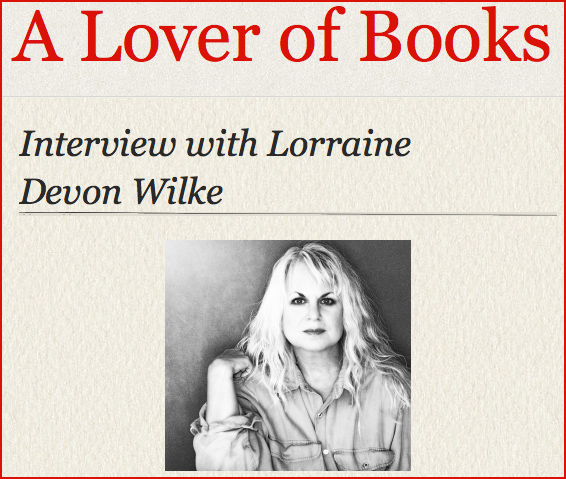
Interview With Sonya Kemp @ ‘A Lover Of Books’ Blog

Interview Image from A Lover of Books

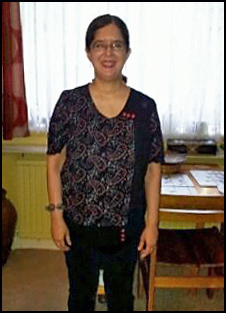
Sonya Kemp is a blogger and book enthusiast from the UK who describes herself on Twitter as “a very avid reader who just can’t imagine a life without books”…. the exact sort of sentiment we writers love hearing!

Sonya Kemp
Sonya Kemp

But Sonya doesn’t just read and review books; she makes a point to reach out to independent authors around the globe to help promote them and their books on her blog, aptly titled “A Lover Of Books.” I’m fortunate enough to be one of those authors this month and am delighted to be included… particularly because she asked great questions I had fun answering! To access and follow Sonya on Twitter go to @destinylover09. If you’re a Goodreads member, you can find her page HERE. And to read Sonya’s interview with me, click the link below: A Lover of Books: Interview with Lorraine Devon Wilke Thank you, Sonya! I appreciated your interest, enjoyed the questions, and am happy to be a part of your book blog!

LDW w glasses


Visit www.lorrainedevonwilke.com for details and links to LDW’s books, music, photography, and articles.

AFTER THE SUCKER PUNCH Makes TOP 50 List

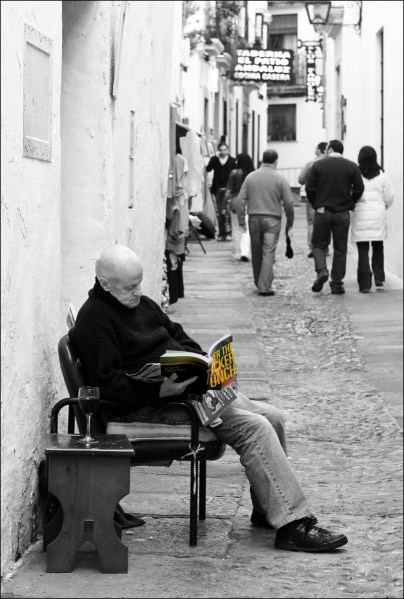
Alley Reading_ATSP

After just a little over a month in publication, less than a month in print, After the Sucker Punch was chosen by readers at Indie Author News as one of the Top 50 Indie Books for June.

That is no small thing. I’ll take a moment to celebrate:

Yippee!!

OK. That’s done.

I also want to take a moment to acknowledge Indie Author News, one of the many wonderful sites working in support of independent authors and their books. Alan Kealey does the heavy lifting for the site and he is an enthusiastic and indefatigable promoter. I am grateful for his persistent tweeting and noise-making… thank you, Alan!

And THANK YOU, indie readers, for showing my book a little love. I can’t tell you how much I appreciate it. And for those of you who haven’t yet had a chance to pick up a copy, here’s the link: AFTER THE SUCKER PUNCH. And thank you! Let me know how it hits you…

 Alley Reading Break photo image by LDW 

LDW w glasses


Visit www.lorrainedevonwilke.com for details and links to LDW’s books, music, photography, and articles.
The Amazon vs. Hachette Debate: What Do Independent Authors Think?

2014-06-08-ReadingWhatWeWant.jpg
Reading what they want… from whom they want.

Lines have been drawn, sides taken; articles, blogs and editorials prognosticate about what – and whom – will be left standing when the dust settles. Big 5 authors are stamping their feet in step with their publishers and it’s getting noisy out there. Uber-successful author James Patterson is fuming about the “national tragedy” that is Amazon (as quoted in the Los Angeles Times piece, “Amazon and Hachette: The dispute in 13 easy steps“), while another high-profile writer, Malcolm Gladwell, opines in the same piece (in oddly vulnerable tones), how heartbreaking it is “when your partner turns on you.” It’s high drama in the literary corral.

USA Today’s Michael Wolff frames the melee in his piece, “How book biz dug its own Amazon grave,” as a transparent “power grab” by Amazon that should have set off alarms much earlier… but didn’t:

“…Amazon, evident to anyone paying the slightest attention, is a creeping totalitarian state. Its effort is to build a marketplace that will give it the most power to shape the behavior of its customers and suppliers. That is pretty much the definition of ‘platform,’ that new word that denotes ultimate commercial and personal control. […]

“So, broadly, the fight is between, on the one hand, the incompetents, craven panderers and mid-level corporate bureaucrats in the book business and, on the other, the authoritarian creepos at Amazon. More specifically, the fight is about better and lesser businesses’ acumen and strategies. […]

“The negotiation, not to mention brinkmanship, between Amazon and Hachette seems vastly too unequal. Publishers need Amazon more than Amazon needs them. So publishers are screwed. The walking dead. They gave it away.”

Evan Hughes over at Slate appears to largely agree with Wolff. In “Bringing Down the Hachette,” he makes the point that this battle was essentially allowed to get out-of-control by those not paying attention and is now, belatedly, inspiring an almost hysterical level of response from those who will be most affected – Big 5 publishers and their authors. He even concludes mournfully, “How do you notice a great book that never gets written?”

Yes… this is a very grim crowd.

It’s a fascinating debate, a fascinating time, one that mirrors much of what’s already happened in the music industry, in journalism, art and photography; even online news aggregation. And, as in all revolutionary movements, the paradigm is shifting, to use a weary phrase. The status quo has been shaken up, with elites at the top of the food chain being toppled by the democratization of the publishing process, whether by scruffy rebels who’ve finally had enough of never having enough (or any, for that matter), or, in this case, by another corporate “elite,” one that’s had the audacity to design a business model that actually includes those previously kept outside the gates: the independent writers of the world. And, believe me, those writers, unlike the rich, famous ones long held in the warm embrace of the Big 5, view this debate through a very different filter. We are celebrating Amazon’s open doors.

Unless you’re someone who writes books and attempts to get them published, it’s unlikely you’re aware of, or pay much attention to, the arcane process by which books come to market. As a reader who goes to bookstores or shops online – at Amazon or any of the other sites where books are sold – you likely make little note of the publisher’s name, more interested in the author, the name and genre of the book, the cover, the book description, and the reviews. But for the writers of those books, the journey to that book shelf – virtual or otherwise – has been, until Amazon, a gauntlet of restrictions, exclusions, and endless hoop-jumping, followed, most frequently, by rejection, dismissal, and, in too many cases, lack of even an acknowledgement of your introductory email or letter. There cannot be a less considerate, more brutal, process than the one required to simply gain the attention – much less the interest – of a literary agent, a step necessary if you want to approach Big 5 publishers. And while I have sincere empathy for those agents who are, no doubt, overwhelmed by submissions from the millions of writers looking for that representation, the entire process is set up to drive pretty much everyone involved f**king crazy. Agents try to preempt the seeming cruelty of their perceived coldness and disinterest by noting on their sites that they’re too busy to respond to anyone but those in whom they’re interested, but still…

A few lucky writers do get through – you might have one of their books on your nightstand – but even those are being rudely awakened to the new reality of far less marketing and promotional help from big publishers who, regardless, still control what their books will be and still take a big chunk of their profits. Other authors decide to go with smaller publishers who have little money to spend on anything but at least have a masthead. But for most writers this “auditioning” process can go on for years, during which time they edit, rewrite, and polish their manuscripts but, in most cases, see little progress in the quest to get them traditionally published.

I wrote a bit about this spinning journey in my piece, “Is Self-Publishing Killing Books? My Journey With After the Sucker Punch Answers the Question,” so I won’t reiterate beyond the obvious: when an industry becomes too exclusive, too restrictive; with contradictory standards, inexplicable or confused reasoning, and the inability – or wherewithal – to be open to much beyond the most obvious, the most predictably commercial, or the most connected, a revolution is going to happen. As it has.

While Big 5 and their gatekeepers were holding tight to their velvet ropes, Amazon opened their doors wide, giving independent authors of every ilk a place to publish, market (often with Amazon’s help), and sell their work, and, consequently, giving millions of readers the opportunity to buy it. As much as the naysayers bemoan this “muddying of the waters,” the fact is, books are not declining or becoming more generic because of Amazon; they are, more likely, expanding, with many new, talented writers finally getting an audience, one delighted to discover new work in, perhaps, a wider range of genres and styles than traditional publishers were willing to service. Some may sniff that self-published writers are a scruffy lot cranking out bad romance novels with sloppy manuscripts, amateur covers, and marginal skill – and some are. But there are also many who are remarkably talented, know their craft, and implement their impeccable standards with professional editors, formatters, and cover designers. Some of those writers are bestsellers. Some are famous. And some, like me, invite you to read our books now being independently published at Amazon to see just how they stack up against the “traditionals” (my book link is below… please, avail yourself and let me know; I’d be delighted to get your feedback, seriously!).

When Slate’s Evan Hughes posits, “How do you notice a great book that never gets written?,” his concern might be more applicable to the writers big publishers have been ignoring for years. Their books are, now, not only getting written, but finally getting noticed, thanks to that “national tragedy” that is Amazon. Whatever this behemoth is or isn’t; whatever it’s doing right or wrong, all I know, after years of jumping through endless hoops in hopes of getting my work acknowledged, I’m done jumping. I’m putting my creative ass on the line, standing by my work, and selling my book on Amazon. As are millions of others.

For those of you raging, I hope this gets worked out to the benefit of the most worthy; in the meantime, we independents are marching with the revolution.

Reading What They Want image: LDW @ Fine Art America

LDW w glasses


Visit www.lorrainedevonwilke.com for details and links to LDW’s books, music, photography, and articles.

Independent Publishing: Book Killer or Inevitable Evolution?

Book cover full

A reader with whom I’ve had occasion to debate various issues in the past said to me recently, “self-publishing is killing books.” We were discussing the state of literature at the time and little did I know this arena of marketing was a bit of a trigger for him. As he carried on about amateur writers and “book covers that look like they were made by 6-year-olds with colored pencils and construction paper,” it was clear he’d taken umbrage at that fact that, “everyone and their brother thinks they can write, now anyone can publish, and that leaves the market flooded with crap.” (He’s always been an indelicate sort.)

He wanted to know how I felt about this and since I am now one of those writers who’s leapt into the self-publishing world (though we writers prefer the “independent publishing” world!), I decided to take him on, as he seemed to be unfairly painting all indie writers with the same cloth. But not only am I a self-published author, I am an avid, selective, and very judicious reader, so between those two points of view, I feel uniquely qualified to rebut his assertions.

Do I think self-publishing is killing books? In a word, NO. In fact, not only do I believe self-publishing isn’t killing books, I believe it’s actually enlivened the marketplace, bringing a fresh, less structured, less filtered, more open life to the entire literary industry. And how has it done that?

By resuscitating moribund, outdated paradigms of just who who gets to publish, who gets to sell, and how one gets to buy those books. Until this recent industry shift, one that mirrors a previous and similar plate-shifting in the music business, the traditional publishing industry ran a tight show: it had its gatekeepers review and select what was ultimately an elite group of authors, who would then, hopefully, be vaulted to success by large, well-financed promotional campaigns. These companies controlled every aspect of their authors’ books – their titles, their content, their marketing platforms; their rollout – and while this could be very advantageous for those select writers, it wasn’t always. And it didn’t include very many people.

Self-publishing, on the other hand, has pushed that literary paradigm aside and, instead, opened the doors to many talented writers who had, prior, been kept shuffling behind gates held tight by gatekeepers, who – by virtue of presumed supply and demand formulas, and, it seems, a somewhat limited perception of what should get published – refused them entrance. Sometimes kindly, sometimes not, and most times by simply ignoring them. Now, in the new world of independent publishing, those rejected writers, unbound from requiring “permission to proceed,” have put their creative asses on the line to take the risks, and do the work, to share their books with the wider world. And that has done for readers and writers what the digital revolution in music did for bands, singer/songwriters, and the fans who listen to them. It democratized the process and gave power to the artists to provide the product, and the consumer to decide what succeeded by virtue of their personal choices. What has followed is the discovery of some incredible work.

Don’t think it applies? Don’t think there’s that much undiscovered talent in the world of books? Wonder if the tsunami of self-published work has glutted the market with sub-par literature, as my friend asserts? Think the filters implemented by traditional publishers are necessary to pick the best and keep out the…. less best? Well, let’s address these very valid concerns:

1. Don’t think there’s that much undiscovered talent in the world of books?

If you’ve ever watched The Voice, American Idol, or any of the many singing talent shows that populate our airwaves, you have to have noticed how, year after year, an unlimited supply of astonishingly talented vocalists have stepped up to the stage to be discovered. This year alone The Voice has featured so many outstanding singers it’s impossible to honestly pick one over the other; a choice is made simply because those are the rules of the game. The point is, any of them are good enough to win; there is no shortage of talent out there in the great, undiscovered public. None. If it ever seemed there was, prior to the televised democratizing of the process, that’s because the formula for “being discovered” and making it big as a recording artist was difficult and exclusive. Record labels had A & R people who had to, first, find you amongst the millions, then hear you, get you signed, and hope the record company did right by you. And those A & R people could only cover so much ground; they were limited in who and what they could sign, and the kind of money needed to break a star pre-digital-age was mind-boggling. Hence, very few artists were chosen. Now? In the digital age there are no limits, which means any of the authentically talented artists who were previously ignored, dismissed, or rejected are being found. Or are simply taking matters into their own hands and recording and marketing their own work.

That same basic formula now applies to authors. They may not have a televised show (can you imagine…what would that be??), but they have self-publishing. They have Create Space, Kindle, Smashwords, and others, and following the same paradigm as the revolutionized music business, the degree of talent given rein is profound, and countless numbers of incredible, and heretofore unnoticed, writers have been given the chance to step up and be heard. Or read, as it were.

2. Wonder if the saturation of self-published work has glutted the market with sub-par literature?

It has, to some extent (though I’m not sure I’d go with “glutted”; supplied, perhaps). Certainly I’ve seen some ridiculously amateur book covers, read a few self-pubbed books that were clunky and uninspired. There are writers who haven’t learned the craft as well as they should have; didn’t access professional editors and formatters as needed, and lack a deeper understanding of how to fashion a compelling narrative. These are the writers who seem to prove my debater’s point; not good enough to sit on the virtual shelves amongst our very best (but then again…even velvet painters seem to find an audience).

But I have also read a number of traditionally published books, some bestsellers, that were not only clunky, but amateurish as well (don’t ask… I might be tempted to say!). I have found typos and bad formatting in books by some of our most famous writers. I’ve struggled to get past the first chapters of well-known books touted as “gems.” And some of what gets marketed as “stunning” and “shockingly original” in Big Company parlance simply isn’t. Subjective? Certainly. In both camps. And on both ends of the good/bad spectrum.

And while there is more “lesser literature” now than prior, even those writers have their readers (not every reader wants War and Peace), and certainly the more selective readers can easily suss out what meets their standards and what doesn’t. It seems worth it to me – a good trade – to have to, perhaps, take a bit more time to ferret through product, certainly if it means having access to stellar work previously kept from the marketplace.

Books

I have a personal stake in this question, based on my earlier disclaimer of being a self-published author myself. I just recently independently published my debut novel, After the Sucker Punch, and by way of that transformational experience, feel well-suited to address this issue.

I attempted the traditional publishing route with this book and couldn’t get arrested (well, I probably could’ve gotten arrested considering some of what went through my head after my very last rejection letter, but you get the point!). I say “my very last rejection letter” because after I got that letter, after years of waving my hands and trying to get the attention of a literary agent (necessary to breach the traditional publishing gate), I made the very conscious decision to shift gears and pursue self-publishing. I hadn’t wanted to, only because I’d self-produced a musical CD, I self-promote my journalistic and photographic work, and. frankly, I was hoping for a little marketing and promotional help this time around! But I’ve since learned that even with traditional publishing that is not always guaranteed anymore and, besides, with self-publishing I could control the elements of my book that were most important to me: my cover artwork, my title, particularly my content. Seldom so with traditional publishing.

But back to the question: As much as I love my book – and spent years of hard work molding and fine-tuning the story based on notes from editors, consultants and readers – getting continued yawns from agents (few of whom actually read the book) most assuredly pushes one toward self-doubt. “Maybe my book just isn’t ‘fall in love’ material. Maybe my writing isn’t ‘wow’ enough. Maybe I do need vampires.” But then I read the work of several authors who’d also attempted traditional publishing and, like me, had been unable to break through and so chose the indie route. And their work was fabulous. As good as any book I’d read put out by the Big 5. Which was a revelation. Because it made clear that being rejected by traditional publishing DOES NOT mean you’re not good enough. What it does mean is pointless to guess; the checklist of “why your book was rejected” is long and sometimes arbitrary. The main point is, it doesn’t mean it isn’t good enough. Period.

But here’s the most salient point for those debating the merits and quality of self-published authors… and I know this to be true: most independent authors hold themselves to the same impeccable standards of excellence that any traditionally published author does. It’s not about vanity, it’s not about just wanting to see their words in print, or having over-inflated creative egos. It’s that they’re writers, compelled to express themselves through words, and, like any bona fide writer, they want their work read by readers for whom those words resonate. Their standards are unrelentingly high and they expect their work to be on a par with any writer published by Simon and Shuster or Harper Collins. They work their asses off to hone their craft, find a brilliant plot, fashion sharp dialogue and create a compelling story arc. They get the best editors they can to shape their work, the best designers to create their covers; they hire top formatters to make sure what’s on the page works. And they don’t push those “publish” buttons until they’ve been through that book so many damn times it’s buffed and shined like no other. And they have no company contact to lean on, no PR mavens to hold their hands, or get them to the book reading on time; they do it all for themselves, with verve, vitality, and complete awareness that the buck stops with them. Now, that’s a standard to meet!

I know this because I know many writers. And I know how I prepared my book. There are so many incredible books out there now written by authors who “couldn’t get arrested” that any argument against the shifting tides of publishing is, essentially, moot. In fact, some phenomenally successful authors who’ve actively chosen the independent route, JA Konrath being one, assert that the pendulum has swung so hard to the self-publishing side that it will never again swing back. I know for many writers, heady at the creative freedom and exhilarating opportunity to finally get their work out, this is likely true.

I don’t know if my argument fully rebuts my debater’s assertions, but, ultimately, for independent authors, their books are their statements. My book, which I hope you’ll seek out, is my statement to the notion that self-published authors are less. They’re not less. They’re just independent.

ATSP book cover design by Grace Amandes
Cover photos by Lorraine Devon Wilke
Book Collections image @ Wikimedia Commons

LDW w glasses


Visit www.lorrainedevonwilke.com for details and links to LDW’s books, music, photography, and articles.