
MTBI: Mild Traumatic Brain Injury — Most traumatic brain injuries result in damage to the brain because the brain ricochets inside the skull during the impact of an accident. Mild Traumatic Brain Injury, also called closed head injury or post-concussion syndrome, is a condition where an individual suffers a mild concussion, whiplash, or blow to the head and subsequently develops symptoms such as recurring head pain, cognitive difficulties, emotional and personality changes, hypersensitivity to light or sound, nerve damage, memory difficulties….
 You meet someone and there’s a thought: “He seems like a nice guy.” Not much else, not yet. Tall, handsome, in a Charlie Brown tee and cuffed jeans—yes, we laughed about that later—but the eyes were blue, the smile warm, the first impression amiable. No particular fireworks, no spiritual recognition, no sense of destiny, just a nice guy. Eight months later we were married and today we celebrate our 20th anniversary. That first impression? We’ve gotten beyond cuffed jeans and the tees have been replaced by Tommy Bahamas. The guy? Still so very nice.
Every couple has their “how’d you meet?” story, and ours is particularly useful because it offers both the story and a casual reminder that I actually did get a film made at one point in my illustrious career, convenient two-birding at a time when blowing one’s horn just seems crass. There was this film, from a screenplay I wrote with the inimitable Patricia Royce, called To Cross the Rubicon, which was being produced by the Seattle film group — of which Patricia was a partner—called The Lensman Company. All very exciting and imminently life-changing (though perhaps not in quite the ways I imagined!). At some point early in the process I went to the company office housed in a beautiful old building near the Pike Street Market, and was greeted at the door by company partner and Rubicon director, Barry Caillier, standing in conversation with company attorney, Peter J. Wilke, Esq. We got on with the aforementioned first meeting and I got on with my day. Not long after, Mr. Wilke, Esq. negotiated my contract for the film, I flew back to LA to record a song for the soundtrack; he came to LA for various business reasons, we inexplicably ended up at Disneyland, and somewhere between spinning nausea on Star Tours, sparking lust on the Log Ride, and realization that this man was the kindest, most patient human being on earth (who, on a first date, sits for an hour with his hand on the forehead of a queasy blonde chick without one word of complaint?!), I fell in love. It seems he did, too.
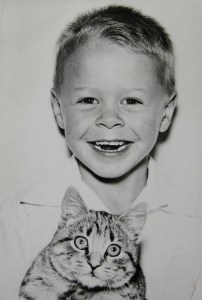 Being married is an interesting journey. You start off with a powerful cache of feeling, an idealized sense of this person you’re latching yourself to, and yet a firm grip on the point and purpose of your commitment. At least that was my experience. But learning about your mate is really the adventure, isn’t it? Pete was unlike any man I’d ever known. Quiet and laconic, like a lawyerly Gary Cooper, he was born in the Scandinavian-rich state of Minnesota (Norwegian and Swedish on respective sides of family), spent the wonder years in Southern California, Montana for that very impressionable high school era, then bounced between Washington and California for college. A major sports booster, he vacillates between team colors for UCLA and the Montana Grizzlies, and will even make note of Gonzaga on a good day.
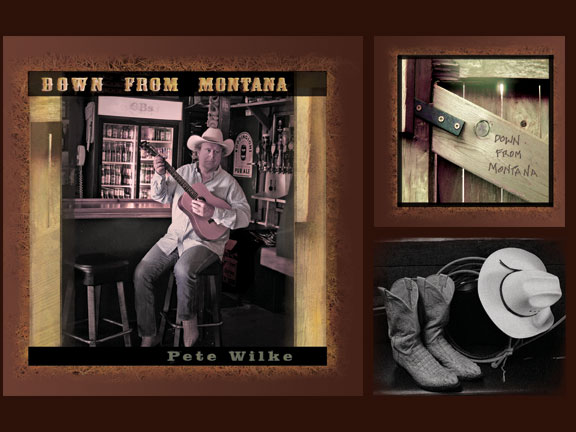
 It seems Montana is where he found a most inherent part of his identity; the rough and tumble cowboy spirit with a love for sports and the great outdoors and all that big sky appreciation of nature and its regal beauty. Regardless of where life took him after that period, Montana was in his blood and it remains an archetype of sorts; an almost mythical ideal of the balance between man and nature. In fact, when it came time for his most recent high school reunion, he took himself into a Nashville studio and recorded an entire original album of “brown grass” country music as a gift to his classmates called Down From Montana. What started as a reunion party favor ended up bringing him some stellar reviews (Country Stars Online) and a very loyal following of country music fans on Montana radio. Who knew? I didn’t.
In fact, I had no idea Pete had the heart of an artist. He was a highly respected attorney (Pete Wilke, Attorney for Independent Filmmakers), a former political activist, a tribal lawyer, and a beloved friend to many. But an artist? That I didn’t know. I also didn’t know he was funny. In fact, when a friend who’d heard I was getting married so soon after meeting Pete expressed concerns about my hasty decision by asking, “But does he make you laugh?,” I remembered seriously mulling the question—after all, that had been a standard prerequisite for most of my life. “No,” I answered honestly, “I can’t say he’s particularly funny.” But, I made very clear, he was KIND. And given my life history, kindness had surpassed humor as an essential mate trait somewhere around my mid-30’s. Deep, authentic, uncompromising kindness. Gold. And Pete had kindness down.
 And as a delightful bonus discovered not long into the relationship, it turns out he actually was funny. An alter-ego named “Stevie” whose take on life was simple and inanely satirical provided mirth during long car trips and late night conversations. Somewhere between music and mirth, I was discovering a whole new man behind the husband I was to marry.
On October 1, 1990, shortly after Pete got his grandfather to and from the clinic for his annual flu shot and before my three-day migraine kicked in, we drove to the courthouse in Mount Vernon, Washington, where Judge Gerald Mullen postponed his lunch to solemnly don a long black robe and, in the company of our two witnesses, court secretary Pam Green, and jovial bailiff, Harold Johnson, we took our vows. I remembered wondering ahead of time if the whole court-house/elopement scenario would feel generic and unemotional, but when Judge Mullen said the line, “The union into which you two are now about to enter is the closest and tenderest into which human being can come,” I was a goner. Something about that word “tenderest,” about the respect with which the judge was conducting this ceremony, just got me. I grabbed the back loop of Pete’s dress pants and held on for dear life, overcome by the gravity of what we were doing, suffused with the sense that something sacred had just happened, bad lighting be damned. Bailiff Johnson took our only wedding photos with my crappy 35 mm camera…most were out of focus and none were truly worthy of the moment, but the wonder of Photoshop in later years allowed me to bring them to at least some measure their inescapable value as the only photographic evidence of our momentous day. Here are three of my favorites:

And life went on. We moved from Seattle into my LA apartment. I got pregnant. We moved into a bigger house. He passed the California Bar. We had our son. We shared time with his daughter. We struggled with our careers, wrestled with money, had good times and bad. Life. Marriage. Parenthood. It was at some point in here I became more clearly aware of his musical talent. He had written me a song when we first got together called, “I’ve Just Got To Take This Chance With You,” and I remembered being surprised at how warm his voice was and the passion he put into his poetic writing. But it was over time that I was introduced to his rather deep repertoire of heartfelt country/rock songs written over the years, songs he’d sing as he sat in the living room banging on his battered left-handed guitar with our son, Dillon, looking on in awe. Pete might not have known what chords he was playing but he sure made it sound good! I was a fan, encouraged him to explore it further, and before long he found himself concocting a country musical built around his best songs: Country Rules (originally called Country! The Musical). It was a fantastic concept and we literally leaped into it with a “my Dad has a barn, I’ve got some curtains” kind of production frenzy.
This was an amazing period of creative collaboration for us and he was a killer producer. With no background, no real experience in the realm of musical theater production, this guy put together a show with some of the most talented people in Los Angeles (Kay Cole directing; Lauri Johnson, Gary Clark, Rod Weber; Ronna Jones, to name a few) and was invited to put it up at what was then the premiere country music venue in Orange County, The Crazy Horse Saloon. Through sheer determination and indefatigable effort, Pete made it happen like no one I’d ever seen and it was spectacular. The style was “environmental theater,” which meant we—the actors and singers—”worked” or played customers with the actual club as our set, singing, dancing, and emoting our way around the real customers and bona fide waitresses, with a very hot live band led by the exuberant Jeff Brown up on stage accompanying us. People were delighted and good reviews followed, most notably one that appeared on the front page of The LA Times Calendar section: (LA Times/John Roos: “Barbecue Theater”). It was sheer triumph for Pete.
A few years later we attempted to get the show on film, shooting an expanded, opened-up version at Buck Owen’s Crystal Palace in Bakersfield. But while the cast was again stellar (Dean Fortunato and Jennie Wilke Willens joining the group), the additional songs great, and all intentions good, the lack of budget and creative differences within the production team led to a disappointing result and the film was never completed. But Pete’s music transcended even that, and when his Down from Montana CD came out years later, there were many who also requested the show’s soundtrack, which he hadn’t yet put into the marketplace. He was working on getting that done, with plans to also get back into the studio with his Nashville team to do another record…
Five years ago Pete was crossing a street in El Segundo, CA, and a young man on a cellphone, looking the opposite direction as he pulled into traffic, hit him. There were broken bones, torn shoulders, damaged vertebrae, excruciating pain. There was surgery and physical therapy and so much fear and frustration at the impact on his life, but he worked hard to heal and two-and-a-half-years later he was almost at a clean bill of health. Then, in an inexplicable twist of repeated fate, there was another accident. Pete was in his car, stopped at a crosswalk waiting for a couple of pedestrians to make their way across Highland Avenue in Manhattan Beach, when a car being driven by a distracted driver smashed into him from behind at about 25 to 30 miles an hour with no attempt to brake. Pete’s head was turned slightly to the right, the impact was stunning, and amongst other injuries, his right frontal lobe sustained damage. MTBI they call it…mild traumatic brain injury. Mild because he can still walk and talk. The impact on his life, however, was anything but mild. In fact, nothing has been the same since.

This is a man who rarely took an aspirin, whose life was filled with athletics and running, one team sport or another. A man who hiked down and up the Grand Canyon almost every year and trekked through the Montana wilderness pheasant hunting every fall. A man for whom music and theater and singing and the whole gamut of sensual, creative, and aural pleasures was deeply appreciated. A man who longboarded down the Strand with his teenage son. That kind of man. But in the two-and-a-half-years since that inattentive driver looked away for too long and changed life as we knew it, Pete’s world has been about hospital visits, neurology treatments, pain management intervention, ear/hearing care, and pharmaceutical assistance for a myriad of injuries and symptoms including painful ear nerve damage, hearing loss, 24/7 tinnitus, excruciating and persistent head pain, cognitive challenges, persistent startle reflex, loss of certain elements of his emotional palette, etc.
Though the cognitive struggles have improved significantly, allowing him to continue and rebuild his law practice (which suffered in the first year after the injury), and the extreme nature of the head pain has subsided enough on a day-to-day basis to allow him to again enjoy many aspects of his life, the landscape of his existence—and ours as a couple, a family—has changed significantly. He has to wear hearing aids now and cannot hear well enough inside his head to sing or play guitar, yet he can no longer go to clubs to listen to music because the volume is intolerable; the same with movies. The Grand Canyon is out, hunting is a thing of the past, and he had to quit his softball team not only because the potential of further impact to his head would be devastating, but also because running and vigorous exercise ratchets up the tinnitus and head pain to excruciating levels. A planned hiking trip to the Bob Marshall Wilderness in Montana was canceled because altitude does the same, a trip to Europe with all its planes, boats and automobiles became too taxing; a rafting trip with our son proved over-ambitious, and even the volume at a small dinner party can push him to a tipping point that sends him home. Sometimes he can barely tolerate talking and silence has become a big part of our lives now. Anyone who knows me knows how hard that is!
 The pain level got so extreme earlier this year that he hit a full-blown crisis that resulted in him leaving home to live by himself for a couple of months in an attempt to quell the pain and noise inside his head and heart. It was a brutal experience for him, for me, for our family; one that has shaken us all to the core. In his absence I not only had to deal with my grief and the potential loss of the marriage and husband I’d known, but to confront my fears and inadequacies as “the wife of a brain damaged man.”
One thing that is very much missing from the treatment protocol of brain injury—traumatic or mild—is guidance and assistance not only to the injured party, but to their families as well. It is virtually impossible, as a neophyte to the injury and its many enigmatic results, to have any notion of what you’re getting into, to understand the full spectrum of imminent impact on the family system, the marriage, the personality of the injured; to know the best treatments, the most advantageous way to handle stress, the sense of isolation, etc. Whatever you think you know about it, you don’t know squat.
And yet there is no social worker to take your family’s hands after a diagnosis, no instructional program to attend, no support whatsoever for how to deal with this monolithic event. I was given no advice or information that would have alerted me to many of the unexpected ramifications of not only how a brain injured person might act, but how best to respond, how best to be a partner, a family member, a caretaker to that brain injured person. I discovered that in the entire city of Los Angeles there is not one support group specifically for families of the brain injured or the brain injured himself. This is a shocking deficit, particularly in this era of so many brain-injured athletes and returning vets dealing with the short- and long-term consequences of this most confounding injury. Luckily I was referred by Pete’s neurologist to a brain injury survivor who’d previously been in a support group at Cedars Sinai that was no longer in existence. She proved to be a desperately needed and deeply appreciated source of insight and perspective that only a person who’d gone through the injury could have offered. In a way, she saved us from total familial implosion.
After talking to her, it was abundantly clear that I needed to better educate myself on the injury, to learn what Pete actually needed from me versus what I thought I should be giving him. They call it the “invisible injury” for good reason: unlike with TBI (traumatic brain injury), where the injury and resultant symptoms are so obvious, MTBI patients can seem normal. They walk and talk and do many of the same things they used to. What is not readily understood is the “brain storm” (as one writer put it) that is going on inside their head. And the cause doesn’t have to be severe; my support group mentor was ten years into her recovery and her brain damage had been caused by standing up too quickly under a cabinet and smashing the back of her head against the bottom edge. It’s not hard to imagine how a stationary brain at a dead stop would react to being hit by a car moving 25 mph!
My re-education was all encompassing. I ordered books and read everything I could find online. I talked to doctors and therapists and alternative med practitioners. I sought the comfort and counsel of friends and family members. I gathered around me people I trusted—my brother, sisters, my dearest friends, my son and stepdaughter, all of whom were profoundly supportive throughout—and got through the days. I made adjustments in my thinking, my reactions, my expectations. I dealt with the fear that neither my husband, nor my life, would ever be the same. It was gut-wrenching and terrifying, but mostly my heart ached for the anguish Pete was experiencing and….I missed my sweet, good man.
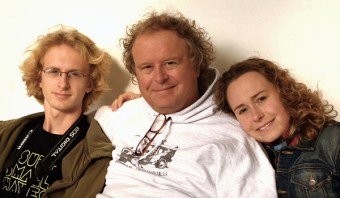
As difficult as it was, the time away proved restorative for Pete, and ultimately he came home. It was sometimes a confusing and often very challenging transition, but little by little life got back to some kind of normal. He reconnected with his kids, he was able to effectively move his practice forward, particularly as his client base once again resurged; the tinnitus, head and ear pain were still ever-present but definitely more manageable, and the rage and confusion he’d felt about this confounding injury evolved to a more tolerable level of acceptance. In fact, he’s so stoic about it that sometimes I forget he’s got buzzing and whirring going on in his ears every minute of every day, or that so many of the things he loved most in life—music, sports, activity—can no longer be experienced. His identity as a person, a man, a husband and father, has been compromised by this injury and that’s got to just get to him. I know when I really think about it all I just want to cry.
But he doesn’t cry; he just gets on with his life. He needs to rest more often during the day, take breaks from activities when the pain in his head gets too intense, and often by Friday night a long conversation with his wife is not doable. He doesn’t laugh as often, “Stevie” rarely makes an appearance these days (when he does it’s precious), but he’s doing the best he can. He’s taking care of his family, his work, the legal actions related to the accident. He’ll drive out to Norco to bring candy to an 80-year-old friend, he’ll stay in weekly touch with his godson, he’ll check in with his extended family, and bring me Pinkberry when I’m not expecting it. He’s living his life. He even picked up his guitar the other day and tried. It didn’t sound good to him, it didn’t feel good, but he tried. I hope he’ll try again.
As for us… we’re a “work in progress,” as he says. He still struggles with accessing his higher band emotions (empathy, compassion, love), a common result of frontal lobe damage and a particular consequence I struggle with. Some days are better than others. Sometimes I do a commendable job of dealing with it, others I’m a mess. Sometimes he seems fully engaged, other times he’s as cold and distant as a stranger. It’s hard for us both to realize that someone who loved and felt with such depth and intensity cannot fully get to those feelings at will… his neurologist says they’re there, somewhere in there, he just isn’t able to get to them… yet. There’s hope. But brain injury is a complex and really mystifying event, this I’ve learned, so I can’t help but wonder how long it will take for him to once again look at me with the full range of his feelings. I’ve learned from experience, and I’ve been ably taught by my support group mentor, that time is not to be predicted, watched, gauged. It’s the worn but wise cliche of “one day at a time.” And it takes time… lots of time… to heal a brain.
 But he’s here. He may be different in some ways from the man he was, but the man who is here, who is smiling at me from across the room, who loves me however he can love me and works so hard to find solutions and compensations for where he’s lacking, is still the man I love. The concept of “for better or worse” was never so poignantly felt as it has been for both of us this year, and this is when you realize what stuff your marriage is made of. Not whether he makes you laugh or has a big enough career or can still write you musical poetry. None of that ultimately matters. What matters is resilience, loyalty, commitment, empathy, compassion. What matters is remembering and re-educating. Holding on and letting go as needed. Understanding that this “tenderest union” is tough as well. Tough enough to endure and remain grounded even in the worst of situations.
And so we celebrate our twenty years. Older, less dreamy-eyed, battered and sometimes weary of it all, but oh so certain of who we are and who we are to each other. After twenty years it’s sometimes hard to think of new and inspiring things to write in an anniversary card, but I saw this quote and it touched me. As sappy as it may seem, it’s what I want to put inside my anniversary card because it so resonates with my thoughts about marriage at this juncture: “We need a witness to our lives. There’s a billion people on the planet, what does any one life really mean? But in a marriage, you’re promising to care about everything. The good things, the bad things, the terrible things, the mundane things, all of it, all of the time, every day. You’re saying, ‘Your life will not go unnoticed because I will notice it. Your life will not go unwitnessed because I will be your witness’.”

I will be your witness, Pete. I might not do it perfectly, I might not always get it right, but I will be your witness, if you’ll let me, for another twenty years. And maybe another twenty after that. We’ll see how it goes… we know how tricky time and life can be but I’m holding a good thought. Thank you for your never-ending effort to get better, to survive this. It does mean everything. Happy Anniversary…My Good Good Man
Down From Montana CD cover by Dillon Wilke
All other photographs courtesy of Lorraine Devon Wilke

Visit www.lorrainedevonwilke.com for details and links to LDW’s books, music, photography, and articles.

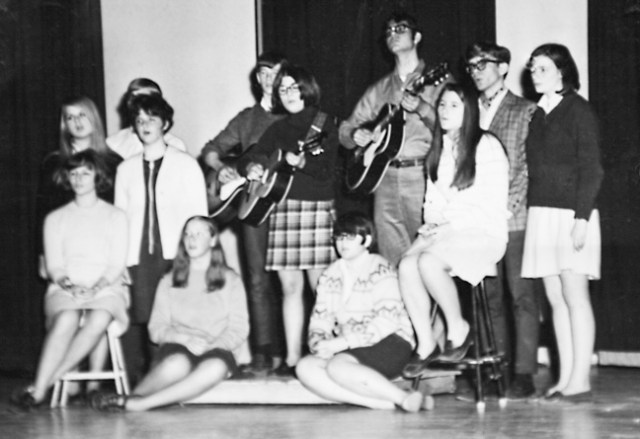
 This was not a minor question nor a minor event. Mudaco (Music Dance Comedy) was the premiere talent show of the school year and we, TOOU — The Organization of Us — viewed it as a pivotal performance to cap a year of folk singing success and that song, “Leaving On a Jet Plane,” was our signature number. To have it snatched from us moments into dress rehearsal was unfathomable. By a girl who no one in that school could possibly compete with, a girl who was a bona fide celebrity by virtue of having won the WLS “Big Break Contest” at 14, subsequently scoring a record deal, then just continuing on in high school as the gorgeous guitar slinging, singing/songwriting phenomenon with her soulful eyes and long, swinging brunette hair, and well…who could compete with that?
 Not me. Not us. We were from a another planet. Like the “Glee” geeks without the choreography. The Organization of Us, or TOOU as we were acronymically known, was just a loose band of earnest teenagers originally gathered to folk-sing along to the new and somewhat controversial “folk Mass” about to debut at St. Thomas Church in Crystal Lake, Illinois. It was the vaunted Summer of Love, 1968, with its ubiquitous mix of flower power, draft card drama and lentil-soup fueled protests against the Viet Nam war, and TOOU became safe harbor for those of us too young to fully embrace the hippie lifestyle but aware enough to rebel against…something. Launching the Folk Mass with its banging guitars, bouncing energy and unconventional repertoire would have to do. So while my oldest sister marched with political fervor in her John Lennon glasses and Janis hair, I spent that summer reveling in Summer Blonde, Sergio Mendes and my first boyfriend. But more than anything, that summer I fell in love with this eclectic group of singers and guitarists who met in the church basement to pound out folky versions of “Holy Holy Holy” and the “Our Father.” That boy I liked was one of the movers and shakers and I was lucky enough to have him and the vocal chops to move up quickly in the TOOU performing hierarchy. It was an unforgettable summer.
 Our success with the folk Mass, which ultimately became the most attended service at the church, led to a burgeoning slate of outside engagements, not least of which was our first non-secular gig at some business or school event (can’t remember). As if breaking out of church mode wasn’t heady enough, it was also our first paying gig…$50 to split between a group of 15 or so. And we were delighted. I think it was then that we realized we needed a name; we couldn’t just be the “St. Thomas folk singers.” We
  needed a moniker, something with heft and buzz. It’s my recollection that I came up with the very era-centric name of The Organization of Us. Or maybe I just came up with the rather clumsy acronym TOOU, but whatever the history, the name stuck. Before long we were performing at parties, beach gatherings, other church events, anywhere we could squeeze into a corner or a picnic table and start singing.
  TOOU became a formidable performance behemoth that sometimes included up to 25 kids, many of whom played guitars, tambourines, penny whistles and various other percussion instruments and, quite frankly, we took up so much space we simply began to require bigger venues! There were the performers from my family – sisters Peg, Mary and me and, in later incarnations, brothers Paul and Tom. There were the O’Reillys, 14 siblings, most of whom could sing like birds, all of whom were enthusiastic performers: Chris, Beau, Cecelie, Gloria, Dorothy, Beth Ann, Jamie, well…there were lots of them, some of whom joined later. Then there was our guitarist extraordinaire, Pete Swenson, who we’d force to play “Classical Gas” as often as we could because he was simply brilliant at it. His sister Patti, Ken Polnow, Andi LeBlanc, Wendy Treptow, Karen Tefft, Tom Mooney, Joe Haase, Kent Tarpley; Cris Vosti.
  Occasionally Ed Csech would show up with his rocker edge and cigarette smoke and I’d sing songs like Simon and Garfunkle’s “The Boxer” with him. He played 12 string better than anyone I ever knew, then or now. People came and went (check the many names under these photos), it was an ever-fluid line-up, with some of us — the core group — always there to anchor the show. And with our excellent musicians, clear voices, and tight harmonies that stacked up high, sweet and all Phil Spectorish wall-of-sound, we were often very, very good.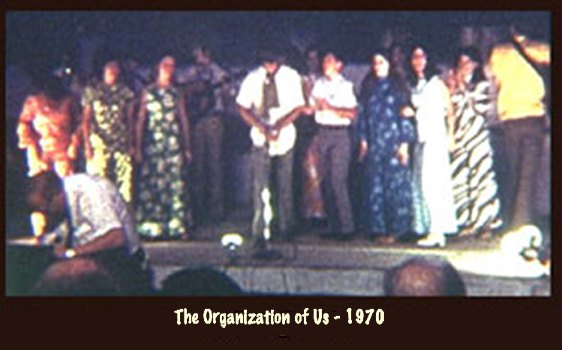
 god-awful 60’s patterned jump suits and jumpy-jittery stage moves (you should see the tape from which this picture, above, was pulled!) and on that stage, we were the stars…we snared first prize in front of a crowd of family, pig farmers, 4-H kids hugging their ribbons and our many fans from all over McHenry County. It was a seminal moment of sweet victory, one that is unmatched in its youthful, exuberant joy. For some of the group heading off to college, it was a last, perfect performance. For those of us remaining, it was a feat we would never replicate. Though we continued throughout the next year, it felt like the original incarnation had peaked and the younger kids that came in and took over ultimately formed their own version of TOOU.
 It was with these fellows that I did my first recordings, cutting two memorable tracks with the titles “Rome Didn’t Fall In a Day” and “Our Love Is Just Like an Old Pinball Machine (the Kind That It Don’t Take Much To Tilt”)…I never did get copies, which is unfortunate; I’m sure they were impressive!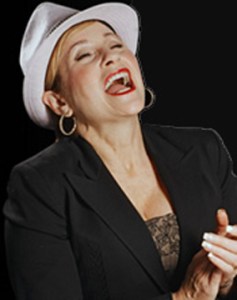


 Knee-deep in the pursuit of rock and roll dreams, I faced the ’80s like so many other pavement-pounding, hair-sprayed, idealistic artists of the era: driven, sartorially questionable, and usually broke. Too many years on the road with various cover bands—covering not only the Top-40 of the day but most of the west, mid-west and southwest by car and van—left me weary of musical circles headed nowhere. It was clear the time had come to get serious about my destiny. I was to be a rock n’ roll star. I needed to get on with it. That meant an original band and a job to support it.
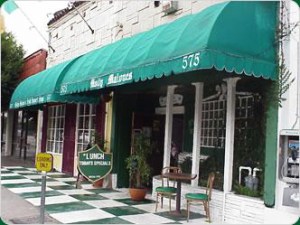 one of the many hearts of Los Angeles; very casual, lunchtime menu, just cocktails at night. Small enough room, easy enough uniform, loose enough management style (i.e., lots of staff and management drinking shenanigans) and on most nights, plenty enough cash to pocket. As good as it gets. Nowadays Molly Malone’s is a bona fidedly hip music venue with an expansive stage area, an impressive dinner menu and a respectively spiffed-up decor; back then it was a smoky, scruffy, one-room pub where hardcore drinkers came to suck down Jameson shots and Black n’ Tans, and get into fist-fights that ended with sweaty man-hugs and often — to my mercenary delight — loose wads of cash knocked under sticky tables. It was a wild place filled with Irish immigrants, wannabe Irish (particularly on St. Patrick’s Day), off-duty (and occasionally on-duty) LAPD, and a contingent of rock n’ roll hipsters (a harbinger of the evolution to come).

 The largest painting was of Angela Hanlon. It hung in clear view over the entrance and depicted her in all her youthful, lovely splendor. Other paintings were of bar scenes, street scenes, but most were of the people and faces that came and went through the swinging doors of that pub; the regulars, the Molly Malone’s coterie. And everyone who walked through those doors wanted to be one of the faces Neil painted, everyone. Few were. And you had to be asked. There was no appealing to him, no requests, no hinting; no prancing around commenting on “how nice it would be to be up on these walls.” No one got up there unless Neil wanted to paint them, wanted to put them up there, and to be asked, to be chosen, was an honor like no other.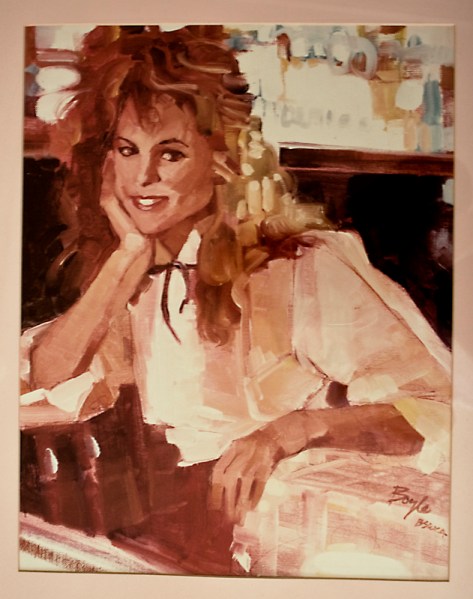


 guide that gets us through the shoals with instruction and reassurances that whatever we’re thinking/feeling/experiencing is simply part of that phase, hang on, we’re all going through it, nothing to be afraid of.
 It’s a worthy topic this time of year when yet another fresh batch of graduating 18-year-olds and their beleaguered parents are faced with this unavoidable and monumental transition. It might be instructional to break it down. Because here’s the truth: like all other phases of life, all other Rites of Passage – whether teething, teening, or reluctantly senioring – NONE of it is the same for all of us. No advice, no analysis, no remedy applies unanimously. We’re all going through our own version. Of everything. You may be gleefully booking your cruise for September or planning that first post-child remodel on the house, but I’m not. I’m dealing with the fact that I had a very cool roommate for 18 years and now he’s moving out. And I’m going to miss him.
 imply inordinate neediness on my part by making the point. No one wants him to fly more than I do. Nor is anyone more aware that it’s time to let go. Just say, “Oh, honey, I understand…you’re going to miss him… it’ll get better.” That’s all that’s needed.
 3. Try to avoid: “You’ll be surprised how nice it is when you don’t have to do his laundry or look at his messy room anymore.” That’ll be surprising? I’ve been looking forward to that for years! But, frankly, regardless of dirty clothes or the bomb site that is his room, I’ve always loved knowing he was just down the hall, ready to wake up and make me laugh, help me with my website or talk to me about his girlfriend. If you know me, you’ll understand why I might be found napping on the well-made bed in his empty room every once in a while. Don’t call the shrink… it’s my own form of therapy.
 Parenthood is one of the few relationships that comes with a certain planned obsolescence. We go into it fully knowing we’ve got to leap now and let go later. There’s no other such deal in life: we get married and the plan is till death do us part. It doesn’t always work out but that’s the idea… we aren’t typically required to give it up at a preordained time. Same with friends; we make a great friend and there is absolutely no reason to believe we can’t keep them through the dotage years. A loving pet is under our feet and in our beds until the very end.




You must be logged in to post a comment.