
Aging While Woman… How Dare We

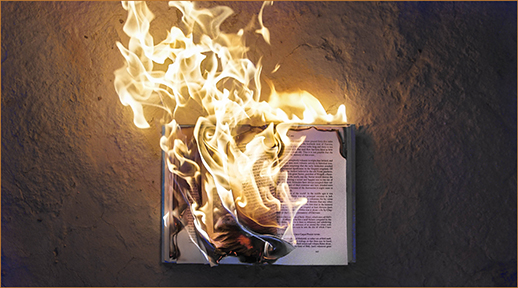
Photo by Luis Machado on Unsplash

I recently saw a picture of a very famous pop star (who shall remain nameless because this is not about shaming anyone), and I only knew it was her because the caption said so. Had it not, I might have guessed anyway but with fairly significant dollops of incredulity, because this particular pop star looked so completely alien to me, to her former self, that she was nothing like the sassy chick she’d been in the olden days of our mutual young adulthood. And not because she’d gotten older, but because at some point while getting older she completely re-manufactured her physical visage.

Which was sad. Because I liked her face. Now I can’t find it.

Let’s assume her cosmetic transformation was by choice — because it’s doubtful anyone could get this particular woman to do anything she didn’t want to do. But let’s also admit that the choice was likely pressured by the fact that she’s in an industry and at a time when youth and beauty are vaunted above all else, and her having the audacity to do that unthinkable thing — aging while woman — would surely have made the world stop spinning and fans fall to their knees in wailing protest had she not put herself through the plastic factory.

Which is also sad.

I’m not picking on this particular woman specifically. I could have just as easily seen a snap of any one of the preternaturally glacial mugs of any number of A-list actresses, singers, influencers, etc., and felt the urge to scream, “We are allowed to grow old, dammit!” Except… we’re not really, are we?

I read an InStyle article recently in which Sarah Jessica Parker, getting rightfully defiant about the sexist, ageist “chatter” of fans disturbed by her visible aging in recent photos, brilliantly remarked, “I know what I look like. I have no choice. What am I going to do about it? Stop aging? Disappear?”

Exactly. Though, given the ageist bent of the American zeitgeist, it’s likely a good number of people would have answered, “Yes. That’s exactly what you should do. Disappear.”

But they’re wrong and she’s right. Her defiance, her willingness to continue putting that lovely, aging face forward to continue doing her excellent work is quite applause worthy. That takes courage in today’s climate. And I love her aging face. I understand her aging face. Because mine is aging too. As is yours. We’re all aging, every day, every one of us, whether that cherry-cheeked three-year-old or the spry twenty-something over there smirking. We’re all in this together, just at different points of the ride.

Sadly, there’s another response to Sarah’s question, one that’s being articulated by many, many woman who don’t have her (or Helen Mirren’s, or Judi Dench’s, or Catherine O’Hara’s) confidence to boldly embrace their age: “What you’re going to do about it, you ask?? You’re going to get thee to a cosmetic surgeon tout suite, and do any and everything possible, imaginable, available to remove all evidence of your natural age, cuz, sister, we will not be defined by our lines, wrinkles, droops, sags, and gray bits!”

Though it seems we can be defined by our willingness to manufacture youth at any cost. I’m convinced it’s a form of Stockholm Syndrome.

I’m not only seeing older women, particularly in the media though certainly not exclusively, succumb to this tortuous, expensive, sometimes self-mutilating response to aging (see Linda Evangelista, amongst others), I’m seeing younger and younger women jump on the train as soon as a line shows up on their face, leading to a strange demographic of attractive women who start early to resemble large, lovely, plastic dolls.

I’ve taken to watching international television these days not only because their series tend to be very good, but because I relish the opportunity to view men and women of certain ages being allowed to actually look those ages. That’s a revelation, really, considering that every FBI agent, doctor, cop, teacher, nurse, or firefighter on American TV looks like a model, something I noted in a Huff Post piece I wrote a zillion years ago called, Why American Women Hate Their Faces and What They Could Learn From the Brits.

As for that aging three-year-old: the difference between her and your fifty-something cousin Mary is that Mary is considered on the downslope of life and, therefore, she reminds us of death. We don’t like death, we don’t like being reminded of death, so we don’t like Mary. And even if we can put aside death as a trigger, we also don’t like Mary because she’s not as sexually appealing as Americans like their women, and once that happens, she’s of no particular value. Kind of like Tudor queens who lost favor and ended up losing their heads. We don’t behead our women for aging out, we just shame them into surgery.

We need to stop that. We need to evolve as a society past this sexist, ageist, self-flagellating attitude. Because it’s only perception, not reality. Once it’s been decided (as it has) that the only face of merit is a young one, we’ve demonized and made terrifying one of the most inevitable, unavoidable, and universally shared experiences of human life: aging. Certainly we women have it within us to reject that script.

As one commenter, Lucy Fox, so beautifully put it in our Twitter conversation on the “aging while woman” topic: “I embrace it, as I’ve known a few people who would have loved the chance to get wrinkles but they didn’t get enough time to. People need to recognise the privilege of aging rather than vilifying it.”

I couldn’t have said it better myself.


Visit www.lorrainedevonwilke.com for details and links to LDW’s books, music, photography, and articles.


In the Image of a Father… Redux

Several years ago I wrote this piece about fathers and fatherhood, moved by the holiday to express some thoughts on the topic. As I sit here in 2021, thinking about my own father—gone now for almost 22 years—while blessedly, lovingly, still able to admire the parenting skills of the very alive man I married, I am once again moved by the role men play in the process of life’s continuation. The piece below makes reference to Mad Men, a series that, while not current, remains an interesting treatise on “fatherhood” from its anachronistic point of view… so it still holds; thought I’d “redux” it… Enjoy the read/re-read!   

  Noble fathers have noble children. ~ Euripides

I was not initially hitched to the Mad Men bandwagon as it hurled its way to phenomenon status; I missed the kick-off and never jumped on. But once the media analyses and water-cooler accolades became so hyperbolic as to raise the show to “Breathlessly Zeitgeisty Must-See TV,” I knew I had to get with the program; it’s bad enough I never watched an episode of Survivor!

So I’ve been Netflixing the series and, I have to say, it is a fascinating snapshot of a historical time teetering on the brink of explosion. It well depicts the era’s style and panache (now called “mid century”), and paints a clever and sometimes unsettling anthropological thumbnail of human nature at a point when society was remarkably different. While it focuses mainly on only one or two class sub-sets, it does a good job of breathing life into the anachronistic “swells” and “dolls” of the jargon, the girdles and slicked back hair, and the propensity for unrestrained smoking and drinking (after watching several episodes I felt both asthmatic and buzzed!). But what it illustrates most pointedly is the distance we’ve come in our gender politics.

my-boys

I was a child during those years and though aware of the more superficial elements, was clueless to the nuances and expectations of the roles of men and women in how they related to each other and certainly as parents. It’s one of the truer clichés of the time that “women’s work” was mostly defined as homemaker, house cleaner (unless affluent enough to afford “help”), and primary parent. Despite the Madison Avenue secretaries and the exceptional women who worked their way up toward the glass ceiling (ala Mad Men’s Peggy Olson), most women carried the weight of child raising, and Dads would show up after cocktails to give big hugs, have dinner, then go off to do “man” things while Mom put the kids to bed. Fathers were loving and involved in their way, but the extent to which they were hands-on was minimal. And while certainly there are still fathers operating from the antiquated paradigm of Don Draper, they’re a different breed these days, the product of an evolving and equalizing culture.

Our views of motherhood have remained fairly constant; it’s the role of “father” that has fluctuated and changed with the times. Men’s life expectancy is still up to six years shorter than women’s so, to put it bluntly, Daddies die sooner. While more women work outside the home than ever before, men still rely on them to take the larger role in parenting, meaning Dad’s intimacy and influence with his children is commensurately less. Some family compositions simply transcend without a traditional father: post-divorce custodial mothers, families with deceased fathers, single mothers who never married, same-sex mothers, etc. Statistics show that these families can thrive and be remarkably “whole” and functioning without a male figure, so the question remains: How essential is a father these days?

tom-benIn families that have them? Very essential. It’s not whether families can survive without a father – they can, that is well documented. It’s whether a family that has a father has one that is fully present, involved, and contributing in the most effective ways possible for a child’s best shot at success.

Scores of books and studies have dissected, analyzed, and deconstructed the role and there is likely no man on this earth who doesn’t have at least some notion of the task based on his own experience as a child. Typically a man either admires the parenting he received and mimics it, or abhors his own father’s choices and becomes determined to make better ones. Which gets right to the point.

Modeling. A father is the first male role model a child has. In most families the father is the BIGGEST, most influential authority figure to first set boundaries, examples, and expectations. Through him a boy conjures his first idea of a man, picking up the nuances, proclivities and emotional expressions he will emulate in his own version of the role. In a father, a girl sees All Men – at least in the early years. She learns what to expect from other men by virtue of how her father treats her (and her mother). Through him, she sets her bar for the level of respect she’ll require, the honor she’ll demand, the self-confidence she’ll exude, and the aspirations she’ll pursue.

It’s a big responsibility, no doubt about it. We have come a long way from the Mad Men who saw their children as so many props, but new eras bring new problems and in a world where too many young men advance into adulthood needing anger management skills, a better understanding of how to be strong without being a bully, and a clearer sense of the purpose of honor and integrity, a father’s work is cut out for him. When a daughter sublimates herself in her relationships with men, loses her sense of confidence in the face of career adversity, or can’t determine how strong a woman to be without losing appeal, she clearly needs wise fathering to help reconstruct her perspective.

There are as many ways to be a good father as there are fathers and this is not to say a mother is any less important to the outcome of a child. But a father’s role is unique, specific, and very powerful. As we celebrate Father’s Day, it merits mention, as Euripides stated, that “noble fathers have noble children.” So wear that well, Dad, celebrate your nobility. Embrace your role and never forget you hold center stage – and always will – in the eyes of the children celebrating this day with you.

A very Happy Father’s Day to all the “noble fathers” in my life.

fatherdaughter

LDW w glasses


Visit www.lorrainedevonwilke.com for details and links to LDW’s books, music, photography, and articles.

Empty Nest, EPILOGUE: He’s Getting Married In the Morning…

OK, not actually the morning, more like “late afternoon/evening”… and I doubt bells are gonna chime — I’m pretty  sure they don’t do that for the smaller events —  and certainly I’ll have no trouble getting to the church on time; I tend to be relentlessly prompt… but still… well, you get the gist.

The boy whose tales I’ve detailed throughout my six-part “Empty Nest Series” is getting married to the woman of his dreams on what will be a cool, sunny Friday after a maddening year of fits, starts, and global mayhem, arriving at a milestone that’s as sweet and life-affirming as milestones get, and well… let’s have a whopper.

I have found myself awash in every kind of memory and emotion as we’ve approached the day, bouncing from excited anticipation to the sheer incredulousness that we’ve reached the point in each of our trajectories that this event is absolutely natural, welcomed, and celebrated. A new family of their own to build, a new daughter-in-law for us to love (as we already do); a new family of in-laws, warm, loving people we’re delighted to get to know and join in creating a circle of wagons for the newlyweds.

But still… wasn’t he just putting Pokemon binders together, clanging around the patio with his skateboard, hollering “you’re not my fwiend!” every time he disagreed with my parenting choices? It’s such a cliche, one of the most ubiquitous in fact, yet one that proves itself to be oh, so true: it all flies by so fast. Even when you’re paying attention; even when you remind yourself it’s flying by; even when it still feels like there are years and years and years of childhood, and family trips, and teenage meltdowns, and college essays left to wrangle. There were… and now we’re here, many years past those moments, to a new moment, a new chapter, a new milestone.

I spent months of the 2020 lockdown digitizing our countless home videos from the early 90s on, and let me tell you: you try doing that and not getting caught up in an existential wonderland of tripping timelines and time-travel confusions about who and what is in the here and now, and why does then feel so real and close and tangible — touchable — when now is what is?

I sat transferring those tapes of him at two, three, ten, fourteen, and it was like that boy, that young, crazy, hilarious little boy was, indeed, the son I know and love. So viscerally familiar, so HIM, so right here… in this moment. And yet he’s not, not that boy, not in the here and now. That boy is relegated to tape, to memory, to the cloud, the past. And here, now, across the room, in a full beard, with glasses and headphones as he conducts a Zoom meeting with civil engineers he’s managing on a major Los Angeles mall project, is the boy that is. The man. In the here-and-now. I adore him. And I miss that crazy little boy. I feel both. It’s nuts, I know, but that’s how it is. I have a feeling I’m not the only one who wrestles with that paradox.

And that bearded man is getting married in the morning (well, not the morning… but we’ve already been over that) and I feel… happy. Grateful he’s found someone to love who’s good, honest, passionate, connected, and inspiring. Who’s dedicated not only to making their lives as a couple, as a family, as good as it can possibly be, but is driven to make the world around her a better place, too. There’s so much about her to admire, so much to love and celebrate; she makes a perfect fit for this man I parented who embodies those same traits and characteristics. They are a good match. And having made my own good match to a good man, I know how essential that is. It’s everything.

So I feel joy. I feel peace… and satisfaction. I also feel another little letting go. As it should be. As it must be. I know I will always hold my mantle of mother, teacher, mentor, and beloved friend, but I pass to his beautiful new wife the role of “primary.” As it should be. He’s in good hands. As is she. We’re a lucky family all around.

“Ding dong the bells are gonna chime”… even if only in my smiling imagination.


Kissing at Bridge photo by Dillon Wilke
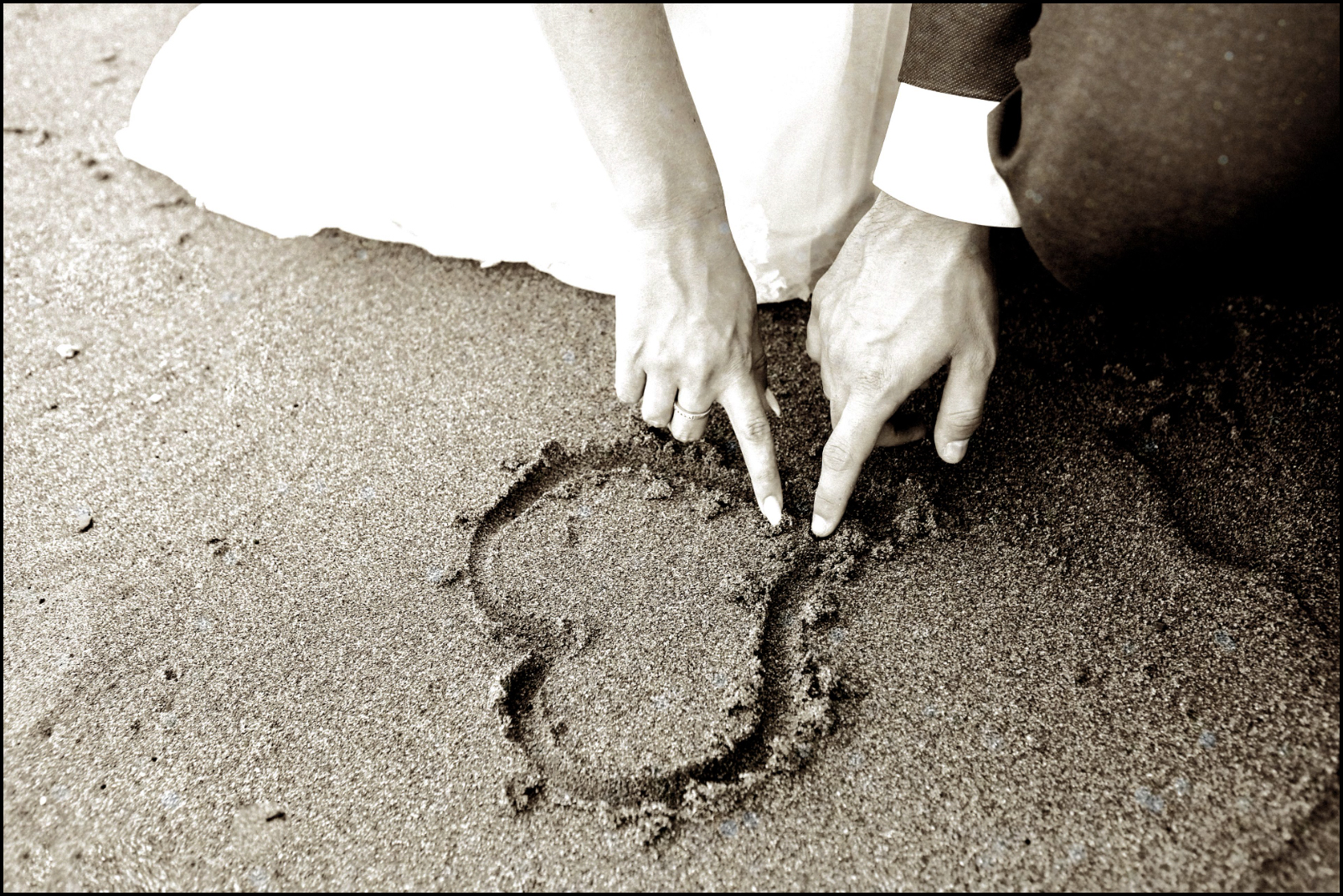
Heart in Sand photo by Nick Karvounis on Unsplash

To read the entire Empty Nest series, click links below:

• Empty Nest Pt 1: My Very Cool Roommate Is Moving Out…
• Empty Nest Pt 2: Empty ‘Next’ Syndrome…Coming Home
• Empty Nest Pt. 3: See You In November!
Empty Nest Pt. 4: He’s Leaving Home AGAIN… Bye Bye
Empty Nest Pt. 5: It’s a Wrap… Well, Almost
Empty Nest Pt. 6: the Final Chapter: With Keys In Hand, He Flies…
Empty Nest, EPILOGUE: He’s Getting Married in the Morning


Visit www.lorrainedevonwilke.com for details and links to LDW’s books, music, photography, and articles.
So, My Hubby Wrote a Novel….

Life goes on and people do what they do, and then one day a person you know very well does something creatively unexpected and you’re so very surprised but, at the same time, not so much, because they’ve always been surprisingly creative, and, after exploring the situation in depth, you discover how incredibly impressive and amazing it all is, and you’re delighted to have the opportunity to talk about a book that has nothing whatsoever to do with yours! 🙂 

My very talented husband, Pete Wilke, just published his first novel, an “irreverent legal drama” titled CONFIDENTIALITY.

The short description:

Exploring the ephemeral meaning of its title, Confidentiality jumps into the tumultuous world of private practicing attorney, Robert Sinclair, currently tangling with a crumbling marriage, a persistent brain injury, and an alluring associate while defending the most complex, and potentially dangerous, civil case of his career. A slate of colorful characters bring to life a narrative that’s compelling from a legal standpoint, provocative from a psychological one, and as wildly entertaining and unpredictable as the roller coaster ride that is Robert Sinclair’s life.

It is a wild read.

For those who don’t know him, a little background: Pete is a long-time Los Angeles-area attorney specializing in securities, private placement, and investor documentation, particularly for emerging businesses, and independent film production and its many ancillary elements.

That’s his legal practice.

He’s also a writer and producer; his original musical, Country the Musical, was produced to critical acclaim (LA Times, etc.) at Santa Ana’s Crazy Horse Steakhouse & Saloon in 1999, and later for a taped production (in 2000) at Buck Owens’ Crystal Palace in Bakersfield. All twenty of the soundtrack songs (music and lyrics written by Pete), were recorded in both Nashville and Los Angeles, and can be heard by accessing the Music Page on the show’s website, or by clicking over to the show’s SoundCloud page.

Additionally a solo singer/songwriter in his own right, he wrote, produced, and performed a 12-song album titled, Down From Montana, which was recorded in Nashville with some of the city’s finest players and producers. The project has been enthusiastically received by listeners across the country, including Montana radio stations, and can be accessed on YouTubeSpotify, and SoundCloud.

Then, more recently, he decided take another creative leap—this time in “novel” form. He conjured up a story that taps his estimable legal expertise, his appreciation for irreverent humor, as well as his unique storytelling voice, and came up with Confidentiality. It’s a complex, sexy, suspenseful read, and I know he hopes you enjoy it as much as he did writing it… and he enjoyed it very much!

I hope you’ll grab a copy, e-book or print, and enjoy the ride! And since you’ve heard me say it many times, I know you know how helpful reviews are, so hope you’ll leave a line or two after you’ve had a read!

A preemptive “thank you” for supporting my  guy!


Visit www.lorrainedevonwilke.com for details and links to LDW’s books, music, photography, and articles.

America. Land of the Free, Home of the…Incredibly Selfish?

Listening to an elected congressman, too-loose mask slipping below his nose, finger pointing, voice crackling with indignation, demand to know just when Americans can “get their liberty and freedoms back,” might have, in other circumstances, inspired a round of applause. After all, our liberties and freedoms are what make us uniquely American, for God’s sake, so any attempt to diminish, limit, or impose upon those vaunted privileges is certainly something to protest.

Of course, in this case we’re talking about ever-contrarian, “I scream before I talk” Republican congressman, Jim Jordan, whose permanently aggrieved brand of discourse has been painfully endured for years (who could forget the Benghazi hearings?), and who’s now decided that Dr. Anthony Fauci, with his prescription of precautions — masks, distancing, hand washing — designed to mitigate the already horrific death toll of COVID (nearing 600,000 Americans), is to be excoriated for the audacity of presuming Americans give a damn about each other. When a sitting congressman frames commonsense steps to help keep each other healthy and safe as denials of our “liberties and freedoms,” you know you are in the Land of the Selfish. Jim Jordan is, apparently, a leader in that land As we watch and listen to right wing pundits, Republican senators and representatives, conservative media, et al., take “bold” and outspoken stands against science, against logic, against any notion of “for the greater good,” I’m struck by how uniquely selfish Americans are. Maybe we always were — considering Manifest Destiny and the scourge of slavery that seems a good bet — but at this particular historical conflation of a deadly global pandemic, systemic racism, and the ongoing, never-ending, deeply disturbing epidemic of gun violence, that selfishness has come into high relief, making clear how destructive misunderstandings about the true definitions of “liberty and freedom” have become. If you were to listen to a Republican, whether a stalwart oldie or one of the newer, more incendiary of the party, you’d believe that “liberties and freedoms” mean, “I can do, have, be, own, behave, respond, react in any way I want, regardless of impact, damage, or injury to others.” This blanket mandate extends to everything from wearing a mask during a pandemic, supporting logical gun laws, right up to everyday things like keeping your dog on a leash, or not calling the police when a Black person sits in a Starbucks. Why are Americans so selfish? How have they twisted the notion of personal freedom into expressions of “carelessness” in its most literal definition? Societies and communities have survived over the hundreds of years of this country because of rules and laws that evolved out of need, as a response to events, reaction to problems; the understanding that a thriving whole is nurtured by the compassionate one. What we’ve got now is a toxic brand of individualism that’s really more about entitlement mixed with hardcore self-centeredness. According to Jim Jordan and other hissy-fitting right wingers, just the simple, self-and-other protective act of wearing a mask during a raging pandemic is his — their — “lost liberty.” Rather than frame it as a small but effective step they can participate in to help keep others safe, help the country overcome the pandemic, even help keep themselves from being infected, they’ve chosen to stamp their feet and declare such an “ask” as something oppressive, an infringement, because, dammit, that cloth on my face is just an intolerable assault on my personal liberties and freedoms! The sheer childishness of that kind of response to a thoughtful, simple action meant to assist the “greater good” is just one small example of the great plague of American selfishness. Instead of the solidarity of, “we’re all in this together; what can we do to help our fellow Americans?”, we get a grown man waving his arms around, demanding that the renowned scientist he’s berating give him a date, a metric, dammit, for when all this foolishness will be over. Even the question is the height of stupidity, given that NO ONE can predict when this will all be over, but asking is endemic of the juvenile, tantrumming position this man and others have taken. Meanwhile, the daily average of new COVID cases is over 70,000, but JIM JORDAN WANTS HIS LIBERTIES BACK. I sometimes think about Great Britain in WWII, how the citizens of that country had to work together, in union, solidarity, and with great deprivation, to survive the almost-year-long Nazi “blitz,” and imagine that if Americans were asked to make such a sacrifice, Jim Jordan and the Republicans would be screeching about the oppression of blackout curtains and rationed butter. It seems whatever admirable independence is part of the American DNA has been, for far too many, subverted into a kind of corrosive civic narcissism. “What I need, want, think, demand is all that matters, damn the Nazis!” Would we have survived as well as England? I doubt it. We see that same American egocentrism play out in the deadly, relentless gun debate, where rabid 2A zealots like Lauren Boebert, Marjorie Taylor Greene, and so many others have prioritized their rights and freedoms over any discussion whatsoever that might help mitigate the over-ease of gun purchases, the lack of enforced regulations and due diligence of gun purchasers; the rethinking of a Constitutional amendment that is antiquated, misinterpreted, and couldn’t possibly have foreseen the current rash of assault weaponry and the country’s appetite to own such guns. As we’re daily met with news reports of mass shootings, domestic gun violence, suicides, gang wars, death on a massive scale, there feels to be no answers, because that egocentrism is so pervasive, so loud and threatening, so almost-violent in its pushback, that sane people looking for solutions to our gun violence epidemic are shouted down and finger-wagged much like Dr. Fauci in front of a sputtering Jim Jordan. What is the answer? I don’t know. Well, actually, I do know: the answer is that Americans have to evolve beyond their conviction that their personal independence — “liberties and freedoms” —is rationale, justification, defense of selfishness. Just as Brits joined in solidarity to survive the deadly onslaught on their country without framing it as a loss of liberty and freedom, so can Americans do the same regarding our particular “wars.” Of course, that would take an attitude adjustment. A reframing of “united states.” A willingness to care about, empathize with, and humanize those outside our personal circles to actually DO what’s best for the greatest good. Are Americans capable of that at this moment in time? As I watch Jim Jordan haranguing Fauci, as I read Boebert’s and Greene’s toxic pro-gun tweets, as I note the racism and bigotry insinuated in our systems, as I witness continued refusal to take necessary steps to stymie the gun wars, I fear that Americans of the 21st century have lost their ability, their will, their compassion to act in global, national, and personal solidarity to make the world a safer, more just, more functional place for all people. Are we really going to let that be our American identity? I hope not. My liberties and freedoms are not threatened by wearing a mask. By pushing for better gun laws. By considering equity as essential. In fact, my ability to participate in and contribute to those goals IS what makes me a good American. Think about that, Jim Jordan.

Photo of Jim Jordan by Gage Skidmore @ Creative Commons


Visit www.lorrainedevonwilke.com for details and links to LDW’s books, music, photography, and articles.

Active Choosing: The Art & Craft of Finding True Love

After mentioning the 31st anniversary of my husband’s and my first date (Disneyland: he fell in love on Splash Mountain, for me it was his hand on my forehead after Star Tours queasiness), an interviewer marveled at the longevity of my marriage and asked: “How’d you do it? What advice do you have?”, making me feel like a 100-year-old woman with “wisdoms.” But still, I appreciated the awe and wonder because I remember feeling just as awestruck around long-marrieds back before I figured it out/got lucky myself. So I decided to honor her query with the reply that follows. And it’s just that: my reply, my experience. We all have different journeys, theories, and views, so take this for what it is and if/how it may inspire you.

When I was charging headlong into my early adulthood with all its intoxicating freedoms, particularly around the mating rituals of the young and libidinous, I arrived at that inevitable rite-of-passage fully and completely unarmed, lacking useful (any?) parental guidance, and boomeranging off religious repression that had overwhelmed my personal and sexual development.

See, my parents were so busy keeping me from sex I was never taught anything about it, other than to avoid it at the hideous cost of my eternal damnation. Which, when you’re a reasonably attractive, wildly hormonal young person faced with the reality of BOYS (or GIRLS, as the case may be), even threats of endless inferno hold no sway. But the problem is without guidance, without meaningful comprehension of the intricacies and nuances of how to approach and manage this seminal arena of life, it’s too easy to develop bad habits, move forward with misconceptions and rules that don’t always apply and can lead down thorny roads of heartache, breakups, and, when you’re all grown up, divorce.

I know. I’ve been there. Lots of heartache, bad boyfriends, really lousy choices, and far too many relationships that should have never happened in the first place. No divorces, but only because I didn’t marry any of them. Had I married any of them there would have been divorces. I at least had the good sense to know that marriage was to be avoided until I figured it out, which, in my case, required the tutelage of much life experience and excellent therapy. By the time I met the man who was to become my husband, we were lucky enough to have both learned the secret:

Active choosing.

If you want a partner (as opposed to an undefined whatever let’s just see how it goes thing), it’s about actively choosing someone… someone who’s not just sexy, fun, and with whom you have astonishing chemistry, but who’ll actually be a good partner. It’s how to determine that that’s the kicker.

Because what we’ve been mistakenly told, either literally or via cultural osmosis, is that when we meet someone, when we embark upon the beginning stages of a relationship, there are “rules” that preclude any kind of real due diligence: We are to be cool, not demand too much, reveal too much, make him or her feel there are any expectations of them. Don’t share too much or ask too many questions—that might overwhelm them. Certainly don’t attempt to ascertain “where we might go from here” any time soon. Act interested but not too interested, available but not too; desirous but not slutty; just go with the flow and let it all reveal itself. If you see things you don’t like, presume those things will get better as your relationship evolves. Have standards but not too high. As long as there’s chemistry, you’re good to go. Right?   

Not always. Often not. In fact, 50% of the time not. Because, despite the very real delights of early-relationship fun, you lack information. Foundational information. The kind you need to smartly assess future potential. And no matter what modern culture or “dating rules” would have you believe, there’s only one way to get it before you’re too entrenched:

ASK.

Ask LOTS of candid, specific questions that require answers, then determine the truthfulness of those answers. Discuss. Debate. Don’t hide who you are, don’t hold back who you are. Don’t not eat when you go to a restaurant. Assess the “here and now” reality of the person in front of you with absolute awareness that what they are, here and now, is the essence of what they’ll likely always be, and determine if that’s compatible with your own here and now.

And that’s just a start.   

Look, I know how exhilarating it is to be swept up in the heat of passion, the allure of “new person” appeal, no questions asked. You revel in the excitement of discovery, the hope of potential, the envisioned evolution of what might, might, come to be, confident you’ll figure out all the kinks, quirks, and questions along the way. Just go for the ride and let it take you where it will.

Yes. So fun. Until you discover he has rather startling anger issues. She doesn’t think she ever wants kids. He’s a bottle-a-night drinker. In her eyes, commitment is overrated. He turns out to be really boring past the initial hot period. She’s had three bankruptcies. He struggles to hold a job. She hates dogs. He wears a red hat. She never votes. Etc.  

What I learned in my long and storied relationship career is that too often by the time I figured out the person I’d become enraptured by was fatally flawed and oh-so-wrong for me, I was already in DEEP, emotionally invested, heart, soul, hopes, and dreams. Doing something about it at that point is… challenging. Decisions are made then quickly reversed. Boundaries are set, then easily violated. Promises asserted, apologies offered, change assured, then it all swings back to the chronic state of the relationship, which, if you’d taken the time to “look before you leapt” (as my mother used to say), you would have known he/she was a bad choice. What follows then is the universally devastating process of breaking up… which is always hard to do. 

While I can count a couple of decent relationships in my younger years, those happened almost by accident. Because it was never about me actively choosing, it was typically about me responding (“Someone likes me, he really likes me… I’m in!”). Then I hit thirty and noticed this wasn’t working and, dead-weary of the repetitive recovery demanded of each breakup, I got into therapy to hopefully  figure it out. Now, I’m not pushing therapy, but given my deficit of parental guidance, I needed guidance from somewhere and my very wise therapist provided the forum in which I could learn. And I did.

By the time I went on that date to Disneyland, I had a wealth of confidence and knowledge that gave me tools to approach that relationship differently. My new, self-preserving attitude set the stage: I was unwilling to be delicate and cautious out of fear of rejection, unwilling to invest without proper knowledge; unwilling to prioritize “dating rules” at the expense of honest due diligence. So just days after Disneyland, within the very first week of our relationship, I nervously told him I needed to clarify some essential things, he agreed, and I fired away.

Now, you’ll have your own questions, but this was the basic list I asked and he answered, not necessarily in this order:

  1. Are you looking for a committed relationship?
  2. Are you open to marrying again (he’d been married before)?
  3. Do you want another child (he already had one)? How many?
  4. What are your politics and are you politically active?
  5. What is your attitude about race, racism, diversity, and immigration?
  6. What are your thoughts regarding LGBTQ issues?
  7. Do you have a drinking/drug problem?
  8. Are you a healthy eater?
  9. Do you like to travel?
  10. What are your attitudes about money, saving, spending, sharing?
  11. What’s your philosophy about truthfulness; do you lie?
  12. What’s the status of your relationship with your family?
  13. Have you ever been verbally, emotionally, or physically abusive…EVER?
  14. What is your attitude about guns—ownership, laws, controls?
  15. What are your views on religion, spirituality, etc.?

And so on…

It’s likely we were not as organized as this list implies—and, no, I didn’t have it written out at the time, I just knew what my priorities were. And it wasn’t easy, I felt squeamish; at times I could see he was surprised by my candor, but I’d reached a time in my life where I was not going to invest in another relationship without enough information. We literally talked for hours, because once we got through my list, he had his own, which was largely a version of mine from the male perspective. It was exhausting. And exhilarating.

But know that, brave though you may be to commit to this exercise, you go in aware you might get to the end of it only to realize you really aren’t as compatible as hoped, and quite honestly shouldn’t waste each other’s time when the conclusion is clearly foregone. But still, the List is a gift, because you’ll have figured that out before investing weeks, months, years into a relationship that won’t, ultimately, succeed.

In our case, we didn’t scare each other off, we didn’t implode, we didn’t “ruin the romance” or run screaming into the night. We learned what we needed to know and, in the act of asking and answering, created intimacy, got to understand each other, so well that the magical state-of-being long-marrieds always tell you happens—“you just know”—happened. We just knew. I remembered thinking: “Oh, this is the kind of guy you marry!”, realizing the reason I hadn’t “just known” before was that I hadn’t been with anyone I should have married.

And so we did. Eight months later and now over 30 years.

But trust me, we aren’t magical. It hasn’t all been smooth sailing. As with any relationship, particularly a longterm one, we’ve hit some unforeseen bumps along the way, some significant. I won’t pretend we’re preternaturally transcendent “relationship experts”; we’re not. But it is true that the solid foundation we began building after we got back from Disneyland and sat around my house with our lists was the glue that ultimately held us together. It was very good glue.   

So, dear interviewer, that’s my “secret,” my advice. Do with it what you will. Or don’t. It’s all so personal. If you’re just looking for fun with someone who makes you laugh and gets your pheromones tingling, go for it, Devil may care, caution to the wind, however long it lasts. But if you seek a relationship that might have the potential of future, revel in pheromones, sure, but also ASK. Everything. All things. Every single little question you might have. If you scare him or her off, trust that it wasn’t the right relationship for you. But I promise, if you honestly and authentically get through your lists and discover there is reason to proceed, you will have put yourself in the best possible place for all the good that follows. 

Photo 1 by Korney Violin on Unsplash; Photo 2 by Charles Deluvio on Unsplash


Visit www.lorrainedevonwilke.com for details and links to LDW’s books, music, photography, and articles.

It’s a Wrap, 2020: Holidays, Hope & ‘Gift a Book’ Ideas

Volumes will be written about the madness of this very mad year, but if you’re reading this post, the good news is you’ve survived so far and will, hopefully, continue to be safe, healthy, and ready to welcome a never more anticipated turn of the page! 

My own year has been admittedly slim on celebratory content, but we Wilkes, like so many others, remain grateful for what we can celebrate: our family’s good health (which I hope extends to each of your own), continuing creativity (albeit of the less performance kind), a more encompassing relationship with streaming TV, and a new, hope-inducing American administration (thanks to ALL who helped with that essential goal!).                    

Beyond wanting to take this timely opportunity to wish you all a holiday that’s as jolly as social distancing, masks, backyard dinners, Zoom gatherings, and limited household pods will allow, I also want to introduce you to four authors, with whom I’m friends and colleagues via our shared publisher She Writes Press, whose award-winning books will make brilliant choices for your holiday gift giving.   

You might recall, way, way back before the scourge descended, that I wrote about how I’d be appearing with these authors at the famed Los Angeles Times Festival of Books, something we were all looking forward to. But, as COVID would have it, not only was the original April date scrapped, but the subsequent October date was as well, with future options currently undetermined.

We decided to take matters into our own hands. 

Given our respect for each other’s works, and wanting to stick with the group effort (even if, sadly, without the cool booth and fun cookie and bookmark giveaways!), we decided to do a December “Gift a Book” Event, mutually presenting all five books as gift-giving suggestions, inspired by a quote of Garrison Keillor’s:“A book is a gift you can open again and again.”

To that end, let me share info & links about each author and book for your easy access:

Romalyn Tilghman’s, To the Stars Through Difficulties, tells the story of a group of contemporary women who join forces to revive a library and arts center in a small town destroyed by a tornado, inspired by found journals recounting the original building of the Carnegie Library.
 
Kimberly Robeson, a Greek-American professor of world lit & creative writing at Los Angeles Valley College, and co-advisor of the college’s LGBTQ+ Club, brings her native mythology to her debut novel, The Greek Persuasion, a fascinating story of a woman’s international search for love & sexual identity.
 
Judith Teitelman, development consultant, educator & facilitator, describes her debut novel, Guesthouse for Ganesha, as “magical realism,” a tale of love, loss & spirit reclaimed with a tagline that asks: Left at the altar, spurned—what does that do to a young woman’s heart? And why would a Hindu God care? 

Dr. Marika Lindholm, a trained sociologist who founded ESME.com, a social movement of solo moms, is co-editor of We Got This, essays by 75 women sharing their resilience & setbacks, follies & triumphs, with the powerful message that no one—not even those mothering solo—is truly alone.

And, of course, my own book, my third novel, The Alchemy  of Noise, a sociopolitical love story that tackles issues of racial injustice, police profiling, and subsequent challenges faced by an interracial couple whose relationship asks the question, “Can love bridge the distance between two Americas?” 

We also got together with author/teacher, Bella Mahaya Carter, to talk a bit about each of our books; click below for that lively conversation! 

https://youtu.be/sDd_0I584Go

I hope you’ll explore each of these wonderful, eclectic titles, and pick up copies for your own and other’s reading pleasure… I guarantee you’ll enjoy them all!

And that’s it for this, our mutually endured “Annus Horribilis 2020,” (in a nod to Queen Elizabeth!). Merry Christmas, Happy Holidays; Smashing New Year, every and all loving, inclusive, diverse salutations with my hopes, affirmations, prayers, and wishes that 2021 brings a fresh start, positive change, renewed hope, and a return to full body hugs, visible faces, indoor dining, and joyful, unencumbered gatherings in our many squares around the world. Until then… all my best!  

Woman in Mask photo by Volodymyr Hryshchenko on Unsplash


Visit www.lorrainedevonwilke.com for details and links to LDW’s books, music, photography, and articles.

A Shout-Out from ShoutOut LA

As an independent creative entrepreneur, I’m always appreciative of interest from influential corners and people in what I do, what I’ve done, and how any of it impacts what I hope to do in the future.I was delighted, therefore, to be invited by “influencer” mag, ShoutOut LA , to share some perspective on the issue of their compelling prompt—”pivot or persevere?”—as it relates to my own work and background:

ShoutOut LA: To pivot or to persevere? Or more bluntly – to give up or to not to give up? This is a haunting question, a question that has ramifications far after an answer has been chosen and it’s also a question that almost everyone in our community has had to face at one time or another. How do you know when to give up and when to keep trying?

We had the good fortune of connecting with Lorraine Devon Wilke and we’ve shared our conversation below:

Hi, Lorraine: have you ever found yourself in a spot where you had to decide whether to give up or keep going? How did you make the choice?

LDW:  On some level, this question has been a “guiding conundrum” throughout my entire life (I say that with a slight wink and in all seriousness!). Whether workout programs, career paths, artistic projects, or bad boyfriends, the mantra of “keep going… you can do it!” sometimes clouds the wisdom to know when it’s time to move on (and I like “move on” better than “give up”). Particularly as an independent creative entrepreneur, I’ve been dogged throughout my life, always the tenacious, resilient one willing to hang on until the bloody end of whatever end I was hanging onto, and that tenacity has proven to be both admirable and, at times, utterly foolish. I can look back at various chapters of my life and recognize there were times when the urgency of my goal—and how much I identified it with ME, not just what I do—pushed me past points of productiveness or realistic fruition.

ShoutOut LA: Let’s talk shop. Tell us more about your career, what can you share with our community?

Click here to READ MORE>>

Photo by Ken Jacques

[Thanks for reading! LDW]


Visit www.lorrainedevonwilke.com for details and links to LDW’s books, music, photography, and articles.

I Bought a Yard Sign Today…

We do not have that now. And if Donald Trump is re-elected, we won’t have that again for another four years, with many more after that to attempt recovery and reconciliation.

I cannot stand by and quietly allow that America to be America, not for one more minute than I’ve been forced to during this corrosive administration. I fought like hell the last time and, tragically for us all (except, maybe, the rich folks), chicanery prevailed. That cannot happen this time. It can’t.

#VoteBidenHarrisToSaveAmerica


Visit www.lorrainedevonwilke.com for details and links to LDW’s books, music, photography, and articles.

Harassing for Hubbard: The Relentless Spammery of Scientology Recruiters

It was just an ordinary day. A good power walk (mask on), a minute or two at the mini-mart for bananas, then a quick stop at the mailbox where I found a Costco mailer, a client check for my husband, some car dealership spam for my son, and, like clockwork, another gold-embossed letter from the Chaplain’s Office at American Saint Hill Organization (ASHO) at Scientology’s big blue monstrosity in Hollywood.

I didn’t bother to open it — though I occasionally do just to see the current spin on my hoped-for re-recruitment — and it went right into the recycling bin. Again. The sheer volume of trees that have died for Scientology would likely put the Amazon to shame.

Today’s outreach was just another in a clusterfuck of calls, letters, entreaties, packages, movies, books, etc., that have been sent to me over decades by a sect clearly desperate for my prodigal allegiance. Their relentlessness would be admirable if they were chasing money for, say, gun control, immigration reform, women’s healthcare, or LGBTQ rights, but this bloated pretense at a religion, with their purported value (largely real estate) of almost $2 billion, wants my singularly unremarkable self (I’m not even one of their coveted celebrities) for… what? What reason? Why do I matter?

I don’t. Not a bit. They don’t care about me personally — if they did, they’d honor my repeated requests to remove me from their call/mailing lists. No, this rabid recruitment is not about me specifically. It’s about them organizationally. They have a fixation on “getting stats up.” The show of numbers. The adding of adherents. The detailing of devotees, defining of disciples; the show & tell of their purported popularity. I’m just a bean for the Scientological bean counters whose assignment is to “harass for Hubbard.”

Which, apparently, after some sort of “let’s think outside the box” recruiting brainstorm by marketing geniuses at the cult, evolved into the launch of “Let’s Get the Defectors Back!” This theory of mine has been proven out by the fact that many of my closest friends, also long-ago defectors, have been graced by the same graceless bombardment of mail, phone calls, visits, etc., over years and without abatement despite, as in one friend’s case, frequent and Julia-Sugarbaker-level derogations on the folly of the campaign.

I’m with Julia.

Because, folks, if you have to dig that far back to ratchet recruitment rolls, you’ve lost the script. It’s new blood any healthy organization needs, new people who’ll come in all blank-slate and starry-eyed, ready to do good until they figure out just how bad the dogma is. Given Scientology’s indefatigable efforts chasing after me — someone so long-gone and with seriously baked-in antipathy for the group — my guess is they’re struggling to find new blood. Which means, despite promises made by seemingly sincere Sea Org underlings, they’ll persist.

Though I escaped the “defector horrors” so often detailed on Leah Remini’s terrifying show, I learned they have an investigative arm that can suss out addresses on a par with the FBI: No matter where I’ve moved over the decades, they’ve found me. Prior to my current location there were actual home visits; one involved proselytizing to my, at-the-time, young son, which inspired a cease-and-desist letter from my attorney husband (so far so good on that one). Beyond that, packages of Scientology movies, books, and other detritus have been left on my outdoor mailbox. Countless letters — not only from the “chaplain” but other recruiting departments — have rolled in like Bed, Bath & Beyond coupons. And always, always, the endless voice mails (I don’t answer random numbers) from fiercely-indoctrinated stick-to-the-party line Sea Org members chirping about a “big event” at Celebrity Centre, “checking in” on my current state of being; hoping I’ll “join them for a Golden Era Productions movie premiere,” even floating flattery with obsequious lines like, “We see from your folder you were a cross between Bonnie Raitt and Janis Joplin! Love to talk to you about that!”

All this and I’ve been out of Scientology for 35 years. Unbelievable.

We all make youthful calculations that turn out to be misguided. Scientology was one of mine. I joined as a teenager, seduced (literally) by a cute boy who kept showing up at my school and, after a few flirts and coffees, got me to the local “mission,” a small white house in Illinois filled with what seemed to be great kids my own age. Later, I discovered his attraction was less personal and more “flirty fishing,” apparently standard recruitment technique, and while it broke my naïve little heart, I stuck around. I took the first few easy, affordable courses (Communications Course, Student Hat, etc.), I liked the camaraderie of the kids there, and I really did want to subscribe to something spiritually meaningful… which I thought this might be.

When I moved to Los Angeles four years later, I anticipated immersing myself in the purported artistic mecca of Celebrity Center, eager to become part of the movement to “save the planet” (which sounds suspiciously like Trump’s equally imperious, “Make America Great Again”). I got a job at a restaurant owned by Scientologists, started an acting class taught by a Scientologist, lived with Scientologists, and created a friend circle exclusively of the group. It was a heady time of hope and inspiration, and I was dedicated to not only creating a successful career for myself as a performer, but giving something back by spreading the gospel of L. Ron Hubbard. Yep, a true believer.

What I wasn’t, however, was rich. Which meant, once beyond those benign introductory courses, I couldn’t afford the staggeringly expensive “auditing” one needed to go “up the bridge,” as they put it, a trajectory that would deliver me to the state of enlightenment required for planet saving. First, it was a conundrum, then it became a point of contention, particularly when a recruitment officer called me in to discuss my finances and suggested I sell my car, gets some credit cards, and sign a billion-year contract to join the Sea Org after which a whole bunch of stuff would be “free or reduced!”

I always say my ambition saved me, because, given my artistic dreams, none of that mess sounded good to me. I deferred on all counts, and as time went on and I wasn’t advancing, suspicions about my true dedication were piqued and questions were asked… many by me. I began looking around more, listening harder, paying more attention to attitudes, philosophies, rules and requirements; treatment of fellow adherents. I watched punishments meted out, then found myself the focus of this cult’s version of shunning (called “disconnection”… something they deny and something that most certainly exists). When a group of higher-level members of my circle decided I was a “suppressive person” — apparently because my BTs (body thetans) were (unbeknownst to me because, as mentioned, I hadn’t “advanced”), behaving badly in ways “we can’t tell you because you’re not OT3” — I was gobsmacked. Imagine a 22-year-old girl being told no one in her entire network of friends, classmates, and co-workers could talk to her now because she was, quite literally, declared dangerous. Luckily a few of the community’s outliers — who later also defected and remain my closest friends today — defied orders and kept me from certain insanity.

 Realize, this was back before the Internet, before Leah Remini, even before the media became courageous enough to flout Scientology’s mob-like thuggery to write about them. Which meant for a while we were on our own figuring out what was true and what wasn’t. And as I began defending my good self, and met new people who not only took umbrage with the disconnection policy but convinced me I was just fine, that it was all bullshit, a light began to illuminate the Fog of Cultism. Eventually, and at some contemplative moment ten years after my somewhat mercurial involvement, I quietly slipped away.

Lucky for me I was unimportant enough that my defection went largely unnoticed, allowing me to avoid the kinds of punitive harassment so many defecting members suffered. And as I continued to investigate and dig deeper into the devilish dogma I’d previously embraced, I not only realized how contradictory it was to my own worldview, but found solace in sorting my life out via one-on-one therapy, something they denounce as literally Satanic. I felt vindicated, and gloriously, happily, fully embraced my future as a free-thinker who’d never again be seduced by any philosophy, religion, “think,” cult, or church, getting on with my life as a compassionate agnostic.

Then the bombardment began. Damn… just years away from a clean getaway.

There are laws against this type of spammery but odds are the dubious assignation of Scientology as a “church” exempts it from whatever those laws might be. Likely the same applies to their calls, despite “do not call” registration lists. Frankly, I don’t know, but I refuse to give one more iota of time to this offensive and ineffective recruiting tactic. Nor will I engage further with actual human beings over there, because attempting to reason with a Scientologist determined to “reg” you is akin to debating Trump supporters on the virtues of masks, or trying to “reason” your crazy ex out of stalking you.

Unless they ratchet up the onslaught — and with an apology to trees — I’ll just keep recycling their letters, ignoring their phone calls, and blocking and deleting their messages, all while feeling pity and compassion for the true believers working for serf-wages, on billion-year-contracts, convinced they’re making the world a better place by harassing long-ago defectors in a desperate attempt to keep Scientology relevant in a world that has now exposed its chicanery and abuse.

That’s one tough gig. You gotta feel for ‘em.

Photo by Tom Harpel 


Visit www.lorrainedevonwilke.com for details and links to LDW’s books, music, photography, and articles.