Once Again: Call Me Scrooge; I Hate Inflatables

It was a wild week, busier than expected, and the story I planned to publish this week did not come to fruition. You can call it “literary laziness,” but since I occasionally republish earlier articles for new subscribers, and since this story still makes me laugh — and is season-appropriate — I thought it was worth another run. Hope it brings a grin!

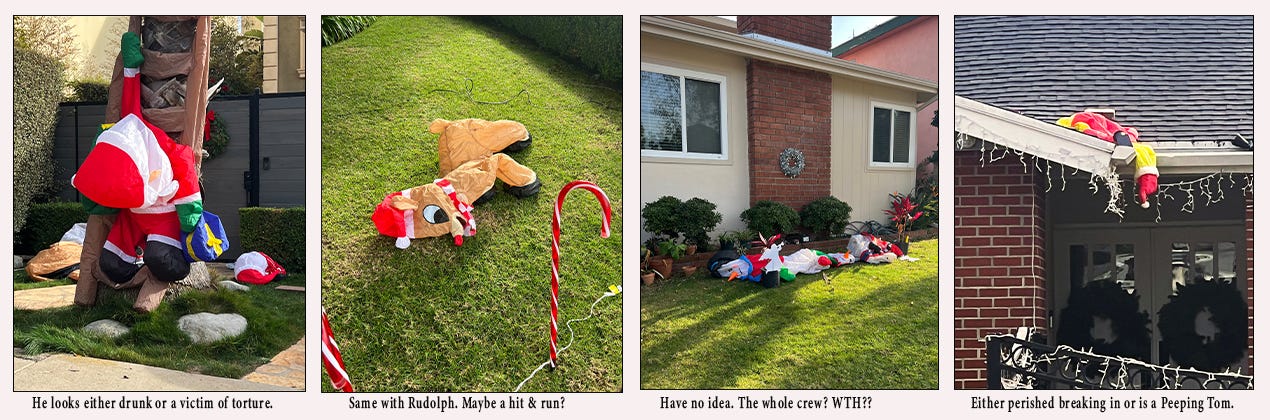
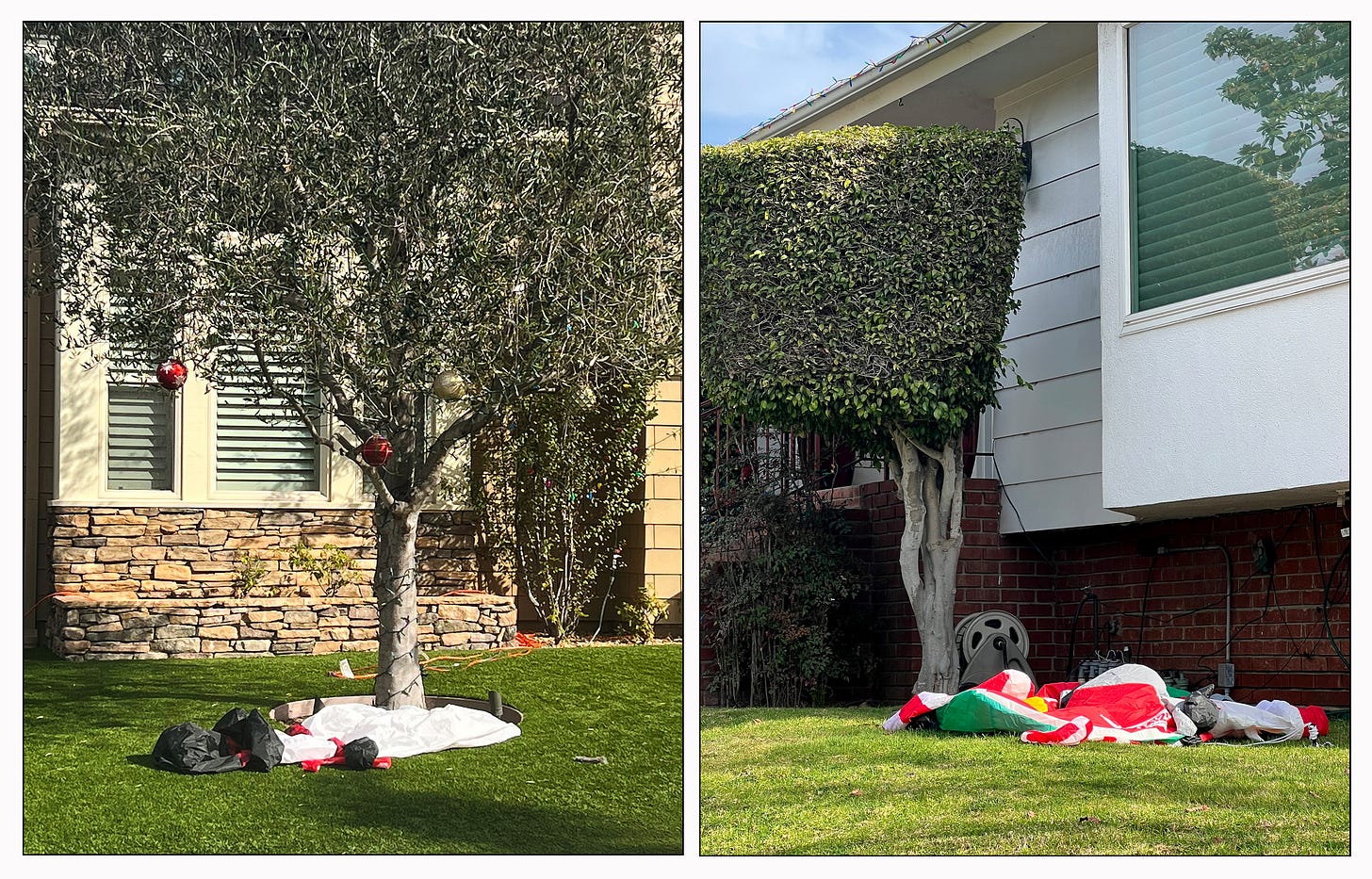
“Dearly Beloved, we are gathered here today to mourn the demise of Frosty (the Snowman), Rudolph (the Reindeer), a slew of unidentified Christmas characters, and several iterations of Santa himself, all of whom gave their last gasp sometime between yesterday and my walk this afternoon. May they rest in pieces in the front yards of friends and neighbors, reminding us of the fleeting and ephemeral nature of life itself.”

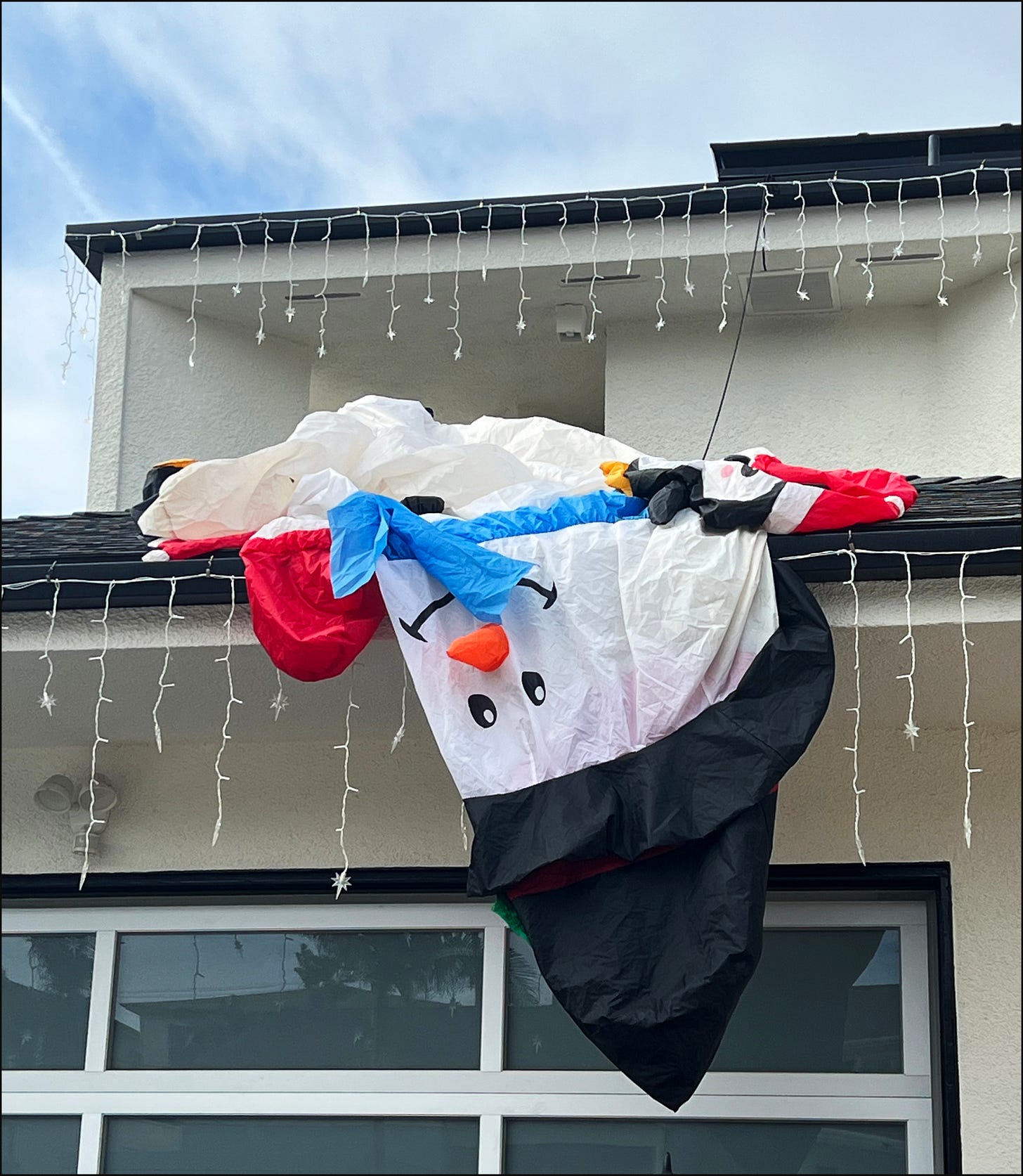
Inflatables suck. Or, more accurately, deflatables suck. While the idea of whimsical holiday creatures blown up like balloons, wafting in December breezes, may seem a delightful fancy, why can’t barely a one hold their position (air) long enough to get us through the damn holiday … or even the week … one night? What’s the point of assigning them the job of “our really fun front yard Christmas decorations” if they’re flat on their asses (or faces, as it were) well before the second week of Advent?

Case in point:

And that’s just around my neighborhood.

There’s something uniquely depressing about these aggressively colorful characters lying around like so much flotsam and jetsam when their singular purpose is to convey good cheer, raise spirits, and celebrate the season in festive fashion. I’ve walked through my neighborhood (and others) making note that somewhere around 85% of all Christmas inflatables (and, no, that’s not a proven statistic) are lying flat and lifeless more often than not. Which seems a dereliction of duty.

Here’s the problem: They’re not state-of-the-art decoration items. They have no actual endurance or sustainable shelf life. They’re TOYS, blow-up dolls meant to delight children who don’t give a hoot about holiday aesthetics or the soul-killing effect of deflated Santas on people fighting to stay jolly during what can be a triggering season. Kids like ‘em because they look like cartoons. Some adults like them (really?) because they look like those “hands-in-the-air” grinning tube men swaying like lunatics in front of car dealerships, who, by the way, seem to take better care of their air-filled staff than, say, the owners of these sick puppies:

Tell me, how sad is that flat-ass snowman, or the Santa face-planted under a window box during the most wonderful time of the year?

Sad. Very sad.

You know how when you get a pet and must fully commit to the daily care and feeding of that dependent critter? Well, so too must you extend the same maintenance to your inflatables. You don’t buy a dog then leave it out in the yard to languish and eventually collapse to the lawn. Nor do you truss them up on the roof ignoring their full-frontal disintegration in front of the entire neighborhood. So, why such errant treatment of your deeply-dependent Christmas creatures?

After Amazon delivers ‘em, or you pick some up from Target; after you put them out on the lawn with the kiddies squealing, “They so cute, Daddy, we love them!”; after the house lights are off and you trundle to bed with nary a thought to your grinning Frosty wobbling over the garage, you still remain responsible for their viability.

Meaning: either put that air-blower thingy on a timer, or wake up every morning prepared to make management of Rudolph, Frosty, and Santa a top—and first—priority. Get out there and make sure they’re blown-bloated before the kids wake up screaming, “Santa’s dead, Daddy, and he’s falling off the ladder!” or the neighbors glower as they speed walk past your cadre of characters wadded in a mess by the front bushes. You owe it to your family, your neighbors, certainly your inflatables, to step up. To not do so is to flout the very message of the season:

“Lo, be joyful and merry, invite the season to warm your hearts and souls, and if those hearts stir you to fill your yard with googly-eyed Christmas blow-ups, honor the peace and goodwill of the holiday and make sure the damn things are up and at ‘em.”

I’d credit the quote but I’m not sure who said it. Either way, the point is made.

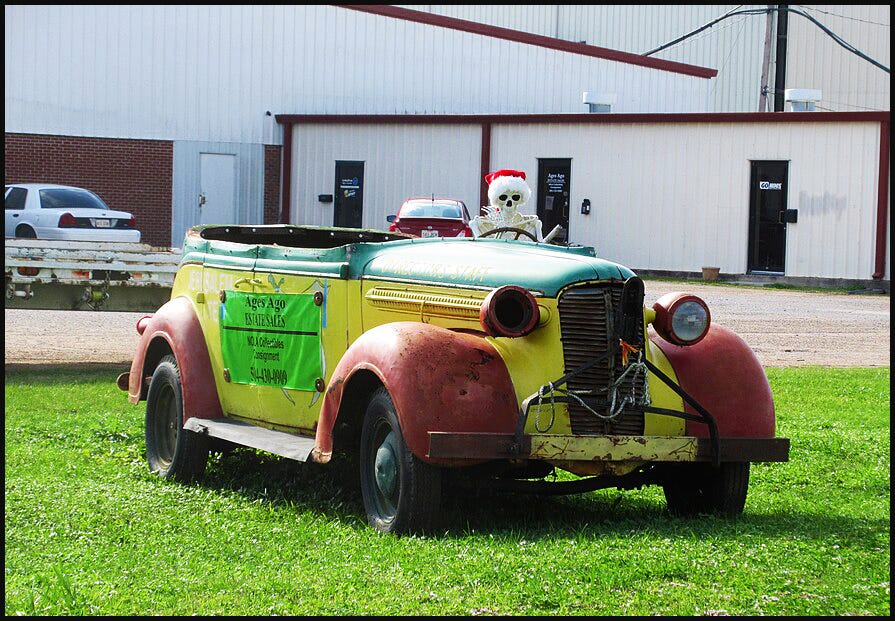
FACT: Inflatables are high maintenance; they demand your daily dedication. If you can’t be trusted with them, don’t take them on. Fall back to old stalwarts like manger scenes, stick reindeer, or that old jalopy with a Santa skeleton. OK, don’t do that last one, but whatever you do, commit to it, people! Santa Claus is coming to town and those deflated inflatables will not do!

“Infrogmation” of New Orleans via Wikimedia Commons

Gratitude Comes In Flickering Spots of Light …

Photo by LDW

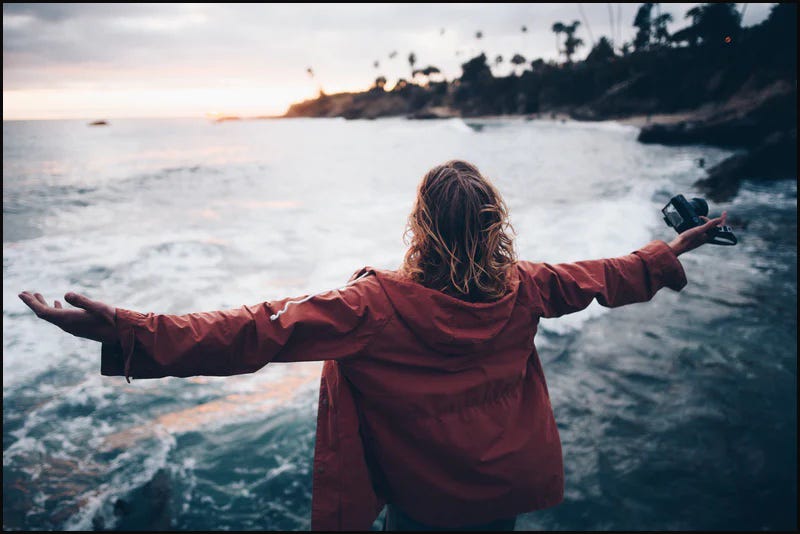
It’s not always a wave for me, a surge; a tide of sensation. Sometimes I don’t feel it at all … or feel left out, karmically rejected, less than. But that’s rare. Short-lived and situational. Most of the time I look around, take in my life with its many, myriad spots of light and color and electricity and possibility, and feel… gratitude. Deep, profound, right to the bone marrow gratitude.

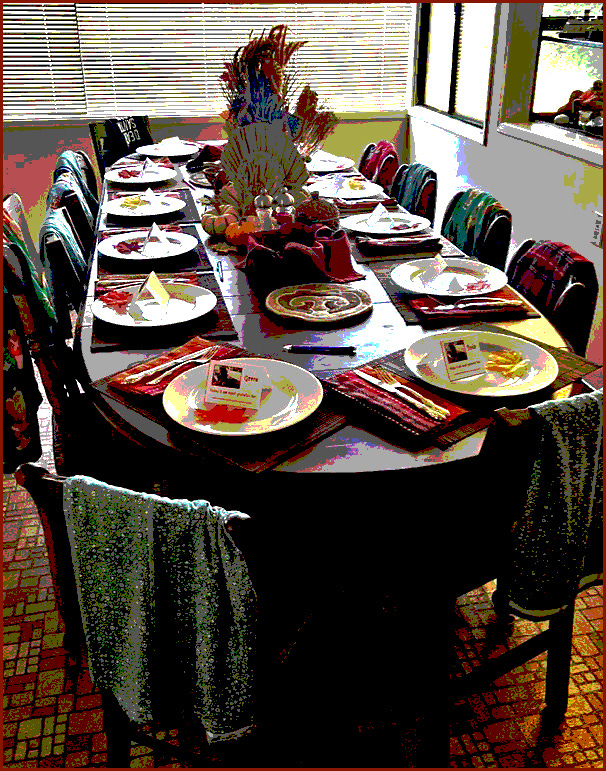
Which is why this day, Thanksgiving, resonates for me, a day built on the promise to take a breath, take a pause, and reflect on the things for which we feel that essential emotion. A day to gather with family and friends for a feast. To set a picturesque table. My husband has a thing about quirky Thanksgiving shirts. See’s Chocolate Turkeys always make an appearance in our household, and wishes of “Happy Thanksgiving!” are sent around the circle, far and wide. It’s a grand night for eating.

Photo by LDW

Unlike Christmas, with its wondrous weeks of anticipation and merry making, Thanksgiving is but one day, one 24-hour period; it’s unhysterical and undemanding; even its frivolity is muted (its colors are orange and brown, for heaven’s sake!). It’s a holiday during which no one expects gifts, there’s no pondering a menu—most of us look forward to the classic meal—and any tendency toward singing is thwarted by the cacophony of football games. Simple, sweet, and meaningful.

So, I’ll follow suit. I’ll keep today’s “special Thanksgiving Substack” to a short list of things for which I am grateful, large and small, silly and serious, meaningful and minor, in no particular order:

  • Waking up in that perfect stillness of dawn.
  • Being old enough to appreciate my age.
  • A perfect cup of chai tea.
  • The ease and comfort of my home.
  • Heartfelt connection with my son.
  • Living in blue, blue California.
  • Winning an election.
  • An unexpected gift.
  • My savvy, sensible, sensational siblings.
  • The wonderful diversity of my city of angels.
  • The charm of my husband feeding the birds and squirrels.
  • Solid legal adjudication against MAGA madness.
  • My dearest circle of longtime friends.
  • Chef José Andrés and his kitchen of compassionates.
  • The pleasure of being fully understood.
  • Fearless people standing up against authoritarianism.
  • The life-changing wisdom from knowledgable teachers.
  • That sensation of sinking into a perfectly prepared bubble bath.
  • My husband snoring quietly beside me every night.
  • The Westside Threshold Choir and everyone in it.
  • Every hopeful article about the tide turning toward ethics and honor in the current political scene.
  • The colleagues and cohorts of my creative worlds.
  • A good book review.
  • When I take what turns out to be a quite brilliant photograph.
  • That Jane Goodall existed.
  • Enthusiastic attendance at protest rallies and marches.
  • The smiles, love, and sparkling life of my newest family member.
  • When my singing voice does everything I want it to.
  • Rich people like MacKenzie Scott and Melinda French Gates.
  • An excellent bowl of popcorn.
  • When my husband walks a the room and smiles.
  • Animal videos that make me laugh or go “aw.”
  • When poll numbers tilt in favor of sanity and progress.
  • Strength, fitness, and excellent health … mine and my family’s.
  • When everything clicks with my band and I’m transported to that out-of-body exhilaration I’ve been lucky to experience since I was fifteen.
  • A fierce speed walk on a cool, sunny day with Lady Gaga pounding in my ears.
  • Knowing that the majority of human beings value goodness and empathy.
  • Watching a sunset shimmer over the ocean outside my window.
  • The beautiful world around me.
  • A new, true friend.
  • Trees.
  • Kindness.
  • Good food.
  • Rain.
  • My asshole cat, Georgy Girl.
  • My life… all of it. Every bit. Before, now, and whatever’s next.
Photo by Nathan McBride

And you. I’m grateful for you. For your reading this, reading whatever I muse on about; for being part of this circle, this conversation. I don’t take it lightly or for granted. Your interest and support, however you choose to share it, is incredibly meaningful to me. Thank you.

May you have peace, safety, and love. Good health and the lightness of joy. Time with the people who matter—family, friends; grateful strangers. The opportunity to let go, even for a bit, for as long as you can, of worry, concern; anxiety, and fear. May you have moments of clarity when the realization that all that’s good in your life, large and small, adds up to bona fide abundance, your version of abundance, and you know that’s something worth celebrating. I wish you that gratitude…on this day, and every day going forward.

HAPPY THANKSGIVING!

I Hate Social Media, I Love Social Media, I Hate It … I Love It …. I … Argh…

Our ever-maddening affair with the greatest scourge/tool of modern society.
Photo by Alexander Krivitskiy on Unsplash

If you’ve ever had a relationship with a lunatic, or, to put it more scientifically, a bipolar, narcissistic, irrational, occasionally lovely but always unpredictable asshole, then you know what it’s like to be involved with the scourge/tool that is social media.

Reject it, embrace it. Need it, refuse it. Use it, abuse it. Whatever your particular stance on this ubiquitous thing that AI (yes, A-fucking-I) refers to as “websites and applications that enable users to create and share content, as well as participate in social networking,” it is, much like relentless relatives or benign stalkers, not going away. It behooves us, then, to come to terms with it.

Sometimes “coming to terms” translates to “shut that damn app off and put the phone down!” Apparently this is becoming the modus operandi (if put more politely) of many places of education. This week the New York TimesNPR, and other media ran stories about how more and more schools are implementing “restrictions on cellphone possession and use in class” for the expressed purpose of removing distractions, encouraging students’ self-regulating skills, curtailing bullying impulses, and, of course, limiting the seductive pull of near-constant posting, updating, and commenting on the various forms of social media available to kids.

A list which is prodigious and growing. Kids are on and using platforms that we elders haven’t even heard of, and their attachment to them is all-consuming. Walk down any street on any given day at any given time and you will note that 80%-90% of the people you see—of all ages, frankly—are looking at their phones as they walk (how we don’t have more pedestrian injuries is beyond me). Given this proclivity, how on earth would anyone expect unregulated students to self-regulate when even adults can’t seem to? So, yes, schools, restrict away. It is surely for the greater good of the children we hope will be running the world someday.

But here’s the thing: This piece is not going to be a screed against social media. In fact, considering its “scourge/tool” duality, I’m going to talk some about the “tool” aspect of the equation. And before you pull a muscle rolling your eyes, hear me out.

I have friends and relatives whose antipathy toward social media is leviathan (and I’ve always wanted a reason to use the word “leviathan”). They loathe it, hate it, resent any push, pull, or prescription that suggests they avail themselves of it. Some will lurk and look at other people’s pages, threads; platforms, but they don’t want any of their own. Some ignore it completely. Many find nothing good or valuable about the whole mess, yet are stuck between a rock and a hard place because they have some business, some art, some product they’d like to market, they don’t have unlimited resources, so the obvious choice to amplify what it is they’re selling, transacting, merchandising, promoting is … yes, social media.

That means Facebook, WhatsApp, Instagram, Tik Tok, Threads, SnapChat, You Tube, Pinterest, LinkedIn, Reddit, Twitch, Discord, some even say Tumblr is making a comeback. All the most most dreaded names for those who dread the medium the most.

And I get the dread. I do. I started on Facebook in 2009, Twitter, 2010; not sure when I jumped on the others (and it’s a limited list), but somewhere around then. That’s a long time. And during those ensuing years, I’ve experienced my share of social media rage and disgust, annoyance and disdain. I’ve shaken my head many times, astonished and perplexed, at the choices people make about what to post, stunned that anyone thinks anyone wants to see their red, swollen foot, the thirtieth photo of some mundane meal they ate, or the current state of their dog’s anal glands. I’ve recoiled from the bile and hate spewed on the more political posts, the insensitivities and aggressions thrown at people in disagreement (even over bacon, FFS!); the sheer indecency that breaks the surface more often than it should. I’ve been attacked, pilloried, and trolled, sometimes so badly that friends have reached out to see if I was okay (that’s what I get for being a loudmouth!). It can be a lot, however it comes at you, so I get why some people want nothing to do with it.

But still …

What I’ve learned in my almost-seventeen years of participation in the social media experiment is how to manipulate it to be a force for good. For commerce. For fun. For the deepening of friendships and family connections. “Liked” pictures or simple comment-conversations can engender true warmth and affinity. Social media can be an outlet for creative exchange and promotion, yours and others’. I’ve seen beautiful, thoughtful, even profound posts in response to someone else’s grief, illness, loss, or disappointment. I’ve reveled in the enthusiastic sharing of historical events, political wins, record-breaking marches, and global victories. I’ve enjoyed beautiful photographs (the ones not made by AI), amazing paintings, hilarious comedy reels, gorgeous musical performances, and sweet, funny animal videos (again… the ones not conjured by AI).

I found the amazing inn we stayed in Tuscany on Facebook (thank you, Mia!); connected to musicians I’ve worked with, and gotten hired to write articles via Twitter. I’ve used social media to promote my books, sharing book events, literary awards, and good reviews. I’ve alerted followers to this Substack, my photography site; where to find my music. I’ve shared the art of artists I admire and respect, amplified the hard work of those making meaningful contributions to society, and posted important articles written by smart people covering topics of significance. Sometimes, for the sake of my sanity, I’ve even shared some truth in response to political nonsense posted by a MAGA politicians (usually on Twitter … I refuse to touch Truth Social). Conversely, I love tweeting kudos or “thanks yous” to people like Obama, Pete Buttigieg, or Jasmine Crockett.

And yes, I am still on Twitter. Because that’s where those three, and so many other great people, are. Yes, I know… Musk. I ignore him (mostly; occasionally I enjoy responding to something he posts … you can imagine!). But so many great journalists, liberal politicians, writers, artists, social activists, etc., are there—and I want access to this crowd—so I’ve made the choice to remain. I recognize that corporate overlords like Musk, Bezos, and Zuckerberg are blights, but the platforms with which they’re connected, or have created, have merit. I would never have been able to publish and sell my first books without Amazon, or promote my work without the other two. There’s a whole article to be written around that discussion—who and what we boycott or not—but I’ll postpone further comment until I write that one. Back to social media:

What I don’t do with it?

• I won’t engage with trolls, ever. I block and delete. Quickly and without notice. There is nothing whatsoever to be gained from engaging with chaos agent whose first words to you are something like, “your (sic) a libtard c**t.” Buh bye. I know a few people who actually like getting into protracted back-n-forths with trolls, but my time is too precious, and, as I’ve noticed, that decision ultimately curates your various feeds to be more of what you want and less of the ugly.

• I don’t overexpose my personal life. I keep that to a minimum or to a private family group. Members of my family have made clear they don’t want their lives displayed on social media (and with AI now making handy work of children’s photos, that’s a wise decision), and, as time has gone on, I want less of mine there, too.

• I don’t over-post … I least I hope I don’t. I pay attention to how often I rattle on about my work to avoid moving into the eye-rolling “ugh, more about her damn book” category. It’s a tricky balance, as anyone promoting on social media can attest, but I stay vigilant to being judicious and finding that balance.

• I don’t post articles or news until I make sure they’re accurate and timely. Posting an article from three years ago that’s dated and no longer applicable is pointless, and given how often mendacity passes itself off as truth, we all need to be vigilant to not contributing to the disinformation river.

There are likely other “don’ts” people can (and should) add to this list, but those are the main ones for me: both what I do and what I don’t. And what I do do is the main point I want to make to those who swim in the sea of social media antipathy:

There are good reasons—and good ways—to use and enjoy the medium. Which is why I encourage artist/business folk with social media aversions get past their twitchiness to realize just how useful the medium can be. To them. To their goals. To the success of their business, their art, the things they create. At a time when publicists cost a fortune (was there ever a time they didn’t?), and making any kind of profit from creative work is a challenge; when indie artists and entrepreneurs are left to their own devices without behemoth companies getting their books to Oprah or Reese, their music to the top music supervisors, or their restaurant to the high-profile reviewers, social media becomes a boon. A tool. A force, yes, for good.

So while we limit social media contact in schools for excellent reasons, implement a “no phones at the dinner table” rule in our homes, and prioritize real-life interactions over virtual ones, let’s also acknowledge the value of social media as a tool we can use to and for our benefit with wise and considered boundaries. And once we’ve done all that, let’s all walk down the street with our phones tucked away, our eyes alert and aware, our energy open to make contact, say hello, or offer a smile to others as we pass by.

You know, all those human things that remind us we’re not our machines and technology, but the purveyors of heart and soul.

The Art & Craft of Protest: AMERICAN SUNSET by Composer Louis Rosen

“A writer should speak with candor and truth no matter what they’re writing about, whether political or personal. That’s the writer’s obligation.”
Louis Rosen, composer; photo by Jason Brett

I read a rather plaintive post on social media recently asking, “Where are the protest songs of this era?” and thought it was, frankly, a salient question. Having come up at a time when protest songs were simply part of the everyday listening landscape, there does seem to be a dearth of such things in this MAGA moment … though, it appears there is a public playlist on Spotify called, “Donald Trump Protest Songs.” It’s a fairly lengthy collection, with some names I recognized, but I’ll leave it to you to listen and see if it meets the demand.

Cuz I got Louie Rosen … or “Louis Rosen,” as he’s known to his many fans.

I’ve known Louie since we were kids in college back at the University of Illinois in Champaign/Urbana. I was a theater major; he was in music. He ultimately landed in New York; me, LA. We’ve stayed connected over the decades, and have been supporters of each other’s artistic endeavors from the get-go. He reads my books, listens to my music, I collect his albums and anytime Lou is playing at, say, Joe’s Pub in NYC or Davenport’s in Chicago, I’m there.

Louie’s list of compositions and albums is breathtaking in scope and creativity, his official bio stating, “Louis Rosen is a composer, lyricist, performer, author, guitarist, educator and Guggenheim Foundation Fellow in Music Composition, whose musical style fuses and juxtaposes classical, folk, jazz and popular styles.”

Given this impressive resume, and my lifelong appreciation of his myriad talents, I’m always delighted when Louie gives me an early listen to his latest work, as I was recently gifted with his just-released album, American Sunset.

To call it a “departure” is not exactly accurate. Though his milieu does tend to fall more in the songbook, theater, jazz arenas (he worked for years with vocalist, Capathia Jenkins; those albums are some of my favorites), his expansiveness as a composer is notable. Still, American Sunset veers hard and unvarnished into “protest” territory, and I gotta say; I am so here for it!

With twelve tracks (and a bonus thirteenth track), and Louie’s unique, evocative vocals interpreting the lyrics, it’s a profound musical statement. I’ll let the album description make the point:

AMERICAN SUNSET is a twelve-song cycle—or if you’d prefer, concept album—that was mainly written between Election Day, November 5, 2024, and Inauguration Day, January 20, 2025. The album is both a personal and a political response to this unsettled and disturbing American epoch. It’s filled with the immediate intensity of the present, reflected in songs that are by turns dramatic, ironic, comic, and sometimes all of those at once. And AMERICAN SUNSET is a true cycle: while each track stands on its own, the personal narrative and political thematic connection of each song to the whole cycle is immediately clear when the work is listened to from start to finish.”

After doing just that, I had some questions for my friend, and invited him to (virtually) sit down with me and have a conversation about this epic work. He generously obliged.

LDWLou, you’ve delved into political issues before in your memoir/oral narrative, The South Side, which was about “white flight” on the south side of Chicago in the 1960’s and 1970’s, but have you ever written a musical album, a collection of songs, a song cycle, or, as the rocker in me likes to call it, a concept album, that’s as overtly political as American Sunset? And if this piece is unique in that focus, share a bit about what compelled you to do so.

LOUIS: No, never an entire album. The times never seemed to warrant it before, though there’s been something pointedly political—or some social commentary—on nearly every album, increasingly since the Bush/Cheney era through Trump, Part 1. But this moment is obviously different. The period between Election Day and Inauguration Day seemed to offer at least one new outrage per day, rhetorical or via the nominations of the many incompetent, unfit characters who were joining the administration. A response seemed more than warranted, it seemed necessary, if only to maintain my own sanity and equilibrium. And if writing helped me process this moment in time, I thought similarly-minded people might get something from listening.

And it was often fun to write. The songs flowed, music and lyrics; the more critical lyrics sometimes provided a pressure-valve-like release, occasionally made me laugh—and again, I thought if I responded that way, so might the listener. It’s enjoyable to write lines like “Look who we admire/scoundrels, megalomaniacs and billionaires”—I think it’s an accurate observation of the direction the culture has gone. I imagined the lyric and music to the darkly comic, “American Clown Car March,” for instance, as a new, contemporary national march. Again, enjoyable to write it, to express the frustration with our current situation in a way that Sousa couldn’t have.

LDW: At this highly polarized time in our country, when so many on the right think artists should “stay in their lane” (i.e., “shut the fuck up”), why do you think it’s essential that artists speak up, speak out; take a stand on the injustices we see unfolding before us daily?

LOUIS: The political right only thinks that artists should “stay in their lane” when they don’t agree with those particular artists. I haven’t heard anyone on the right mention that Kid Rock or Jon Voight should stay in their lanes. More to the point, artists don’t have a particular lane to stay in, so that’s a false argumentAn artist’s lane is whatever path she or he chooses to travel down. (Had to highlight that. LDW).

Regarding the second part of your question: I actually don’t think it’s “essential that artists speak up … take a stand on the injustices…” etc. Artists should do what is true to their nature. Though I attend some protests, or volunteer for a candidate now and then, I always feel I fall seriously short on the activist end of the citizenship scale. But writing about the current chaos was something I could do; and was, in fact, compelled to do. As I suggested above, it was the best way for me to process the madness that was already unfolding in the days between the election and the inauguration; a way to discover, articulate, and share what I was thinking and feeling; to release a bit of the anger and frustration brought by the daily news cycle, and to talk to others who might find some solace or satisfaction in these ideas articulated in a nuanced fashion in song. We know that political and social commentary is an old tradition in music. Some of my favorite songs by some favorite songwriters fall into that category—sometimes those songs are subtle and complex, sometimes agitprop. I like both. I think both can be satisfying. I’m just carrying that tradition forward in my own manner.

LDW: One element of this concept album that I loved is its narrative arc: you not only vent (”American Sunset”), rage (”Last Things First”), and righteously ridicule (”American Clown Car March”), but you find moments for tenderness (”Candice and Me”) and almost wistful hope (”And Still I Sing”). As an artist myself, I often feel compelled to find that balance in what I write, to offer a glimmer of hope despite the outrages we’re all impacted by, and I wondered: was that a compelling impulse for you, too, as you wrote these songs and assembled this album?

LOUIS: Offering hope … I didn’t set out with that as a plan, but I’m not without hope, so it wouldn’t be honest to write a piece that is completely without it—though it seems to me that hope is parceled out in limited servings from different angles over the course of the piece.

For instance, “The Wheel Goes ‘Round embraces the notion of karma, a hopeful notion; as you mentioned, “Candice and Me (which is inspired by Voltaire’s Candide) finds a subtle hope in the embrace of what is real and true in the midst of treacherous times; “Life On Earth is hopeful in that it’s a gentle meditation on the contradictions of living. Even the rage in “Last Things First” leads to something akin to a call-to-action.

You found the most hope in “And Still I Sing.” The song wasn’t planned, but in looking at the writing process, it seems inevitable. Songs often come in pairs. “And Still I Sing” was written in one sitting, the same day that “Run It Back” was completed. The rage and desperation of “Run It Back” seemed to require an answer, something of an antidote. The intention with “And Still I Sing” was to write a hymn, a song for carrying on “when everything feels broken,” which is a fundamentally hopeful notion. The music itself embodies that notion in that it’s actually a major key transformation of the main musical idea of the two darkest pieces in the cycle, “Executive Orders,” and “Elegy.” (“Elegy actually came first—then the lyric idea, “And still I sing a song for you” to match the first musical phrase of “Elegy,” but now in the major key; and last came the score for “Executive Orders”). I had to understand who the “you” was that I would still sing for. Realizing that it was both the people I love, along with anyone who chose to listen, I knew that I had the conclusion of a larger cycle—which means I knew that I was ending the work on a hopeful note. That’s a long way of saying the conclusion was more discovered than planned.

LDW: I know when I write something overtly political, even controversial—whether an article, a song, a novel—I can expect pushback, anger; trolling. But conversely, and what most pleases me, is how so often people will write or comment with something like, “Thank you for putting into words what I think and feel,” one of the reasons I believe artists must speak with candor and truth. As an expansion on the first question, do you feel a similar obligation, specifically with this album, one that makes no bones about where you stand on these issues, pushback be damned, and gives voice to many who feel the same?

LOUIS: I think that a writer should speak with candor and truth no matter what they’re writing about, whether political or personal. That’s the writer’s obligation. One hopes that the response to the work will be what you suggested, “Thank you for putting into words (and/or music) what I think and feel.” And as we know, the separation between political and personal often gets blurry. But in this piece, there would really be no point in pulling punches. The work would have just ended up as weak tea. One can disagree with the point of view—the critique of the current American political and social culture—but you can’t claim the work doesn’t have one. And the most personal songs ground the work, allowing the cycle to be more than only a political piece.

LDW: And, lastly, given the dedicated fan base you’ve accrued over your career, one that’s been regaled with incredible music that isn’t, perhaps, as political and unvarnished as American Sunset, do you expect any pushback or, conversely, and more positively, to expand your audience to those who will appreciate the rage, the truth, the candor of your political stance?

LOUIS: You are very kind. I never have any idea how the work I offer will be embraced. I just try to write what interests me, and hope that since the subject interests me, there will be people who want to listen. I don’t think interest in this subject matter is unique to me, so I hope that, as intended, it might offer some solace of shared recognition, perhaps a couple of laughs, and maybe a brief infusion of tempered hope to both audiences familiar with my work and those who are new to it. I have no illusion that a song or musical piece ever really changed anyone’s mind. And we’re all so siloed these days. But a song can inspire. As I answer your questions, it’s clear to me that the work is fundamentally about observing the dangerous national chaos that we are in the midst of, and then trying to figure out how to carry on in the difficult face of it.


LOUIS: A few random thoughts: I’d venture to say that “Executive Orders” is one of the most original compositions that I’ve yet composed, and as the seventh of twelve tracks, really functions as the centerpiece of the cycle. Also, I was contemplating putting a liner note on my website, but it ended up less as commentary and more of a scenario of the story-like arc of the cycle. In case you’re interested, here it is:

AMERICAN SUNSET—Liner Notes:

The cycle is divided into two parts. The titles of the 12 songs offer a hint of the overall narrative:

PART ONE: Track 1, “American Sunset,” the title song, sets up the premise of the cycle in a both serious and ironic fashion. Track 2, “The Wheel Goes ‘Round,” is a jazzy, R & B inflected meditation on the inevitable confluence of life, politics and karma here on earth and beyond; while Track 3“Tango for Charlie,” is the first of two instrumental elegies in the cycle – with this one an expression of loss on the more personal side of the ledger. Track 4, American Clown Car March,” offers a darkly satirical perspective on a contemporary cast of political characters in the form of a new American national march. Track 5, “Candice and Me,” is the one love song in the cycle. While tipping its hat to Voltaire’s “Candide,” it reflects on what remains unchangingly essential in a time when all around seems madness. Part One concludes with Track 6, “Gulf of Mexico,” a tongue-in-cheek, joyous jazz-rocker that catches our narrator as he plots his escape from the current national craziness down to a place that many in government claim no longer exists.

PART TWO begins with Track 7“Executive Orders”in some ways the centerpiece of the cycle—a composition for piano solo (played brilliantly by Charity Wicks) and spoken voice, with the spoken part being a recitation of the dates and titles of selected Presidential Executive Orders issued between Inauguration Day, January 20, 2025 and July 2025. Track 8, “Life on Earth,” offers a moment’s respite from the intensity of “Executive Orders,” and a gentle meditation on the contradictions of living. But the respite is short-lived: Track 9, “Run It Back,” finds the narrator raging against an unnamed, but understood, enveloping and anxiety-producing chaos, while still seeking a way to carry on. Track 10, “Elegy,” is the second instrumental elegy in the cycle – this one a lament for the nation. The penultimate Track 11, “Last Things First,” finds the narrator still raging, but this time with a shade of raucousness, while also offering something akin to a call to action. The cycle concludes with Track 12, “And Still I Sing,” a song of hope expressed as a secular hymn that suggests a more personal way forward for this moment in our lives.

NOTE: A Bonus Track, “Executive Variations,” will be made available to those purchasing the album.


Lou, thank you for offering such thoughtful and thorough perspective on your latest work. As we’ve discussed, I, too, find music to be a seminal outlet for our most passionate expressions. Whether waxing on love, aching over heartbreak, or raging about politics and injustice, there’s something uniquely powerful about music—writing it, singing it, playing it, performing it—as a conduit of human emotion. Of commentary and utterance. Of demand and whimsy. You do it all so well. Thank you, my friend.

To access American Sunset, go to these links. (Spotify’s link automatically puts up a preview; just click the thumbnail and it’ll take you there.):

APPLE MUSIC

https://music.apple.com/us/album/american-sunset/1846186165

AMAZON MUSIC

https://music.amazon.in/albums/B0FW5DSV79

SPOTIFY:


’How’s Your Book Doing?’ and Other Post-Publication Questions

Every step in the process of birthing a book has a life of its own:

Imagining the book. Writing the book. Editing the book. Querying the book. Not querying the book. Publishing the book. Celebrating the publishing of the book. Then marketing and promoting the book. And marketing and promoting the book. Still marketing and promoting the book…

I repeat that last one because it seems that once your book has been put out into the world (however it gets there), the relentless demand from that moment forward to promote and market the living hell out of said book is the worst— I mean, the most exhausting, overwhelming, often confusing—part of being an author in the year 2025. Or any year. Ever.

I’ve had four novels published. The first two I self-published (2014 and 2015). The third I hybrid published (2019, She Writes Press). The fourth was published this year by Sibylline Press, a small traditional publisher with a marketing buy-in. I love all four of those books. They truly are like my children; each individual and specific. Each gestated with love and devotion. Each brought into the world with high hopes and unlimited dreams. And each as demanding and unpredictable as any child can be.

My last book, Chick Singer, came out in early April, and since then I’ve been asked innumerable times, “How’s your book doing?” My answer is always the same:

I don’t know.

I don’t know because we’re not yet up to the publisher’s first reporting period. I don’t know because despite enthusiastic responses via texts, emails, private messages, social media, and in person, the book has not accrued many reviews on Amazon or anywhere else (are people just not reviewing books these days or am I being gaslit about “how much I loved it”??). I don’t know because despite my relentless flogging of said book via social media and everywhere else, I see countless other authors and books also getting prodigiously flogged, and how can I compete with that onslaught of excellent books, sparkling authors, inventive promotional events, with then a whole new season of countless more of all that? I don’t know that either.

I can just do … well, me. My book. However I do that. I’ve done it three other times with varying degrees of success, yet, to be honest, I am a tad flummoxed as to how and why results have been somewhat different this go-around. Different time, maybe? Changes in the industry? Readers responding differently after decades of supporting indie authors? Whatever the cause, I still very much want my latest novel to soar and so I adjust and pivot as needed to respond to the changing … whatevers.

One way I’m doing that is by putting aside any “opening weekend” mentality, deciding that, regardless of when the industry determines a book has aged into “backlist title” territory, I’m going to take the entire post-publication year to treat this book like the newbie is it. We don’t deem a one-year-old child to be a has-been, old news, a backlist kid, do we? Even if another child arrives at some point, that year-old entity continues to elicit our passionate love and support; hence, my book of 2025 is going to be treated as a cherished new child until … I dunno, until whenever I decide.

Of course, this doesn’t mean media, bookstores, or reviewers are going to go along with my year-long rollout, but I’m going to do my damnedest to bring them along on the ride. Which means I have to get creative. Be indefatigable. Relentless. Even innovative. We’ll see what I come up with and how it all goes.

As a first step, I’ve pulled another side of my creativity into service: my music. Having been a singer my entire life, including during the wild and wooly ‘80s, it was suggested by a clever bookstore manager that—since Chick Singer revolves around a former ‘80s rock singer suddenly thrust back into the secrets and dreams of that era—it would be a great tie-in to have my band play before and after the book presentation. I was thrilled by the idea, my band worked up shiny new versions of my old ‘80s tunes, and the event was a smashing success. So much so that the store invited us back to play (and for me to present my book again) at a party celebrating their 5th anniversary. I sold more books, there was cake, and people danced … another smashing success.

This kind of innovative promotion seems to me to be a very good idea … if you’ve got a band and a book about rock & roll singers! If you don’t, the idea would be to explore whatever tie-ins make sense for your book. I’m seeing Facebook posts from authors who’ve done just that: a princess-themed party for a romance novel about a princess, environmental speakers at the book event for a novel focused on climate change; poets brought in for a book presentation about a wandering poet. Creative, fascinating, engaging. This is the kind of promotion I like seeing and like doing. I plan to keep my own “creative promotions” going long enough to inspire continuing, increasing traction for Chick Singer.

But, ultimately, publishing a book is much like gift-giving: you do your best to present an absolute top-notch item (your stellar story, buffed, shined, and edited), you wrap it as artfully as possible (gorgeous cover and book design), you offer it with enthusiasm and confidence (“I do hope you like it!”), and then … well, then you let it go. And just as you don’t keep checking if they ever wore that blouse you gifted, or “if you like those earrings I gave you?”, you can’t keep pulse-checking with people who promised to write a review but didn’t, or said they’d buy the book but “keep forgetting,” or promised to suggest it to their book club but haven’t yet. You can only do your best to gently nudge, to promote; to follow-up, follow-through with media resources, and keep exploring new, interesting ways to amplify and shine more light on your work. Then you trust what you’ve put in motion and move on.

But to answer the title question: if I were to hazard a guess about Chick Singer’s reception out in the wide, wide world, based on media reviews, delighted emails, phone calls, texts, social media posts, and bookstore conversations, I’d say it’s been very well received. People have enjoyed it, been moved by it, entertained by it. And that, really, is the most essential goal, isn’t it? Whether we crack that elusive bestseller list, accrue countless reviews, sell bundles, or win awards and kudos from influential people, knowing the ones who bought it and read it “really loved it” … well, that’s gold. That’s the prize. That’s (almost) enough for me.

I’d still like to crack that damn bestseller list someday …

Originally published in Women Writers Women’s Books.

‘We Can’t Dance Our Way Outta This Mess,’ They Say…

…but we CAN “sing the truth and name the liars.”

Puppets found in the Bread & Puppet MuseumJared C. Benedict

I’m old enough to remember when political resistance included protest songs that played on the radio (“Think it’s time we stop, children, what’s that sound? Everybody look what’s going down”), troupes like the Bread and Puppet Theater aptly shared bread and puppetry in protest of the Vietnam war; dancer/choreographer Alvin Ailey used his and the talents of his company to support the civil rights movement, and so on.

Now we’ve got social media, a 24/7 Internet feed, and Substack. Sigh.

I love this quote I saw on Threads the other day:

“The world will try to convince you that art is luxury. It is not. Art is medicine. It heals in ways that cannot be measured or explained. It reaches places therapy cannot touch. Art is essential.” Rokita

I don’t know Rokita, but she is an artist and she is correct. Art is medicine. I’ve been saying that for years. I even made a meme and shared it all over the place in my determined quest to make the point:

Good message … though not a widely accepted one.

The problem is, unlike the ‘60s and ‘70s, America is now a tech-bro/media-heavy culture rather than an artistic one, so most messages conveyed are siphoned through those hard-edged filters. Humanities is downplayed (or literally dismissed), art classes are considered fluff; creative careers are framed as foolish, and when brilliant, insightful artists speak out on salient issues, they’re negated as narcissists “stepping out of their lane.” It’s as if the MAGA Machinery of 2025 is too dense, too ponderous and unyielding to allow for more creative interpretations of our current circumstances. This, of course, is folly.

The socially-conscious artists of earlier, more soulful, eras understood that ideas, concepts, provocations, and calls-to-action were most successful when wrapped in the language of art, creativity that inspired people to sing, get up and dance, feel emotions, find themselves sparked to act. The ‘60s with all its hair and art and music and rebellion literally spawned movements that changed the trajectory of America. Younger people can snigger at the accomplishments of that generation, but smart people know that even the most whimsical of human behaviors can shift the zeitgeist. That era surely did.

I speak about this today as a creative loudmouth who regularly utilizes my art to make points I want to make. I’m told this is crazy because it might alienate people who only want to hear/know about the art parts, but I refuse to separate my activism from my artistry. Won’t do it. And you know who else feels that way? The brilliant, courageous Salman Rushdie.

Read those four sentences; they are amazing. Then know that the last line of his quote, not included in this meme, is: “We must tell better stories than the tyrants.”

Yes. We must.

Those five sentences speak volumes. They say everything that needs to be said about the power of art to impact and change the world, wisdom from a man who has lived by those five sentences his entire life. So dedicated to writing the stories he passionately believes in, he was damn near killed, he did lose an eye, and he continues to be in the crosshairs of violent fanatics to this day. Does he stop writing? NO. His next book comes out November 4th. It will no doubt be insightful, fearless, and brilliant.

I figure if he, blinded for his dedication, can continue in the face of death threats and relentless persecution, I can surely put my own much smaller, less provocative words and art into action. I can sing the truth and name the liars, too, however limited my reach may be. So I’m going to keep doing that.

Next week I’m gathering with my band and good friends to help raise money for Democrats running to flip Congress and save our democracy from two additional years of unfettered lunacy. Our first such event, titled “Rockin’ For Democracy,” is set for Sunday, September 21st. If you’re in the Los Angeles area and would like to join us, message me and I’ll get you the address. If you’re outside LA, or you can’t make it but still want to contribute (which I hope you will), click the link I’ll leave right here so you can donate via our specific event … we will be most grateful.

There will be other spirited fundraisers, and I’ll continue to write, march, sign, yell, and sing, but some nights I lie in bed with my head spinning, trying to conjure up new ways, better ways, more effective ways to combat the insanity roiling our world. I want to do more, have more impact, create bigger effects, then I realize, at 4 o’clock in the morning with nary a stitch of sleep, that I can only do what I can do. So I’ll do that. In every way I can … singing the truth and naming the liars in my own way.

Let’s all keep doing that. Whatever mediums we use. Whatever art we love. Whatever ways we do it. Our expressions don’t have to be on-the-nose, don’t even have to be overtly political or provocative. They can just be art, of any kind, uplifting, enlightening, inspiring art. Creativity that makes people think, laugh, cry, dance, smile, empathize, have hope, feel.

That alone can be revolutionary to the human spirit. From there, miraculous things can happen.


Books & Bands: Celebrating The Book Jewel

Music, singing, songwriting, my band, parties in bookstores … these things make me happy. And in a delightful mash-up of all the above, my band will be entertaining party-goers celebrating the 5th Anniversary of one of the most creative, welcoming, inventive indie bookstores around, The Book Jewel.

It’s interesting how, during these trying times politically, people still want to get out and celebrate; gather with friends, experience art, feel joy, shake off the doldrums and anxieties that seem to endlessly swirl around us. I appreciate when people show up at gigs, join me at a show, text me about a new art exhibit, or just want to get out on a walk. We need to break away from noise and clatter.

In my last Substack piece I mentioned that my readers tend to less interested, however, in reading about these things, more focused on political analysis and opinion. So when people do join the party, so to speak, do read the piece on music or publish, do share articles about new, great places to eat, I’m encouraged. Because, as I’ve said countless times, we’ve got to find balance. Never more essential that in this mad moment…

So if you’re in the Los Angeles area next Saturday night, I hope you’ll come join us for this celebration of a fantastic indie bookstore. I promise it’ll be a rockin’ good time!


Rescuing Debbie: An Immigrant Story Close to Home

How would ICE have treated my grandmother?

Fofo & Debbie Derebey

1919: Nineteen-year-old Deborah Derebey stood in a long line of immigrants waiting to be processed at Ellis Island, her younger half-sister, Sappho (known as Fofo), by her side. Nervous, hopeful, and exhausted from the long voyage from Turkey, they waited to be met by their aunt, Aphrodite Derebey, who’d sponsored their passage. Two Greek sisters, both orphans, making their way to a better life in the bountiful and welcoming arms of the United States of America…

I write this paragraph just minutes after watching yet another horrifying video of ICE agents lurking in the hallway of an immigration court, dog-piling on a young immigrant as he exited the courtroom. These masked thugs of the current White House occupant proceeded to violently arrest this man (with no criminal record) who was there, in that courtroom, to comply with the laws said Occupant claims everyone is violating.

Welcome to “Immigration, the MAGA Era.”

The reality that every single person in this country, bar the Native/First People, has descended from immigrants does not appear to diminish the raging sense of white entitlement so baked into the American Right. The compassionate intent of “Give me your tired, your poor, your huddled masses yearning to breathe free…” has little or no impact on minds hellbent on “making America great again” by regressing to some delusional version of “the golden days,” when whiteness reigned, immigrants were subservient, and everyone of color knew to keep “their place.”

Right now, as Trump dismisses the border of predominantly white Canada, the feverish “MASS DEPORTATION NOW!” crowd has laser-focused on the southern border. One might guess that jarring disconnect has something to do with the fact that between 2010 and 2022, the share of the population that is Hispanic/Latino grew the most, increasing 2.7 percentage points to 19.1%. The white (non-Hispanic) population had the largest decrease dropping 4.9 percentage points to 58.9%.

That statistic has gotta chill the cold, dark hearts of bigots and white supremacists.

As the granddaughter of immigrants from a country and culture often dismissed as politically and culturally problematic, I have often reflected on what my grandparents endured coming to this country. My sister, Mary Amandes, our family archivist, and I perused old pictures and discussed that journey, juxtaposing their experiences against the corrosive and toxic state of immigration as it’s currently being implemented. It struck us both that, if our family members had immigrated today, they could very well have been one of those tackled in a hallway, pulled from a job site, or dragged to the floor in handcuffs.

But Mary also made the salient point that, as toxic and repugnant as our current laws and policies are, history tells us this process, in a country literally built by and for immigrants, has long been fraught with discriminatory, contradictory, and biased policies and practices. The welcoming arms of America have been fickle, opening and closing based on changing leadership, as each administration imposed their own bigotries into laws that govern the activity. From Mary:

“The Homestead Act of 1862, offering 160 acres to men and women who met certain requirements, was critical to settling the west. Land was given to the railroads who then parceled it out to various groups of ‘select’ immigrants (no ‘shithole’ countries!) to settle 685 million acres of public land (all stolen from the native population). Total acreage of distributed land from the government was over 1 billion acres. Advertising was targeted to Northern European groups, especially Germans and Scandinavians, because existing farmers were having trouble finding farm laborers. Apparently the earlier waves of immigrants in the south were already too vested in their farms and too reliant on slave and tenant labor to move further west.

“Beyond the numbers, the concepts for this competitive advertising are the most interesting, especially contrasting with the present day attitudes. Immigrants were needed to form congressional districts, develop natural resources, raise land values, become consumers, merchants and tradespeople. These people had great value and were especially needed to share tax burdens.

“The most disheartening fact is that so many of these very prized, ‘select’ immigrants who came over and brought their ideas, talents, and work ethics, etc., ultimately turned into immigrant-hating, violent, racist thugs themselves, passing that toxic ideology down through family trees to our present-day divided America. Combine that with bigoted attitudes towards people of color and it’s amazing we function as well as we do.

“And yet people still want to come here.”

They do, don’t they? Though I have to wonder if now, in this toxic Trump era, that urge has been stunted.

Turning my thoughts to my grandmother, to whom my siblings and I were very close, I asked Mary to dig into her research to offer some perspective on what “Debbie Derebey” experienced in her own fraught journey as a teenager coming to this country in the early 20th century. Following is her report (mixed with some editing input of my own):

“The Derebey clan lived in an area of Turkey that had once been part of Greece. They were Protestants, which alienated them from the Orthodox Greeks, isolating them from the intense politics of the time. Both groups, however, were allowed to live peaceably and worship as desired until WWI. At the outbreak of that war, the Turks (the Ottoman Empire) chose to align themselves with the Germans. Imagine how this decision contributed to the festering of nationalism and tribalism driven by longstanding feuds!”

From the German-Ottoman Alliance: Some members of Ottoman leadership were eager to form an alliance at the start of WWI. They worried what might happen to their already weakened empire in the face of global war. The small, but powerful, war party saw Germany as a useful friend with money and a large military presence. They signed a secret alliance agreement with Germany on August 2, 1914.

My grandmother, Debbie, seated at her grandfather’s knee; Bursa, Turkey.

“Prior to that war, and when Debbie was still a young girl in the early 1900s, her Aunt Athena Derebey had escorted some of Debbie’s cousins out of Turkey to resettle them in Chicago. Another Aunt, Erasmia Derebey, was growing increasingly concerned about the roiling political climate, and wanted to get the whole family moved; three other Derebey siblings already in Chicago were perhaps keeping them apprised of the geopolitics at hand.

“Meanwhile, as Debbie grew older, she did housework to earn money, her family living with her maternal grandparents as the political atmosphere grew more fraught. Luckily, she was going to the American school and learning English, ultimately, if unknowingly, preparing herself for eventual migration. When the war finally broke out, the violence and chaos Greeks experienced was horrific. Just within the Derebey clan, twenty-seven members were killed in the political unrest.”

From the Hellenic Research Center: During and after World War I (approximately 1914-1922/23), historical sources show a significant number of Greeks in the Ottoman Empire, which later became Turkey, died due to systematic persecution and violence. This period is often called the Greek Genocide.

Estimates of the number of Ottoman Greeks who died during this period vary widely. Some estimates suggest that roughly 700,000 to 750,000 Greeks were killed. Others put the number closer to 1 million.

“This genocide, of course, heightened the family’s urgency to get the girls to safety. And just as the war was winding down, that urgency was heightened when the 1918 Pandemic, the ‘Spanish flu,’ hit. Having already lost her mother, Debbie was left completely orphaned when both her grandparents and her father became victims of the pandemic.

Her half-sister, Little Fofo, whose mother had also died years earlier, was by then working as a child laborer in a silkworm factory belonging to her father. When he, too, succumbed to the pandemic, leaving her an orphan as well, the Chicago family of siblings determined the time had come to rescue both girls.

“Interesting note: Somewhere in the family’s pre-emigration discussions, Debbie had developed an understanding that she would be getting a college education once she got to Chicago, clearly a ‘carrot’ of sorts. Being a young girl with a persistent nature and the desire to advance in her life, perhaps she was told that to keep her feeling positive about the journey.

“She did not go to school.”

Which makes me sad, frankly. My grandmother was very bright, an adventurous woman who traveled to all corners of the world on her own, even until the year of her death. She was inquisitive and fearless, and I can imagine, had she gotten that promised education, she would have been unstoppable.

But back to Mary and the immigration parallels between then and now:

“The 1917 Immigration Act (extended to 1924), particularly with its literacy rules detailed below, clearly applied to our grandmother—making her ability to read and speak English a boon. The Chicago family, working to get the girls over, was most likely aware of that and the many other provisions of THE IMMIGRATION ACT OF 1924 (THE JOHNSON-REED ACT):”

“In 1917, the U.S. Congress enacted the first widely restrictive immigration law. The uncertainty generated over national security during World War I made it possible for Congress to pass this legislation, and it included several important provisions that paved the way for the 1924 Act.

The 1917 Act implemented a literacy test that required immigrants over 16 years old to demonstrate basic reading comprehension in any language. It also increased the tax paid by new immigrants upon arrival and allowed immigration officials to exercise more discretion in making decisions over whom to exclude.

Finally, the Act excluded from entry anyone born in a geographically defined ‘Asiatic Barred Zone’ except for Japanese and Filipinos.

“The Asiatic Barred Zone? While this did not specifically apply to immigrants from Greece or Turkey, restrictions of the ethnic kind sound very familiar, don’t they?

“And how about some quotas as well?”

The literacy test alone was not enough to prevent most potential immigrants from entering, so members of Congress sought a new way to restrict immigration in the 1920s. Immigration expert and Republican Senator from Vermont, William P. Dillingham, introduced a measure to create immigration quotas, which he set at three percent of the total population of the foreign-born of each nationality in the United States as recorded in the 1910 census. This put the total number of visas available each year to new immigrants at 350,000. It did not, however, establish quotas of any kind for residents of the Western Hemisphere. President Wilson opposed the restrictive act, preferring a more liberal immigration policy, so he used the pocket veto to prevent its passage. In early 1921, the newly inaugurated President Warren Harding called Congress back to a special session to pass the law. In 1922, the act was renewed for another two years.

Once again, the opening and closing arms of America …

“There were many other elements of the law that restricted immigration, inclusive of national origin quotas, preserving racial and ethnic composition, nativist sentiment, and—and this says it all: ‘IN ALL OF ITS PARTS, THE MOST BASIC PURPOSE OF THE 1924 IMMIGRATION ACT WAS TO PRESERVE THE IDEAL OF U.S. HOMOGENEITY.’ How MAGA can you get?”

“So, Debbie comes to Chicago, a metropolis teeming with immigrants from everywhere on the planet, and a government looking to preserve U.S. ‘homogeneity.’ The dictionary defines homogeneity as ‘the quality or state of being all the same or all of the same kind.’ I would imagine there were all kinds of MAGA-style goons and pre-Nazis out there ready to enact this.

“I would actually like to know how the newspaper article about Debbie and Fofo being refugees came about [image at top]. I would have been concerned that this public exposure would have made them targets.

“Meanwhile, Debbie was given work housecleaning and being a governess. She was not happy about any of that and didn’t hide her feelings, which likely prompted the Derebey family to find her a husband to solve those myriad problems. That would have been our grandfather, Gus, a much older man. To me, both Gus and Debbie look resigned in their wedding photo.”

Gus and Debbie Amandes, wedding portrait

“Perhaps he’d already gotten the news that she didn’t have a large dowry after all. Perhaps the threat of deportation had been presented to her in no uncertain terms. Gus had become a citizen in 1915; she needed to be his wife in order to be naturalized and become a citizen herself. It was a marriage of need, of demand, and though they weren’t particularly suited to each other or happy together, they lived a good life, had two boys, our Uncle Henry and the man who became our father, Philip Amandes (or, as his Greek name would read: Theophilos Amanitides), and flourished in America.

“Fofo didn’t marry until 1940, but she was protected because she’d been claimed as the daughter of Aphrodite (the aunt who met them at Ellis Island) and her husband Peter in the 1930 census. She, like her older half-sister, was a strong, determined young woman. She became a citizen on her own prior to marriage. In between, she went to school, qualified for her beautician’s license, and launched her own business, tremendous accomplishments for any woman of the day, certainly a young Greek immigrant.

“Our grandparents, Debbie and Gus, set up a rental business with an apartment building and cottage, and she was named on the deed … another astonishing accomplishment for the time! She participated fully in the management of that enterprise, and took it on as a sole proprietor after Gus’ death, living there until her own death in 1979.” [Interestingly, that building was the first home of my two older sisters, a younger brother, and me.] She traveled the world, was beloved by family and friends globally, and tirelessly gave to those in need.

“The immigration laws that impacted all of them have been revised multiple times since 1924, with arcane details and restrictions that can be both daunting and, at times, prohibitive, yet people still want to come here! As for our Auntie Fofo and Grandma Debbie, I count them as two very successful immigrant stories to remember!”

I do too.

But I have to wonder: given my grandmother’s “illegal” status for a healthy chunk of time before her mandated marriage, if she, too, would have been rounded up by ICE, thrown to the floor, handcuffed, and spirited away to some hideous holding cell if her story happened in 2025. My grandfather came to America in 1907 but was unable to attain his citizenship until 1915 … after he served in the American army. Would ICE have assaulted him had they found him before those papers were in hand, despite his four years of loyal service in the military? I’d guess, in this MAGA era, they would have.

My grandfather, Gus Amandes, in the U.S army.

As I watch countless mothers, fathers, children, grandmothers, and grandfathers of other immigrant families experience exactly that fate, some quite brutally, my heart not only breaks, but my view of humanity falters. Cruelty seems to be the point, and the feint that it’s about “who’s here legally and who isn’t; who’s a criminal, who isn’t” appears to be just that: an attempt to distract from rampant racism and xenophobia.

Immigration throughout the ages has never been a neat, tidy progression of steps and sequences that meet every time marker and adhere to every deadline. For many (most?), it can be cumbersome, inefficient, and slow, leaving many in states of limbo, vulnerable to the Gestapo tactics of our current system. Each day, each egregious act, makes clearer that those of us who view people as people, regardless of country of origin, ethnicity, color, race, religion, orientation or immigration status, must continue to march, speak out, defend, protect, videotape, and VOTE … in defense of immigrants, and for good, sane, compassionate immigration policies.

Every single person being throw to the floor of some hallway, school yard, farm field, or immigration office by masked thugs is someone just like my grandmother. My aunt. My grandfather. A person, a human being, a beloved family member. Someone escaping danger, fleeing to protect family, or hoping, intending, determined to build a better life in this occasionally welcoming country.

We must keep it that way … for every Debbie, Fofo, and Gus.

Thank you, Mary Amandes, for your invaluable contribution to this story.

Then They Came For My Books

… AI trolls. And some of them got ugly.
Photo by Joshua Hoehne on Unsplash

There are two strains of AI/troll activity afflicting the health and welfare of my personal book life these days. There may be others for other people, but so far the incursions into my world are relegated to the two I shall explain in this article.

First, there’s the illegal and very rude co-option of one of my books, which, along with millions of other titles, was purloined by Meta for the express purpose of using it to train their AI robots. I checked the database and there it was, my last novel, The Alchemy of Noise. No one asked, no one paid for it; no one had the decency to acquire it the right way. I have to wonder if the “AI students” for which it was acquired grasped the subtle narrative choices of its socio-political plot line or were moved by the protagonist’s decision to—oh, for fuck’s sake, it’s all so invasive, and if they’re gonna steal your damn stuff they could at least leave reviews at Amazon, right??

The Atlantic: “The Unbelievable Scale of AI’s Pirated-Books Problem

Search the LibGen database HERE.

The above image is a screenshot of the search tool The Atlantic (and other sites) provided for authors to check their own titles. As you can see, The Alchemy of Noise is in the database. And what, exactly, is that database? It’s called LibGen, short for Library Genesis, which is described as follows:

Library Genesis, often abbreviated as LibGen, is a digital library and search engine that provides free access to millions of academic papers, books, and other scholarly materials. It’s considered a “shadow library” because it bypasses paywalls and makes content available that is typically restricted by publishers. LibGen has a vast collection, including scholarly articles, books, comics, and magazines, and is maintained by volunteers who upload files and share torrents.

Is LibGen illegal in the US?

Yes, Library Genesis (LibGen) is generally considered illegal in the US due to its distribution of copyrighted materials without permission. LibGen hosts a vast collection of books and research papers, but these are often uploaded without the consent of authors and publishers, constituting copyright infringement. While downloading from LibGen isn’t considered filesharing, and therefore less likely to be tracked, the site itself is illegal.

There are lots of other unsavory details about these unsavory practices implemented and managed by, of course, Meta, that nefarious conglomerate that includes Facebook, Threads, and Instagram, ironically providing these vibrant platforms for artists to promote and share work while they—the faceless bosses—get busy stealing it. But that’s the world we live in today, isn’t it? Very MAGA. Very anarchistic. A very “tech-trumps-art-trumps-ethics” culture. (And yes, I did mean to use the word “trumps”).

So, what’s an author to do when they discover their work has been lifted by LibGen? The Author’s Guild has a particularly comprehensive article on the various steps that can and should be taken: Meta’s Massive AI Training Book Heist: What Authors Need to Know.” Give it a read, and if you’re one of those affected, follow through on the steps. You never know; you might get a class action check for $12.63 sometime in 2034 for the gross violation of your proprietary rights. 🙄 But hey, it’s worth doing if for no other reason than setting precedent. In the current tsunami of AI onslaught, any controlling moves are a good idea.

Now, what’s the second AI/troll/whatever insult to my literary world? This one is odd.

I’d been getting a higher-than-average number of emails (via my website email address) pitching various book promotional services. Nothing new about that on its face, but what was new was the tone of these emails, the content. They were hyper-conversational, very detailed; breaking down whichever book of mine they were focused on as if they’d actually read it. Some stated they had actually read said book, offering nuances, character names, plot points, etc., that seemed to support the assertion. The language was sharp, intelligent, and savvy.

One email had a particularly nimble, humorous edge to it that actually cracked me up, to the point that I responded, telling her (the name attached was female) that it was one of the better pitch letters I’d read, inviting her to give me her whole speil. Which she did: She supposedly managed a group of very “passionate,” dedicated readers who were hungry for good books, eager to read and write about them in thoughtful reviews. She was focused on The Alchemy of Noise (hmmm… the very one filched by LibGen), asserting that “a book this good deserves more reviews than it has” and “let’s do something about that!”

Now, every author in the indie world can use more reviews of their books; that’s easy bait. Despite our reluctance to ask readers to write them, reviews are considered metrics of popularity; they’re used to support increased marketing and promotional opportunities; they trigger algorithms beneficial to searches, and they raise the profile of a book. That they’re too hard to get is unfortunate, as often even the most loyal and supportive readers either don’t take the time to leave them, or for one reason or another are uncomfortable writing them. So, hells yes, my damn book could use more reviews, sister, lay it out for me!

Of course, it’s frowned upon to pay readers for them, I never have, so I queried this very smart, funny, enthusiastic “woman” about what her company was offering within those ethical parameters. She said she’d assign the book to her select team members, they’d read the book and write thoughtful reviews, and for that service, they’d be “tipped” (not “paid,” she insisted) $20 each … and she’d “start with up to twenty readers.” Twenty readers. $20.000 each. Um, that’s $400 of “tips.” And just to “start.” Now, who is this woman?

I did some research on her name, looking for something solid regarding her services, maybe some references, testimonials, a good track record in the public realm, but found nothing. So I wrote back that not only was the business model monetarily problematic, especially since she implied it would be ongoing (regardless of what she called it), but I found it equally problematic that she had no website, no visible business identity, no social media presence; her name didn’t correspond to the name in her email address, and Googling either name pulled up crickets.

And that’s when things got weird.

Her responding email was immediate and stunningly passive aggressive. She literally snarled in response, negating any logic to my concerns, insulting me for being “one of those people who cares more about money” than advancing my career, rattling off a list of reasons why my hesitation was regressive and, ultimately, stupid as fuck. Her tone had swung so hard from cute to creepy that I thought it wise not to respond. Then she wrote again … now berating me for my silence, sneering about my unwillingness to engage, my clear lack of business savvy. Again, she got no response from me. Her last missive came in several days later, and though she softened her tone somewhat, again pleading her case for business, she remained snarky enough to make me want to reach into the computer to virtually slap her head. Instead I filed and blocked.

But the tsunami of similar emails, Twitter (X) and Instagram private messages, continues, all written with essentially the same style and format: clever, warm, interested “people,” very conversational, breaking down the books as if they’d read them (of course, always claiming they have), very complimentary to me and my “brilliant writing,” using every kind of ego-buffing, business-savvy lingo available. And all with names that don’t jibe with email addresses, few with company names or websites affixed, some with website addresses that don’t work or look generic and … well, fake.

In a world where I’m sincerely and earnestly trying to sort out the best ways to do the things I do, accomplish the goals I’ve set, achieve the successes I’ve worked for, it’s so damn exhausting to have to deal with this kind of manipulative, trolling, dishonest bullshit.

These are essentially human bots. Scammers, trolls, however you want to categorize them, who are now, in today’s era, very well briefed by AI. They’re either working off the AI information that comes up when you put the book title in a search engine, copying data directly from ChatGPT, or tapping into the stolen material from LitGen. And damn, they’re good. That introductory conversation I had with Ms. Snarling Review Trafficker was quite clever, funny, very human, and, yes, professional. Until it wasn’t. Oh wait—I just got another one minutes ago… here’s the opening paragraph:

I just finished Chick Singer, and I’m still thinking about Libby, her voice, her grit, and that raw ache of rediscovery. You’ve managed to capture something rare: a story that doesn’t just entertain, but echoes. The emotional truth you brought to the mother-daughter dynamic, especially with the past and present colliding through music, was beautifully done. This isn’t just a good novel, it’s one that deserves to be talked about.

Aw… isn’t that just so lovely?! It might be if I hadn’t read the same damn exact words from fifteen other AI-informed trolls!

Amazing that AI has managed to cobble together enough reviews, articles, comments, words, phrases, etc., to allow scammers to regurgitate such beautifully articulated and specific babble, but the emptiness of it, the inauthenticity of it, the sheer manipulative fucking bullshit of it makes my teeth grind. Because now I have to vet every single compliment, outreach, pitch sent to me through a finely-tuned filter akin to the old, “is it real or is it Memorex” meme. Now it’s: “is it real or is it AI?” … whether photograph, video, article, pitch letter; music, art, books … person. EVERYTHING.

Which is just sad. And inspires musings like this thought-provoking article by Vicki DeArmon titled, “Wrestling with AI and the Soul of Writing.” That’s a reluctant sport with which we’re all—writers, readers, appreciators of authentic art—going to have to tangle with.

So AI trolls beware: Your letters will go unanswered. Your outreach will be funneled into spam. Your email addresses will be blocked. I’ll let real readers, real reviewers, real promoters, real fans of my work set the tone for any future communication. Which is fine; I will always prefer human thoughts, words, and intentions, however bumpy, flawed, or fallible, to the slick, well-polished articulation of AI-burnished fakery.


linktr.ee/lorrainedevonwilke

A ‘Chick Singer’ Reflects on Dreams, Heartache and Renegotiation

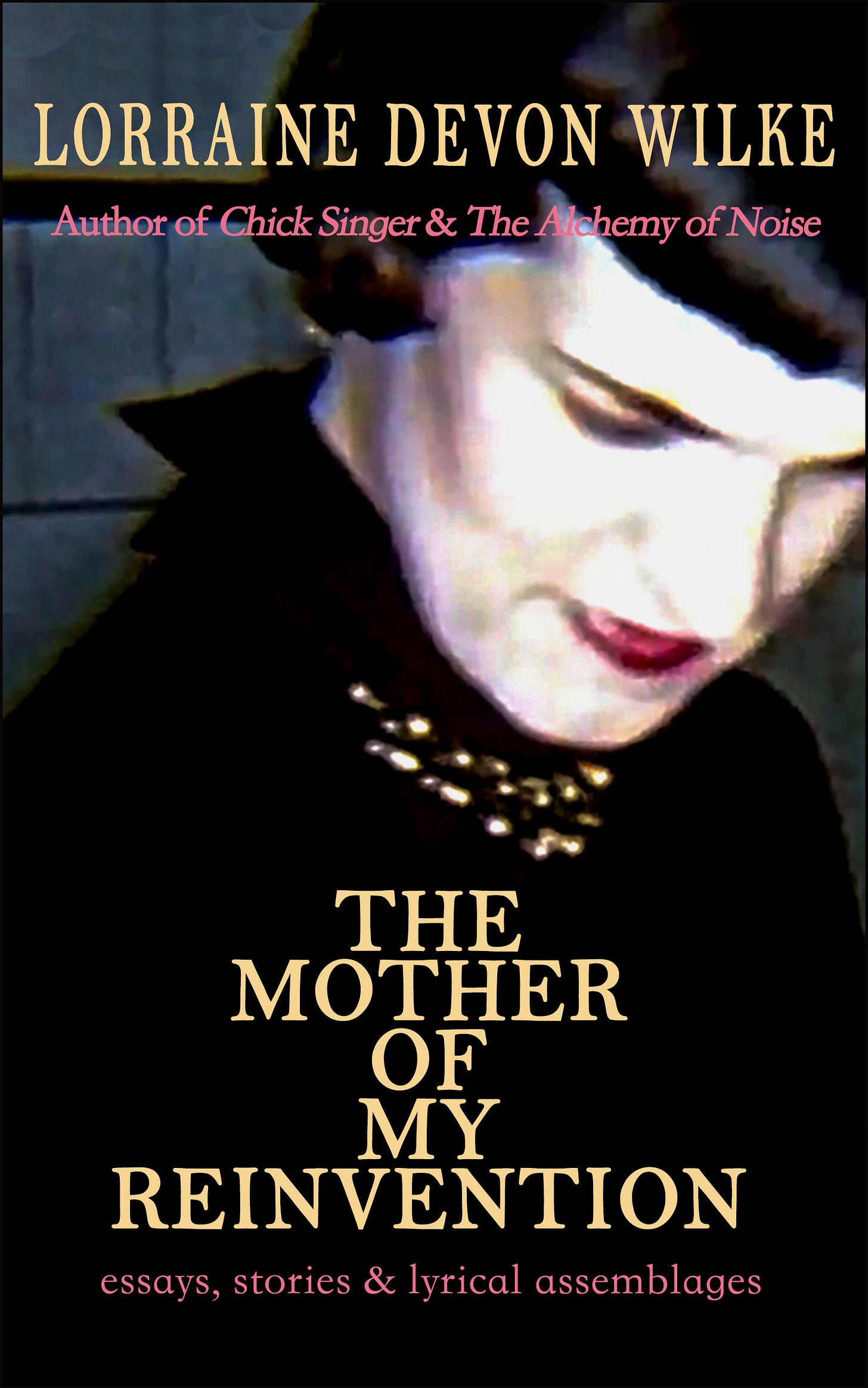
A fascinating online magazine, Habitat To Art, invited me to write about the journey to my latest novel. Titled, “A ‘Chick Singer’ Reflects on Dreams, Heartache & Renegotiation,” I hope you enjoy the read! Thank you, Laura Wagner, for the invitation and the platform. Much appreciated!

A ‘Chick Singer’ Reflects on Dreams, Heartache and Renegotiation

It’s unusual to refer to someone as a friend whom you’ve never met, but I consider Lorraine a friend and a commiserator. We bonded on Twitter (aka X) when one of her posts articulated my exact sentiments. I realized that, aside from shared ‘initials’, we shared many of the same thoughts. It is my pleasure to introduce her to our Habitat2Art famiglia and friends. I hope she will become a frequent contributor. ~ Laura Wagner

It comes as a slow infusion of awareness. A dawning of sorts. A moment when something happens, words are spoken; an epiphany emerges, and suddenly you learn what was heretofore unknown. New elements of who you are, clearer ideas of what you’re meant to be, to do. It’s both exhilarating and terrifying, identifying that dream, because now you’re driven to make it come true.

A girl whose name I don’t remember had turned around. She was in the descending row on the choir stand in front of me, and apparently I was singing directly into her ear. With an expression bearing some harmonic of surprise, she said, “You have a really good voice,” and I was equally surprised to hear those words. I sang loud and often, yes, but never before had any assessment of “really good” been assigned. That portentous comment opened my mind. I felt it, let it wash over me, recognizing the truth that singing not only transported me out of my everyday reality, but felt to be an honest, true talent.

And there it was. My designated dream. I was to be a singer.

It started with folk music, graduated to musicals, veered into singer/songwriter, but it was swiftly determined that I would set the world on fire as a rock & roll star. Not just a singer. Not just a rock & roller. No, I would be a “star.” It was fated. It was my destiny. Everyone in my orbit bolstered that belief, which was powerful, propulsive stuff.

The wild and wooly ‘80s became the launch pad. With the requisite big hair, ripped fishnets, belts and bangles, my band DEVON became an LA success story with incredible gigs, recordings, management, financiers, and fans; interest, excitement, and conviction followed, then came panic, despair, and, ultimately, the cold-water dip of having exhausted the decade of both time and opportunities with no shiny record deal to show for it.

Oh, dastardly, dogged dream …

I was gutted. Empty, lost, and heartbroken. It was not a matter of just moving on; every aspect of my identity was wrapped up in that persona, that expectation, that plan. I had no other plan, no contingency. Despite my father’s admonition to, “have something to fall back on,” I’d been so convinced of my dream’s fruition that “falling back” was a form of blasphemy. It would take hard grief, good therapy, and the love of excellent people to pull me out of the abyss.

But I did pull out. I survived. I recalibrated. I dipped into various other skills sets—acting, screenwriting, political opinionating, more music (though not of the “angling for stardom” kind, just … singing)—and began negotiating with my dream. Could I reinvent myself? Reconfigure, reimagine a path forward that felt authentic, real, and still offered some measure of my previous exhilaration? We haggled, my dream and I, and ultimately decided to keep music on a burner (if in the back), but let my photography and, particularly, my writing muses step forward.

I started a blog in 2010 when blogging was all the rage. Wrote for HuffPost for seven years. Got a fine art photography business going online. Then I started a novel. A novel. Crazy. Something I’d have never imagined doing prior. After the Sucker Punch published in 2014, followed in 2015 by Hysterical Love. In 2019, a small publishing company, She Writes Press, took on what would be my most controversial novel, The Alchemy of Noise, and in April of this year my fourth, Chick Singer, was released by Sibylline Press.

There’s something full circle about Chick Singer coming out at this particular moment. A moment when I’ve acknowledged, as the group I’ve intermittently sang with over the last few years struggles to find time to convene, that I do, indeed, miss being in an active, working band. One that plays enough to feed that part of me that rode my bike down the street belting out rock tunes. Writing Chick Singer (which is not my particular story but one I certainly understand) allowed me to excavate much of what I’d experienced in losing, and letting go of, that musical dream of mine. It dug into the emotional, even spiritual, journey of finding (clawing?) your way back to some version of yourself that’s healthy and resilient.

It was cathartic, in a way, writing that “chick singer’s” story. It reminded me that dreams are not intransigent, immovable. Despite the reality that what one imagines for their life doesn’t always evolve as planned, dreams have a way of adapting, adjusting, molding themselves into the you you ultimately become. Given my many years at it, I’m convinced they will doggedly stick with you until the end, though you may have to renegotiate from time to time.

But that’s not a bad thing. I’ve learned they are very amenable to that, dreams.