Junkfood Journalism: Why We Get Exactly The Media We Ask For And What To Do About It

There’s nothing new in complaints that journalism has died a slow, inexorable death since the days of great newspapers, intellectually sharp periodicals, and newscasters who brought wisdom and gravitas to their broadcasts. Culture bemoans the passing of those glory days, as media critics and the viewing, reading and listening public denounce most news and media coverage as cesspools of hacks plagiarizing each other, sensationalizing even the most banal of stories, and often getting facts wrong in the rush to get the “get” or beat the deadline.

And all that’s true… well, sometimes and in some cases. Particularly the sensationalizing part. But as someone who’s now been a media writer (how that differs from “journalist” I don’t know but I’ll take the lesser label in a nod to humility) for several years, much has become clear to me about how and why we got to this point. I’d like to take a minute to spell it out, at least from my point of view, and hopefully illuminate whose fault it is.

It’s yours, dear readers; your fault. You are to blame. Oh, I know you had nothing to do with Jeff Bezos buying the Washington Post, the fact that The New York Times is struggling to sell ad space or the Chicago Sun Times recently layed off all its full-time photographers. I’m aware you had no vote in choosing the cover of the Rolling Stone or pushing for the demise of Newsweek as an ink & paper magazine. Certainly you aren’t responsible for wrangling advertisers or selling souls to keep staff paid at online media companies. But you are the demand part of the supply/demand equation and it’s because of what you’ve demanded – gauged by what you buy, read or comment on – that has determined the direction of media in our 2.0 world.

And what you’ve demanded – the majority of you, anyway – are stories about celebrity weight gain, idiotic politicians, ever-more evil criminals, persistent racists, inexhaustible homophobes, wildly divergent religious nuts and… well, you know what you’ve demanded. And being slavishly devoted to the Almighty Demand that attracts the Almighty Advertisers which results in the Almighty Dollar, media sources in the 2.0 world are more than happy to supply that demand. Well… maybe not happy, but they’re doing it.

And the reason the media knows what you want? For rags like the Weekly World News, it’s how many rags you buy. For online journalism? By the sheer click of your keyboard to open a story. That one little seemingly benign click is a dead giveaway to the bean-counters of online media. And newspapers, media sites, magazines and political blogs are all paying rapt attention to just what you click on because the click is currency.

Back in pre-Internet days, a newspaper’s fortunes were determined by two elements: subscribers and advertisers. The more subscribers, the more attraction to advertisers; the more advertisers, the more money to pay reporters to provide that deeper, pithier coverage oldsters remember. It was a symbiotic and tenuous relationship that drove many a newspaper publisher crazy, but the value of the subscriber was not to be minimized.

However, in those pre-Internet days, publishers didn’t necessarily know what subscribers actually read on any given day. Yes, there were “Letters to the Editor” to reflect some response, but only few of those could be printed and, human nature being what it is, only the most outspoken took the time to actually write; clearly no scientific gauge of interest. Publishers and editors were inspired to be meaningful (Pulitzers were always nice), and burdened to pick the most important – but also the most attention-getting – stories for “above the fold.” If they got it wrong, fewer newspapers sold, dampening subscriber and advertiser interest, trickling down to economic tension. It was a business model built on the fragile anticipation of how best to present news and anticipate readership.

Then along came the Internet… and, as with so many other industries, everything changed, witnessed by the demise of countless fine newspapers and periodicals that had once been chroniclers of our life and times. While a few ink and paper sources remain, what we’ve got now is a glut of Internet media that represents the online versions of the New York Times, the Washington Post or any of the other extant big-city newspapers; the online arms of radio and TV stations; political, news and cultural media sites; bloggers – known and unknown – and every kind of site related to media you can possibly imagine. AND ALL ARE COMPETING FOR YOUR CLICKS.

Because, just as as subscriptions used to telegraph reader interest and loyalty, now it’s clicks. Every media site – large or small, The Huffington Post to Addicting Info to that blogger your friend turned you onto –  is competing for clicks. The click that happens when an online reader opens an article. They don’t have to read it, they don’t have to comment on it; all they’ve got to do is click it open and their “vote” has been registered. Those clicks tell advertisers that readers have gone to the page where their ads are placed, which encourages them to keep paying for that ad space. Those clicks tells Google, or whichever ad algorithm is being used, that readers have clicked on the page where they’ve sold space, which activates a mechanism for them to pay money to that media site for its clicks. The click tells a site which stories, which writers, are most popular, and those writers (and, yes, their less popular counterparts) get paid per click.

The click, therefore, is the trigger of success; the all-important gauge of reader interest.

And how do you get those clicks? You have to grab the reader’s attention with everything in your arsenal: sensationalized stories, attention-getting headlines, fear-mongering editorials, compelling photographs, provocative quotes; you focus on the most buzz-worthy aspect of any piece of news and pick stories that translate as urgent, salacious, can’t-look-away must-reads. Those are the stories that get the most clicks… hence, those are the stories that glut every news site online (and off). When even the higher profile sites like The Huffington Post, Salon and The Daily Beast run stories about orgasms, excrement, misbehaving celebrities, and who’s got side-boob problems, you know we’re all beholden to the mighty click. When headlines are purposely broad, base, and dripping with sensationalism (often times unrelated to the actual story they’re titling), you know we’re all beholden to the click. When publishers push trivial but prurient pieces over more meaningful but less exotic fare, we are all, very much, beholden to the click.

For writers, the formula is truly a deal with the devil. You need to make a living, you want to pick pieces that have the potential for high readership; you hope to “go viral” with something that catches fire, but you have your credibility as a writer to consider as well. So you throw in a few of the more didactic, literary, meaningful pieces to keep your journalistic cred intact, but it’s understood those are for prestige, not clicks… ’cause they ain’t gonna get any! If you get too squeamish about the smut, and turn down too many of the extreme, salacious, horrifying, incendiary stories, the other writers will take them and walk away with the “click load” of the day. And the writers with no compunction about journalistic cred? They rush to cover the latest shooting, the most grisly deaths, the biggest idiots doing the most idiotic things, and they cash out… while your Nelson Mandela piece, the moving article on roadside memorials, or that thoroughly researched post on the Arctic thud at the bottom of the list. Regardless of the urge to cover those stories, you know they won’t garner anywhere near the clicks as one about a baby being raped to death by a her mother’s sociopathic boyfriend. Like I said; it’s a deal with the devil.

A few colleagues shared some thoughts on the dilemma we online writers face. One, a male writer with a big following in liberal politics, said he occasionally has to write something literary and academic because the survival of his soul demands it… but he’s clear his bread and butter is in snark and sensationalism. Another spoke of her queasiness at making such big numbers on the aforementioned raped baby story when she’d rather be covering something more uplifting. Some writers get discouraged when their well-analyzed pieces on important issues tank while shallower, less researched ‘snap pieces” bring in the big numbers. See… it’s all about you readers.

Frankly, it’s the TMZ formula: prurience, gossip, snark; anything with the word “butt” – they cover those stories repetitively and persistently because readers click on them in such big numbers the demand is clear. And every media site is clamoring for numbers like TMZ.

Case in point: after a couple of years of doing this, I got into a discussion with an editor friend of mine who insisted that “good news stories” did well, “happy” pieces can catch fire, and inspirational themes could capture solid readership. I’m sure they can, I retorted… every once in a blue moon. In truer fact, I countered, the bulk of readers could care less about ‘good news.’ No matter how much they complain about sensationalism and salaciousness, they are, in fact, more likely to click on stories covering the spectrum of ‘evil-doing’ in politics, entertainment, religion, crime, and general life than pieces about heroes, winners and do-gooders. Proof?

It was the end of the year; the typical retrospectives were in order and I was set to write a “best and worst people of 2012” piece for Addicting Info. In a flash of brilliance, I realized this could be the perfect test for my theory: instead of combining the lists in one piece, I wrote two: The 10 Best People of 2012 and The 10 Worst People of 2012. Both were published at the same time, both started at top position on the site’s home page; both had compelling photographs appropriate for their theme; both were promoted equally. And in just the first days in which I was able to check the stats, the Worst article received almost 40,000 clicks; the Best… you already guessed it… less than 3000. While clearly not scientific, it made the point.

We get sensationalized, salacious, bad news journalism as a steady diet because that’s what readers demand by virtue of what they’re clicking. Or buying. Or reading. 

So my advice for those of you who want something better? DON’T CLICK ON THAT STORY ABOUT LINDSAY LOHAN. Don’t pick up that ridiculous tabloid about Hillary’s ‘alien baby.’ Don’t fall for the purposely ensnaring headlines, particularly ones about someone’s sexual habits, weight gain, bad cosmetic surgery, failing movie, stupid political comments, insane acts of self-sabotage, or latest bad affair. Pick and choose your real life crime dramas, presume the Westboro Baptist Church and Rush Limbaugh have been amply covered, and don’t be afraid to not read every single story about Sarah Palin and Ann Coulter. DO click on pieces about companies implementing health coverage for their employees, the lunacy of Confederate history month, anti-women myths that need debunking, the Herzog PSA about texting and driving and non-profit groups that shouldn’t get tax-exempt status. Enjoy good snark, witty commentary, sharp satire and inspirational think pieces. And get over the misconception that thoughtful, meaningful stories are too ponderous for online reading. Yes, the depth might be different but the word counts tend to be the same. And let’s make this very clear: the more you succumb to junkfood journalism, the more it will be fed to you. It’s that simple. They’re counting your clicks.

The future of journalism is in your hands… click wisely.

LDW w glasses


Visit www.lorrainedevonwilke.com for details and links to LDW’s books, music, photography, and articles.

What’s With Weddings? The Good, The Bad… The Wonderful

Daniela & Frank's Gorgeous Cambridge Mill Wedding, Anne Edgar Photography

Spent a recent weekend immersed in the buzzing activity of a big family wedding and, as I always do, made note of the event not only as a participant but a sort of anthropological observer. There’s always been something about weddings that’s fascinated me: why little girls dream of them from childhood on, why parents both dread and glorify them; why – unlike most other cultural traditions – they seem fraught with the potential to either explode into drama or transcend to magic.

I haven’t quite figured it out, probably because my experience has been a mixed bag throughout my wedding-attending life. There was one earlier on – that of my best friend from childhood – which was an extravaganza we all still talk about today. Between hay-rides, singalongs, strange motel proprietors and Bloody Marys, I was able to thoroughly enjoy my role as a catered-to participant. It was such a wild affair that it gave me a rather Gatsbyesque sense of what grand parties can be and that was worth noting. But after that one golden experience, the downhill trajectory on the topic did much to sour my taste for the tradition.

I became a long-running wedding band singer and I worked in the catering industry for years, so I not only know all kinds of popular food usually ordered, but even can give the best tips for your winter wedding in Tahoe. Right there, you’ve got a view from several angles, all with the capacity to blow the lid off. Or at least blow away the smoke and mirrors of the often less-than-magical behind-the-scenes madness.

Being in a wedding band offers an interesting perspective on the event. You’ve got the family insistent upon certain songs (fair enough), certain times (goes with the territory) and certain rhythms (“and don’t play disco during dinner”… as if we didn’t know!). You’ve got the bride arguing with the mother over what should be played during the Father/Daughter dance (yes, you’d think they would’ve worked that out earlier), a groom digging (and MIL hating) “The Stripper” during the garter bit; you got a father so insistent upon enough time for every single person in the wedding to participate in the “money dance” (yes, just like The Godfather) that you end up playing “Let’s Stay Together” for over an hour and a half (true story), while the bride’s bulging bag grows buldgier (shut up, I know that’s not a word!), and a certain lead singer vows to never again sing Al Green.

But whatever light a wedding band may shine upon the proceedings, nothing can quite demystify weddings as much as being the caterer. I worked for over four years with one of the premier catering companies in Los Angeles and when you are pulling the levers of the machinery that manufactures marital bliss… wow. You see it all. If you’ve seen any episode of Bridezillas, you’ve got the gist. I personally dealt with the following:

  1. A bride-to-be and mother coming to almost-blows about the head-count and “why the fuck they need to be there!!”
  2. A mother screaming at me about delivered napkins that were the “all wrong shade of purple!!”
  3. A bride screaming at me that the band didn’t know her “signature song” (of which they had not been informed prior).
  4. An entire family having a knock-down blow-out in the ante-room before the ceremony because someone’s ex had shown up.
  5. A coordinator screaming at me because the marzipan frosting on the cake did not “cut well.”
  6. A bride and groom screaming at each other over… I dunno, something.

The list could go on but you get the picture. Lots of screaming. And, of course, as every reception came to its close I’d be approached by the heretofore screamers, now oozing “thank you so much… it was SUCH a great day,” as if, like childbirth, the pain of labor had been all but forgotten.

Frankly, I grew to hate weddings. I’d watch as the actual ceremony, the hopefully touching public exchange of vows, become an after-thought to a big bash meant to impress, and there became something corrupt and meaningless about the whole affair. When it came time for my own wedding, my husband-to-be and I actually started putting the pieces together but, before long, realized the Beast That Is A Wedding almost can’t be contained, as various parents began twitching over this element or that, and the logistics of gathering the right group without going bankrupt became more of a challenge than we could stomach. After a few weeks of this number-crunching, we pulled the plug. A month later we drove to a judge’s chamber in a small town in Washington state, and with a bailiff and courtroom secretary as our witnesses, exchanged our vows in front of a properly respectful judge who made it all feel as special as a wedding is supposed to be. I felt the electrical charge of new connection as the man beside me became my husband and there has not been one moment since that I regretted the choice to elope.

But I am in the minority. Weddings remain not only the dream of many (most?) women, but are an industry poised to participate in rescuing the economy. From an April piece in The Huffington Post:

If you’re planning on tying the knot in the next five years, you’ll be doing a lot to boost the economy.

Industry research group IBIS World reported Tuesday that thanks to an improving economy and an increase in disposable incomes, the $50.6 billion wedding industry is expected to grow 2.3 percent over the next five years. IBIS identified five sub-industries that will see a particular increase in profits.

Love in the billions!

So if it’s an industry – and a tradition – that’s here to stay, how does a wedding-hater reconcile with the weddings in their own family? One must attend, one must do so with a positive, embracing attitude, but how does one do that when every bone in their body screams, “this is NUTS!!”

One must be lucky enough to have family members who find the exact right mix between the pomp and splendor of the circumstance, and the spirituality of its meaning. I’m that lucky person.

My stepdaughter’s wedding a few years ago looked to have the potential, from the outside, to be one of those über-weddings of cacophony and chaos: it was a several-day event with hundreds of participants, many locations, and lots of logistics. Instead, because my stepdaughter is anything but a bridezilla, has an extended family of remarkably amenable and generous people, and is herself such an efficient, smart and creative “producer,” this extravaganza, the kind I would have cringed at years ago, became a truly magical, mystical example of what a big wedding can be if all the right elements are prioritized. It was unforgettable, fun and deeply moving. And I’m not aware that any screaming occurred… unless you count that cousin who got excited during the bouquet toss!

Then there was my niece in New York. I dearly love my niece, as I love any excuse to go to New York, so we looked at the event as a family vacation, embracing the logistics accordingly. Like my stepdaughter, Lovely Niece was set on creating an event that would be both meaningful and fun, and with her imaginative, artistic heart, and wonderful circle of family on both sides, accomplished her goal… and then some. There was fabulous music (of both the performing and listening variety), brilliant comedy (there were Brits involved…), fabulous food, a beautiful setting and a ceremony that encompassed the poetry and traditions of love expressed. And, of course, there was dancing. Dancing the night away. Did I mention I was not aware of any screaming?

This most recent wedding was for another beloved niece. Like her cousin and my stepdaughter, she is a woman of fierce creativity, warm logic, and an abiding sense of what works, what’s manageable, and what would keep the proceedings… FUN!! Again, it was a several day affair, lots of traveling relatives and transportation wrangling, but there was a blessed absence of insanity, of expectations THAT MUST BE MET. Instead, shoulders were relaxed, ease was encouraged, and by the time we all gathered in the very well-chosen hall for both the ceremony and reception, the focus was properly placed on the tender, heartfelt vows; the funny, very touching officiating of the “cousin-preacher”; the sweet songs of a father and mother; the sass of a sister, and the warmth of uncles, aunts, a brother, and the many cousins and friends who filled the room. The party that followed was the kind of party we all hope for when we gather: great food, fabulous music, a hilarious photo booth, and, once again, dancing the night away. As the evening wound down, my niece stood with her new husband in the circle of remaining celebrants and said something lovely along the lines of, “This was the best wedding I could have possibly imagined,” and I’m sure it was. Because she did it right… and there was no screaming.

So I’m a believer. Not necessarily in the big wedding per se, but in the fact that a big wedding can be done without the insanity of misguided priorities and the pressure of performance. I’m still so grateful for my own very private, very sweet, very emotional elopement with my husband of 23 years, but if you’re going to do it big, let me know; I’ll put you in touch with my nieces or my stepdaughter. They’re some women who know how to do it right!

Wedding photo by Anne Edgar @ Unsplash

LDW w glasses


Visit www.lorrainedevonwilke.com for details and links to LDW’s books, music, photography, and articles.

I Write The Songs That Make The Whole World… Well, I Write The Songs I Love And We’ll Go From There

SOMEW TRAYIN.QXD

I spent a weekend in Chicago recently with a group of old friends celebrating a birthday. This particular group embraces people from every era of my life – grade school, high school, college, and beyond – and every single one of them is supremely talented in one creative arena or several. Particularly music. Which meant the weekend, like all weekends with this group, was filled with music: the singing, playing and, this particular weekend, the writing of it.

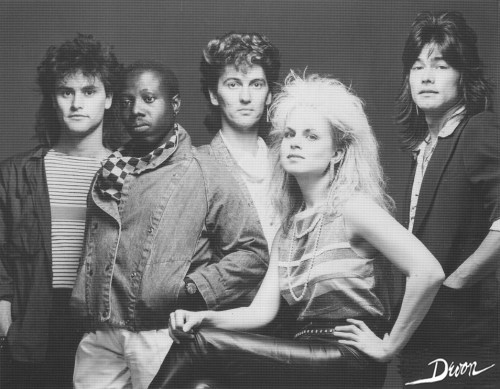
Writing songs used to be a major part of my life. I wrote my first real song back in the 80s, a very era-centric pop ditty called The Ghost, which I co-wrote with the drummer and guitarist of my band, Tony Alexander and David Resnik, respectively. It had a boppy sing-along chorus and a great synth part and the words worked with the rhythm. That song, for some odd reason, became a popular tune in France and was one of the band’s top requested numbers at live gigs. And I was singing my words… I was hooked.

The process of songwriting was mentored for me by both players but mostly Tony, who, though a complex fellow I didn’t always understand, was a deeply creative musician who organically understood the flow, rhythm and meter of music. He taught me to listen to what the music communicated and trust what it told me. He taught me to trust my own skills as well, and gave me plenty of opportunities to practice them. I became a good songwriter, predominately a lyricist at that point, and we – Tony, David and I – wrote some great songs together. One of my favorites, one that also, strangely, made it to France, garnered us the attention of 80’s icon, Kim Fowley, who thought we “smelled like money,” as well as thought we had an 80s hit in “What Can I Do?While the song never fully blossomed into the commercial boon we hoped, it was one that remained emblematic of the mood and musical sensibilities of the era and our part in it. One of my dearest friends, Tina, knows she was the inspiration for the lyrics and to this day presumes most of my lyrics are about her. 🙂

DEVON band photo w-logo

I eventually began writing melodies as well as lyrics, a process that relied on my ability to grab the “music in my head,” since my hands never learned to play an instrument well enough to properly assist me in the task. I’d listen to a recorded track over and over, locked in my “songwriting bubble” of focused, meditative concentration, and eventually the melody (and the words) would come to me. Sort of magical, always very exciting. As I was sorting out these various songwriting methods that worked for me, I discovered that the process is as personal and individual as any craft and, as my own confidence rose, I listened and learned where I could, but also came to understand that no one else’s process need be my own. When I’d read articles about that great writer who “wrote 5 songs a day” and all I could manage were one or two a week, I didn’t let it bother me. When friends from Nashville told me everyone there sits in a room together and hashes out lyrics line by line, it wasn’t hard for me to say I worked alone inside that “bubble” to find the story of a song. When others said you should do this or that or the other… well, I followed my own drummer and became my own songwriter. We each have our way.

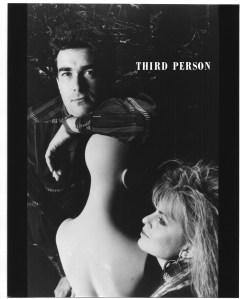
My second prolific songwriting period was what I called “the English chapter.” A couple of longtime Rod Stewart vets, the inimitable Jim Cregan and Kevin Savigar, were looking to put their own side project together, looking for a singer/lyricist specifically, and mutual contacts “made the marriage.” We worked together under the moniker Third Person (ironic that in the only band photo we took, Jim couldn’t be there so our “third person” was a mannequin!) and together, as well as with other writers the guys knew, we created a catalogue of songs that are still some of my favorites.

It was with “Tender Mercy” that I stepped up in this particular incarnation to first contribute melody parts. Both Jim and Kevin welcomed my contributions (and were very fun guys!), so writing with them, as well as with the other writers they brought along, was always fabulous. Lots of laughing and wine. Our process was, typically, that they’d give me already recorded music tracks with some melody ideas hummed over them, and I’d come up with the words. As we continued, tracks started to come without melodies so I could find my own, and, eventually, we started songs from scratch, sitting around Kevin’s music room or Jim’s Sunset Strip vintage condo bashing out songs we’d later record in some stellar Hollywood studio. Notable was the opportunity I had to provide Rod Stewart, at his request, with lyrics for the song that would ultimately become “Forever Young.” He didn’t use my words, but just the asking was a heady experience at that stage of my career!

After that chapter came a few years of writing and recording songs for films (my favorite being one I wrote with my old guitarist, David Resnik, for the independent film, To Cross the Rubicon, a tune called “I Surrender”). But the next big foray had to be my most profound and satisfying as a songwriter. I’d always wanted to write and record my own album; it was, in fact, a life-long dream. But as the music business undulated in the changing, churning tides of the digital and internet revolution of the 90s and into the 2000s, things changed. When piracy and downloading shattered all previously known paradigms, leaving the bar for “rock star success” so high and down so long and winding a road that few know how to follow, it became, for me, simply about the music.

In the early 2000s I started working with a deeply talented guitarist and songwriter, Rick M. Hirsch, doing a blues/rock gig, which was incredibly fun but largely built on classics rather than originals. Two years in, it finally felt time to create our own music and so we did. The first song we wrote together was built on a guitar riff Rick had in his personal library, one so evocative and emotional that I was immediately drawn to the melody and words of Drowning.” Songwriters are often asked what compelled certain lyrics, if they’re fact or fiction, and this one was definitely inspired by an outside source. Mira Nair had directed an emotionally wrenching film called Hysterical Blindness about a floundering young woman struggling with the fallout of her father’s abandonment and her own inability to find meaningful love, and the ache of that script jumped out at me; “Drowning” ended up being an homage to that very heartbreaking story.

LDW_RH

Another of my favorites from our collection was hatched in its melodic and lyrical entirety in the “songwriting bubble” inside my head, assisted by no music track or chord progression. It was just a musical line that ran over and over in my mind, its melody slowly attaching, with lyrics to follow. I sang it into a boom-box recorder (yes, that’s what we used back in those days!), gave Rick the cassette, and he came up with the chords and arrangement that not only supported it, but built on the words and melody. The song, Richer For Rain became an anthem of sorts, a testimonial to the triumph of realizing that one’s hurts and heartaches only add to the richness of who we ultimately become. It also became the title track of Rick’s and my CD of 11 original songs which, later, after the incarnation of our project took some turns, I released as a single artist under the new title, Somewhere On The Way (a refrain from “Richer For Rain”). That CD, a true labor of love and one I will remain forever proud of, is up at CDBaby and iTunes, if you’re interested.

While I continued to dabble in the craft even after that album was done and out in the world, as anyone reading this likely knows, my creative focus shifted more predominantly to other writing arenas: fiction, non-fiction, journalistic, etc. But the music Muse was always there, always tickling my brain with snippets of melodies and lines of verse that begged be formed into something cohesive and melodic. But circumstances to collaborate were fewer and farther between and so I suggested the Muse sit down for a bit, relax, and wait until some new turn of events offered an invitation. That came with this glorious gathering of friends.

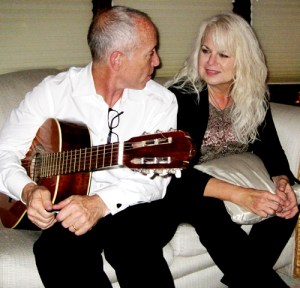
One in particular, Jason Brett, is a brilliant and accomplished producer (About Last Night), entrepreneur (founder and CEO of MashPlant.com, an emerging artistic and educational platform for school/student interaction), and all-around creative enthusiast, who also happens to think I’m one of the funniest people on earth (the feeling is mutual so you can imagine the time we spend falling to the floor in laughter, particularly if certain mutual friends – Pam and Louie, that’s you! – are there to egg us on!), and while I was visiting recently, he pulled out his guitar and we sat quietly for about 30 minutes banging through a chord progression he came up with, recording it on our iPhones to listen to later.

Later was back home in Los Angeles; I ran it over and over, inviting my Muse to sit with me and see if there was something to hear and translate from the music. We listened, again and then again, and there it was… slowly emerging from the tinny, muddled recording on my phone. First a melody idea, than a lyric or two; before long the whole song flowed out of that progression and I rushed to type up the story that was being told. I went back to Chicago a couple of weeks ago and we sat around Jason’s music room to work out the bridge, find the right key, come up with the feel and flow of the arrangement and, before I hopped back on the plane, we had our song. It’s ready to be recorded, but we’ve decided to accrue a few more before we go into a studio to experience something both long-distant and oh-so-familiar to me, as well as one of the most exhilarating experiences any singer/songwriter can possibly have: going into a good studio with excellent musicians and top-knotch technicians to record a song you wrote. Nothing much better than that in the spectrum of creative experiences.

I’m writing about this today because it reminded me of how powerful and energizing the creative process can be – whatever creative process – and how life can prove so circular and unpredictable. How things that once seemed to have disappeared can come back anew; how something we long ago abandoned or felt we had to put aside can suddenly move right into the forefront to bring us back to some part of ourselves we loved… and missed. My Muse is delighted to be back in the room. I’m delighted to have her there.

LDW w glasses


Visit www.lorrainedevonwilke.com for details and links to LDW’s books, music, photography, and articles.

Dog Days Of Healing Bowie…The Unknown Journey Of A Broken Pet

Portrait of a Dog_smMy dog is crippled.

Not even six, healthy, strong, full of life; he woke up Monday morning and couldn’t walk. Blown disc. No trauma had occurred, his disc just gave out for reasons unknown leaving him paralyzed. What a stunning way to start the week.

I’m not a dog person. Just ask Tina. Oh, I love dogs, I certainly love my dog, but I’m not one of those gushing “I love all dogs!” kind of people. Same with babies. I don’t love all babies either. Babies and dogs to me are just like adults; some you love, some you want to go away and stop licking you.

Truth be told, I’m more of a cat person. Easier to manage and I appreciate their independence. Dogs can remind me of dopey boyfriends; cats are more like those cool girls who’d be your friend but never invite you to the slumber parties. There’s something refreshingly unencumbered about that kind of detachment. It’s also annoying but that’s the trade-off with cats. Of course, my cat, Perry, was less a cool girl and more a pissy old uncle, but that was his way. He was a cat who played fetch, talked vociferously, and was clearly smarter than most – all – of my dopey boyfriends. I miss him to this day.

The whole pet thing has eluded me throughout most of my life. This is due to the fact that I had a pet-less childhood. With a small house and eleven children, my parents were understandably averse to adding more bodies to the mix, particularly hairy, peeing ones (my brothers amply fulfilled that role). But even beyond spatial limitations, my father had a sort of pathological disdain of “pet culture.” He seemed to view it as a money-wasting self-indulgence and, being a bit of an iconoclast, sneered at the compulsion of most to have one. A pet, that is. Damned if he would and damned if his kids would.

He did concede to a turtle, however. Not sure how a turtle passed muster; regardless of its hairless, non-peeing (that we were aware) status, it was a pet. But a turtle was the extent of it and we were happy to have it. For the time we did. While I believe we might’ve had more than one during the tenure of my childhood, I’m aware that I was responsible for losing our first, Turk, while playing in the apparently too-long grass in our front yard. How I managed to lose a very slow-moving turtle in a flat midwestern lawn is beyond me, but I did and I have no subsequent memory of grief from my presumably bereft siblings; which meant either Turk’s disappearance was a non-issue in my pet-neutral family, or everyone was so horrified I went into a dissociative state to escape their wrath. Bottom line, I killed my first pet and that was the canvas upon which my pet-philosophy sprang going into adulthood.

The first dog that came into my life was an adopted 2-year-old Golden named Charlie, who was the same age as my son at the time and immediately became a part of the family in that warm, fuzzy way Goldens do. Being uninitiated in the world of dog ownership, there were times when the noise, hair, peeing, pooping and general neediness between the two of them at their shared and tender age ratcheted up my frazzled quotient in ways that reminded me why I liked cats and only had one child. But I loved that dog; not as much as I loved my boy (and if you know my boy you know he inspires pinnacles of love), but I loved that dog like crazy, even used the dog communicator, and when he grew old and developed kidney failure and had to be put down, it was a true tragedy for our entire family, particularly my husband who is a dog person and who’d suffered a terrible trauma (hit by a car as a pedestrian) and found Charlie a comforting and healing companion. At that painful juncture I wasn’t sure I could ever endure having another dog; not when it came with such a short life-span and an end as agonizing as any loved one’s.

Then came Bowie. I’d never had a puppy and after my husband had the unimaginable misfortune of a second car accident, this one resulting in brain damage, it seemed time to bring another sweet, healing Golden into our midst. I picked him from the litter. We’d gone to the home of a family who home schooled their kids and had made the breeding of their dog a lesson plan of the semester. There were about 11 puppies, as I recall, and after sitting with a few squirmers, I picked up Bowie and he curled into my lap as if he belonged there. And so he did.

Smart, feisty, more courageous and less anxious than Charlie, he became an adored family member and a companion on all adventures, whether weekend beach forays or longer road trips…as my husband would always say, “you made the traveling squad, Bowie.” He tended toward some of his own extremes of bad luck: his first summer he was poisoned both by rat poisoning left at a vacation house and poison mushrooms snuffed on a long forest walk, requiring a sort of Hannibal Lecter face mask until he learned to not eat everything in sight. He was born with a rare skin condition that is not uncomfortable but leaves him uber flakey. He’s had congenital arthritis from birth which limits his ability to run like the crazy dog he wants to be. But despite these misfortunes, he was – is – a most exuberant and playful fellow who is deeply attached to us all. When the ramifications of my husband’s brain injury worsened at some point in early 2010, it was Bowie who kept him company when he took time away to heal and find himself again. From that point on, Bowie was my husband’s talisman; a warm, non-verbal partner (unlike his very verbal wife), a conduit for much-needed stress-release, and a companion for slow walks taken when a lessening of pain allowed it. When they came home it was noticeable how close they’d become and how foreign I and the boy seemed to our dog…which was its own little sorrow.

But it all came back. Even in the midst of their growing connection, Bowie and I found our own (as did my son). My regular power walks kept him on his toes and though he might have preferred the slower, tree sniffing meanders with my husband, he kept pace – most of the time – and built his stamina as I did mine. The day before that strange morning, we’d done some ball throwing, a good neighborhood run, and a crazy little game of tag in the front yard.

Then he stopped walking. Perfectly mobile on Sunday, Monday brought total paralysis. X-rays were clear, the myleogram was inconclusive, but an MRI revealed the blown disc. We got a full debrief of possibilities: he might walk again, he might not. If he does it might take a while – weeks, months; or, as they repeated, he might not walk again…ever. But whatever the result, the only possible fix was surgery. Big, messy, very expensive surgery.

If money is no issue, the prospect of surgery for a a relatively young dog in otherwise good health is a given. If money is an issue, as it is with us, there are other questions to consider: can we afford to spend thousands on a dog when we have a son in college, a wife who’s a freelance writer, and a husband who’s a private practicing attorney suffering with recurring symptoms of a brain injury? Can we afford money for a surgery that might not even result in a functioning dog? And what happens if we do end up with a non-functioning dog? Could we consign him to a life of immobility? Are we willing to take that on? Or would we make the decision after such an ordeal to put a crippled dog down? If so, how would that be reconcilable after the fact?

I was overwhelmed and questioning, but my husband was adamant. “I want to give him every possible chance,” and the decision was made to move forward. After immediate surgery and four days of post-op recovery, Bowie is now home.

He cannot walk but he’s beginning to move his legs. Getting him wrangled into proper position to do his business is a challenge; he’s a big dog and his legs don’t work…I guess that’s something we’ll have to sort out…quickly. He’s laying in a comfortable area created at the foot of our bed in a room where he and my husband will, once again, spend time together healing.

Me? I’ve retreated to my son’s room for the time-being, willing to give them their space and companionship. After years of my husband’s journey with brain injury this drill is a familiar one. I’ve learned to accept my solitude, keep my own counsel. I enjoy the work I do (even if the “virtual office” would be loads more fun with an office kitchen, hot coffee and Costco muffins!), so that is a boon. I have good, strong friends and family nearby who are there when I need them but don’t expect attention when there’s no mental energy to engage. I live near the beach and get to look out at the glorious ocean every day, and my own health is solid. I walk fast and often and though I miss my walking companion, I’m holding out hope he’ll rejoin me soon.

Bowie

And how does someone who’s not a dog person feel about all this? Two nights before Bowie came home I went to the hospital by myself and found him laying quietly in the crate where he was kept. He brightened immediately when I approached, enjoyed the biscuit I brought, and licked my hand so many times I’m sure his mouth tasted like Euphoria. I even allowed him to lick my chin – which I never do – but just once, ’cause I’m not a dog person who likes dogs licking my face. But when I got up to leave, assuring him he’d be home soon and we’d be back to visit the next day, he did something I’d never heard him do. He cried. He made sounds that were pained and full of anguish and even as I stepped out of his view and stood with tears running down my face, he continued, crying and crying. The doctor assured me “it’s just because you’re leaving and he wants to go with you. Go, he’ll be OK.” So while Bowie cried, laying there with legs that couldn’t walk, I walked out and felt my heart breaking in all the ways you’d expect from a… huh, I guess maybe I am just a little bit of a dog person.

LDW w glasses


Visit www.lorrainedevonwilke.com for details and links to LDW’s books, music, photography, and articles.

As We Embrace 2013: My Top Seven Points Of Facebook Etiquette

info vs wisdom
I love social media. Regardless of the list of complaints I read every day on Facebook; in spite of the articles about privacy erosion, ad tracking, and all the rest, I happen to love the connectedness, the interaction, the sheer volume and creativity of sharing that goes on there. Without Facebook in particular (though I did love Twitter during the presidential debate season!), I would know less about my extended family and friends, would miss amazing events going on in my city, would be less in the loop of the cultural and political zeitgeist, and would not have been able to reach out to the widening and always welcome group of readers and subscribers who’ve come my way via social media. I always love good “conversation” on intriguing topics, it’s clearly a boon for any independent artist, and whatever you think of what people may post there, it’s an entertaining, thought-provoking and educational “community bulletin board” I personally love accessing from day to day.

But. I know…always a “but.”

There have been many comments posted about what Facebook “is supposed to be,” particularly during this very political election year. I’ve heard from some bemoaning the saturation of political articles and discussion; one friend even exhorted fellow group members to “PLEASE use Facebook the way it was meant to be used…pictures of our kids, our vacations, that kind of stuff. I’m SO SICK OF POLITICS!!”

To which I say….hmmm.

My thinking: Facebook is meant to be used however you choose to use it. For some that’s exactly as the writer admonished. For others it is, in fact, the exact place to post and ponder politics. For still others it’s about enlightenment via inspiring text, images, and artwork. Personally, I love the mix; I wouldn’t want my Facebook experience to be limited to only one thing. When I scroll down the newsfeed I actually enjoy the anticipation about what I might stumble upon; it’s oddly like going to Costco and wandering down the aisles never knowing what’s going to be there or what might grab my attention! A great, big, interesting mess of different items with different points and purposes and I can choose what I want to look at depending on my mood in the moment. How cool is that?

But what to do if someone in your group posts too much of something you don’t want to look at? It’s not hard: Hide their posts, change the setting and filters on what of theirs shows up on yours; delete them from your newsfeed or…delete them all together. It’s all within your grasp to make Facebook work for you. Rather than get overwhelmed or annoyed, design your experience as you see fit. That’s part of the fun.

(Of course, deleting or hiding anything of mine is so not recommended. 🙂

And what about etiquette? I bring this subject up at this particular moment because we’re days away from the new year, and the turn of the calendar always seems a good time to reset the button, refresh the window, restart the engines (dear God, please stop); and yes…turn the page. To better behavior, more productive action; a new way of looking at things. And as I took note this morning of a particular “friend” who constantly posts about his gigs, his CDs, his radio play, etc., but never, EVER, takes a moment to comment on, share, respond to, or even “like” the posts of anyone else that I can see, I decided today was the day to make some “refresh points” about Facebook etiquette. Read, absorb, and if so moved, add any of your own in the comments section below. These are not in any particular order of importance; just the ones I see as most useful in terms of making my personal Facebook – and maybe yours – a richer, more reciprocal experience.

1. Musicians: Don’t use Facebook as your personal billboard. We love knowing about your gigs, CDs, awards, etc., but without reciprocation – commenting on the posts of others, responding to comments left on your own posts, answering private messages of support left in your FB message box, sharing the posts of others, or just clicking “like” (how easy could that be??) on things unrelated to YOU YOU YOU –  you’ve made Facebook your exclusive, personal billboard. And that one-sidedness gets old for the rest of us.

It also doesn’t allow those in your FB group to get any sense of you as a person, as someone who can see outside your own world to be interested in someone else’s, and that works against you. It makes you seem self-absorbed and narcissistic. Believe me, I’m going to be more interested in your work, in supporting that work, if you’re a person engaged with others; a person who steps outside of yourself long enough to be interested in what someone else is doing or sharing. You know how politicians kiss babies, shake hands, make direct eye contact, and stop by coffee shops to engage one-on-one with people? That’s done to create personal connection, which makes people feel closer to the politician shaking their hand and…yes, more likely to vote for them. So even if you can’t find it within yourself to authentically reciprocate on Facebook for the purest of reasons, do so because it’s going to ultimately work for your public relations. People will like you better. You’ll make connections beyond slapping your gig dates up every week. And please don’t say you’re “too busy”; if you have time to bombard us with all your posts and invitations, you have time to reciprocate. If you truly don’t, make the time. It’s just good form.

2. Writers, Artists, Photographers, Actors, Filmmakers, Business Owners, Group Leaders, etc.:  see and apply #1.  I post a lot. Because I write a lot, I do a lot with my photography, I post a lot. I do so because I want to share, get feedback, encourage you to enjoy and pass around my work. But I also spend a lot of time commenting, sharing, liking, reading, and perusing the work of others. Your work. Your posts. I enjoy that process as much as I do the posting. I like availing myself of what others see worthy of sharing. I’ve found great articles, amazing photography, interesting resources I wouldn’t have found otherwise and have even been so compelled by some things that I’ve then shared them myself. It’s not about reciprocating just for the sake of social media etiquette; there’s actual benefit…to you! You’ll likely meet some very cool new people, get to know ones you know better; you might find links or references that aid you in your own work, and you’ll become a part of the community, not just someone who the rest of us are supposed to pay attention to! Get in there. We’re not your audience; we’re your collaborators. You’ll be surprised how much more willing people are to pay attention when you return the favor.
Noteworthy

3. Commenters: This is a big one. Learn how to do it. I have a public profile; I’ve chosen that setting because I want to reach as many readers, music and photography lovers, culturally and politically interested people as I possibly can. Having a public profile means that many of the people who comment on my threads are people I don’t personally know. Don’t presume I do and make the judgment that I have really weird friends, please. Some of the people who subscribe to my posts may very well be weird. But all the same rules apply, whether you’re my cousin or a subscriber from Dubai:

  •  Civility is required. Without question. I’m not interested in name-calling and personal bashing of any kind. Speak your piece as candidly as you wish, but speak to the issues; don’t attack other commenters and keep your personal attacks on the parties being debated to yourself or to your own page. (i.e., you can slam Romney’s politics but I have no interest in hearing that “he’s a fucked up Mormon asshole.” You can think Obama is a socialist Muslim but since he’s not, keep it off my page. Certainly feel free to share those types of comments on your own threads, on your own page, but understand I’m not interested and will delete them.)
  • READ THE ARTICLE YOU’RE COMMENTING ON! Major one for me. I can always tell when people are commenting without reading the piece, particularly if they admonish me or make suggestions about something I “should have said” when I actually addressed that exact item in what I wrote. While I always appreciate anyone taking the time to comment, whether on Facebook or the comments section of an actual article, using my piece as a springboard to spout your opinion without the courtesy of actually reading what I wrote is…disrespectful. I take a lot of time to write thoughtful, cogent, hopefully intriguing pieces; if you choose to comment on them, thank you, but please do me the service of reading what I wrote before you do.
  • Please don’t hijack a comment thread on one topic by suddenly bringing up another, unrelated, topic that gets the next batch of comments off on a weird tangent. Particularly when the thread is filled with thoughtful, passionate comments from people who really do want to discuss the topic at hand. If you want to extrapolate beyond the point of the post, share it on your page with the unrelated comment you’d like to make.
  • If you have nothing useful to say, DON’T LEAVE A COMMENT. I’ve had to delete a few regular commenters from my threads because they repeatedly leave inane, pointless, even vile comments that offer nothing to the conversation. While I’ll leave opposing views, debating views, contrary views (presuming they’re suitably civil!), I will delete stupid shit, to put it bluntly.
  • Be thoughtful in your comments. Beyond civility and usefulness, there’s really no point in just parroting the same, weary partisan bromides, thread after thread. Thread conversations on my page are usually about significant topics of great importance to people; take the time to offer something thoughtful and illuminating. I’m less interested in agreement than considered, honest, even researched contribution. If you’re on the other side of my aisle, don’t just be contrary or combative. Offer something insightful, sane and potentially thought provoking from the other side. Makes for a much more meaningful contribution.
  • That’s my list…do you have any others?

4. Mix up your posts. I’ve already covered the “make Facebook what you will” theory, but there is one part of the complaint that has merit. Which, to my way of thinking, is this: certain people become too predictable.  Not just musicians, artists, etc., promoting their work, but others who tend to ONLY post one type of thing, typically political pieces expounding on their side of the political divide. When you see their name, you know what you’re going to get. If you share their politics, it can be a good read; if you don’t, you skip on by. But what if you, the poster, are more interesting than just that? What if you’re missing out on engaging FB folks who’d add richness to your conversation but instead walk on by because they think they know what you’re saying without even looking? You are on Facebook for the point of sharing, so don’t limit your audience by being so predictable! Mix it up. Surprise us with something we wouldn’t expect from you. Post about your politics, certainly (we all know I do!), but then surprise us with a piece about music, your favorite ice cream truck, or an amazing person from Africa who discovered a new species of bug. SURPRISE US! It keeps you fresh and us interested.

5. Be Present and RECIPROCATE. If it seems I’ve already covered this, there’s a nuance here that bears stating. If you’re on Facebook but not participating, ask yourself why you’re there. Frankly, I don’t understand people who sign up, put up a Facebook page, “friend” lots of people, then never contribute or post…ever. I’ve had more than one person tell me they “like looking at everyone else’s stuff but don’t really want to post anything of my own.” Really? Don’t we call that stalking? Or voyeurism? 🙂 Obviously this is not remotely earth-shattering and is, as my son would say, a “first world problem,” but the point of social media is being “social.” It’s about connecting and participating in the greater social community created by Facebook, Twitter, Stumbleupon, etc. If you’ve taken the steps required to sign up, build a page and accrue some friends, can I make a suggestion? Participate. Jump in. Say hello once in a while. Click “like” as a default position of participation (really, could anything be easier than the “like” button??). If you’ve sent a “friend” request and I’ve “friended” you, or you’ve accepted a request of mine, come on…PARTICIPATE. Don’t just peek over the fence and offer nothing to the conversation. You climbed onto the Facebook hayride for a reason; figure out how to use it. But if, ultimately, all you really want to do is peruse other people’s links, posts, pictures and stories…OK. But at least take the nanosecond required to click “like” when you’ve read or viewed something that you…liked. It’s quiet participation, but it still counts and those who get those clicks will appreciate them, I promise.

6. Thank you, but NO Poking, Games, Applications, “Please Make This Your Status For One Hour If You Care,” Facebook Privacy notices, etc. This is personal request of mine, though I know others share it. I use Facebook in all ways I’ve laid out here. What I don’t use it for are things I’m not interested in or think have merit. Poking, games, applications, birthday calendars aren’t my thing; please don’t take it personally, but if you “poke” me, send an invitation to a game or application, or even send posts that require I join something to open them, I’m not going to participate. Sorry. Also, those “Please make this your status for an hour if you care” postings are just guilt inducing. If you wish to post something for an hour, great. But please don’t imply that I don’t care if I don’t. I usually do care. But I won’t post them. As for Facebook privacy notices, warnings, etc.: if you believe a Facebook privacy warning or notice is worth sharing and request that I and others pass it around, please check www.snopes.com first to ascertain whether or not it’s bona fide. Almost 99.9% of times it’s not and it’s just a big waste of everyone’s time, including yours. If you can remember these items here in #6, wonderful; if you forget, please don’t take it personally when I reject the invitation or don’t respond.

7. Public Profile Friend Requests: This applies to me specifically but it bears making a point. If I get a friend request from a “public person” I don’t know, particularly one who has no “mutual friends,” I am going to look at your Facebook page before I click “confirm.” While I welcome people from all over the world, with varying political, religious and cultural beliefs and norms, I’m going to look at your Facebook page first and if you have nothing on it, nothing “about” you, I will not confirm you as a friend. If you have a profile in a language other than English and I cannot read and understand what you’re “about,” I won’t confirm you. If you have a profile that displays Satanic, Nazi, racist, intolerant, bigoted hate-speak of any kind toward any group, religion, ethnicity, etc., I will not confirm you. I will only confirm you if you have a fully realized Facebook page and you seem like a basic, decent person. Of course, if your contributions later proves that to be untrue, well…you know what happens then.

So there you go, that’s my list of the Top Seven Points of Facebook Etiquette. Please read, take to heart, without offense, and with the positive intent in which they were conferred. Social media is an amazing tool, a profound point of exchange, and a really fun, engaging way to connect with each other. Let’s all try to do it in a way that makes it as positive and rich as experience as it can possibly be…particularly in the bright, shiny new year of 2013!

Happy New Year!

LDW w glasses


Visit www.lorrainedevonwilke.com for details and links to LDW’s books, music, photography, and articles.

The Ten Worst Christmas Traditions. Really. And I Love Christmas.

Quirky Christmas_sm

There is no holiday as steeped in tradition as Christmas. Every denomination, ethnicity, country, even individual sections of the United States, has specific traditions that infuse their celebrations with something rich and unique. Of course, there are also the more mainstream, universal traditions that often seem to transcend diversity, to the point that they become trademarks of the holiday. Some are good, some not so good. Some have even circumvented all conventional wisdom and good taste to become iconic symbols of Christmas gone wrong (if only tongue-in-cheek). We’re going to focus, for the moment, on the not-so-good ones that makes us all – well, most of us – cringe just a little.

The Ten Worst Christmas Traditions In No Particular Order

1. The Christmas sweater. Why does anyone think a bulky knit top with garish Christmas designs and neon-bright colors is ever a good sartorial statement? When Rudolph’s red nose pokes conspicuously at Grandma’s bosom and Santa’s beard stretches over Uncle Bob’s burgeoning belly in that way that makes the little kids laugh and point, it’s time to take a second look at this notorious holiday fashion. Regardless of well-meaning knitters, Christmas sweaters are simply not flattering on anyone – truly, no one.  EvenAngelina Jolie would look hideous wrapped in red elves with bells. Also, and not to be dismissed lightly, they make even the slimmest person look as if they’ve already packed on the Holiday Ten. Truly, the only way to wear one is ironically, and really, how often is that the case?

Suggestion: Since there is no way to make a Christmas sweater look good, follow the advice of wiser fashionistas and avoid them like room-temperature eggnog.

2. The Christmas family newsletter. We get it: it’s the year-end wrap-up, the summation of twelve months of familial accomplishment; the list of achievements of children and grandchildren far and wide, blah blah blah. The problem is, family newsletters are sent out generically, to the entire Christmas list, with no particular accommodation made for individual relationships. Which means we’re all regaled with “Austin’s Scout troop went to Springfield for the Lincoln fest …” or “Minerva did her very best but only placed second in the McHenry County step-class competition” when most of us have no idea who Austin and Minerva are.

Suggestion: Send them only to people who actually know all the cast members and trust that the rest in the family/friends circle either already know or will find the updates on Facebook.

3. The Christmas photo card. I don’t know why, but I’m pretty sure Christmas photo card companies are run and staffed by Satan. There can be no other explanation for the stunningly and consistently HORRIBLE photographs that emanate from their environs; hideous concoctions sent on cheap, glossy card stock accompanied by a generic message and the name of the family. I’m not talking about the cool art cards created from professional shots you send in to a design card company; I’m talking about the ones that are shot in a cheesy mini-mall studios with the worst possible lighting, backdrop rejects from the local high school theater department, and stylists who pose humans – and too often, animals – in ways that suggest nobody involved has a clue about composition or creativity. In fact, I’ve observed that even attractive people can be made significantly less so by bad photo processors who makes normal people look strange colors and all people look like deer in the headlights.

Suggestion: Don’t do it! Or make the investment to hire a professional photographer and get it done right. These will likely be on refrigerator doors for months to come; have some pride in your legacy.

4. The Christmas Video or CD. The digital revolution has brought much good to the world. It has also lowered the bar on every form of creativity and entertainment ever dreamed of by man. Due to the ease and affordability of creating almost anything – books, movies, records, photographs, videos, etc. – everyone with even a modicum of computer skill can crank out something that resembles a creative accomplishment. For people with talent who, heretofore, had no funds to get this done, this is a boon. For the rest of the much larger crowd of marginally-if-not-at-all talented folks, it has resulted in a sea of self-created, self-produced and self-published product that is akin to the photo card discussed in #3. More regularly now, families are creating Christmas videos and CDs to send out with their Christmas card (and, God help us, newsletter). While certainly a delightful bonus to the non-judgmental immediate family, the less forgiving friends and colleagues on the Christmas list are less amused or entertained by a four-minute rendition of a badly-performed version of Jingle Bells, with lyrics specific to your family and sung by grade schoolers who, though charming in their squirmy grade-school way, will not be winning any awards at “America’s Got Talent.”

Suggestion: Again, don’t do it. Don’t send it out. Or, like the suggestion for the newsletter, reserve this stocking stuffer only for a very select few in the closest possible family circle. They’re always an amenable bunch.

5. Fruitcake. You wouldn’t think at this point we’d need to have this conversation. It has been made abundantly clear that nobody on this great green Earth actually likes this stuff. The Food Channel can show as many “how do they make these?” shows about the dubious confection, and Claxton, GA can unashamedly claim the title of “Fruitcake Capital of the World,” but I’m going to go on record, here and now, and say this has got to be the biggest waste of calories in the entire food pyramid.

Suggestion: Don’t send me any. Please.

6. Carolers in Restaurants. I know, I know; they’re charming, they’re in pretty costumes (apparently all carolers are from the Victorian era), they sing well (usually … ometimes … not always.) and they bring musical merriment to any restaurant festive enough to hire them for the Christmas season. And they won’t get away from your table no matter, how reticent you were about “what song would you like?” And could they get any louder with that jingling bell and the four-part harmony on “I’ll Be Home For Christmas?” I was at a restaurant recently where we got hit up once – fine, they sang one, two songs, we all tipped, they moved on – then a second batch came by later and despite our alerting them that we’d already been serenaded, like a wolf pack of aggressive carol-harassers, they insisted on another round. Pressing as close to the table (and my head) as they could get, they sang too loud, too long and made us feel like captive audience … literally. I would’ve tipped them to go away, which they ultimately did … but not before my prime rib got cold.

Suggestion:  Bring the volume down, one song per table (unless otherwise requested), don’t hover for tips and if people don’t want the racket, move along.

7. Green Bean Casserole: What is this dish … really? Canned soup, canned fried onions and beans. In a casserole dish, piping hot and … seriously strange. This is a culinary holiday tradition? Why? A holdover from the Depression? Campbell’s Soup propaganda? Brainwashing from the ‘50’s when canned products were actually served without irony? Whatever the reason, please stop. We’ve moved on. Fresh fruit and vegetable are easily accessible. Get a little creative. Vintage is nice with old clothes and furniture, not so much with food.

Suggestion:  Anything else of a vegetable variety that doesn’t come in a can.

8. Charity solicitors.  There’s no secret to the timing; organizations that raise money for any kind of charity, religious group, foundation, etc., choose Christmas time – the “time of giving” – to hit up generous (aka: guilty) people who feel moved at the holidays to dig deep. However, in more current times, most of us do our giving via the web or mail: making donations, giving to Kickstarter campaigns, gifting charitably, etc., and door-to-door solicitors only seek to interrupt dinner, disturb the evening activities, get the dog barking like a hound and cause us to stand too long in our doorway listening to a badly memorized script about “unwed mothers,” “children looking for a way up,” or something to do with a church. I get it; they’re doing what they gotta do. But giving is done in many ways; for most, it’s safer, easier and more credible to give via the web versus giving to a teenager with a clipboard. The other night I had three episodes of doorbell ringing, dog howling, and long speeches about giving. It broke my heart to repeat my “I give via the Internet” (I do!), but it had to be done.

Suggestion: Groups that send children door-to-door need to rethink the strategy. I feel for the kids pounding the pavement, but it’s not a particularly workable paradigm. It ends up creating a sense of disruption – like calls at dinner or email spam – that works against the goal. I give online. Thank you for thinking of me but please don’t roll your eyes when I tell you I’m not going to donate to your cause, Christmas or no Christmas.

9. Animated Christmas e-cards: At first these were cute, particularly Jacquie Lawson cards, or JibJab silliness. But after you’ve received about twenty of these from well-meaning friends, they all, seriously, all, start to look the same. Cute graphics, warm messages, silly messages, you click, you watch, “oh, cute!” … you get the picture. Actually, you do get the picture, but it’s kind of lost its cachet. It’s like Krispy Kremes or Tickle-Me Elmo; after awhile, the novelty wears off.

Suggestion: If you’re so moved, send them out once to somebody, then never again. I know, that sounds Scroogian, but that’s just the way it is.

10. And lastly, Mistletoe. Seriously, while this may have descended from a delightful Norse tradition, in today’s culture this poisonous, if picturesque, little plant is an invitation to your creepy uncle leaning in the dining room doorway, the skeezy loser at the office party who slips in a little tongue if you happen to be found under said plant, or for any number of people you don’t want kissing you to feel they have permission to do so by virtue of this age-old holiday tradition. It’s like a flora gone wild.

Suggestion: Use mistletoe sparingly for colorful table displays, embellish Christmas packages with it, delight in holding it over the head of your willing loved one, but keep it off ceilings and doorways where unsuspecting recipients of unwanted kisses are too often found.

So there you go; that’s the list of the Top Ten Worst Christmas Traditions. You likely have some of your own. Feel free to share in comments. We’ll keep track and just make the list bigger next year!

Merry Christmas!

LDW w glasses


Visit www.lorrainedevonwilke.com for details and links to LDW’s books, music, photography, and articles.

But Men Can’t Have It All Either

It’s not a new conversation. We’ve been having it since women broke out of the shackles of 1950’s thinking and began carving lives for themselves outside of hearth, husband and home. Finding balance, advancing ambition, spinning plates, and determining how we do it all without destroying the family paradigm – or driving ourselves nuts at the fear of doing so – have all weighed heavily on the minds of women now out in the work force yet still trying to be the best possible wife and parent they can be. It’s a tall order.

The women’s lib movement declared that women not only could have it all, but should. Some in the movement even went so far as to say that struggling with the pull between family and career was the mark of a woman not fully liberated, but many became confused when the “have it all” mantra proved rosier in theory than in practice. Certainly there has been progress: gender roles have been redefined, doors have been opened, glass ceilings have been shattered in industries, career paths, and institutions that, heretofore, had only been regarded as bastions of men (even the venerable, vaunted, slightly musty Augusta National Golf Club has opened its doors to women, though only a couple so far, Condoleeza Rice being one). Like many other cultural evolutions, advances are quantifiable and, yet, problems remain; even as new ones spring up.

The conversation came into full relief recently when Anne-Marie Slaughter, former director of policy planning for Secretary of State, Hillary Clinton, unexpectedly quit her post – a job she loved and excelled in – and explained why in an article in The Atlantic titled, somewhat to the point, Why Women Still Can’t Have It All.

…for the remainder of my stint in Washington, I was increasingly aware that the feminist beliefs on which I had built my entire career were shifting under my feet. I had always assumed that if I could get a foreign-policy job in the State Department or the White House while my party was in power, I would stay the course as long as I had the opportunity to do work I loved. But in January 2011, when my two-year public-service leave from Princeton University was up, I hurried home as fast as I could.

A rude epiphany hit me soon after I got there. When people asked why I had left government, I explained that I’d come home not only because of Princeton’s rules (after two years of leave, you lose your tenure), but also because of my desire to be with my family and my conclusion that juggling high-level government work with the needs of two teenage boys was not possible. I have not exactly left the ranks of full-time career women: I teach a full course load; write regular print and online columns on foreign policy; give 40 to 50 speeches a year; appear regularly on TV and radio; and am working on a new academic book. But I routinely got reactions from other women my age or older that ranged from disappointed (“It’s such a pity that you had to leave Washington”) to condescending (“I wouldn’t generalize from your experience. I’ve never had to compromise, and my kids turned out great”).

Her article goes on to analyze, through her experience and that of others, how deeply the notion of “having it all” can clash with the reality of work demands vs. the primal desire to be there for the children you’ve brought into this world and feel a grave responsibility toward. She discusses the rigid work schedules (as she had) that often put many women at odds with their roles as mothers (and wives) and leave them attempting to wear all hats at the expense of their health and emotional well-being, as well as that of their children. She champions the concept of “flexible working hours, investment intervals and family-comes-first management,” but also acknowledges that, outside higher level professional positions, the average working woman cannot expect those accommodations, nor do her financial responsibilities give her the flexibility to demand them. Slaughter concludes that both men and women in positions of leadership must work together to create working conditions that address these concerns not only for those higher in the food chain, but equally for “women working at Walmart.”

Some of the criticism Ms. Slaughter has endured since writing this article has been swift and, in some cases, cutting; not unexpected when you’re taking on the veritable foundation of a movement designed to champion women along the “I am strong, I am invincible, I am WOMAN” lines. Even Hillary Clinton was asked to weigh in on the thinking of her former employee, and her comments, recorded in recent Marie Claire interview, stirred up their own controversy. In the portion of the interview in which the interviewer asked Ms. Clinton about her former employee, Marie Claire attributed the following quote to Ms. Clinton:

“I can’t stand whining. I can’t stand the kind of paralysis that some people fall into because they’re not happy with the choices they’ve made. You live in a time when there are endless choices. … Money certainly helps, and having that kind of financial privilege goes a long way, but you don’t even have to have money for it. But you have to work on yourself. … Do something!”

However, shortly after this interview came out, a State Department spokesperson took Marie Claire to task for “taking Clinton’s comments out of context.” According to the interview transcripts, Ms. Clinton had discussed Holden Caulfield with the interviewer’s daughter and made her statements in relation to that. As the NY Daily News reports:

The former State staffer Anne-Marie Slaughter was not the person Hillary was slamming. It was Holden Caulfield, the fictional character from the cult favorite novel “The Catcher in the Rye,” who happened not to be mentioned in the article.

“With all due respect to JD Salinger,” Clinton spokesman Philippe Reines said in a release about the resulting confusion, “it’s clear as day from the transcript that the only person being called a whiner is his fictional character Holden Caulfield.”

And then, of course, the Marie Claire interviewer came out with her own quote in The Huffington Post defending her article and whining about the whining about the word “whining.” Dear God, how can we “have it all” when we can’t even talk about having or not having it all without having a hissy fit?!

But this is not just a problem for women. Men can’t have it all either. Men who think they can because they have powerful jobs, loads of money, and wives who take care of the expensive house and those privileged children? Odds are they know better than anybody what they gave up to get there. Perhaps relationships with their children that go beyond the cursory and superficial. Perhaps a level of emotional intimacy with their wives that’s been lost along the way. Maybe they wish they could shuck off professional responsibilities to hit the road in a camper but wouldn’t think of it for fear of losing position. Likely they’ve missed important family events, school plays, occasions when their absence was sorely missed for the sake of job demands, the relentless need to stay on top of things, stay ahead, be one step ahead of the next guy. And the men who didn’t jump on that gravy train so they could have a more involved role with their families? Likely, like any woman who made the same decision, their professional trajectory was commensurately stunted. It’s the way the game is played. The only gender difference is this: working men often have working wives who also do the laundry, clean the house, make dinner and take care of the kids; most working women rarely get that kind of partnership equity in return. Now, if working women could have wives too…

Forget having it all; no matter what they say, that’s not possible. It’s all about trade-offs and anyone who faces life with a modicum of candor and honesty knows this. Decide what you want, decide which of those things is most important, then go for it. Understand that the demands of one will impact the other and choose accordingly. Don’t kid yourself; be honest about what you can provide to a family before you have one; be as honest about what you can contribute to a job before you take it. If you have kids and go back to work, understand how that will feel for you and for them. Whatever your decision, man up, own it, and do the best you can. And if you discover conflicts after the fact, adjust your decision and make the necessary changes. Frankly, I admire Ms. Slaughter for doing exactly that. She adjusted. Regardless of what it looked like on the outside, regardless of the browbeating she took from feminists, others in the field, or women and men who might be afraid they’re in the same boat as she but don’t, perhaps, have her courage to make such a phenomenal change, she recognized the problem, acknowledged her priorities, and took action. I admire that.

I can also think of no more liberating a move. Acknowledging your priorities and making a choice. That is, after all, what the woman’s movement was all about: the freedom to make choices. Let’s stick with that.
LDW w glasses


Visit www.lorrainedevonwilke.com for details and links to LDW’s books, music, photography, and articles.

The Politics of Political Harassment: Might It Need a Law Too?

He walked into the lunchroom like he was walking onto a campaign bus; poster of “his” presidential candidate in hand, he marched to the community bulletin board, tacked it up, and announced loudly, “This is the next president of the United States. Anyone who doesn’t think so probably shouldn’t be eating at my tables.” Yep. He was the boss. He quickly laughed and said “Relax, I’m just kidding!” before making his exit but the point had been made. Everyone looked silently at each other before getting back to their soup and turkey wraps.

A new young employee finds herself in benign conversation with a supervisor about the Vice Presidential debate, all very generic and anecdotal, when the supervisor leans in with a paternal arm around her shoulder and says, “Can’t be undecided now, right? Who are you voting for, by the way?” Before new young employee can answer, he quickly responds, “Because everyone here is pretty much for _____________.” He squeezes her shoulder, gives her a wink, and walks off. She gulps and shuffles back to her cubicle.

A group of department heads with varying degrees of seniority are gathered for a human resources seminar. Before long, and before the official meeting starts, the conversation steers to politics and, without subtlety or discretion, five out of the seven begin discussing what “an idiot” the President is; laughing about his name, his “lack of religion,” and his “dubious” birth certificate. The other three? Two are relatively new to the company and the third is departing shortly on maternity leave. Speak up? What do you think?

And lastly, this past Monday the CEO of Westgate Resorts, David Siegel, sent out a company-wide email detailing why he was voting for Mitt Romney and what would happen to his employees if they didn’t. According to CNBC’s Robert Frank:

“Siegel stressed that he wasn’t out to intimidate his workers into voting for Romney. ‘I can’t tell anyone to vote,’ he said. But he wants to make sure his workers made an informed choice. ‘I want my employees to be educated on what could happen to their future if the wrong person is elected.’”

The story and Siegel’s full email can be found here: CEO to Workers: I May Fire You If Obama Wins. Important to read, I think.

In case the thought struck you too, here’s the legal definition of another kind of harassment:

Sexual harassment is a form of sex discrimination. The legal definition of sexual harassment is “unwelcome verbal, visual, or physical conduct of a sexual nature that is severe or pervasive and affects working conditions or creates a hostile work environment.”

Now let’s add in the paragraph about how this harassment affects working conditions:

Affects Working Conditions or Creates a Hostile Work Environment: If you are fired, refused a promotion, demoted, given a poor performance evaluation, or reassigned to a less desirable position because you reject a sexual advance, that almost certainly is sexual harassment. Even if the conduct does not result in economic injury or change of status to your job, it may be sexual harassment if the conduct unreasonably interferes with your work performance or creates an “intimidating, hostile, or offensive work environment.” For example, it may be illegal sexual harassment if repeated sexual comments make you so uncomfortable at work that your performance suffers or if you decline professional opportunities because it will put you in contact with the harasser.

Seems pretty clear. Now, just as an exercise, let’s replace all the “sex” words in both paragraphs with words related to “politics”:

Political harassment is a form of civic discrimination. The legal definition of political harassment is “unwelcome verbal, visual, or physical conduct of a political nature that is severe or pervasive and affects working conditions or creates a hostile work environment.”

Affects Working Conditions or Creates a Hostile Work Environment: If you are fired, refused a promotion, demoted, given a poor performance evaluation, or reassigned to a less desirable position because you reject a political suggestion, inference, or demand, that almost certainly is political harassment. Even if the conduct does not result in economic injury or change of status to your job, it may be political harassment if the conduct unreasonably interferes with your work performance or creates an “intimidating, hostile, or offensive work environment.” For example, it may be illegal political harassment if repeated political comments make you so uncomfortable at work that your performance suffers or if you decline professional opportunities because it will put you in contact with the harasser.

See how easily all the same verbiage applies to the scenarios detailed above? The intimidation, the presumption of agreement, the implication of negative consequences, etc.? How is political harassment in the workplace any less oppressive, offensive, or objectionable than sexual harassment? For the person being harassed, it likely isn’t.

I was listening to a debate about this exact topic on NPR the other day, an AirTalk segment titled: Talking politics: is it taboo in the workplace? Host Larry Mantle was discussing the parameters in which employees and employers are within – or without – their First Amendment rights in discussing political beliefs in the workplace. It was very illuminating to hear the feedback of his guest, Steve Kaplan, a Labor Employment Lawyer in practice in Los Angeles and former chair of LA County Bar’s labor and employment section.  Click the title link above to hear the interview; it’s only 16 minutes long and it’s worth a listen.

family-gathering

As everyone who reads anything I write knows, I love talking politics and I’m happy to do so with any willing, relatively intelligent person with a cogent viewpoint. I figure if I write something that is published in a public forum like Facebook, Huffington Post, Twitter, here at Rock+Paper+Music, wherever, and someone actively chooses to engage me based on that public contribution, great; let’s talk turkey. No one has to read what I write, no one has to ponder my points, and no one has to respond (and given the nature of online media, unless you voluntarily join in, I won’t have a clue what you think!). But beyond those mutually chosen online exchanges is the world outside the internet: family gatherings, friend get-togethers, intimate dinner parties, large occasions, etc. And there, in those settings?

Unless I’m invited into a conversation of a political nature that I choose to join, don’t expect to hear me chattering away about who I think should be doing what in what office of the land. As good manners dictates on any topic of substance and potential controversy, I don’t believe I – or anyone – should spout off about personal political beliefs without first ascertaining the listening party’s level of agreement or interest. Cuz lots of the time, THERE ISN’T ANY. They just want to eat dinner, talk about a movie, catch up on the family, or get some work done. Once you launch into politics there’s nowhere to hide. Unless you’re in a group that’s politically in alignment with each other and with you, and everyone agrees, “Hey, let’s talk politics,” the verbal blathering and subsequent imposition of one’s political beliefs is just plain rude, even offensive, depending on the situation. And nothing has the potential to ruin a good gathering more; once it’s starts, it’s all about pushback, lecturing, arguing, debating, pontificating, yelling, and who knows what else, and only after the evening’s been blown all to hell do you realize all anyone wanted to do was eat pizza and discuss Homeland!

And at work? Are you kidding me? Can you think of any environment more fraught with potential peril when it comes to the discussion of politics? You mention liking the First Lady’s latest J. Crew ensemble and your cubicle partner suddenly won’t turn their chair around, their Romney sticker prominently slapped to their computer cover. Or your immediate supervisor, a rabid Liberal, sees your Facebook pics from a Romney rally and before you know it you’re no longer needed on that new project. And, of course, if you work for David Siegel, your participation in a “get out the vote” effort for the DNC will likely result in “your department being downsized.”

It ain’t a slippery slope, it’s a goddamn landslide.

There are right places to discuss politics and wrong ones. Work is a “wrong one.” A job should never be place where you worry about being outed for your political beliefs, nor is it a place where you should be forced to listen to anyone else’s; certainly it’s not a place where you should be browbeaten into political submission in order to maintain your employment. There are enough reasons to sweat your job these days; politics shouldn’t be one of them.

Harassment is harassment is harassment. Like porn, we know it when we see it. And as sexual harassment is illegal, so should political harassment be. Let’s get on that before 2016, could we?

LDW w glasses


Visit www.lorrainedevonwilke.com for details and links to LDW’s books, music, photography, and articles.

The Very Masterful Master

When you’ve been in a cult and then left, you are in the unique position of viewing it with both an insider’s knowledge and the distance of objectivity. Once you’ve stepped away long enough to reclaim your thinking, reject the jargon, and consider things without the fuzzy filter of “true believer,” you realize, amongst many other things, that you now have the inside skinny on how one ends up in a cult. At least your skinny; sometimes that of others with whom you shared the tent for a while, and that’s good to know, how and why you were enraptured, enticed, ensnared in some cases. Hindsight is always instructive.

Because it’s a mystery to most everyone else, how a seemingly smart, thoughtful, independent person – even a young one – can buy into the hype of what looks to be crazy; what with the horror stories, tabloid press, negative media, couch-jumping characters; quirks, foibles, and idiosyncrasies, right down to the by-the-book crazy/scary but charismatic leader who inexplicably elicits adoration and loyalty from those heretofore logical people. Yep, a mystery.

I got into Scientology when I was nineteen. I was a good believer. Not a zealot one, just a good one (couldn’t afford to be a zealot one!). By my mid-twenties I’d evolved into a confused and deeply questioning one, and by my late-twenties, when I realized it was all much darker and less spiritual than I’d originally believed, slipped away with little notice and no sirens or barking dogs in chase. Not so with some of my friends who were accosted and harassed, sometimes for years, but I escaped with little more than a recurring stream of phone calls, reams of unwanted mail, at least one uninvited visit, and still more phone calls as recently as last year. I wish I had agents as persistent!

The skinny on how I ended up there? A guy I was dating worked for Scientology and, like that girl who takes up surfing because her boyfriend surfs, gets a tattoo because he likes ink, or starts wearing thongs because he says “they’re sexy,” I got into Scientology because my boyfriend was a recruiter and said it would offer me eternal life. I was all about eternal life and he was damn cute…boom, I was in.

In all fairness to myself, I was between religions at the time, having shaken off the stern Catholicism I grew up with and found so counter to my evolving worldview and, despite my youth and somewhat shallow criteria, I held a depth of spiritual longing that was honest and real. I was in the market for a belief system that made sense, one that offered a more compassionate and less fearful philosophy of life, eternal or otherwise. So the enthusiastic and open arms of my boyfriend’s “mission” in Illinois seemed to make sense: lots of shiny happy people welcoming me into the fold, a learning system and “technology” that seemed fresh and intriguing, and, of course, the nobility of “clearing the planet.” At that point, there was little bad media stacked up; no Internet, no Tom Cruise or David Miscavige; no weird stories of glassy-eyed pontificants spouting about intergalactic wars, evil gods, exploding volcanoes, or billion year contracts. That came later. By then I was sidling on out.

I mention this background because I spent an enlightening morning last week with three long-time friends, all former Scientologists, watching Paul Thomas Anderson’s new movie, The Master, at the Cinerama Dome in Hollywood. It was opening day and the place was packed; a palpable buzz could be felt, lots of anxious jostling in seats as if everyone was waiting for something huge and explosive. I have no doubt many there, like us, were former Scientologists wildly anticipatory of this big artistic take on L. Ron Hubbard and the beginnings of Scientology. Because, despite protestations to the contrary, that is the underlying inspiration for this movie.

I’ve seen most of Paul Thomas Anderson‘s films and have not liked them all equally. Magnolia was mad and maddening, Punch Drunk Love a warm, touching departure; There Will Be Blood just a big, ponderous mess to my way of thinking and it won Oscars, so what do I know?

The Master, while also ponderous, complex, intriguing and likely to win Oscars, stands out, however; a profound, artistic saga brought to seething life by performances so startling they stayed with me for days afterwards. Joaquin Phoenix creates a singularly stunning portrait of a mentally ill, violence and sex fixated World War 2 vet who stumbles upon the cult while escaping his inescapably troubled life, and that performance propels everything else forward with a fierceness and intensity that’s almost hard to watch at times. Meeting him on the playing field with an equally powerful performance is Philip Seymour Hoffman, whose depiction of the cult leader is not only chilling and many-layered, it’s a dead-on take of Mr. Hubbard, right down to the wide-collared shirts, Kool cigarettes, grinning arrogance, suggestions of seediness, and inviting yet manipulative certainty of his purpose and philosophy. These two actors, as well as the others involved, most notably Amy Adams and Laura Dern, create an insular, claustrophobic world of spiritual earnestness mixed with steely-eyed control, clear elitism, and certainly delusional thinking…just the sort of fucked up craziness known to anyone who’s ever been under that kind of tent at one point or another.

Is this the story of Scientology and L.Ron Hubbard? Not in name or detail, no. But in broad strokes, intention, in laying out the nascent, seedling efforts that grew into the billion dollar, billion year mega-theocracy it is today, yes. We recognized it. We recognized the jargon, the theories, the science fiction of it all. We remembered the drills and exercises, the “TRs” and “locationals.” We’d heard the speeches, some participated in the highly anticipated and often disappointing book launches. And while most of us never met L.Ron Hubbard in person, we all watched endless tapes of his smiling, jovial visage as he pontificated on his theories, philosophies, and dictates. Seymour Hoffman’s got him down, to an eerie similarity that was undeniable to those in the know. Don’t let anyone tell you otherwise.

Beyond its artistry – which is estimable – and its storytelling – which, though masterful, will likely be found by some to be long, puzzling, even boring at times – well dissects the anatomy of cults and how they succeed. Every cult taps into something being sought. Something longed for, wanted, desired; something that’s not being addressed or provided elsewhere. For some it’s desire for a spiritual path they have not yet found. For others, it’s to be saved, either physically, mentally, or spiritually. Many are looking for community and family, a sense of belonging. For most it’s about philosophy, the greater good, saving the world. Some are just seduced by someone else – the leader they saw on film, the speaker at a seminar, the friend who seems better than they were before, a recruiter who says all the right things; a boyfriend who’s racking up “stats.” Many are simply swept up in something they deem new and exciting, unaware of the nuances and underbelly that, later, they’ll find troubling. This was all well illustrated in the film; that sly identifying of those who will be vulnerable, receptive, and willing, followed by the slow, almost imperceptible capturing of their minds, hearts, and thoughts. By the time the crazy stuff comes around, they’re already in, deep enough to keep them there. Until they slip away barely noticed, leave with a big bang in a publicized letter, or ride off on a motorcycle into the sunset, as Joaquin’s character does.

I’ll see this film again; I want to view it unencumbered from the gasp-factor of every recognized element of Scientology and L.Ron Hubbard that crossed the screen. I do wonder how it hits people without some experience with Scientology. Will they find it so perplexing as to be incomprehensible, too arcane to make any sense? The reviews are a mixed bag and likely there is some of that confusion going on. But it is truly worthy of viewing, with a focused, open mind and a willingness to view something great in terms of its art and craft. And, beyond anything else, it is a master class from two of the finest actors in America today. They’ll be on the list of every award show coming up so you may as well bone up and get yourself educated before the opening number starts and the Oscar ballots are passed around!

LDW w glasses


Visit www.lorrainedevonwilke.com for details and links to LDW’s books, music, photography, and articles.

9/11…That Moment of Extremes

Hard to quip much today. Get all hot and bothered about the latest political reports or that slew of responses to an incendiary Blogher piece from days ago. Hard to crank up enthusiasm for the usual rounds of clicks, tweets, forwards, likes, and comments. Oh, I will; it’s such a part of the day-to-maintenance of projects – yours, mine, and others – that there’s no point in dropping every ball. But still, as I sit here, looking out at the blue sky, embarking upon my day just as I did those eleven years ago, I’m drawn back to those feelings, that sense of horror and sorrow, and it still feels raw, still so bloody sad.

Particularly when whatever solidarity and coming together we experienced those few weeks, maybe months, afterwards, appears to have slipped away, under the rug thrown over open-heartedness and compassion in lieu of continuing fear. So here we are, right back at it; right back to that pugilistic, teeth-baring, adversarial stance we let go of for a while during that time. That was the one bright, gleaming spot in a whole shit-pile of horrible. Tragedy has a way of rising us up beyond our more base instincts and I’ve always believed that place we rise to is the truer form of self. The one free from the narrower, less loving, less compassionate concerns that sweep us away the rest of the time.

Mostly I think back on that day as one in which the entire world changed. Not just us, not just them, everyone. Here, it brought us the Patriot Act, airport restrictions, smaller shampoo bottles,  metastasizing religious fundamentalism, deepening bigotry, political lies leading to war, bizarre color codes alerts, fear of men in beards, fear of women in hijabs, fear of each other, fear of…fear. And as the years have gone by and no greater attacks have happened, as the misguided war in Iraq ended, as we buried Osama bin Laden in the sea, and a new administration steered us away from cowboy posturing toward a more nuanced relationship with the world, there has been a relaxing of shoulders to some extent. As least regarding the fear of terrorism.

Now we focus on more local, more mundane, terrors: fear of gun deaths, loss of civil liberties, panic in the economy, sexism in social politics, the ramping up of conservative theocracy, and the deepening sense that while we may all be in it together, we’re so fearful of collaboration, compromise and conciliation that we’d rather push each other away, push each other into walls, push each other out the doors than find a way to coexist with any workable combination of our varying viewpoints. That’s the greatest destruction we can wreak upon each other at this point and yet…we continue.

So today I think about that day when my 8 year-old-son wondered what on earth was happening but went to school anyway and the rest of us sat around the TV for days with tears and without interruption, making calls, sending emails, talking to neighbors; sharing our horror and sadness in all the ways we could. I find myself this week compulsively watching any documentary or show about that day (The Falling Man based on Tom Junod’s incredible piece in Esquire was particularly poignant and heartbreaking), climbing inside the thoughts and emotions, as much as possible, of the people caught in those buildings and those waiting for them at home, so many, as we know, whose vigils were for naught.

That event reduced our petty concerns to their proper level of pettiness and we got BIG for a while; able to empathize and embrace our fellow man as just that: our fellow man. It was an excruciatingly horrible time that also revealed the very best of us.

18-flag-waver

I won’t even try to extrapolate any comparisons to now, to this moment in time. I won’t attempt to draw parallels or excoriate anyone for their continued embrace of fear and bigotry. I’m just remembering the day. The people. The sorrow. The falling man. The heroes. The coming together. It will never stop being a moment of extremes. And I’ll likely feel them every anniversary…

LDW w glasses


Visit www.lorrainedevonwilke.com for details and links to LDW’s books, music, photography, and articles.