Every step in the process of birthing a book has a life of its own:
Imagining the book. Writing the book. Editing the book. Querying the book. Not querying the book. Publishing the book. Celebrating the publishing of the book. Then marketing and promoting the book. And marketing and promoting the book. Still marketing and promoting the book…
I repeat that last one because it seems that once your book has been put out into the world (however it gets there), the relentless demand from that moment forward to promote and market the living hell out of said book is the worst— I mean, the most exhausting, overwhelming, often confusing—part of being an author in the year 2025. Or any year. Ever.
I’ve had four novels published. The first two I self-published (2014 and 2015). The third I hybrid published (2019, She Writes Press). The fourth was published this year by Sibylline Press, a small traditional publisher with a marketing buy-in. I love all four of those books. They truly are like my children; each individual and specific. Each gestated with love and devotion. Each brought into the world with high hopes and unlimited dreams. And each as demanding and unpredictable as any child can be.
My last book, Chick Singer, came out in early April, and since then I’ve been asked innumerable times, “How’s your book doing?” My answer is always the same:
I don’t know.
I don’t know because we’re not yet up to the publisher’s first reporting period. I don’t know because despite enthusiastic responses via texts, emails, private messages, social media, and in person, the book has not accrued many reviews on Amazon or anywhere else (are people just not reviewing books these days or am I being gaslit about “how much I loved it”??). I don’t know because despite my relentless flogging of said book via social media and everywhere else, I see countless other authors and books also getting prodigiously flogged, and how can I compete with that onslaught of excellent books, sparkling authors, inventive promotional events, with then a whole new season of countless more of all that? I don’t know that either.
I can just do … well, me. My book. However I do that. I’ve done it three other times with varying degrees of success, yet, to be honest, I am a tad flummoxed as to how and why results have been somewhat different this go-around. Different time, maybe? Changes in the industry? Readers responding differently after decades of supporting indie authors? Whatever the cause, I still very much want my latest novel to soar and so I adjust and pivot as needed to respond to the changing … whatevers.
One way I’m doing that is by putting aside any “opening weekend” mentality, deciding that, regardless of when the industry determines a book has aged into “backlist title” territory, I’m going to take the entire post-publication year to treat this book like the newbie is it. We don’t deem a one-year-old child to be a has-been, old news, a backlist kid, do we? Even if another child arrives at some point, that year-old entity continues to elicit our passionate love and support; hence, my book of 2025 is going to be treated as a cherished new child until … I dunno, until whenever I decide.
Of course, this doesn’t mean media, bookstores, or reviewers are going to go along with my year-long rollout, but I’m going to do my damnedest to bring them along on the ride. Which means I have to get creative. Be indefatigable. Relentless. Even innovative. We’ll see what I come up with and how it all goes.
As a first step, I’ve pulled another side of my creativity into service: my music. Having been a singer my entire life, including during the wild and wooly ‘80s, it was suggested by a clever bookstore manager that—since Chick Singer revolves around a former ‘80s rock singer suddenly thrust back into the secrets and dreams of that era—it would be a great tie-in to have my band play before and after the book presentation. I was thrilled by the idea, my band worked up shiny new versions of my old ‘80s tunes, and the event was a smashing success. So much so that the store invited us back to play (and for me to present my book again) at a party celebrating their 5th anniversary. I sold more books, there was cake, and people danced … another smashing success.
This kind of innovative promotion seems to me to be a very good idea … if you’ve got a band and a book about rock & roll singers! If you don’t, the idea would be to explore whatever tie-ins make sense for your book. I’m seeing Facebook posts from authors who’ve done just that: a princess-themed party for a romance novel about a princess, environmental speakers at the book event for a novel focused on climate change; poets brought in for a book presentation about a wandering poet. Creative, fascinating, engaging. This is the kind of promotion I like seeing and like doing. I plan to keep my own “creative promotions” going long enough to inspire continuing, increasing traction for Chick Singer.
But, ultimately, publishing a book is much like gift-giving: you do your best to present an absolute top-notch item (your stellar story, buffed, shined, and edited), you wrap it as artfully as possible (gorgeous cover and book design), you offer it with enthusiasm and confidence (“I do hope you like it!”), and then … well, then you let it go. And just as you don’t keep checking if they ever wore that blouse you gifted, or “if you like those earrings I gave you?”, you can’t keep pulse-checking with people who promised to write a review but didn’t, or said they’d buy the book but “keep forgetting,” or promised to suggest it to their book club but haven’t yet. You can only do your best to gently nudge, to promote; to follow-up, follow-through with media resources, and keep exploring new, interesting ways to amplify and shine more light on your work. Then you trust what you’ve put in motion and move on.
But to answer the title question: if I were to hazard a guess about Chick Singer’s reception out in the wide, wide world, based on media reviews, delighted emails, phone calls, texts, social media posts, and bookstore conversations, I’d say it’s been very well received. People have enjoyed it, been moved by it, entertained by it. And that, really, is the most essential goal, isn’t it? Whether we crack that elusive bestseller list, accrue countless reviews, sell bundles, or win awards and kudos from influential people, knowing the ones who bought it and read it “really loved it” … well, that’s gold. That’s the prize. That’s (almost) enough for me.
I’d still like to crack that damn bestseller list someday …
Originally published in Women Writers Women’s Books.
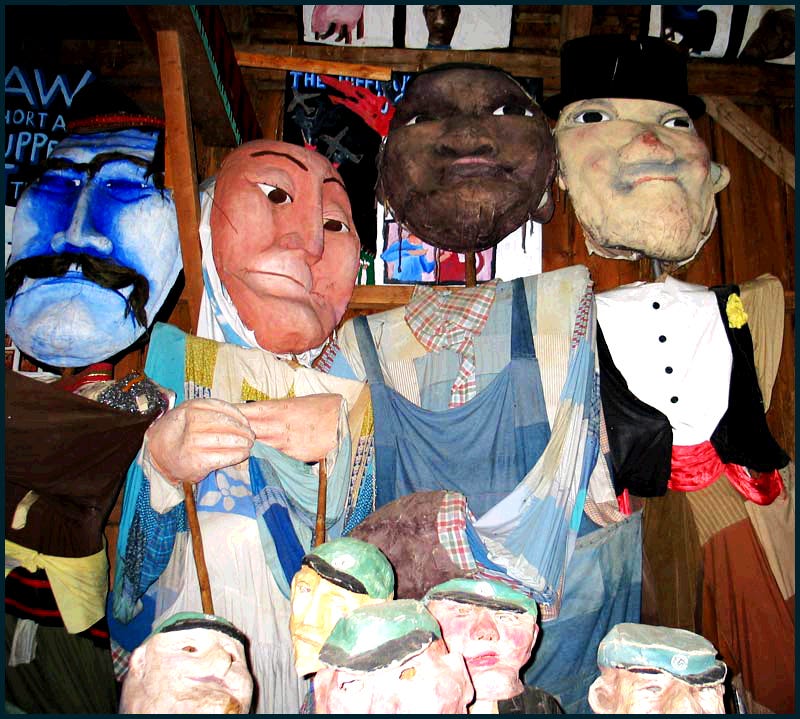
I’m old enough to remember when political resistance included protest songs that played on the radio (“Think it’s time we stop, children, what’s that sound? Everybody look what’s going down”), troupes like the Bread and Puppet Theater aptly shared bread and puppetry in protest of the Vietnam war; dancer/choreographer Alvin Ailey used his and the talents of his company to support the civil rights movement, and so on.
Now we’ve got social media, a 24/7 Internet feed, and Substack. Sigh.
I love this quote I saw on Threads the other day:
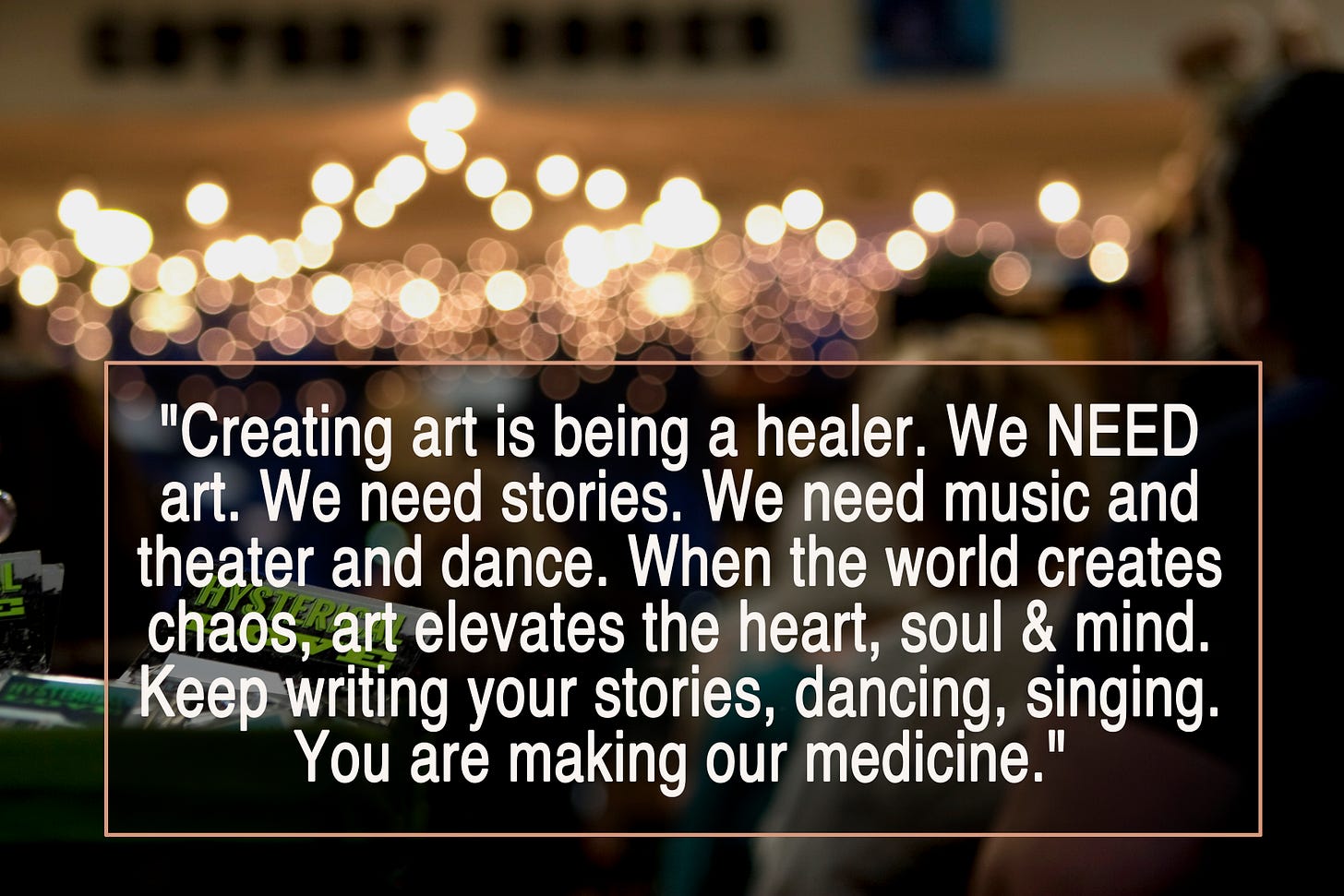
“The world will try to convince you that art is luxury. It is not. Art is medicine. It heals in ways that cannot be measured or explained. It reaches places therapy cannot touch. Art is essential.” Rokita
I don’t know Rokita, but she is an artist and she is correct. Art is medicine. I’ve been saying that for years. I even made a meme and shared it all over the place in my determined quest to make the point:
Good message … though not a widely accepted one.
The problem is, unlike the ‘60s and ‘70s, America is now a tech-bro/media-heavy culture rather than an artistic one, so most messages conveyed are siphoned through those hard-edged filters. Humanities is downplayed (or literally dismissed), art classes are considered fluff; creative careers are framed as foolish, and when brilliant, insightful artists speak out on salient issues, they’re negated as narcissists “stepping out of their lane.” It’s as if the MAGA Machinery of 2025 is too dense, too ponderous and unyielding to allow for more creative interpretations of our current circumstances. This, of course, is folly.
The socially-conscious artists of earlier, more soulful, eras understood that ideas, concepts, provocations, and calls-to-action were most successful when wrapped in the language of art, creativity that inspired people to sing, get up and dance, feel emotions, find themselves sparked to act. The ‘60s with all its hair and art and music and rebellion literally spawned movements that changed the trajectory of America. Younger people can snigger at the accomplishments of that generation, but smart people know that even the most whimsical of human behaviors can shift the zeitgeist. That era surely did.
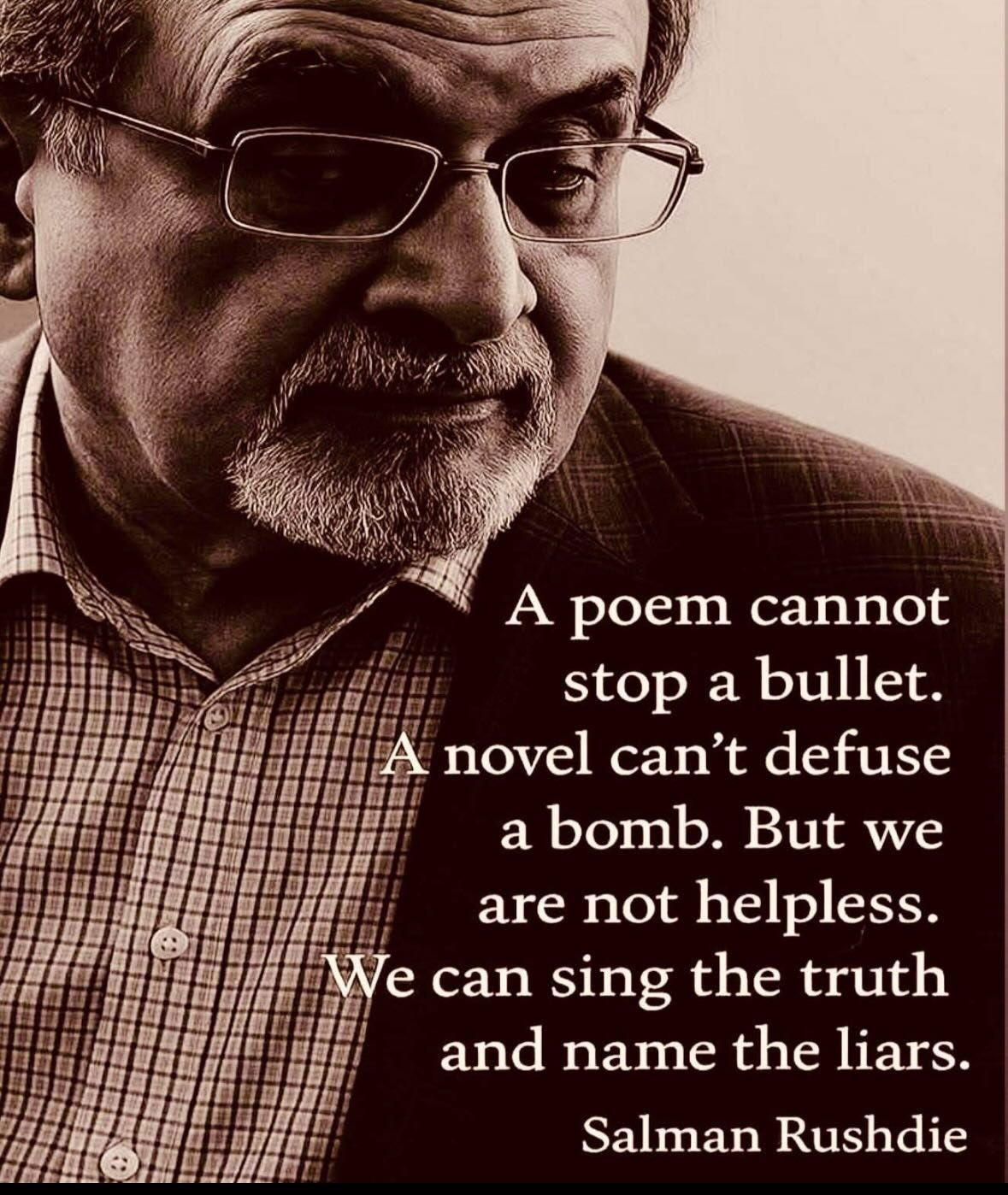
I speak about this today as a creative loudmouth who regularly utilizes my art to make points I want to make. I’m told this is crazy because it might alienate people who only want to hear/know about the art parts, but I refuse to separate my activism from my artistry. Won’t do it. And you know who else feels that way? The brilliant, courageous Salman Rushdie.
Read those four sentences; they are amazing. Then know that the last line of his quote, not included in this meme, is: “We must tell better stories than the tyrants.”
Yes. We must.
Those five sentences speak volumes. They say everything that needs to be said about the power of art to impact and change the world, wisdom from a man who has lived by those five sentences his entire life. So dedicated to writing the stories he passionately believes in, he was damn near killed, he did lose an eye, and he continues to be in the crosshairs of violent fanatics to this day. Does he stop writing? NO. His next book comes out November 4th. It will no doubt be insightful, fearless, and brilliant.
I figure if he, blinded for his dedication, can continue in the face of death threats and relentless persecution, I can surely put my own much smaller, less provocative words and art into action. I can sing the truth and name the liars, too, however limited my reach may be. So I’m going to keep doing that.
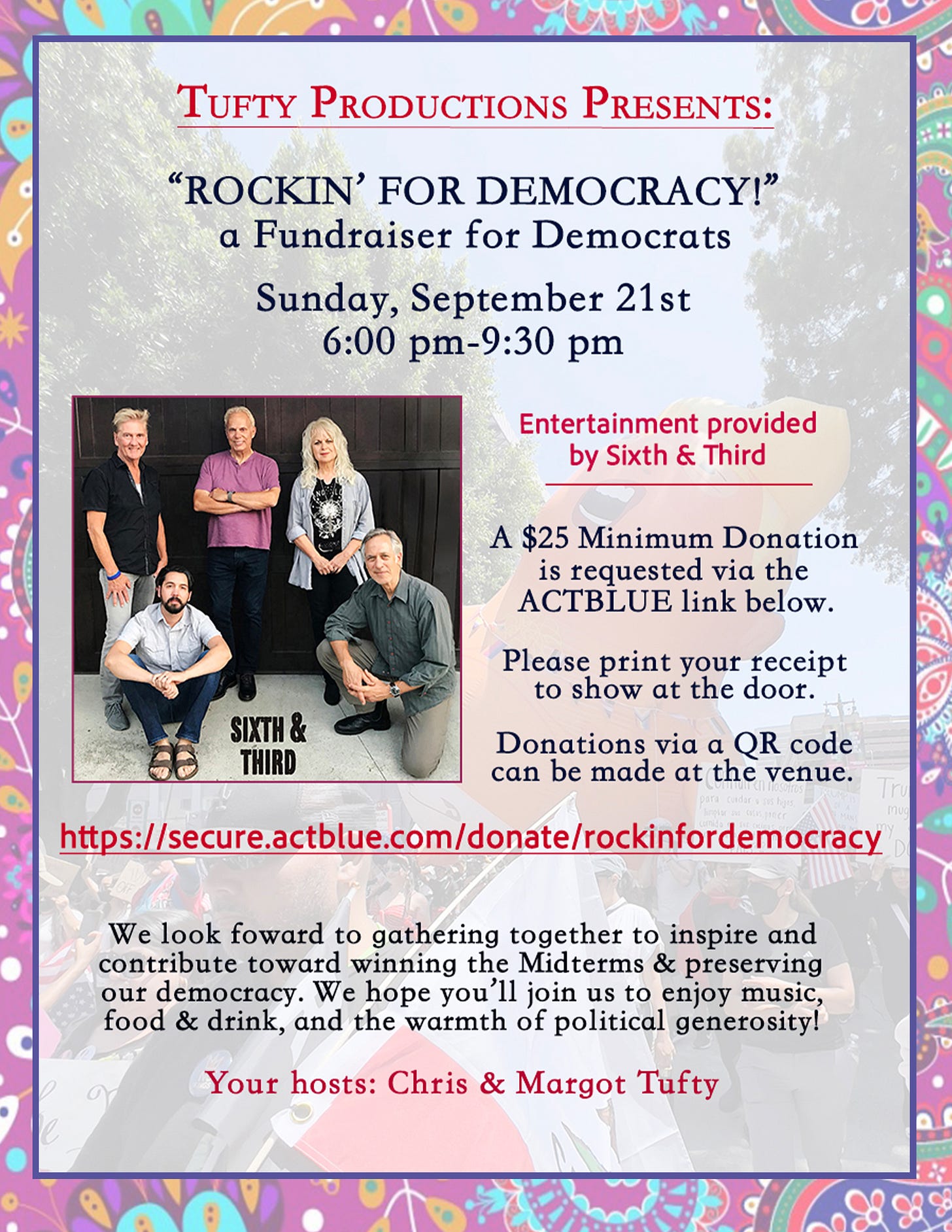
Next week I’m gathering with my band and good friends to help raise money for Democrats running to flip Congress and save our democracy from two additional years of unfettered lunacy. Our first such event, titled “Rockin’ For Democracy,” is set for Sunday, September 21st. If you’re in the Los Angeles area and would like to join us, message me and I’ll get you the address. If you’re outside LA, or you can’t make it but still want to contribute (which I hope you will), click the link I’ll leave righthere so you can donate via our specific event … we will be most grateful.
There will be other spirited fundraisers, and I’ll continue to write, march, sign, yell, and sing, but some nights I lie in bed with my head spinning, trying to conjure up new ways, better ways, more effective ways to combat the insanity roiling our world. I want to do more, have more impact, create bigger effects, then I realize, at 4 o’clock in the morning with nary a stitch of sleep, that I can only do what I can do. So I’ll do that. In every way I can … singing the truth and naming the liars in my own way.
Let’s all keep doing that. Whatever mediums we use. Whatever art we love. Whatever ways we do it. Our expressions don’t have to be on-the-nose, don’t even have to be overtly political or provocative. They can just be art, of any kind, uplifting, enlightening, inspiring art. Creativity that makes people think, laugh, cry, dance, smile, empathize, have hope, feel.
That alone can be revolutionary to the human spirit. From there, miraculous things can happen.
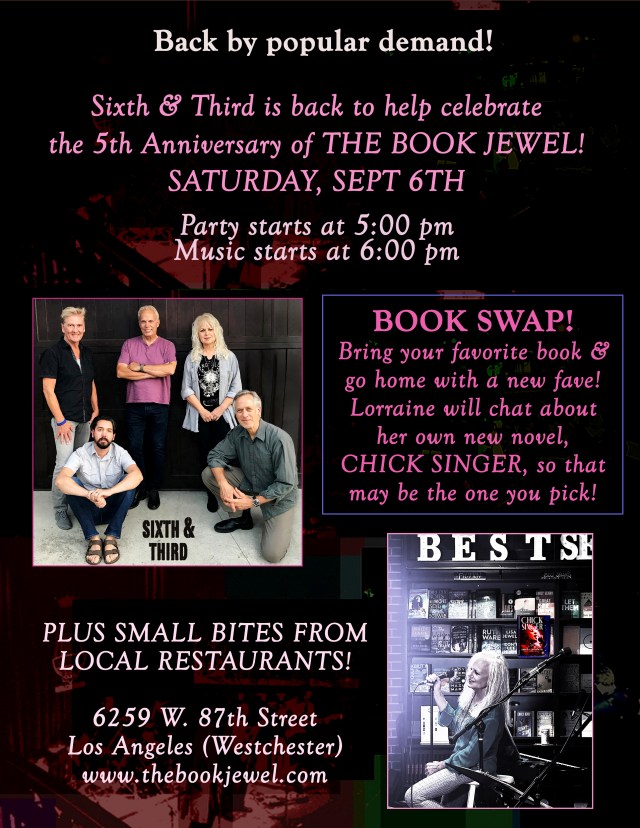
Music, singing, songwriting, my band, parties in bookstores … these things make me happy. And in a delightful mash-up of all the above, my band will be entertaining party-goers celebrating the 5th Anniversary of one of the most creative, welcoming, inventive indie bookstores around, The Book Jewel.
It’s interesting how, during these trying times politically, people still want to get out and celebrate; gather with friends, experience art, feel joy, shake off the doldrums and anxieties that seem to endlessly swirl around us. I appreciate when people show up at gigs, join me at a show, text me about a new art exhibit, or just want to get out on a walk. We need to break away from noise and clatter.
In my last Substack piece I mentioned that my readers tend to less interested, however, in reading about these things, more focused on political analysis and opinion. So when people do join the party, so to speak, do read the piece on music or publish, do share articles about new, great places to eat, I’m encouraged. Because, as I’ve said countless times, we’ve got to find balance. Never more essential that in this mad moment…
So if you’re in the Los Angeles area next Saturday night, I hope you’ll come join us for this celebration of a fantastic indie bookstore. I promise it’ll be a rockin’ good time!
1919: Nineteen-year-old Deborah Derebey stood in a long line of immigrants waiting to be processed at Ellis Island, her younger half-sister, Sappho (known as Fofo), by her side. Nervous, hopeful, and exhausted from the long voyage from Turkey, they waited to be met by their aunt, Aphrodite Derebey, who’d sponsored their passage. Two Greek sisters, both orphans, making their way to a better life in the bountiful and welcoming arms of the United States of America…
I write this paragraph just minutes after watching yet another horrifying video of ICE agents lurking in the hallway of an immigration court, dog-piling on a young immigrant as he exited the courtroom. These masked thugs of the current White House occupant proceeded to violently arrest this man (with no criminal record) who was there, in that courtroom, to comply with the laws said Occupant claims everyone is violating.
Welcome to “Immigration, the MAGA Era.”
The reality that every single person in this country, bar the Native/First People, has descended from immigrants does not appear to diminish the raging sense of white entitlement so baked into the American Right. The compassionate intent of “Give me your tired, your poor, your huddled masses yearning to breathe free…” has little or no impact on minds hellbent on “making America great again” by regressing to some delusional version of “the golden days,” when whiteness reigned, immigrants were subservient, and everyone of color knew to keep “their place.”
Right now, as Trump dismisses the border of predominantly white Canada, the feverish “MASS DEPORTATION NOW!” crowd has laser-focused on the southern border. One might guess that jarring disconnect has something to do with the fact that between 2010 and 2022, the share of the population that is Hispanic/Latino grew the most, increasing 2.7 percentage points to 19.1%. The white (non-Hispanic) population had the largest decrease dropping 4.9 percentage points to 58.9%.
That statistic has gotta chill the cold, dark hearts of bigots and white supremacists.
As the granddaughter of immigrants from a country and culture often dismissed as politically and culturally problematic, I have often reflected on what my grandparents endured coming to this country. My sister, Mary Amandes, our family archivist, and I perused old pictures and discussed that journey, juxtaposing their experiences against the corrosive and toxic state of immigration as it’s currently being implemented. It struck us both that, if our family members had immigrated today, they could very well have been one of those tackled in a hallway, pulled from a job site, or dragged to the floor in handcuffs.
But Mary also made the salient point that, as toxic and repugnant as our current laws and policies are, history tells us this process, in a country literally built by and for immigrants, has long been fraught with discriminatory, contradictory, and biased policies and practices. The welcoming arms of America have been fickle, opening and closing based on changing leadership, as each administration imposed their own bigotries into laws that govern the activity. From Mary:
“The Homestead Act of 1862, offering 160 acres to men and women who met certain requirements, was critical to settling the west. Land was given to the railroads who then parceled it out to various groups of ‘select’ immigrants (no ‘shithole’ countries!) to settle 685 million acres of public land (all stolen from the native population). Total acreage of distributed land from the government was over 1 billion acres. Advertising was targeted to Northern European groups, especially Germans and Scandinavians, because existing farmers were having trouble finding farm laborers. Apparently the earlier waves of immigrants in the south were already too vested in their farms and too reliant on slave and tenant labor to move further west.
“Beyond the numbers, the concepts for this competitive advertising are the most interesting, especially contrasting with the present day attitudes. Immigrants were needed to form congressional districts, develop natural resources, raise land values, become consumers, merchants and tradespeople. These people had great value and were especially needed to share tax burdens.
“The most disheartening fact is that so many of these very prized, ‘select’ immigrants who came over and brought their ideas, talents, and work ethics, etc., ultimately turned into immigrant-hating, violent, racist thugs themselves, passing that toxic ideology down through family trees to our present-day divided America. Combine that with bigoted attitudes towards people of color and it’s amazing we function as well as we do.
“And yet people still want to come here.”
They do, don’t they? Though I have to wonder if now, in this toxic Trump era, that urge has been stunted.
Turning my thoughts to my grandmother, to whom my siblings and I were very close, I asked Mary to dig into her research to offer some perspective on what “Debbie Derebey” experienced in her own fraught journey as a teenager coming to this country in the early 20th century. Following is her report (mixed with some editing input of my own):
“The Derebey clan lived in an area of Turkey that had once been part of Greece. They were Protestants, which alienated them from the Orthodox Greeks, isolating them from the intense politics of the time. Both groups, however, were allowed to live peaceably and worship as desired until WWI. At the outbreak of that war, the Turks (the Ottoman Empire) chose to align themselves with the Germans. Imagine how this decision contributed to the festering of nationalism and tribalism driven by longstanding feuds!”
From the German-Ottoman Alliance: Some members of Ottoman leadership were eager to form an alliance at the start of WWI. They worried what might happen to their already weakened empire in the face of global war. The small, but powerful, war party saw Germany as a useful friend with money and a large military presence. They signed a secret alliance agreement with Germany on August 2, 1914.
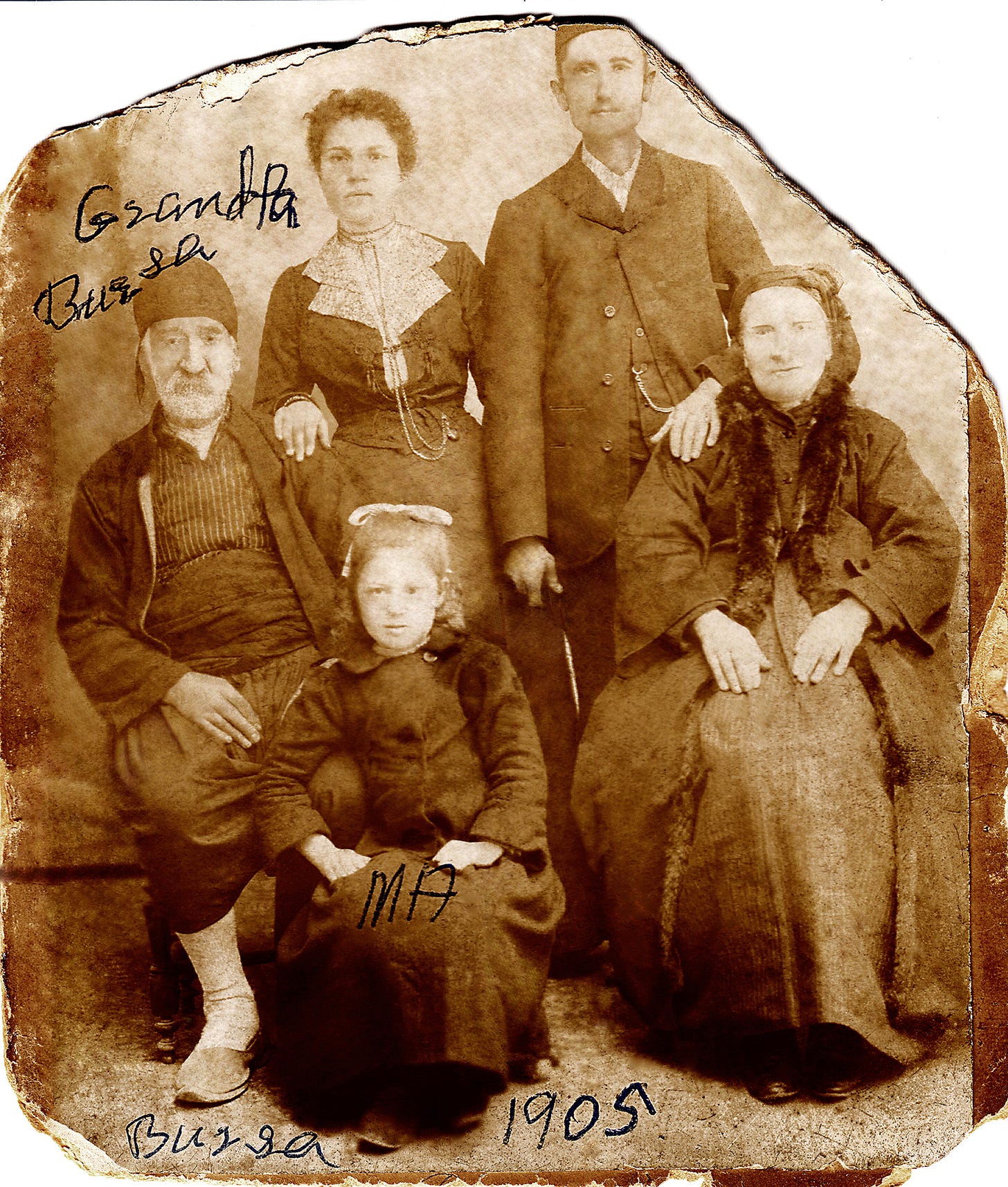
My grandmother, Debbie, seated at her grandfather’s knee; Bursa, Turkey.
“Prior to that war, and when Debbie was still a young girl in the early 1900s, her Aunt Athena Derebey had escorted some of Debbie’s cousins out of Turkey to resettle them in Chicago. Another Aunt, Erasmia Derebey, was growing increasingly concerned about the roiling political climate, and wanted to get the whole family moved; three other Derebey siblings already in Chicago were perhaps keeping them apprised of the geopolitics at hand.
“Meanwhile, as Debbie grew older, she did housework to earn money, her family living with her maternal grandparents as the political atmosphere grew more fraught. Luckily, she was going to the American school and learning English, ultimately, if unknowingly, preparing herself for eventual migration. When the war finally broke out, the violence and chaos Greeks experienced was horrific. Just within the Derebey clan, twenty-seven members were killed in the political unrest.”
From the Hellenic Research Center: During and after World War I (approximately 1914-1922/23), historical sources show a significant number of Greeks in the Ottoman Empire, which later became Turkey, died due to systematic persecution and violence. This period is often called the Greek Genocide.
Estimates of the number of Ottoman Greeks who died during this period vary widely. Some estimates suggest that roughly 700,000 to 750,000 Greeks were killed. Others put the number closer to 1 million.
“This genocide, of course, heightened the family’s urgency to get the girls to safety. And just as the war was winding down, that urgency was heightened when the 1918 Pandemic, the ‘Spanish flu,’ hit. Having already lost her mother, Debbie was left completely orphaned when both her grandparents and her father became victims of the pandemic.
Her half-sister, Little Fofo, whose mother had also died years earlier, was by then working as a child laborer in a silkworm factory belonging to her father. When he, too, succumbed to the pandemic, leaving her an orphan as well, the Chicago family of siblings determined the time had come to rescue both girls.
“Interesting note: Somewhere in the family’s pre-emigration discussions, Debbie had developed an understanding that she would be getting a college education once she got to Chicago, clearly a ‘carrot’ of sorts. Being a young girl with a persistent nature and the desire to advance in her life, perhaps she was told that to keep her feeling positive about the journey.
“She did not go to school.”
Which makes me sad, frankly. My grandmother was very bright, an adventurous woman who traveled to all corners of the world on her own, even until the year of her death. She was inquisitive and fearless, and I can imagine, had she gotten that promised education, she would have been unstoppable.
But back to Mary and the immigration parallels between then and now:
“The 1917 Immigration Act (extended to 1924), particularly with its literacy rules detailed below, clearly applied to our grandmother—making her ability to read and speak English a boon. The Chicago family, working to get the girls over, was most likely aware of that and the many other provisions of THE IMMIGRATION ACT OF 1924 (THE JOHNSON-REED ACT):”
“In 1917, the U.S. Congress enacted the first widely restrictive immigration law. The uncertainty generated over national security during World War I made it possible for Congress to pass this legislation, and it included several important provisions that paved the way for the 1924 Act.
The 1917 Act implemented a literacy test that required immigrants over 16 years old to demonstrate basic reading comprehension in any language. It also increased the tax paid by new immigrants upon arrival and allowed immigration officials to exercise more discretion in making decisions over whom to exclude.
Finally, the Act excluded from entry anyone born in a geographically defined ‘Asiatic Barred Zone’ except for Japanese and Filipinos.
“The Asiatic Barred Zone? While this did not specifically apply to immigrants from Greece or Turkey, restrictions of the ethnic kind sound very familiar, don’t they?
“And how about some quotas as well?”
The literacy test alone was not enough to prevent most potential immigrants from entering, so members of Congress sought a new way to restrict immigration in the 1920s. Immigration expert and Republican Senator from Vermont, William P. Dillingham, introduced a measure to create immigration quotas, which he set at three percent of the total population of the foreign-born of each nationality in the United States as recorded in the 1910 census. This put the total number of visas available each year to new immigrants at 350,000. It did not, however, establish quotas of any kind for residents of the Western Hemisphere. President Wilson opposed the restrictive act, preferring a more liberal immigration policy, so he used the pocket veto to prevent its passage. In early 1921, the newly inaugurated President Warren Harding called Congress back to a special session to pass the law. In 1922, the act was renewed for another two years.
Once again, the opening and closing arms of America …
“There were many other elements of the law that restricted immigration, inclusive of national origin quotas, preserving racial and ethnic composition, nativist sentiment, and—and this says it all: ‘IN ALL OF ITS PARTS, THE MOST BASIC PURPOSE OF THE 1924 IMMIGRATION ACT WAS TO PRESERVE THE IDEAL OF U.S. HOMOGENEITY.’ How MAGA can you get?”
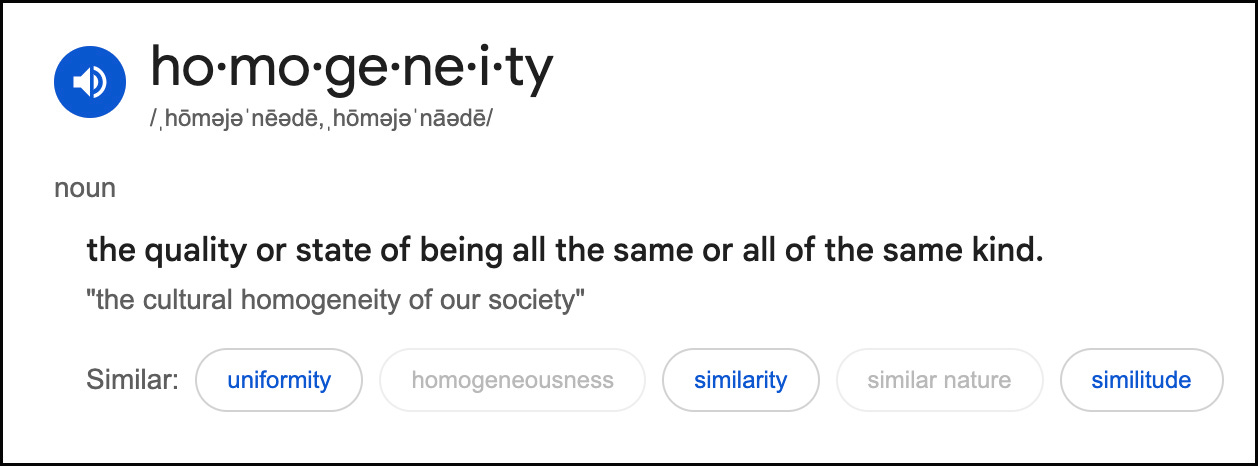
“So, Debbie comes to Chicago, a metropolis teeming with immigrants from everywhere on the planet, and a government looking to preserve U.S. ‘homogeneity.’ The dictionary defines homogeneity as ‘the quality or state of being all the same or all of the same kind.’ I would imagine there were all kinds of MAGA-style goons and pre-Nazis out there ready to enact this.
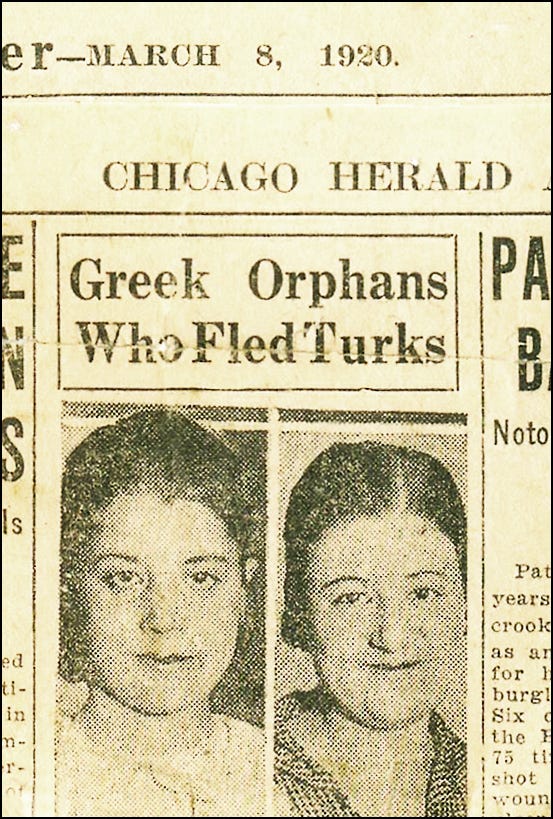
“I would actually like to know how the newspaper article about Debbie and Fofo being refugees came about [image at top]. I would have been concerned that this public exposure would have made them targets.
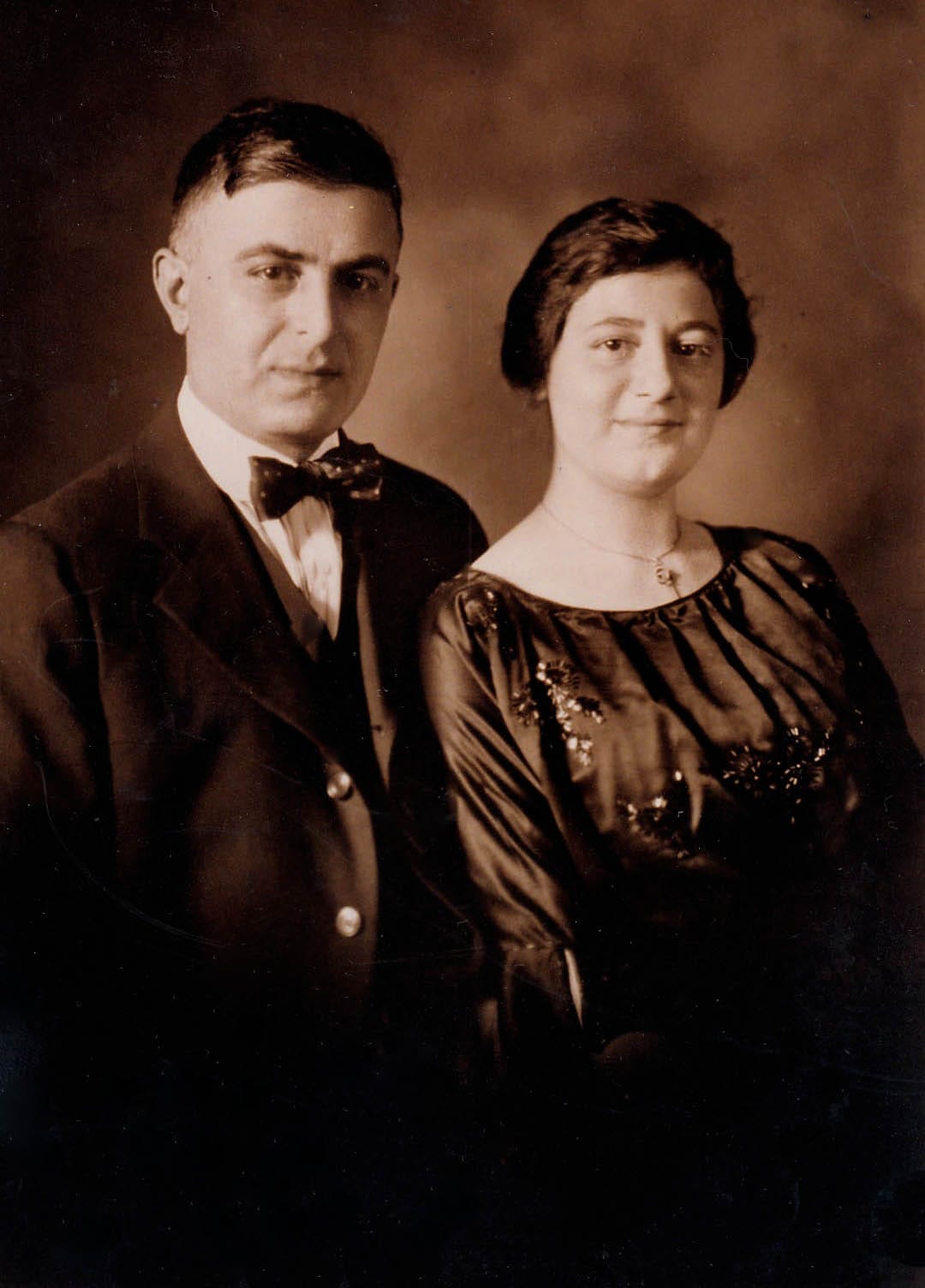
“Meanwhile, Debbie was given work housecleaning and being a governess. She was not happy about any of that and didn’t hide her feelings, which likely prompted the Derebey family to find her a husband to solve those myriad problems. That would have been our grandfather, Gus, a much older man. To me, both Gus and Debbie look resigned in their wedding photo.”
Gus and Debbie Amandes, wedding portrait
“Perhaps he’d already gotten the news that she didn’t have a large dowry after all. Perhaps the threat of deportation had been presented to her in no uncertain terms. Gus had become a citizen in 1915; she needed to be his wife in order to be naturalized and become a citizen herself. It was a marriage of need, of demand, and though they weren’t particularly suited to each other or happy together, they lived a good life, had two boys, our Uncle Henry and the man who became our father, Philip Amandes (or, as his Greek name would read: Theophilos Amanitides), and flourished in America.
“Fofo didn’t marry until 1940, but she was protected because she’d been claimed as the daughter of Aphrodite (the aunt who met them at Ellis Island) and her husband Peter in the 1930 census. She, like her older half-sister, was a strong, determined young woman. She became a citizen on her own prior to marriage. In between, she went to school, qualified for her beautician’s license, and launched her own business, tremendous accomplishments for any woman of the day, certainly a young Greek immigrant.
“Our grandparents, Debbie and Gus, set up a rental business with an apartment building and cottage, and she was named on the deed … another astonishing accomplishment for the time! She participated fully in the management of that enterprise, and took it on as a sole proprietor after Gus’ death, living there until her own death in 1979.” [Interestingly, that building was the first home of my two older sisters, a younger brother, and me.] She traveled the world, was beloved by family and friends globally, and tirelessly gave to those in need.
“The immigration laws that impacted all of them have been revised multiple times since 1924, with arcane details and restrictions that can be both daunting and, at times, prohibitive, yet people still want to come here! As for our Auntie Fofo and Grandma Debbie, I count them as two very successful immigrant stories to remember!”
I do too.
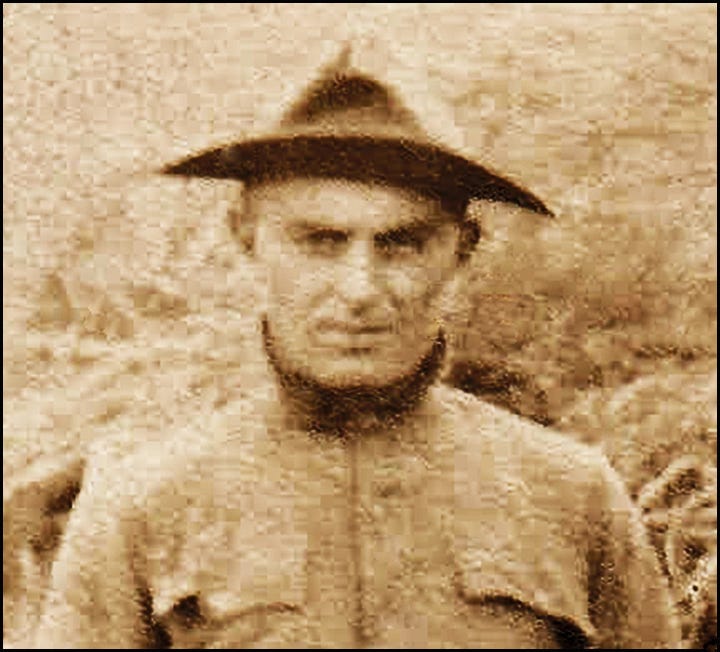
But I have to wonder: given my grandmother’s “illegal” status for a healthy chunk of time before her mandated marriage, if she, too, would have been rounded up by ICE, thrown to the floor, handcuffed, and spirited away to some hideous holding cell if her story happened in 2025. My grandfather came to America in 1907 but was unable to attain his citizenship until 1915 … after he served in the American army. Would ICE have assaulted him had they found him before those papers were in hand, despite his four years of loyal service in the military? I’d guess, in this MAGA era, they would have.
My grandfather, Gus Amandes, in the U.S army.
As I watch countless mothers, fathers, children, grandmothers, and grandfathers of other immigrant families experience exactly that fate, some quite brutally, my heart not only breaks, but my view of humanity falters. Cruelty seems to be the point, and the feint that it’s about “who’s here legally and who isn’t; who’s a criminal, who isn’t” appears to be just that: an attempt to distract from rampant racism and xenophobia.
Immigration throughout the ages has never been a neat, tidy progression of steps and sequences that meet every time marker and adhere to every deadline. For many (most?), it can be cumbersome, inefficient, and slow, leaving many in states of limbo, vulnerable to the Gestapo tactics of our current system. Each day, each egregious act, makes clearer that those of us who view people as people, regardless of country of origin, ethnicity, color, race, religion, orientation or immigration status, must continue to march, speak out, defend, protect, videotape, and VOTE … in defense of immigrants, and for good, sane, compassionate immigration policies.
Every single person being throw to the floor of some hallway, school yard, farm field, or immigration office by masked thugs is someone just like my grandmother. My aunt. My grandfather. A person, a human being, a beloved family member. Someone escaping danger, fleeing to protect family, or hoping, intending, determined to build a better life in this occasionally welcoming country.
We must keep it that way … for every Debbie, Fofo, and Gus.
Thank you, Mary Amandes, for your invaluable contribution to this story.
There are two strains of AI/troll activity afflicting the health and welfare of my personal book life these days. There may be others for other people, but so far the incursions into my world are relegated to the two I shall explain in this article.
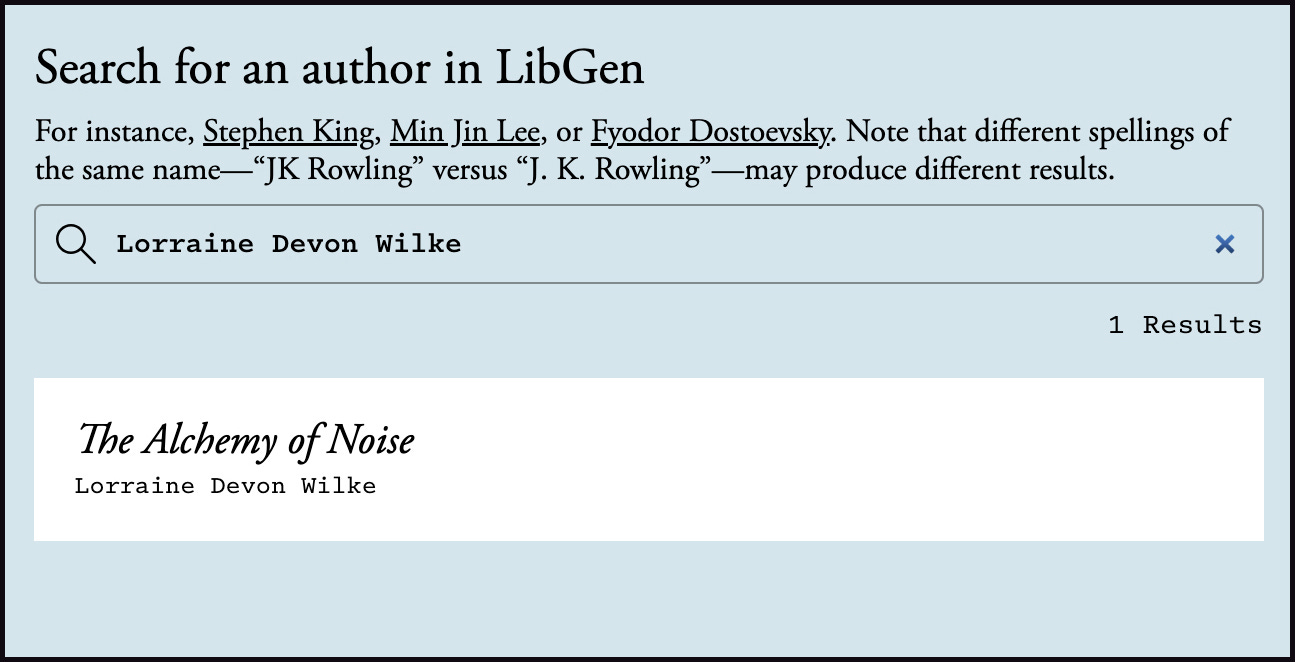
First, there’s the illegal and very rude co-option of one of my books, which, along with millions of other titles, was purloined by Meta for the express purpose of using it to train their AI robots. I checked the database and there it was, my last novel, The Alchemy of Noise. No one asked, no one paid for it; no one had the decency to acquire it the right way. I have to wonder if the “AI students” for which it was acquired grasped the subtle narrative choices of its socio-political plot line or were moved by the protagonist’s decision to—oh, for fuck’s sake, it’s all so invasive, and if they’re gonna steal your damn stuff they could at least leave reviews at Amazon, right??
The above image is a screenshot of the search tool The Atlantic (and other sites) provided for authors to check their own titles. As you can see, The Alchemy of Noise is in the database. And what, exactly, is that database? It’s called LibGen, short for Library Genesis, which is described as follows:
Library Genesis, often abbreviated as LibGen, is a digital library and search engine that provides free access to millions of academic papers, books, and other scholarly materials. It’s considered a “shadow library” because it bypasses paywalls and makes content available that is typically restricted by publishers. LibGen has a vast collection, including scholarly articles, books, comics, and magazines, and is maintained by volunteers who upload files and share torrents.
Is LibGen illegal in the US?
Yes, Library Genesis (LibGen) is generally considered illegal in the US due to its distribution of copyrighted materials without permission. LibGen hosts a vast collection of books and research papers, but these are often uploaded without the consent of authors and publishers, constituting copyright infringement. While downloading from LibGen isn’t considered filesharing, and therefore less likely to be tracked, the site itself is illegal.
There are lots of other unsavory details about these unsavory practices implemented and managed by, of course, Meta, that nefarious conglomerate that includes Facebook, Threads, and Instagram, ironically providing these vibrant platforms for artists to promote and share work while they—the faceless bosses—get busy stealing it. But that’s the world we live in today, isn’t it? Very MAGA. Very anarchistic. A very “tech-trumps-art-trumps-ethics” culture. (And yes, I did mean to use the word “trumps”).
So, what’s an author to do when they discover their work has been lifted by LibGen? The Author’s Guild has a particularly comprehensive article on the various steps that can and should be taken: Meta’s Massive AI Training Book Heist: What Authors Need to Know.” Give it a read, and if you’re one of those affected, follow through on the steps. You never know; you might get a class action check for $12.63 sometime in 2034 for the gross violation of your proprietary rights. 🙄 But hey, it’s worth doing if for no other reason than setting precedent. In the current tsunami of AI onslaught, any controlling moves are a good idea.
Now, what’s the second AI/troll/whatever insult to my literary world? This one is odd.
I’d been getting a higher-than-average number of emails (via my website email address) pitching various book promotional services. Nothing new about that on its face, but what was new was the tone of these emails, the content. They were hyper-conversational, very detailed; breaking down whichever book of mine they were focused on as if they’d actually read it. Some stated they had actually read said book, offering nuances, character names, plot points, etc., that seemed to support the assertion. The language was sharp, intelligent, and savvy.
One email had a particularly nimble, humorous edge to it that actually cracked me up, to the point that I responded, telling her (the name attached was female) that it was one of the better pitch letters I’d read, inviting her to give me her whole speil. Which she did: She supposedly managed a group of very “passionate,” dedicated readers who were hungry for good books, eager to read and write about them in thoughtful reviews. She was focused on The Alchemy of Noise (hmmm… the very one filched by LibGen), asserting that “a book this good deserves more reviews than it has” and “let’s do something about that!”
Now, every author in the indie world can use more reviews of their books; that’s easy bait. Despite our reluctance to ask readers to write them, reviews are considered metrics of popularity; they’re used to support increased marketing and promotional opportunities; they trigger algorithms beneficial to searches, and they raise the profile of a book. That they’re too hard to get is unfortunate, as often even the most loyal and supportive readers either don’t take the time to leave them, or for one reason or another are uncomfortable writing them. So, hells yes, my damn book could use more reviews, sister, lay it out for me!
Of course, it’s frowned upon to pay readers for them, I never have, so I queried this very smart, funny, enthusiastic “woman” about what her company was offering within those ethical parameters. She said she’d assign the book to her select team members, they’d read the book and write thoughtful reviews, and for that service, they’d be “tipped” (not “paid,” she insisted) $20 each … and she’d “start with up to twenty readers.” Twenty readers. $20.000 each. Um, that’s $400 of “tips.” And just to “start.” Now, who is this woman?
I did some research on her name, looking for something solid regarding her services, maybe some references, testimonials, a good track record in the public realm, but found nothing. So I wrote back that not only was the business model monetarily problematic, especially since she implied it would be ongoing (regardless of what she called it), but I found it equally problematic that she had no website, no visible business identity, no social media presence; her name didn’t correspond to the name in her email address, and Googling either name pulled up crickets.
And that’s when things got weird.
Her responding email was immediate and stunningly passive aggressive. She literally snarled in response, negating any logic to my concerns, insulting me for being “one of those people who cares more about money” than advancing my career, rattling off a list of reasons why my hesitation was regressive and, ultimately, stupid as fuck. Her tone had swung so hard from cute to creepy that I thought it wise not to respond. Then she wrote again … now berating me for my silence, sneering about my unwillingness to engage, my clear lack of business savvy. Again, she got no response from me. Her last missive came in several days later, and though she softened her tone somewhat, again pleading her case for business, she remained snarky enough to make me want to reach into the computer to virtually slap her head. Instead I filed and blocked.
But the tsunami of similar emails, Twitter (X) and Instagram private messages, continues, all written with essentially the same style and format: clever, warm, interested “people,” very conversational, breaking down the books as if they’d read them (of course, always claiming they have), very complimentary to me and my “brilliant writing,” using every kind of ego-buffing, business-savvy lingo available. And all with names that don’t jibe with email addresses, few with company names or websites affixed, some with website addresses that don’t work or look generic and … well, fake.
In a world where I’m sincerely and earnestly trying to sort out the best ways to do the things I do, accomplish the goals I’ve set, achieve the successes I’ve worked for, it’s so damn exhausting to have to deal with this kind of manipulative, trolling, dishonest bullshit.
These are essentially human bots. Scammers, trolls, however you want to categorize them, who are now, in today’s era, very well briefed by AI.They’re either working off the AI information that comes up when you put the book title in a search engine, copying data directly from ChatGPT, or tapping into the stolen material from LitGen. And damn, they’re good. That introductory conversation I had with Ms. Snarling Review Trafficker was quite clever, funny, very human, and, yes, professional. Until it wasn’t. Oh wait—I just got another one minutes ago… here’s the opening paragraph:
I just finished Chick Singer, and I’m still thinking about Libby, her voice, her grit, and that raw ache of rediscovery. You’ve managed to capture something rare: a story that doesn’t just entertain, but echoes. The emotional truth you brought to the mother-daughter dynamic, especially with the past and present colliding through music, was beautifully done. This isn’t just a good novel, it’s one that deserves to be talked about.
Aw… isn’t thatjust so lovely?! It might be if I hadn’t read the same damn exact words from fifteen other AI-informed trolls!
Amazing that AI has managed to cobble together enough reviews, articles, comments, words, phrases, etc., to allow scammers to regurgitate such beautifully articulated and specific babble, but the emptiness of it, the inauthenticity of it, the sheer manipulative fucking bullshit of it makes my teeth grind. Because now I have to vet every single compliment, outreach, pitch sent to me through a finely-tuned filter akin to the old, “is it real or is it Memorex” meme. Now it’s: “is it real or is it AI?” … whether photograph, video, article, pitch letter; music, art, books … person. EVERYTHING.
Which is just sad. And inspires musings like this thought-provoking article by Vicki DeArmon titled, “Wrestling with AI and the Soul of Writing.” That’s a reluctant sport with which we’re all—writers, readers, appreciators of authentic art—going to have to tangle with.
So AI trolls beware: Your letters will go unanswered. Your outreach will be funneled into spam. Your email addresses will be blocked. I’ll let real readers, real reviewers, real promoters, real fans of my work set the tone for any future communication. Which is fine; I will always prefer human thoughts, words, and intentions, however bumpy, flawed, or fallible, to the slick, well-polished articulation of AI-burnished fakery.
A fascinating online magazine, Habitat To Art, invited me to write about the journey to my latest novel. Titled, “A ‘Chick Singer’ Reflects on Dreams, Heartache & Renegotiation,” I hope you enjoy the read! Thank you, Laura Wagner, for the invitation and the platform. Much appreciated!
A ‘Chick Singer’ Reflects on Dreams, Heartache and Renegotiation
It’s unusual to refer to someone as a friend whom you’ve never met, but I consider Lorraine a friend and a commiserator. We bonded on Twitter (aka X) when one of her posts articulated my exact sentiments. I realized that, aside from shared ‘initials’, we shared many of the same thoughts. It is my pleasure to introduce her to our Habitat2Art famiglia and friends. I hope she will become a frequent contributor. ~ Laura Wagner
It comes as a slow infusion of awareness. A dawning of sorts. A moment when something happens, words are spoken; an epiphany emerges, and suddenly you learn what was heretofore unknown. New elements of who you are, clearer ideas of what you’re meant to be, to do. It’s both exhilarating and terrifying, identifying that dream, because now you’re driven to make it come true.
A girl whose name I don’t remember had turned around. She was in the descending row on the choir stand in front of me, and apparently I was singing directly into her ear. With an expression bearing some harmonic of surprise, she said, “You have a really good voice,” and I was equally surprised to hear those words. I sang loud and often, yes, but never before had any assessment of “really good” been assigned. That portentous comment opened my mind. I felt it, let it wash over me, recognizing the truth that singing not only transported me out of my everyday reality, but felt to be an honest, true talent.
And there it was. My designated dream. I was to be a singer.
It started with folk music, graduated to musicals, veered into singer/songwriter, but it was swiftly determined that I would set the world on fire as a rock & roll star. Not just a singer. Not just a rock & roller. No, I would be a “star.” It was fated. It was my destiny. Everyone in my orbit bolstered that belief, which was powerful, propulsive stuff.
The wild and wooly ‘80s became the launch pad. With the requisite big hair, ripped fishnets, belts and bangles, my band DEVON became an LA success story with incredible gigs, recordings, management, financiers, and fans; interest, excitement, and conviction followed, then came panic, despair, and, ultimately, the cold-water dip of having exhausted the decade of both time and opportunities with no shiny record deal to show for it.
Oh, dastardly, dogged dream …
I was gutted. Empty, lost, and heartbroken. It was not a matter of just moving on; every aspect of my identity was wrapped up in that persona, that expectation, that plan. I had no other plan, no contingency. Despite my father’s admonition to, “have something to fall back on,” I’d been so convinced of my dream’s fruition that “falling back” was a form of blasphemy. It would take hard grief, good therapy, and the love of excellent people to pull me out of the abyss.
But I did pull out. I survived. I recalibrated. I dipped into various other skills sets—acting, screenwriting, political opinionating, more music (though not of the “angling for stardom” kind, just … singing)—and began negotiating with my dream. Could I reinvent myself? Reconfigure, reimagine a path forward that felt authentic, real, and still offered some measure of my previous exhilaration? We haggled, my dream and I, and ultimately decided to keep music on a burner (if in the back), but let my photography and, particularly, my writing muses step forward.
I started a blog in 2010 when blogging was all the rage. Wrote for HuffPost for seven years. Got a fine art photography business going online. Then I started a novel. A novel. Crazy. Something I’d have never imagined doing prior. After the Sucker Punch published in 2014, followed in 2015 by Hysterical Love. In 2019, a small publishing company, She Writes Press, took on what would be my most controversial novel, The Alchemy of Noise, and in April of this year my fourth, Chick Singer, was released by Sibylline Press.
There’s something full circle about Chick Singer coming out at this particular moment. A moment when I’ve acknowledged, as the group I’ve intermittently sang with over the last few years struggles to find time to convene, that I do, indeed, miss being in an active, working band. One that plays enough to feed that part of me that rode my bike down the street belting out rock tunes. Writing Chick Singer (which is not my particular story but one I certainly understand) allowed me to excavate much of what I’d experienced in losing, and letting go of, that musical dream of mine. It dug into the emotional, even spiritual, journey of finding (clawing?) your way back to some version of yourself that’s healthy and resilient.
It was cathartic, in a way, writing that “chick singer’s” story. It reminded me that dreams are not intransigent, immovable. Despite the reality that what one imagines for their life doesn’t always evolve as planned, dreams have a way of adapting, adjusting, molding themselves into the you you ultimately become. Given my many years at it, I’m convinced they will doggedly stick with you until the end, though you may have to renegotiate from time to time.
But that’s not a bad thing. I’ve learned they are very amenable to that, dreams.
You’re in a family, it has shape, form. It exists in a place, a house, with parameters and parents and things that fill the spaces. If you’re one of the early ones, you witness the shifting, changing, growing of that family as new members arrive, tiny and fragile, engendering your love and attachment, demanding your responsibility. Whether older or younger, you take on roles, nurture relationships, bond, connect, and pull apart. There are comings and goings: jobs, college, marriage; moving out then moving back in. There are personalities, proclivities, problems, and partings.
Family.
As one of a large one in a small town where families of size were not particularly strange or unique given the dominating demographic of the Catholic church, my siblings and I didn’t feel special for a good chunk of our childhoods … that is, until we got to eight kids. Then nine. Ten. Finally, eleven. That number was meritorious and gave our family some “quiverful” bragging rights, though we kids certainly never framed it that way. We were just a lot of siblings living together, finding our feet, our positions, our standing in the large crowd, with, yes, a little buzz to saying, “I’m one of eleven.” People always gasped. They still do.
Except we’re not anymore … eleven. We’ve lost one of us and it feels strange to no longer be able to frame my sibling group with that number. Eleven. It feels even stranger to accept that my little sister, vibrant, beautiful; sassy, with a rowdy laugh and a love of so many people, places, and things, has left this realm. I think of her and somehow she still feels here, on this earth, in her home, expounding on something she feels passionate about, or singing every lyric to every song we performed at my mother’s memorial. Can she really be gone? It appears so.
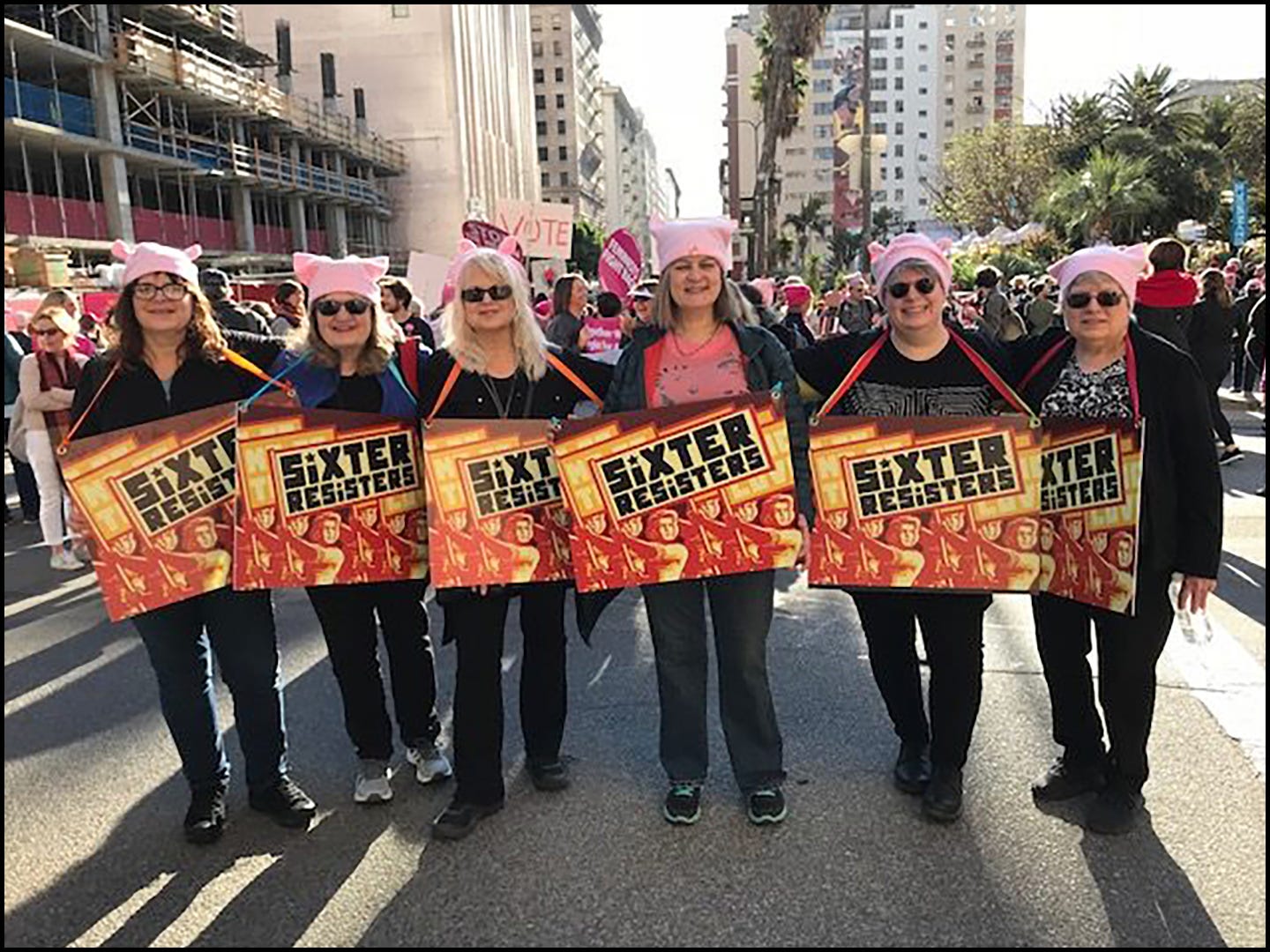
My sibs and I, in various moments and groupings, have occasionally wondered, “Who will be first of us to die?” A macabre conversation, but as we’ve gotten older—as this one or that has dealt with health challenges, or survived accidents, or come back from difficult diseases—an inevitable one. Both our parents are gone. Some of us are now in decades undeniably considered “old,” and life does come with a warning that at some point we will die. But still … it was one of us. Our eleven. One of the “six girls,” a feature that inspired the name “Sixters,” and was something we celebrated loudly and with pride. “Fivesters” doesn’t have quite the same poetry. So, yes, it feels jarring.
Women’s March LA 2018
My little sister and I were far enough apart in family order that we were not close as children. I was her babysitter, her bossy older sister, her occasional advice-giver (she once told me I was the person who explained deodorant to her … a clearly seminal moment of which I have no memory!). But years after we were both out of the house—I, in Los Angeles, she, San Francisco—we connected for the first time as adults, as peers, and spent the glorious ‘80s as girls who just wanted to have fun. Lots of pictures of us in my cool Hollywood apartment, dressed to the nines in ‘80s gear, posing in front of iconic places, laughing, dancing, hanging, singing.
When the ‘90s hit and I got married and had a child, she became our very favorite “Auntie Babysitter” when we visited the Bay area or she came down to celebrate holidays with us. She was the first person who took amazing pictures of my son with her “good camera,” which inspired me to get one of my own and launched my enduring passion for photography, a memorable gift of her influence.
At some point not long after, she moved into her own life with husband and children, which kept her busy enough that our time together lessened. We’d see each other at larger family gatherings, when my parents were either in her town or mine; sometimes for holiday or birthday events, but yes, we drifted. There were gaps in our political opinions; our views about health and healthcare were divergent, and so we learned to avoid certain topics for the sake of camaraderie and goodwill. Ultimately, the invisible string that connected us as siblings, as children who got to know each other as adults, endured. The last time I saw her healthy she was smiling and happy, wanting to know everything going on in my life; we laughed a lot and enjoyed the event that brought us together. Then she got sick. Again.
She’d recovered from a bout of breast cancer many years earlier, a tough go that, as she once put it to me, kicked her ass, but enough healthy time had elapsed since then that we all figured it was a thing of her past. But that last time I saw her healthy … turns out she wasn’t. It had returned and was brutal. Fifteen months later she was gone.
Strange, that she was the first. Others of us have dealt with cancer and recovered, so it’s daunting to view her last journey in light of our own. One of my brothers with his own health issues once told me he thought he’d be the first to go. We all hoped that somehow we wouldn’t have to face the answer to that unavoidable existential question for many more years, but what I’ve learned about life is that it’s wholly and profoundly unpredictable.
I’ve also learned, and believe, that we’re all on our own path, our own trajectory, determined by influences, decisions, perhaps spiritual edicts that have nothing to do with age or birth order. As the song goes, “Nobody’s promised tomorrow,” and so we all, each of us, must live our lives with verve. We connect, and love, and interact, and create, and explore, and experience, and contribute as deeply and passionately and fully as we can. We eat life, our life; we taste every bite, every flavor, so when it’s our time to go, we’ve left nothing essential undone, no necessary words unspoken; no love unexpressed, apologies ignored, or disappointments unreleased.
My little sister lived her life with verve. With passion. And love. And music and laughter and joy and rage and humor and all the parts and pieces that made her who she was. And this coming weekend, Memorial Day weekend, we will gather in her town to memorialize her life. To share her pictures, tell her stories, sing and play the songs she loved listening to, loved singing. A heartfelt celebration will be had for a precious and heartfelt life. We “eleven” will be together again for one last time, saying a sad, sweet goodbye to the first of us to depart.
See you later, Leenie. Fly high feeling our love … or, as one of your favorite songs put it, cherish is the word.
The longtime Fox News contributor, avowed Trumpist, and radical conservative agitator was recently and ridiculously (having zero experience in the creative industries) appointed the interim director of the Kennedy Center for the Performing Arts. Of course, this was after Trump, the most artless human on earth, purged the iconic venue’s leadership and inserted himself as chairman of the board, so why not pick an utterly unqualified partisan to run (down) one of the greatest creative venues in America? That’s the philosophy that drove Trump’s cabinet picks, so his consistency is impressive.
In his new and undeserved post, Grenell has been outraged on an ongoing basis as slews of artists denounce the authoritarian takeover of the Center, some pulling out of scheduled appearances (Hamilton creator, Lin-Manuel Miranda, canceled the musical’s 2026 planned run), citing the obliteration of the Center’s mission of openness, inclusion, and creative freedom. Trump did, in fact (if unwittingly), underscore the veracity of that accusation with his Truth Social post of February after appointing Grenell:
That’s right, dammit, they’re going to make sure nothing “woke” gets up on that stage, so look forward to a roster filled with fluff, pabulum, all-white casts, and musical ditties from the 50s! 🙄
As for Les Misérables and how they fit into this brouhaha: in a stance that asserts their protest of the recent MAGA incursion, a group of the show’s actors are boycotting the June 11th performance Trump is hosting as a fundraiser for the theater. From Playbill:
The Kennedy Center performance was part of a previously scheduled stop on the musical’s tour. The cast was given the option to not perform June 11. Among those who decided not to perform are both principals and ensemble members, though the production has not disclosed exactly which company members. A request for comment had not yet been returned at the time of publication.
In response, theater neophyte Ric Grenell clenched his jaw, ground his teeth, and, in a hissy-fit of epic proportion, publicly bellowed:
“Any performer who isn’t professional enough to perform for patrons of all backgrounds, regardless of political affiliation, won’t be welcomed.’“
“In fact, we think it would be important to out those vapid and intolerant artists to ensure producers know who they shouldn’t hire — and that the public knows which shows have political litmus tests to sit in the audience.” The New York Times.
Oh, Ric, calm the fuck down.
Sputtering at this act of principle by calling for the blacklisting of involved actors is, in fact, a real-life example of applying a “political litmus test” … at a time when every single thing that promotes openness, compassion, innovation, empathy, and acceptance is deemed “woke” and, therefore, to be banished, denounced, banned, and demeaned. And kept out of the Kennedy Center. Grenell’s carping is transparent and ridiculous … but hypocrisy is the MAGA brand.
Given his lack of creative DNA, along with his unbending allegiance to the conservative/MAGA agenda, it’s safe to guess Grenell’s not particularly savvy about the creative persona … the grit and gristle that creatives are made of. Artists, performers, writers, singers, designers, actors, etc., are people who care about things like expressive freedom, inclusion, diversity and equity; who demand spaces where those principles are not only allowed and welcomed, but encouraged, not shut down and denigrated by ignorance and small-mindedness. Frankly, if Don or Ric actually knew what Les Mis was about, what themes, ideas, and principles the performers are portraying, they might’ve expected the boycott:
The Les Misérables revolves around the themes of inequality and social class issues. Set in France, the five-volume novel explores the struggles of people in the lower class and how they grapple with unfair treatment. It also highlights ethical dilemmas and redemption.
I mean, could that be more “woke”??
If this really is one of Trump’s “favorite musicals,” I would guess he has absolutely no clue of these “main points”; just pretends to like it (similar to his affection for the Bible, his “favorite book” despite being unable to reference any part of it). Or maybe he likes Les Mis for … what, the costumes … the music … the flags? Who the fuck knows? It’s possible he got it mixed it up with Guys & Dolls, Cats, or Mamma Mia.
It was Nina Simone who said, “An artist’s duty, as far as I’m concerned, is to reflect the times … How can you be an artist and not reflect the times? That, to me, is the definition of an artist.”
It is to me, too (see In Today’s Maddening World, Yes, BE a Creative Loudmouth). Particularly at this moment, taking a stand that reflects one’s beliefs, principles, and convictions, however unpopular, however risky, inconvenient, or even dangerous, is what artists of conscience do. Whether boycotting Trump’s ego-driven events, refusing to perform for people who diminish and demean the true value and currency of art; whether writing books that get pilloried or risk getting banned by MAGA trolls; whether being bold and innovative with one’s music, art, articles, movies or plays — whatever form of expression, whatever medium — artists reflect the times.
And these times demand a higher consciousness. They demand wisdom, vision; outspokenness. They demand courage — no, not just courage; fearlessness. The fearlessness to create art and then put that art out into the world, especially in this era of cowardice, capitulation, and complicity. True artists are born with and nurture that higher consciousness; it’s imbedded in their DNA, their psyches, their skin, bones, and brains. You can’t be an artist if you’re afraid, timid, easily cowed by strongmen with fascist agendas’ or are willing to bend to the oppression and ignorance of ignorant people. Art demands freedom. It demands audacity and guts. It demands risk-taking, standing up to the exact madness we’ve see playing out every day since the man and his cabal took over our government, wreaking authoritarianism havoc disguised as patriotism, nationalism, protectionism.
It’s none of those things, what they’re doing. We know what it is. We name what it is. And we stand up against what it is. If that means boycotting a show we love performing, cancelling a scheduled run of a production we created, risking our livelihoods and reputations, losing jobs or being blacklisted by toxic agents like Ric Grenell, so be it. People, artists, activists, have been standing up to small-minded tyrants for centuries, and those for whom freedom is essential — in life, in countries, in schools, cities, governments; in art — will continue to do so.
Yes, it is ironic that Trump claims to love Les Mis, because it’s as wise and “woke” as a musical gets. If he actually listened to its theme song, his head might explode. I think Grenell should play it for him with the lyrics printed out … or just get him a DVD of Beach Blanket Bingo and let him slide.
DO YOU HEAR THE PEOPLE SING?
Do you hear the people sing? Singing a song of angry men? It is the music of a people Who will not be slaves again
When the beating of your heart Echoes the beating of the drums There is a life about to start When tomorrow comes
Will you join in our crusade? Who will be strong and stand with me? Beyond the barricade Is there a world you long to see? Then join in the fight That will give you the right to be free
Do you hear the people sing? Singing a song of angry men? It is the music of a people Who will not be slaves again
When the beating of your heart Echoes the beating of the drums There is a life about to start When tomorrow comes
Will you give all you can give So that our banner may advance Some will fall and some will live Will you stand up and take your chance? The blood of the martyrs Will water the meadows of France
Do you hear the people sing? Singing a song of angry men? It is the music of a people Who will not be slaves again
When the beating of your heart Echoes the beating of the drums There is a life about to start When tomorrow comes
Composed by Claude-Michel Schönberg (music), Alain Boublil & Jean-Marc Natel (original French lyrics), and Herbert Kretzmer (English lyrics)
Despite being an “out loud” person in general, it turns out I get twitchy about things like blowing my own horn … which almost compels me to downplay the event, referring to this post as “shameless self-promotion.” But I’m not going to do that because, frankly, what artist/entrepreneur in today’s world doesn’t need to self-promote, and why on earth is there anything shameful in that? Even the guy who tinted my car windows asked me to review him on Google!
Except for Judge Susan Crawford’s recent win, there hasn’t been much in our world to cheer about lately, so it’s incumbent upon us all, for the sake of collective sanity and equilibrium, to make special note of the good times, the happy moments; the accomplishments deemed worthy of celebration. Hence, I’ll joyfully shout about my book’s release!
It’s been an interesting journey, this book, with a longer gestation period than any of my previous novels. It started out decades ago as a screenplay, with a different title, much younger characters, and—given the 120-page parameters of the average film script—a much shorter, less in-depth narrative. It went through various permutations over the years; optioned a few times, awarded in a couple of screenplay competitions, garnered scads of positive response, but no actual fruition. As years passed, I aged up the cast (which, given the core element of “former ‘80s singer,” was necessary) and contemporized the story as needed, until I hit a point where I couldn’t stretch it any further. Then someone suggested a brilliant update that changed the foundation of the family at the story’s heart and I was off again.
Wanting to deepen the plot, develop characters more thoughtfully, and take the story onto a more dramatic territory, I knew the only way I could achieve that was in novel form. Daunting, as that demanded a completely different creative process from screenwriting, but before long out went the brads and three-hole punch paper.
It took a minute (a long minute), but when I finally cracked the code, the evolving characters and plot pushed the story into salient topics that resonate with, I believe, a wider audience: Letting go of dreams. Facing age. Balancing creativity with practicality. Fractured families. Loneliness. Toxic work situations. Betrayal. Love. Mother/daughter issues. Reclaiming true self. Discovering what’s needed for true happiness. And so on. The end result was Chick Singer.
I unabashedly love this book. I love the main characters, Libby Conlin (whose story, if you were wondering, is not mine), and her cranky daughter, Bridget. I love the people in their orbits, how they all traverse the world in and around each other; its ins and outs, ups and downs, good points and bad. It’s real life … with a rock & roll soundtrack!
I shared a short synopsis and some early reviews earlier; I’m leaving those again below for those who missed that piece.
Oh, and I had a great Substack LIVE chat yesterday with my good friend, Dr. Lauren Streicher, who very generously wanted to talk about the book, intro’ing it with this:
A spontaneous Substack LIVE with Lorraine Devon Wilke, the author of CHICK SINGER, a novel about a middle-aged woman who left behind a career as a rock and roll singer to become a more traditional wife and mom. Lost opportunities, new opportunities, and the challenges of aging yet staying relevant.
While Chick Singer is not autobiographical, Lorraine, as a former rocker herself, gives a behind-the-scenes peek at what it was like to be part of an ‘80s rock band. It’s a great read!
It was a fun and feisty conversation (as it always is with Lauren!), so give it a listen/watch when you have a sec.
I want to thank everyone who asked about the book and expressed interest in reading it; who volunteered to be an advance reader; who did podcasts and newsletters to help promote it, and who are assisting my entrepreneurial efforts with word-of-mouth, social media posts, and well-placed reviews. It does take a damn village, this creative and commercial process of art, so know that all the interest, help, and support is deeply appreciated.
Lastly, and as I always write when I sign a book: “enjoy the read!” That really is the main thing, isn’t it?
An “authentic ‘80s playlist” has been put together in honor of CHICK SINGER, click HERE to enjoy the tracks!
The hope and glamor of ‘80s rock & roll stardom is ancient history for Libby Conlin, whose focus is now on the unexpected return of her newly divorced daughter Bridget, home again despite their historically fractious relationship and the chaos it inspires. When Bridget’s application to a local art school involves anonymously posting Libby’s old music online, music that garners the attention of industry gatekeepers, Libby’s mysterious past—and all its dark secrets—comes roaring into the present. The resulting reconfiguration of everything and everyone in their orbit is both bittersweet and life changing. Chick Singer explores a complex mother/daughter relationship against the backdrop of music, dreams, and love—and the art of redefining all three.
Reviews from early readers:
“A smart, twisty, wonderful novel with all the messy grit of the real world. Devon Wilke digs into complex relationships and finds heartfelt emotion in a story of suppressed ambition and motherly love that resolves in unexpected and profound ways. Just a wow.” ~ James Parriott, award-winning producer/writer/director, Grey’s Anatomy, Ugly Betty, Patriot
“Chick Singer rocks with dynamic characters whose dialogue pops like a backbeat. Devon Wilke trains a knowing look upon our current frantic and fragmented state, and the music that goes with it. A multi-track saga for these digitized times.” ~ Junior Burke, award-winning dramatist, songwriter, and author of Buddha Was a Cowboy and Cold Last Swim
“Bittersweet and deeply felt, Chick Singer nails the heartbreak of an artist forced to recalibrate when the heady dreams of youth crumble into the stale compromises of middle-age. But Libby Conlin is not about go gently. In a world where music, passion, and even sex are pitched as the exclusive domain of the young, Libby fights to reclaim some part of her stolen youth and promise. It’s a hell of a story, by a hell of a writer, with characters that live and breathe and stick with you long after the music stops.” ~ Tom Amandes, actor/director/playwright, Everwood, The Untouchables, Celestial Events, Brothers & Sisters
“From the first page of Lorraine Devon Wilke’s Chick Singer, we’re immediately involved with the full-throated, living, breathing, complex human beings who truly seem more like people we know than fictional characters. The writing, while gorgeously descriptive, is honest and fully grounded in the real world, so this fast-paced story is truly a page-turner. Like all of Devon Wilke’s novels, once you start, you can’t stop until the last page. Another great read from this terrific contemporary novelist!” ~Susan Morgenstern, award-winning theatre/storytelling director & Producing Director of The Braid Theatre.
“In Chick Singer, Lorraine Devon Wilke masterfully transports the reader into a compelling world of secrets, suppressed dreams, artistic passions, challenging relationships, and personal triumphs. A page-turner not to be missed!” ~ Judith Teitelman, award-winning author of Guesthouse For Ganesha
“With pitch-perfect writing, fully fleshed out characters, and a page-turning storyline, Chick Singer belts out a classic tune of love, not just love-of-your-life soulmates, but between mother and daughter, best girlfriends, and, finally, that undeniable passion that pulses through your blood and defines your true self. Lorraine Devon Wilke’s best book yet.” ~ Debra Thomas, award-winning author of Luz and Josie and Vic
“Lorraine Devon Wilke has masterfully captured the middle-aged angst of a woman who dreamed big, lost, and successfully put her dream in a box never to be opened. It’s a page-turner that will resonate with anyone who has ever dreamed big and lost, only to find out that sometimes dreams can come true, just not in the ways you expect.” ~ Ann Werner, author of Crazy and the After the Apocalypse series.
In fact, the times have been trying for so long that many of us are exhausted from trying not to lose our fucking minds, a quest that’s sparked vigorous efforts toward that goal.
Much discussed, online and off, is the need to keep sharp and aware, alert to the detours and imminent dangers of our, well … trying times. Burgeoning cultural chaos has led to taking necessary steps to maintain mental health and a sense of connectedness even during the emotional maelstrom of 24/7 news storms. Creativity is encouraged, nature beckons; we applaud any suggestion for offsetting the toxicity of our current moment, open to new and novel ideas.
It turns out this delightful act/pastime/passion (depending on how it hits you) is not only an enjoyable activity, but one that contributes to the health and welfare of our ever-essential brains.
Despite its longtime assignation as strictly a “source of entertainment,” reading fiction has the capacity to actually enhance human behavior by, yes, nurturing empathy and compassion, but also affecting declines in violence. It might be strange to consider, but it seems immersing oneself in the many different worlds, characters, and narrative experiences that fiction offers can impact and rewire the brain in a variety of positive ways, conclusions gleaned from new research published in the Journal of Experimental Psychology.
Readers of fiction can transcend the here-and-now to experience worlds, people and mental states that differ vastly from their local reality. The consequences of reading, however, extend far beyond the subjective experience of any one individual. Researchers from fields as diverse as evolutionary psychology, literary studies and anthropology have independently credited literacy as a possible explanation for such fundamental societal shifts as the decline in human violence over the past few centuries, the development of desire-based over rule-based social interactions, and the advent of ‘modern subjectivity.’National Library of Medicine
All of which makes perfect sense to me. As one who’s been an avid reader of fiction since childhood, I can attest to the experience of fully leaping into a novel to not only feel the page-turning excitement of a good story, but the unexpected opening of one’s mind to new ideas, cultures, traditions, and human narratives otherwise unknown. I’ll never forget reading The Little Drummer Girl by John Le Carré and gaining a wider, more expansive view of the situation in the Middle East. To Kill a Mockingbird touched my young heart and soul on issues of racism and courage. There are so many novels that have impacted humanity that articles like this one exist to help us find them: 10 times fiction changed the world.
Reading fiction also impacts our mind by demanding it pay attention, page-to-page, chapter-to-chapter, to following the story and characters from beginning to end, a mental exercise that develops neural pathways that sharpen brain and memory functions, working one’s ability to remember, to hold the through line to the end. Conversely, in non-fiction you can bounce around cherry-picking what interests you without losing the overall impact of a book’s message, likely why non-fiction doesn’t provide quite the same brain benefits as fiction.
Of course, writing fiction, I’m certain, offers similar payoffs in terms of the positive effects of world-building, climbing into the mind, soul, and spirit of characters you love, hate, or may not even fully understand despite the fact that you’ve created them. I’ve often found myself so involved in the lives of people I’ve conjured up that when I’m officially done with writing, rewriting, tweaking, and rewriting some more, I feel bereft at the idea of walking away from them and their world.
The process of writing a story has also brought me greater understanding of issues and events I’ve chosen to include in the narrative. Writing my first novel, After the Sucker Punch, in which I fictionalized a difficult situation I’d had with my father, allowed me as the author, the creator of that story, to pull apart, analyze, and ultimately better understand that situation (a phenomenon my friend, Diana Stevans, cites in her lovely book, Along Came a Gardener). Fiction, it seems, is a powerful tool whether reading or writing.
“People who read a lot of fiction have better cognitive skills than people who read little or no fiction.” Neoscope
So while you’re on the high-wire act of Life in America 2025, exploring ways to keep from losing your footing and tumbling into the abyss, read fiction. Grab some of the titles off the list linked above. Intersperse novels between TV-watching and non-fiction reading. Between protest marches and walks in nature. Between calling your congressman and calling on friends. Between raising your family and raising a ruckus. Read a novel and give yourself the benefits cited. You’ll get to enjoy a good story, and your heart, soul, and brain—and humanity!—will thank you for the enhancements.
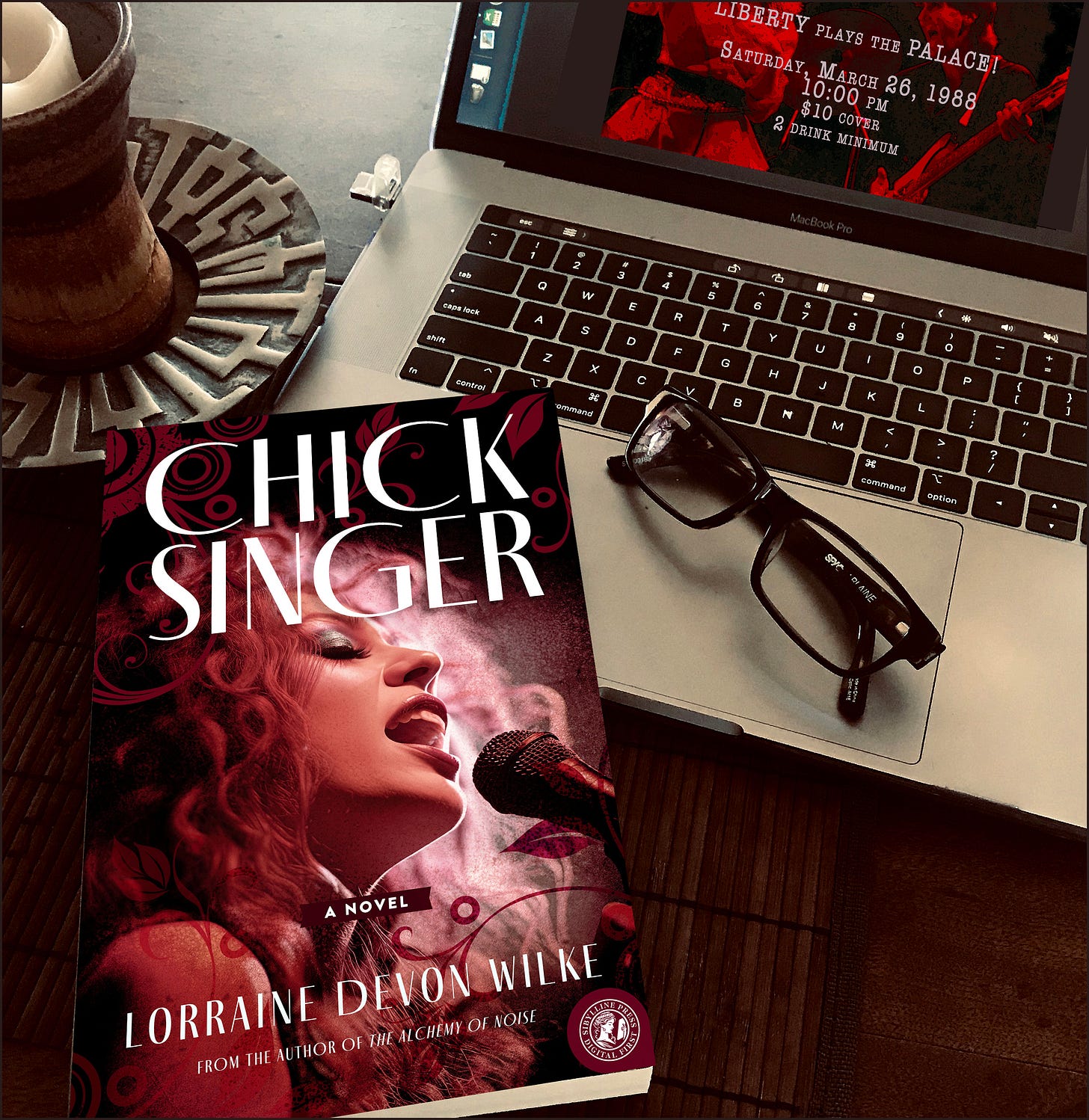
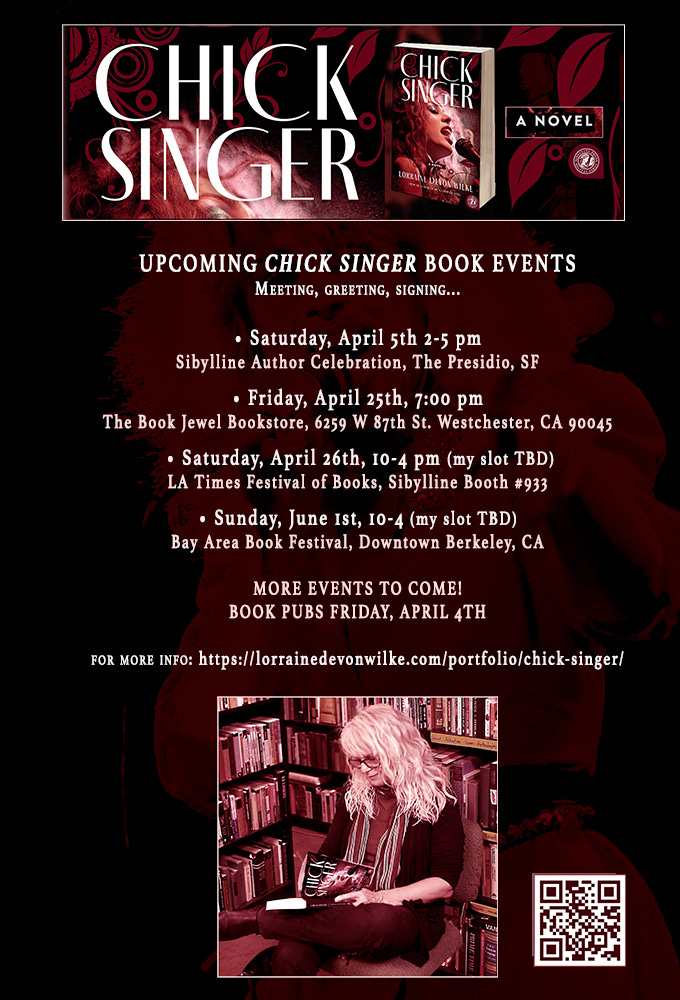
My latest novel, Chick Singer, is out in a few weeks (April 4th) and people are asking if/when there will be book events or other happenings related to that release … thought I’d post what’s on the roster so far.
All events at this moment are in either LA or SF, so I’m hoping peeps in those areas will put these dates on their calendars and come join us. I’ll be reaching out to set up at other places as we roll out and will keep you informed as I do.
In fact, if you have a book club you think would enjoy the book, or a favorite book store in your area you’d recommend, please let me know. I’m already planning trips to NYC, Chicago, and up the coast here in CA, so I “have book, will travel” … holler at me. Look forward to seeing you along the way!














 | Rock+Paper+Music |
You must be logged in to post a comment.