A Writer’s Life is a Roller Coaster. How Best to Avoid Whiplash

When I was in grade school, my class participated in a special pullout session to watch an interesting documentary about noted anthropologist Louis Leakey. I was mesmerized throughout, so when we were assigned to write an essay immediately afterwards, I jumped in, flush with enthusiasm. 

Photo by hannah grace on Unsplash

Imagine, then, the blow of getting my paper back with a big “D+” circled in red with the sharply worded comment: “Much copied material!” Which was shocking (and inaccurate), given that it was written about a movie I’d just watched, with no reference materials to tap, and not a word of it from anywhere but my own fertile mind. It seems I’d enjoyed the film enough that I retained much of the information and wove that into my analysis and review. “Wasn’t that what I was supposed to do?” I internally caterwauled. Yet when I confronted the teacher to assert my plagiaristic innocence, she refused to believe “a child your age could have written anything as cogent and well thought-out as this,” and my hideous grade held. Talk about a back-handed compliment! 

I kept that essay with its big, circled “D+” as a reminder of just how misguided and off-the-mark much about writing (and writers) can be. As both an art form and an industry, it’s rife with opinions, instructions, rules, mandates, perceptions, and demands that often, and sometimes quite loudly, contradict each other. And while we, the writers, are driven to express our narrative impulses from the purest places of creativity, most of us also want to be humble and open, learn from experts, and build goodwill in hopefully sustaining relationships. So when we get hit with those many contradictions and confusions—often found in “rules of writing” lists, personal critiques, and advice we don’t necessarily agree with but feel we probably should—there’s a struggle to know what to accept, what to reject, when to get a second opinion, and when to just shut up and do that page-one rewrite. 

All of these options and elements comingle in the swooping up-and-down roller coaster life that is a writer’s. You know, that ride we clamor onto in pursuit of fulfilling our dream, building a career, working toward excellence, and finding success. It’s a ride that’s unpredictable and exhilarating, terrifying and whiplashing; one that, when it takes off, leaves us unsure of whether to raise our hands and scream in delight, or demand someone stop the damn thing and let us off. 

Though it’s been over a decade since I finished my first novel, I still find myself shaken at times on that ride. Jostled, as I continue to sharpen my writing skills, query agents; evolve my thinking on options in the publishing industry, even work with other writers to help them polish their own work. I think (I hope) I have come to a place where I have thick enough skin, deep enough wisdom, and much less reliance on magical thinking, but I’m still amazed at how many of the questions I asked—or was asked—years ago that are still being asked today: 

  • Is self-publishing the kiss of death? (No
  • Does it really matter what our book covers look like? (Yes)
  • I can’t afford an editor; can I put my book on Amazon anyway? (You can but definitely shouldn’t without professional editing and formatting.)  
  • Can anyone but romance writers find an agent? (I’m not clear on that … I just got a rejection letter from an agent I queried 2.5 years ago; it took her that long to even acknowledge my submission!)
  • Are we allowed to call ourselves writers if we haven’t published anything yet? (If you’re writing, I say you’re a writer.)
  • I heard that Stephen King said writers shouldn’t watch TV; did he say that and is he correct? (I don’t know if he actually said that. If he did, it might have been taken out of context. If it wasn’t, no, he’s not correct.)
  • How many books do we need to write a year to be considered successful? (The metric of “success” has nothing whatsoever to do with how many books you write a year… or ever.)

The list goes on, but let me leap on that last one, as it’s a question that sparked a recent conversation with a writer friend of mine. It had taken her a good many years to fully develop, write, fine-tune, and ultimately prepare her current book for publication, and yet she kept reading about other writers who were cranking out three, four, even five books in a year, which astounded and confused her. “How can they manage that when it’s taken me so long to do my one? Is it possible some of us only have one story in us?”

She said she’d posited the question in her writing class and got lots of feedback: some commiserated with her query, wondering and feeling similar things. Others admitted that though they did publish more frequently, not all they wrote was particularly memorable (she thought that was bracingly honest, as did I!). And there were a few who took umbrage with her phrase “cranking out,” asserting they could write several books a year without any loss of quality. I weighed in with something like this: 

“I totally understand your dilemma. And you’re not alone. I’ve taken years between my books and long ago decided that’s just the way it is for me. I’m not interested in quantity over quality, and for me to write what I perceive to be a quality book takes time, with lots of rewrites and editing and more rewrites, and with that sort of protocol you literally can’t crank out several books a year.

“I have seen some people crank out two, three, sometimes four books a year, and maybe they’re good enough for some readers, but upon further inspection I’ve found many don’t hit the mark for me. Often they’re quick and formulaic, sometimes lacking thoughtful editing or proper copy-editing. But it’s a choice people make, both as writers and readers.

“You do your thing, feel and tell your stories, however many or few you have, and don’t worry about the rest. You’re good.”

And I stand by that. Though, frankly, I don’t know why that debate persists. It shouldn’t. It’s a personal choice. Unless you signed a deal agreeing to a certain number of books for a publishing company (and then congrats to you!), how many books you write is as personal a matter as how much you weigh, how many children you want (or don’t), or why you suddenly hate musicals. That it’s become a flashpoint amongst writers is strange to me, whether it’s that weird point-of-pride for some who do “crank out” several books a year, or a “shame cudgel” for those who don’t, can’t, don’t want to. Both decisions are valid. Neither is more meritorious than the other. So let’s parse how to avoid the whiplash triggered by that particular roller coaster dive.

It can sometimes be hard for writers to take the long view of their art and the industry that encompasses it. Some put heart and soul into the work, believe in it, love it as they’d love a child. Others see it as less about love and more about commerce, using their skills and creative output to build income and popularity. Some fall somewhere in between. I think you have to, first, figure out where you see yourself on that spectrum, then construct a writing protocol and business plan that aligns with what you decide. Once you candidly and honestly do that, it gets easier to find answers to the issue discussed in your writing  group … or any questions that arise over time.

Things like: What do I prioritize in terms of where I spend my time and money? How much critique do I need and want; how much do I seek out; how much do I implement? Which rules feel organic and productive; which are non-applicable to me? What publishing model suits how I want to do this? How many stories do I have to tell; how many books do I feel compelled to write?

No one can answer those questions for you, and anyone who tells you there’s only one way to achieve or perceive success—whether creative, critical, or commercial—is wrong. There are many ways, just as there are many versions of success. Though I’d certainly love all the perks best-selling authors enjoy as much as the next person, more important to me is telling the stories I want to tell the way I want to tell them: how they flow, how they feel, what they say, how the books look, how they’re presented in the marketplace, and so on. If that comes with perks, yippidy do dah! If it only comes with my sense of artistic pride and personal satisfaction, so be it. I can live with that.   

Odds are you can too. You simply have to define your goal, decide your path, then buckle in for the journey you design to get there. Hopefully, you can enjoy the ride, get to your destination in one piece and succeed without pulling a muscle … you might even ask to be taken around again! 

— ———

Additional read: THE ART & CRAFTINESS OF CRITIQUE:  Women Writers Women’s Books, February 25, 2022

Next Year’s Words Await a New Voice…

I’m experimenting with a few. We’ll see what sticks.

“For last year’s words belong to last year’s language. And next year’s words await another voice.” ~ T. S. Eliot

Eliot’s quote seems apropos at this particular moment, on this particular day, the last day of 2024. I feel like I actually need another voice for this coming year, one that can hopefully start fresh, be optimistic; speak about uplifting things. The one I’ve been using is notably exhausted and a little sad, and I don’t want to leap into 2025 with either of those states weighing on my personal zeitgeist.

It was a tough year, 2024.

For those of us who went all-in on the election—some even in the years leading up to it—it’s been hard reconciling the fact that a great portion of our society doesn’t share a value system that once seemed essential, expected, and non-negotiable. We’re left to await the incoming administration with a mix of dread, fear, anxiety, and anger, poised to push back, stand firm, and hold strong to principles they may not hold dear, but good people still do. It sounds exhausting already, but that’s what we’re in for. And we’ll do it; we have to, but, yeah … that’s tough.

It was also a year in which wars stacked upon wars, each with the deadly cost of lives and hope for peace. Gaza was decimated at the expense of tens of thousands of its citizens. Ukraine was forced to continue the fight with Putin’s Russia. Sudan battles its civil war, with violent unrest in other African countries, as well as in South America. Syria, perhaps, offered one glimmer of hope with the fall of the long-running Assad regime; the world now waits to see what evolves from that surprising development.

All over the globe, social justice and compassionate inclusion (or, as hardcore right wing wags call it, “woke mind virus”) take a beating from a growing trend toward fascism, white supremacy, and rabid nationalism. Identity battles related to gender and sexual orientation, women’s rights, the rights and freedoms of many marginalized groups (including marriage equality and reproductive freedoms) are at risk. As are the freedoms typically afforded public schools and other taxpayer funded organizations as fundamentalists and right wing theocrats attempt to control what we read, learn, and think, and how we pray or don’t pray.

On a personal level, this year has been a mix of tough and tender, heartbreaking and celebratory. I lost a beloved little sister to metastasized breast cancer, even as I observe my own “five-year clear.” I held my breath as one of my dearest friends worked to recover from a stroke, then celebrated news of the imminent arrival of my only child’s first child. It’s been a hearty mix of emotions, but that’s life, isn’t it? It’s all a hearty mix.

But now I want to rethink what I “muse” upon going forward, especially on this Substack platform of mine. What I focus on. What I use my voice for. What I dive into. I realized, as I sat here writing this on December 31st, that since the night of the election when I swore off all televised news and mainstream media, that I really do feel better keeping a healthy distance from the nonstop, relentless, clickbaiting, endlessly hyperbolic coverage of all-things Trump, politics, Biden, congress, Mace, Trump, Musk, politics, Johnson, Bannon, inauguration, Trump, Trumps, more Trumps…. aaaaaggghgh! I really do. So I’m stickin’ with that. My mental health is more important than my full-body immersion in “what’s going on today in politics?”

To be honest, I don’t care. Well, I do care; I care passionately. But there’s only so much I can do about the many things I can do nothing about at this moment in time. And while that sense of impotence feels gutting in so many ways, there’s also freedom to acknowledging that I can step back and put my able attention on other things. And those things I can do nothing about? They’re off my table; shelved, back-burnered. I’ll keep a peripheral eye on things—just so I can stay abreast of when there might actually be something I can do something about—but other than that, it’s all going to have to roll down that long, winding, rocky road of the next four years without my finger on the pulse.

What I am going to pay more attention to? Life. Life beyond politics. Things I’m doing, things people I admire are doing; causes I believe in and organizations I support. I keep thinking about all the good people in this world who surely deserve more word count than the worst amongst us, people like Jane Goodall, Malala Yousafzai, Melinda Gates, and Marley Dias. Young climate change activists, good men standing with women to fight for the preservation of their rights; immigration activists going knee-deep to offset the upcoming (and naziesque) “mass deportation” movement. Let’s talk about those people for a change.

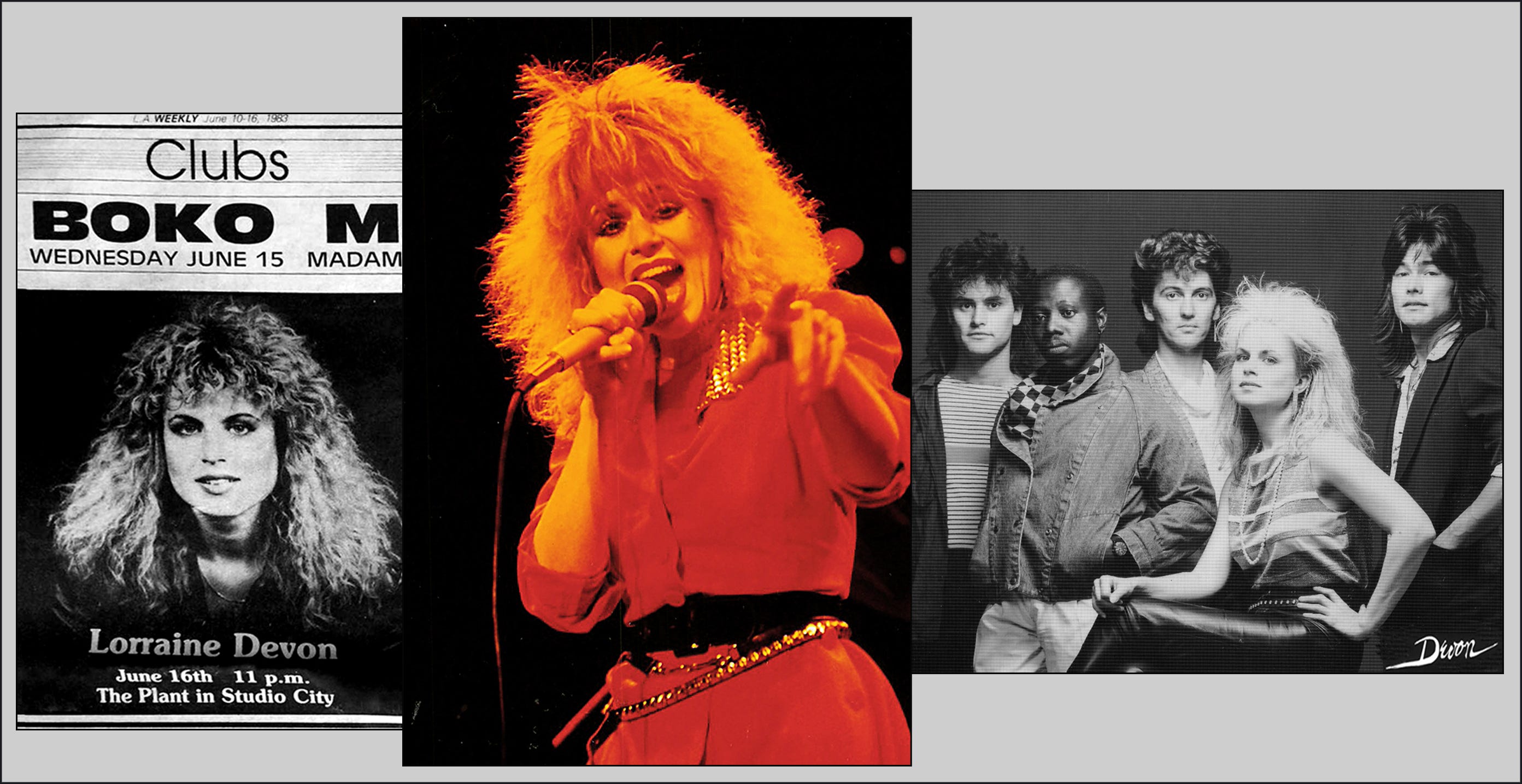
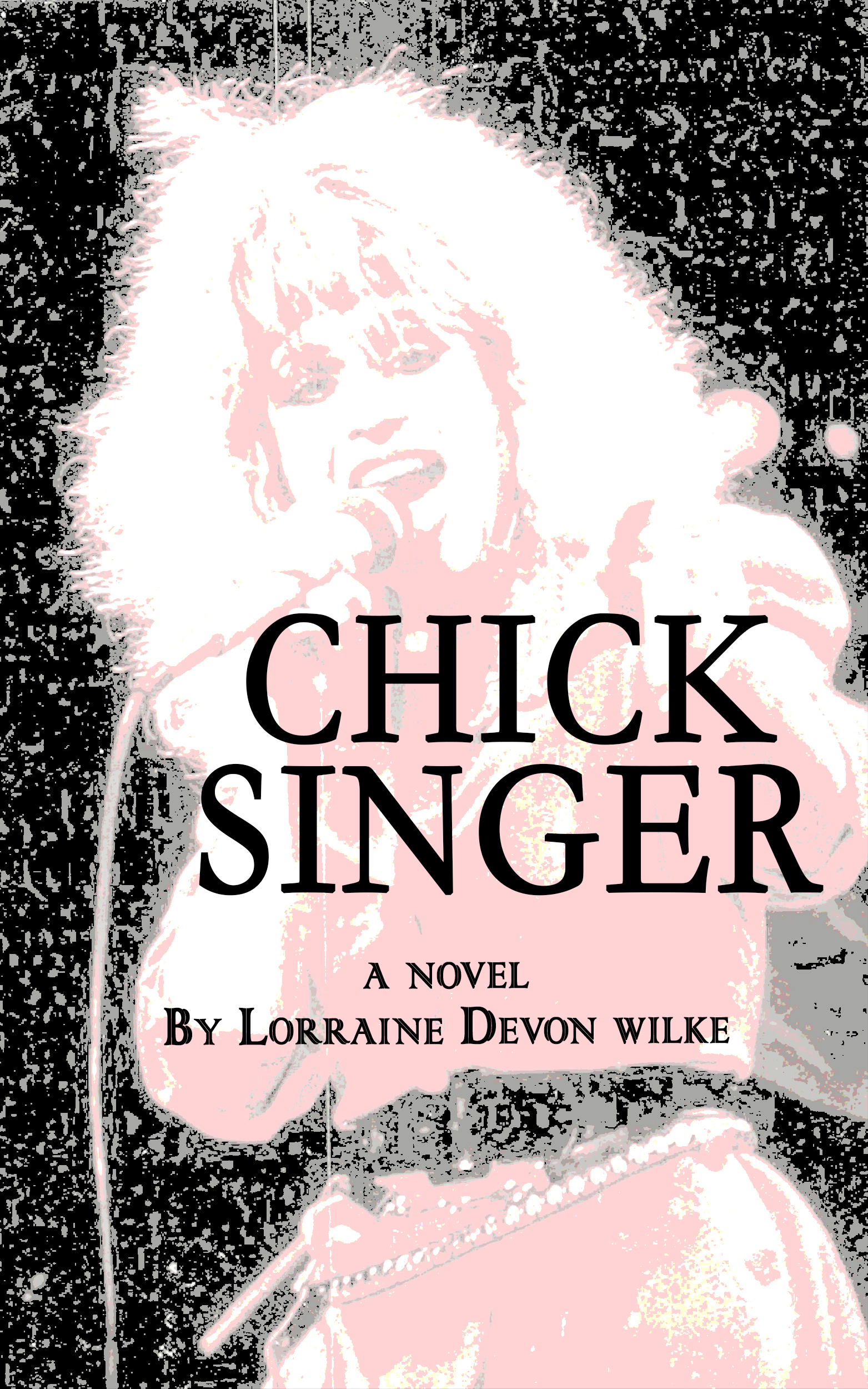
There’s also the day-to-day of my own life, stuff I’ve got going on, things I’m working on. I want to talk about some of that, too. For example, I’ve got a fourth novel coming out on March 28th of ‘25. Chick Singer. I’m excited about that. It’s a book I’ve put a lot of heart and soul into; it taps into my long background in the world of rock & roll (one of the things I love most about my origin story), and I’m going to write some about it as it gets closer to its pub date. I promise I won’t overdo it, but I’ll want you to know enough that you can access and enjoy the book … I’m convinced you will.

I also want to continue to inject humor into things. Actually, as often as possible. Bring my slightly skewed perspective of life to the page from time to time to hopefully engender a laugh or two… that’d be nice, right?

There’s more, but that’s enough for now. Is that a “new voice,” “another voice,” or just my old one refocusing? I’m not sure. All I know is I want to broaden the scope, widen the subject matter; pull myself out of the dark stream of political disconsolation. That new voice will likely be lighter. I hope so. Lightness of being can go a long way toward balancing the dark that persists in this human endeavor we call life. I’m counting on that.

So as we ring out this maddening year, I wish for you whatever “new voice” you might need, and all the lightness of being you can possibly muster for the upcoming year. Let’s make it a really good one … in spite of it all. I’m convinced we can.

Happy, Happy New Year, my friends!


linktr.ee/lorrainedevonwilke

The Girl I Discovered In My Search For You

There was a sharp knock at the door, odd at that dark, early hour of December 13th, 1999. But a knock in the night is always strange.

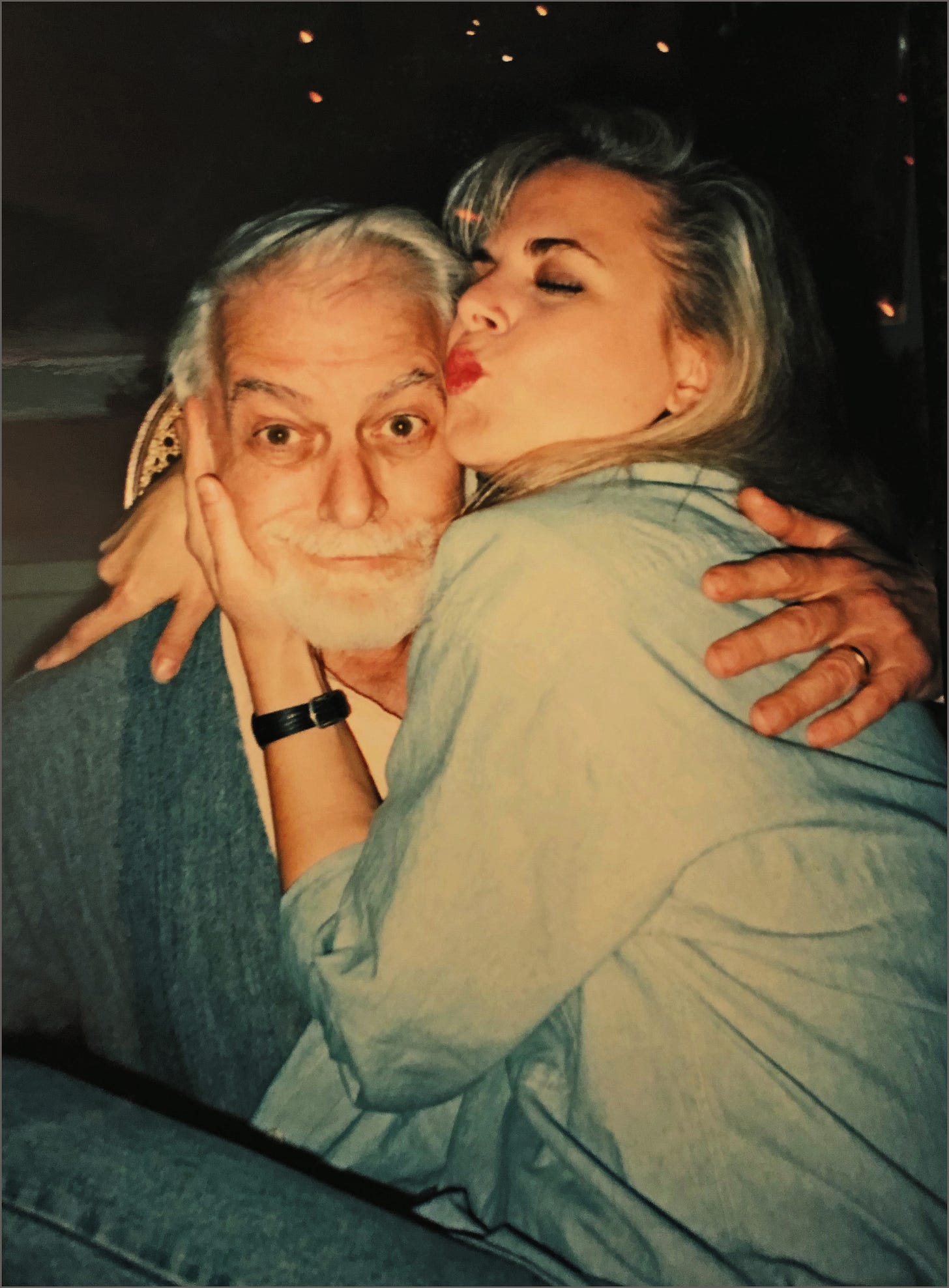
I had closed in a Christmas show the evening before and hadn’t been able to fall asleep for hours, so now, disoriented, I bolted awake as my husband answered the door. My brother. He lived up the hill; came down to tell me the news. Our father was dead.

I remember I had a grief reaction—an outcry, a bend forward—that didn’t seem authentic to me at the time. It felt like a rote response that was expected or something a person would do in such a circumstance, but the emotion didn’t make it to my gut until much later. Which was also odd. But I hadn’t lost a parent before so there was no foresight into how it should feel, how I should react, what was the appropriate response. Mostly it felt surreal. He’d been sick, so it wasn’t a soul-rattling shock, but still … it was my dad. And now he was gone.

If you asked me about my relationship with my father, in today’s vernacular I’d have said, “It’s complicated.” It was, in both basic, traditional father/daughter ways and in very individual him/me puzzles. A lifelong mash-up of deep love, incredible admiration; cyclical conflict, longing for closer rapport (me), confusion about what the hell I was doing with my life (him), and ultimately, always, back to deep love. It was hard getting enough one-on-one time with a parent when you have ten siblings, at least it was for me, and back then, as I created my splashy, vivacious persona to, no doubt, attempt to stand out in the crowd, I felt my father was still … elusive. That’s a good word, I think. I wanted his approval, his attention, but I wanted the stuff that was just for me, not “all my kids,” and that was … elusive.

Yeah… I might’ve driven him crazy.

So I left home and got into my own life across the country, and years into that adulthood it seemed we were, finally, getting to a place where we could relate as peers. I’d become a wife and mother by then; we were grown people with common history and a shared passion for writing, reading, and arts in general, engaging in meaningful discussions of books, movies, family, the meaning of it all. It was good.

Then he got sick.

Neuromuscular, incurable; diagnosed as ALS, degenerative, devastating. It was only five months between the time he entered the hospital and that dark December knock on the door. Which is swift for that dreaded disease. But, as research of other cases made clear, that might have been a blessing.

I remember the first frantic day we knew something was undeniably wrong (there’d been denial on his part up to that point). My brother and I flew up to Olympia after he’d gone into respiratory arrest, lodged ourselves in a waiting room waiting for word while simultaneously watching shocked coverage of JFK, Jr.’s plane crash. July 16th, 1999. That confluence of tragedies made the date one I won’t forget. He was ultimately transferred to a Seattle hospital, where my sibs and I rotated vigil in the ICU family room. I was there eleven days without leaving, getting to know the doctors and nurses involved, being the family spokesperson, wrangling my confused and terrified mother; spending time and feeling hope after my father came to consciousness once again.

That hope took a rollercoaster ride over those next five months, up and down, good news; bad news, reassured, uncertain, ultimately concluding in a rehab facility where he lived with my mom until that December 13th. He died the very first night he slept without a breathing machine (something he’d insisted on), and only a few hours after I’d charmed audiences at the Alex Theater in Glendale with my bluesy rendition of “Walking In a Winter Wonderland.”

That’ll change Christmas for you.

That was twenty-five years ago today. Doesn’t seem that long ago, but twenty-five years is a quarter-century and much has changed in me, in my life, since. I think of him almost daily and look back on the road we traveled together, noting how my perceptions and interpretations of that journey have changed along with my own evolution.

His quick nutshell history:

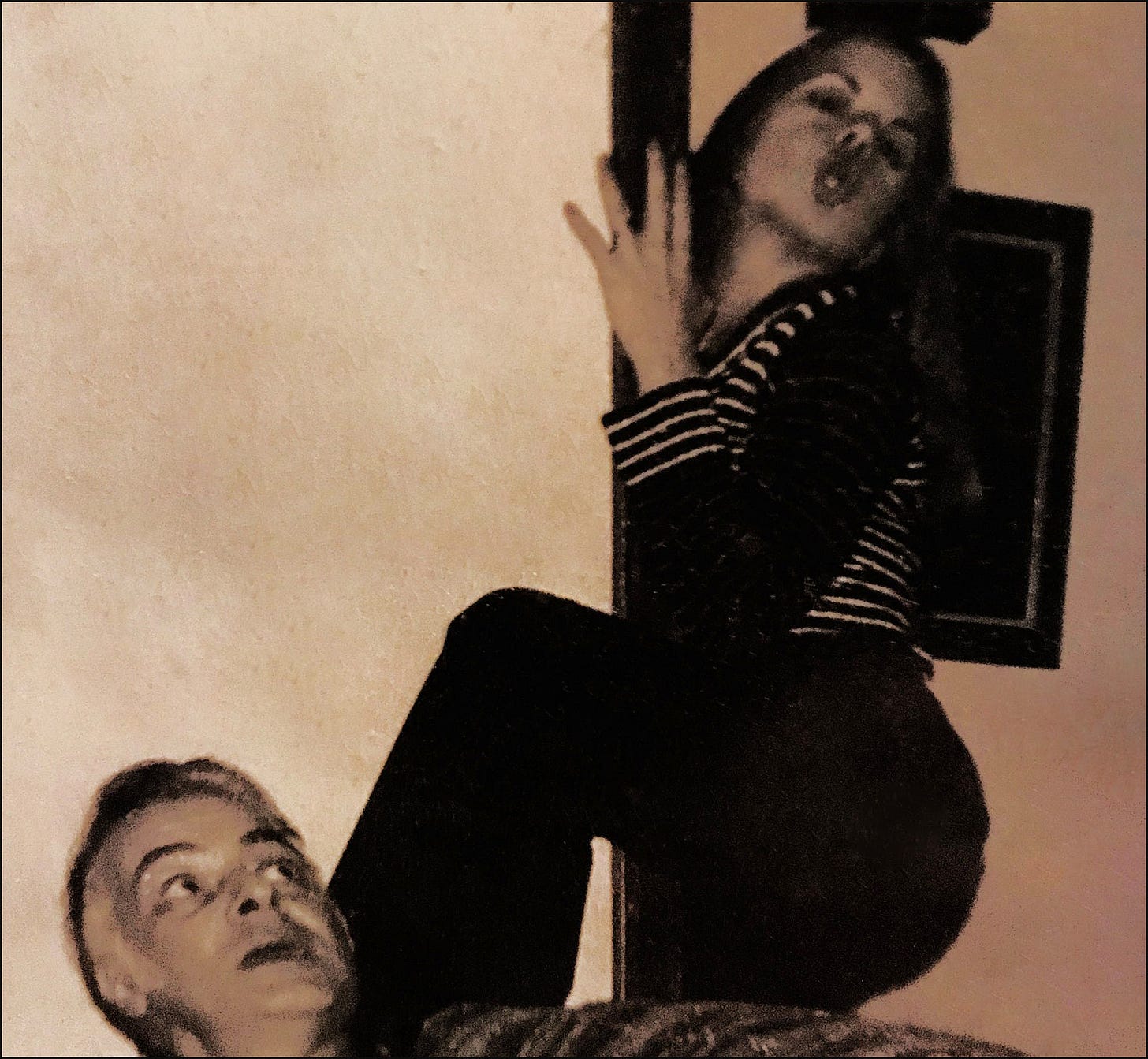
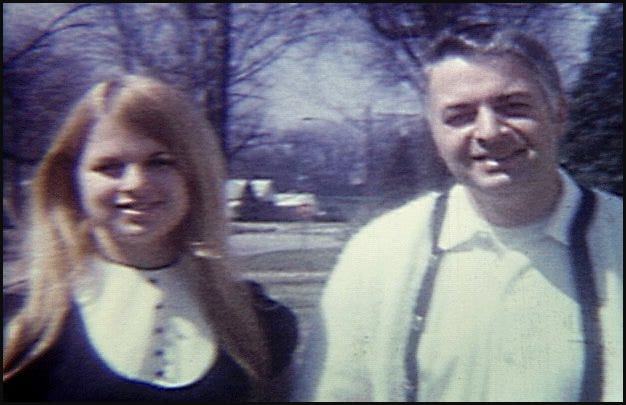
Born to two Greek immigrants who’d fled Turkey in the early 1900s to settle in Chicago where a large Greek community thrived, my father was a serious, handsome boy with one older brother, a love of nature, books, and writing, inspired to major in journalism at Northwestern University. In his early twenties, he fell in love with a funny, effervescent Irish/German Catholic girl who became my mother. His parents weren’t happy about the union—not so much because she wasn’t Greek, but because she was Catholic, a religion for which they held great antipathy, exacerbated when my father converted to make a church wedding possible. My grandparents did not attend that wedding, but later a shaky detente was achieved (the imminence of grandchildren will do that), and my parents moved into the second floor flat of their home, where my two older sisters, a younger brother, and I were born. Then they absconded from the city to raise us (and, subsequently, seven more children) in rural northern Illinois.

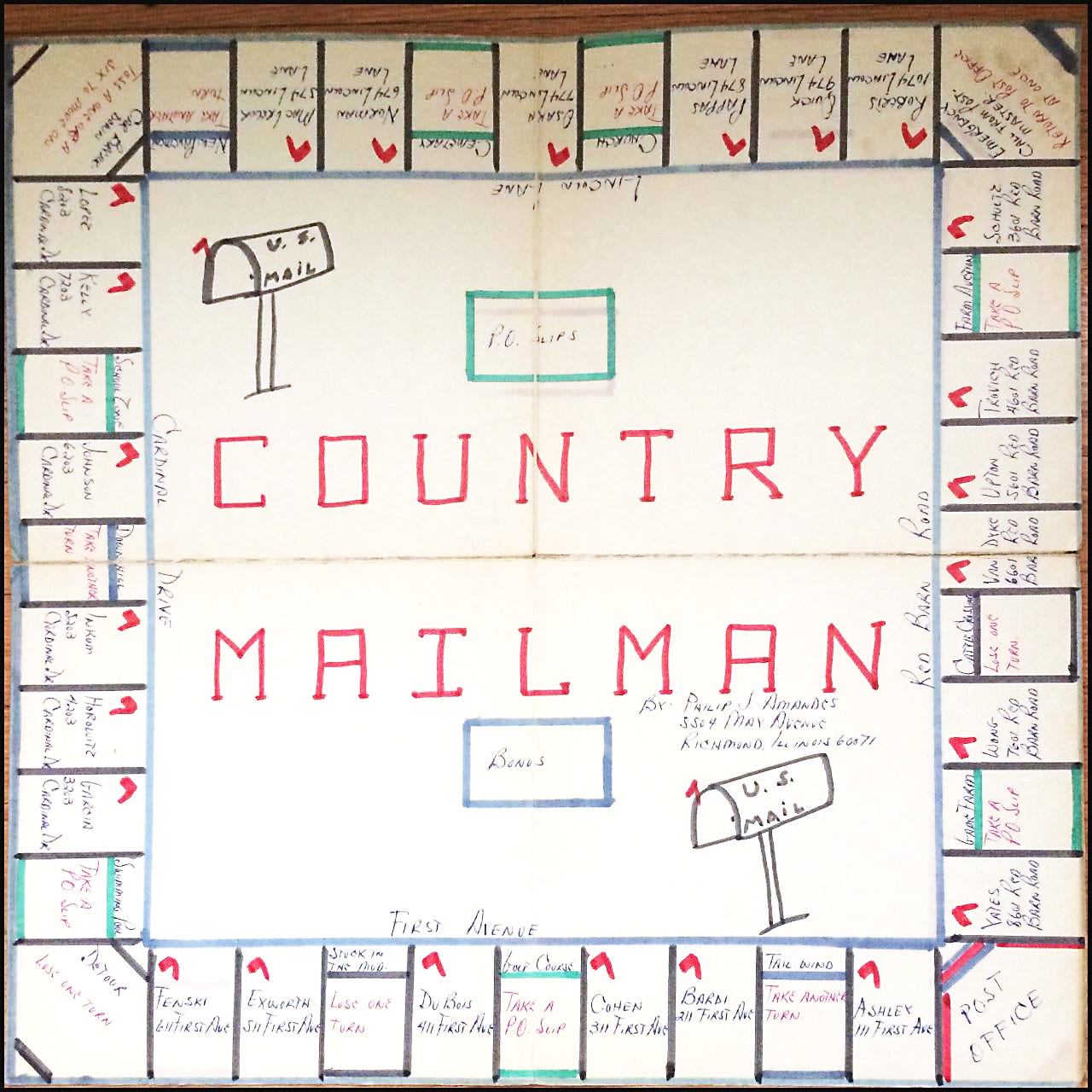
My father was one of those converts who became, perhaps, more committed to the religion than even my mother, which is what sparked many of our cyclical conflicts. I was a skeptic, a questioner, a doubter of the dogma and doctrines; he was not only an enthusiastic devotee, but it informed many of his parenting decisions I most chaffed at. Head-butting was frequent. But in between, I adored him for being the creative, funny, adventurous father he was, introducing us to theater, nature; getting us to White Sox and Cubs games. There was lots of music in the house; records played, singing was frequent; there was art, basement plays and backyard carnivals. While working at the local post office, he created a board game for us called, “Country Mailman.” We loved it. When the TV broke, boxes of library books replaced it and after we stopped caterwauling about losing our cartoons, we found the trade-off endlessly absorbing.

He was also a prodigious and frustrated writer. “Frustrated” because he was determined to get what he wrote—articles, short stories, novels—published, but, as many of us in the field know, that can be a hard goal (and there was no Substack back then!). He certainly found it so and that ground at him. Beyond the time and tasks related to that endeavor, he also kept copious journals he invited his children to read. I scanned a few but at the time didn’t find them particularly interesting (lots of dry, statistical data and odd analyses of people in his life). After he died, however, I was alerted to one written when I was twenty-six in which I played a central role, his year-long commentary on choices I’d made in/for my life and why he felt I was a failure at that point, squandering my many talents. Suffice it to say, that was a sucker punch.

Which became the title of my first novel, After the Sucker Punch, a highly fictionalized story that wrestled with those very plot points. Writing the book was both creatively joyful and a form of therapy. How strange, really, that a totally imagined character, the father’s sister, guided “Tessa,” the story’s protagonist, to an understanding of her father that was heretofore missing, helping her reclaim memories of her childhood and her honest love for him. All of which ended up informing my own emotional and psychological evolution. Fiction as self-therapy … what a concept! I had “Tessa” put some of that epiphany in a letter to her deceased father at the book’s end:

Here’s what I know: You were a good man. You had moments of warmth and kindness and you took good care of us. When you laughed it was golden. You loved a good book. You appreciated creativity and personal expression. You understood passion and you somehow made me feel like I could find my path in the world, that I had the courage to step outside of convention to go after bigger things. You encouraged my artistic self even if you didn’t understand it. You had your own dreams and you understood their value. I know because you were the one who gave me the eyes to dream in the ways I still do. You gave that to all of us, and it is a gift so treasured…

What I discovered in my search for you, Dad, is a stronger sense of myself. It’s fragile, occasionally teetering, in need of much support and reinforcement, but it’s there. I even wrote a song about it, the first one I’ve written in over five years. I’m sending it to you with this letter because it’s about you and me. About how, in trying to find you, I finally discovered who I am. The real me. The true girl. The one who survived your sucker punch, survived my own mistakes and evolved into who I am, not the stranger you wrote about. Your words didn’t define me; my life does. That is a monumental accomplishment. I’m holding on to it for dear life. And I hope you like the song!

Mostly? I know you loved me. No matter what you said in that journal, I know you loved me. As I loved you. And in accepting that, I’ve come to accept you as the flawed man you were. I’ve forgiven you for that man, as I’ve forgiven you for hurting me. I’ve also come to accept you as a loving father who relished life and cherished his family. Can those contradictions exist in the same person? Yes. Because I’ve chosen to believe that. And that choice gives me faith. Faith that you loved me. And that’s just going to have to do.

And I did write that song. For my own father. It’s one of my favorites. “My Search For You.” Click the title to listen.

During one of our last conversations, he was at my dining room table reading some one-acts I’d written for a theatrical production. After putting them down, he looked up at me and said, “You’re a better writer than I am.” He said it humbly, authentically, and it left me both elated and sad. Elated that he recognized and acknowledged a skill and talent he’d, in fact, nurtured in me; sad that it seemed to indicate a resignation, a reconciliation, of his own dashed dreams. But still … he kept writing until his beleaguered hands couldn’t write anymore, which was just weeks before he died. I’ve often thought that as a passionate, driven writer, his being forced to accept that limitation was one final, powerful reason to let go… which I understood.

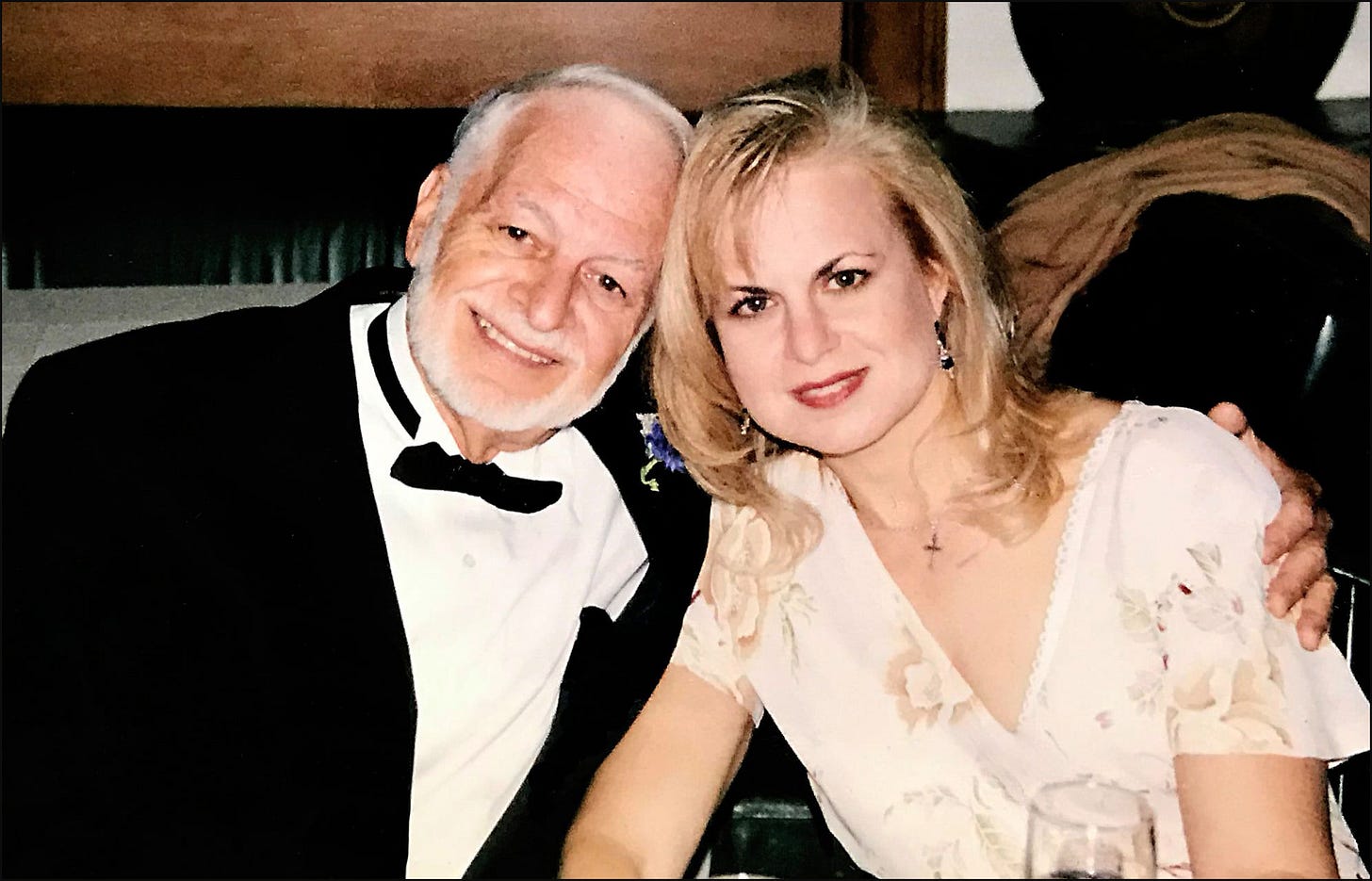
So, on this twenty-fifth anniversary of your death, know that I’m thinking of you, Dad, as I so often do. I hope wherever you are you’re either living another robust, creative life, or hanging with Mom and Eileen, maybe even Grandma, enjoying the lightness and freedom of whatever that vaunted, unknown realm offers. Know you are loved and missed by us all. Certainly by me, your third daughter. The loud one. You’ll always be missed by me.

linktr.ee/lorrainedevonwilke

Chick Singer: How Creativity Became a Lifeline

These past ten days since the election have been brutal, certainly those of us who worked and hoped hard for the more joyful, optimistic outcome. For many, the results cratered their forward motion, and left them fighting to even stay afloat (see How to Survive a Rip Tide … and live to see another election). At the end of the day, creativity is what keeps me sane, for many reasons. And because I know art has the power to lift us up, I’m shifting my focus at this moment from election madness to my latest creative project:

Writing has always been a balm for me. Whether pounding out letters I never sent, winding my way through the puzzle of song lyrics, crafting essays and op-eds that spoke my mind and heart, or taking on the heft of a novel, immersing myself in the art and craft of writing has truly, without hyberbole, kept me sane. 

My latest novel, Chick Singer, has been signed by Sibylline Press, and will be released (in print, audio & ebook) via their Sibylline Digital First imprint in March 2025, and that is something that not only cheers me greatly!

The story was birthed from one of those random “what ifs?”, the kind that sticks; the kind you can’t stop thinking about, that tickles your brain until you follow the thread to some ultimately satisfying fruition. In this case, it was a prompt based on my wild, rollercoastering, exhilarating years in rock & roll, and went something like this: “What if somebody secretly posted your old ‘80s music online and it went viral?”

I remember laughing, thinking that would, indeed, be random, but the idea sparked a bigger idea, one that carried me into the world of “Libby Conlin”—her band, her family, her life, her dreams, her secrets—all of which led to Chick Singer. It’s a story that has percolated through various iterations, engaging the input of many wonderful readers, consultants, editors, and advisors, all of whom contributed to a “satisfying fruition” in novel form. To give you a snapshot of its story:

Logline: A former ‘80s rock singer is forced to excavate her mysterious past when her boomeranging adult daughter secretly—and successfully—posts her old music online.

Rock & roll stardom is something you dream about when you’re young, and for Libby Conlin the ‘80s and all their wild promise are ancient history. What pulls her attention now is the unexpected arrival of Bridget, her newly divorced daughter who’s home again despite their historically fractious relationship and the chaos it inspires. And, as if predestined, life quickly turns upside down when Bridget’s application to a local art school involves anonymously posting Libby’s old music online, music that’s good enough to garner the attention of industry gatekeepers. When Libby’s mysterious past—and all its dark secrets—comes roaring into the present, the reconfiguration of everything and everyone in her orbit is both bittersweet and life changing. 

placeholder cover

When fascination with rock & roll remains a never-ending draw, CHICK SINGER steps onto that stage with its raucous exploration of a complex mother/daughter relationship set against a backdrop of music, dreams, and love—and the art of redefining all three.

If you’d like to keep up with the process as it moves toward publication, you can tap its page on my website, and of course I’ll be posting pertinent updates from time to time here and on my socials.

linktr.ee/lorrainedevonwilke

What Barry White Taught Me About Love

I’m talking about love today … true, true love. Dreaming of it, imagining it, seeking it, finding it, holding on to it, blowing it up, rebuilding it, soundtracking it — wait. Soundtracking it? Yes. Soundtracking it. That’s where this story starts: A song.


I wrote something on this years ago for HuffPost but here we are, a decade later; I just celebrated my thirty-four anniversary and I’m in the mood to revisit the theme. Love’s Theme, if you will (which I’m actually listening to as I write this … I really am.)

Picture this: a young girl, electric with sensuality, eager to revel in all things lust, passion, and love, discovers a song sung by a man with a silky voice that is quite literally an anthem to all three: Barry White’s “I’m Gonna Love You Just A Little More.” She’s smitten, pulled in. It’s like a drug, that song; she can’t listen to it without mooning and swaying in time, awash in the ache of yearning and gauzy dreams of — “Oh, for God’s sake, child, stop daydreaming, drink some cold water, and calm the fuck down!”

(That was my inner-mother; my real mother would have never used the f-bomb, nor would she have abided my dreams of lust.)

I can laugh now, but that ache was very real back then. If I found Barry’s song on a juke box, any juke box, I had to play it … over and over and over. I drove anyone in the vicinity crazy with those dogged replays, but the mood and feel of that song had me under its spell: The suspense of the intro as the drums start, high hat clicking, kick drum keeping a beat that echoed in my head; then keys set that iconic riff; Barry’s voice weaves in and out, that bedroom mumble of his, and the piano starts, then the bass … all of it combining to create the most grooving, driving, layered paean to immutable love I’d ever heard. Cue swaying.

Give it up, ain’t no use
I can’t help myself if I wanted to
I’m hung up, no doubt
I’m so in love with you for me there’s no way out

‘Cause deeper and deeper
In love with you I’m falling
Sweeter and sweeter
Your tender words of love keeps calling…

Eager and eager, yeah
To feel your lips upon my face
Please her and please her
Any time or any place

I’m gonna love you, love you, love you just a little more, baby….

This wasn’t a song about hook-ups and flirtations; this was a song about LOVE, true love so strong “there’s no way out.” That’s what I wanted, even as a youngster, to be in love with someone who’d fall “deeper and deeper in love” with me right back. Now, mesmerized by romance, poetry, and a great bass line, I had my own love theme.

But as time went on, music changed. Barry put out other songs I liked, some a lot, none quite as much as that first one. I grew up, fell in and out of love more times than my mother appreciated, and learned that the kind of passion Barry rhapsodized about wasn’t easily found. I still believed it existed, didn’t give up on the possibility of it, but I stopped holding every relationship to the standard of “no way out.” I always seemed to find plenty of ways out … as did they. I wondered, at times, if Barry had misguided me a little; seduced me with words and music that said that kind of love was possible. I didn’t want to become a cynic, but his ode to romance was getting harder and harder to believe.

Until I met him. Him. The man I married, the man who, thirty-four years ago this week, told me, by virtue of everything he was, everything he had, and everything he promised on that wedding day, that he was, indeed, so in love there was no way out.

This time it looks like love is here to stay
As long as I shall live
I’ll give you all I have and all I have to give

No, those weren’t his vows—I’m still quoting Barry here—but in the ensuing thirty-four years, he has given me all he’s had to give, which was every joyful moment, every event, every triumph, crash, rise, fall, and memorable experience you could imagine.

But life being what it is — meaning we weren’t living in a love ballad with an unforgettable piano riff — we also hit some walls that were so damn hard I thought our heads might crack (after a serious brain injury his almost did). Those were the moments when “no way out” felt more like a sentence than a promise. We ebbed and flowed, ran away and came back; sought and studied and learned in every way we could and, somehow, some way, ended up full circle, back to where we started … back home. Where we healed and evolved and let go and forgave until we knew, once again, with no doubt, “love is here to stay.” A vow coming full circle as well.

I’m sure you realize there’s a wink in how I’m framing this story, a clear understanding that my believing love could be defined by a ballad sung by Dr. Love was sweet, youthful naiveté. But still … certain ideas nestle, certain sensations and feelings become part of your cellular memory, and even seemingly trite words and melodies become connectors to grander ideals. Like endurance. Commitment. Tenacity, resilience, acceptance, and joy, found, lost, and recaptured. And to this day, whenever I hear “I’m Gonna Love You Just A Little More,” I’m transported back to that juke box, swaying to the beat, eyes closed and heart open, filled with longing, believing in life and passion and those “tender words of love.”

And this week I celebrate the man I married, the one with whom I discovered the true story inside the love ballad. Happy Anniversary, darling. Wherever we’ve been, wherever we’re going, know I’m always gonna love you, love you, love you … just a little more.

Thank you, Barry White.

linktr.ee/lorrainedevonwilke

Nope. Don’t Want Robots Writing My Fiction

NaNoWriMo opens the door to AI content and all hell breaks loose.
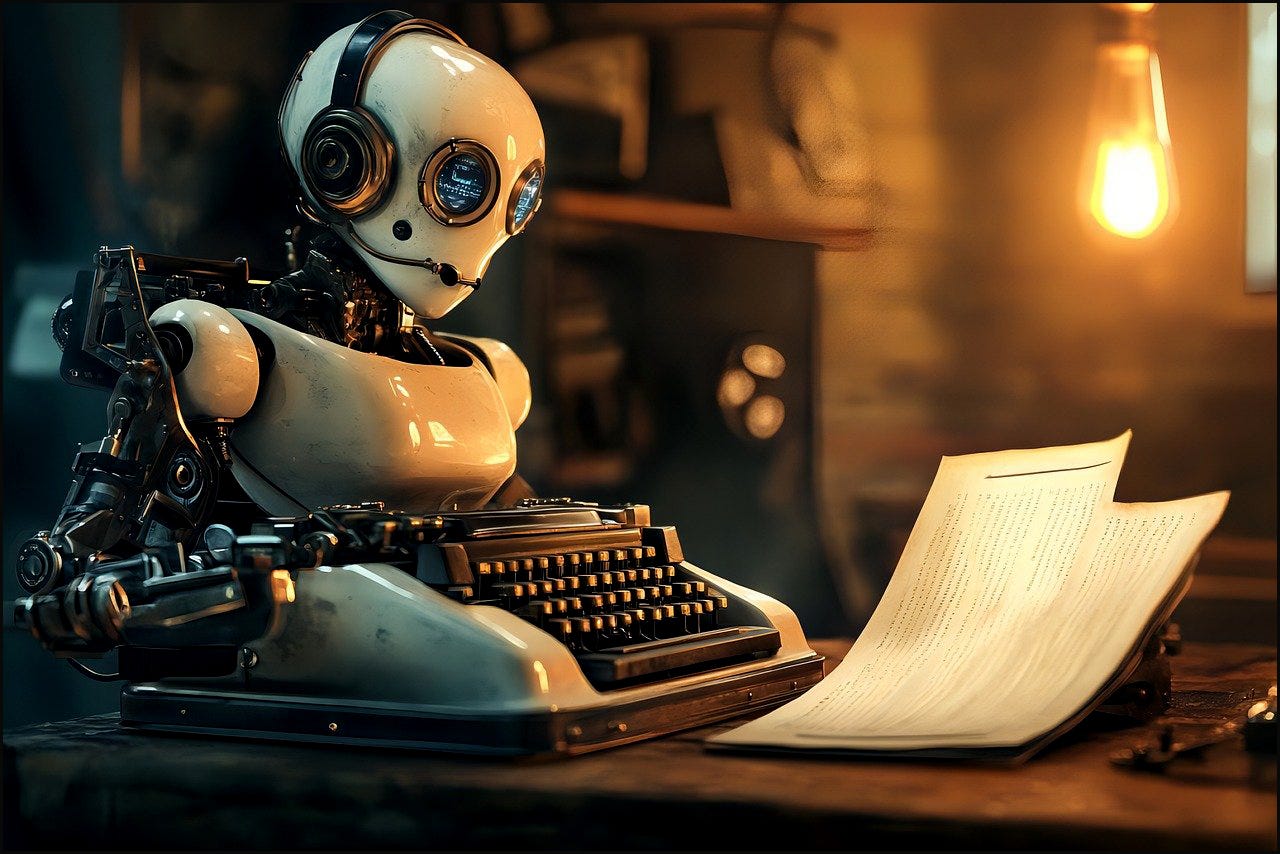
AI Generated Image by Gianluca from Pixabay

First, for the uninitiated, NaNoWriMo stands for “National Novel Writing Month,” and it’s an annual—and, I’ve heard, sacrosanct—tradition amongst a certain contingent of writer who enjoys the challenge of churning out an entire novel (or at least the first 50,000 words) during the month of November. There are no prizes, no winners; it’s done for the sheer pride and public acknowledgment of having accomplished the task. The non-profit that conducts this event has kept it running since 1999, so clearly it’s a popular one, but as a novelist myself the idea of signing up to crank out a novel in thirty days turns the creative process into timed sport, and that just ain’t my thing.

I’m sure many who’ve participated in NaNoWriMo would tout the inspirational aspects of its mandate, one that pushes reluctant writers to “finally get to that great American novel,” or whip up the discipline to produce literature on a speed-dating timetable. But none of that is really the point of this article (though it may be of another one). No, the point of this piece is that NaNoWriMo did something this time that set the writing world on fire: It changed its stance on the admissibility of AI content and the whole damn thing blew up in their face.

Prior to this year, the organization’s policy on AI, as cited in an article by The Washington Post, was as follows:

NaNoWriMo said writers were welcome to use artificial intelligence to “assist your creative process” but that utilizing AI to “write your entire novel would defeat the purpose of the challenge.”

Then, this year, they modified that stance, as WAPO lays out:

NaNoWriMo said it would “recognize and respect writers who believe that AI tools are right for them. We recognize that some members of our community stand staunchly against AI for themselves, and that’s perfectly fine. As individuals, we have the freedom to make our own decisions.”

To condemn AI, the organization said, “would be to ignore classist and ableist issues surrounding the use of the technology,” noting that issues around the use of AI “tie to questions around privilege.” The group argued that “not all writers have the financial ability to hire humans to help at certain phases of their writing,” and that for some writers, AI is a practical solution, rather than ideological.

“Not all brains have same abilities and not all writers function at the same level of education or proficiency in the language in which they are writing,” NaNoWriMo wrote. “Some brains and ability levels require outside help or accommodations to achieve certain goals.”

[Emphases mine.]

This rambling equivocation on the topic sparked the kind of backlash that I, as an artist who finds reliance on AI to be the harbinger of doom, would have expected. NaNoWriMo’s social media blew up, people stepped down from the organization, participants quit the event, outrage against the references to “privilege” and “ableism” were heated and vitriolic. There was such an outcry that just a few short days after that announcement, the organization, clearly stunned by the backlash, issued a “note to our community,” offering an “updated” statement which basically boiled down to, “We fulfill our mission by supporting the humans doing the writing.”

Whether or not their walk-back will assuage the outrage, who knows, but all of this leads to my bigger, overarching issue: what, exactly, should the role of AI be in art?

I get that robots and AI have been essential, even lifesaving, in the arenas of medicine, technology, scientific research; bomb dismantling, etc., but why are humans so willing to abdicate their own creativity, their organizational skills, imaginations, exploratory impulses, etc., to inanimate “brains.” When is it “using tools” and when does it become like the Dillon Panthers relegating their homework to the Rally Girls and being totally, ethically okay with that arrangement (yes, I am finally catching up with the very fine Friday Night Lights)? There’s something disturbing about the trend, and the terrifying thing is that it’s only going to get more ubiquitous and accepted over time. At some point we’ll probably see whole novels written by AI “authors” available on Amazon (are they there already?). Google something and the first thing that pops up is input from AI (which I do read, but honestly? I’d prefer an intelligent human’s input). My Photoshop is now all excited about its “new and improved AI features.” Even the soon-to-be-released iPhone 16 touts it’s “built-in artificial intelligence.”

Holy hell, didn’t anybody see 2001: A Space Odyssey, when one of our very first AI characters, HAL, ominously declared, “I’m sorry, Dave, I’m afraid I can’t do that,” when directed to open the pod doors? Or what about the more recent, Ex Machina? Who could forget AVA the AI (played with banal malevolence by the fabulous Alicia Vikander) seducing the naive young scientist to set her free … to murder her creator and others, and escape to the big city where she’ll/it’ll no doubt wreak havoc on society. Or write a NaNoWriMo novel. Even Taylor Swift, in her well-timed and welcomed endorsement of Kamala Harris on debate night referenced the dangers of AI in her Instagram announcement:

“Recently I was made aware that AI of ‘me’ falsely endorsing Donald Trump’s presidential run was posted to his site. It really conjured up my fears around AI, and the dangers of spreading misinformation. It brought me to the conclusion that I need to be very transparent about my actual plans for this election as a voter. The simplest way to combat misinformation is with the truth.”

[By the way, brava, Taylor, on all the points in that paragraph!]

We’ve been tip-toeing up to and around the inevitability of robots taking on more activities and roles in the lives of us meat-bodied humans, but it seems the alarm bells set off by teams of scientists who “warn of AI dangers” has had little or no impact on starry-eyed inventors, developers, and corner-cutting humans in every profession, including the arts. Learning to fine-tune, organize, edit, and sharpen one’s prose has always been (or used to be) essential elements of a writer’s skillset. Now people dump their first drafts (or even raw ideas) into ChatGPT and let ‘er rip. Is that abdication or efficiency? Some think the latter, especially younger people, but I personally want to possess and hone those skills for myself, proficiency that comes from doing the work, over and over, until you get it right. Call me old school.

The music world has been impacted by its own version of this technological abdication for some time now. When I started as a young session singer in the ‘80s, long before ProTools and auto-tune were around, we vocalists prided ourselves on getting in the booth and laying down tracks that were so spot-on in both pitch and tone that engineers didn’t have more than a note or two to “punch in” (the ancient art of re-recording notes or bars of a vocal that the engineer would skillfully punch into the original track). Yes, that sort of thing is easier to do with auto-tune, and certainly I have no argument with using it judiciously, but what evolved from the emergence of that stellar technology is the same sort of thing we’re now seeing with AI in other creative arenas. As one recording engineer who worked with many well-known young singers told me: “They cut one or two takes, wave goodbye saying, ‘I know you’ll fix it in the mix,’ then I have to auto-tune every note, I mean every single note, and add tone corrections to make it sound decent. They’re not invested in getting to that themselves.” Even live performances can be “assisted” by auto-tune mechanics.

Not much different than letting AI help you “get answers, find inspiration and be more productive,” is it?

It’s getting harder and harder to discern what’s real anymore and that’s a bug in the system. I don’t mind if AI is used and properly credited (i.e., the artwork at the top of this piece), but how often is that the case? These days far too many “photos” and memes shared on social media either look like well-done cartoons or are so graphically ridiculous there’s no doubt of their robotic origin. Can’t say I love any of that.

I know I sound like a technological curmudgeon, an AI-Luddite, but really, I’m not. I love technology; I use it enthusiastically, appreciate it immensely (Maps has changed my life), but when it comes to my art? My creativity? My imagination and the exploration of ideas? Sorry, robot; that’s all mine.


SIDEBAR: A weekly feature where I spotlight people, projects, events, and art … sometimes even my own!

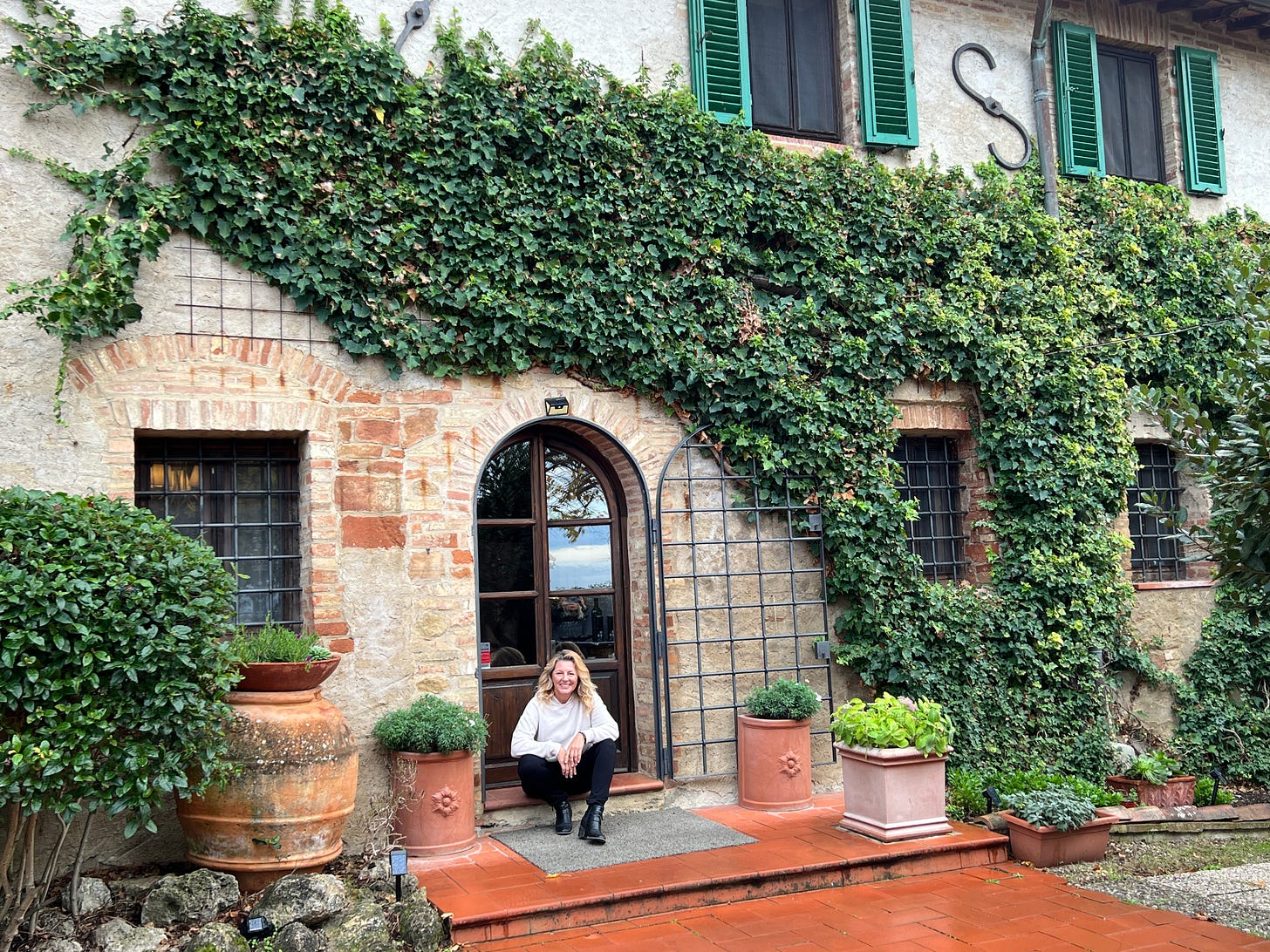
I have a friend who not only owns a stunning villa in Tuscany (where we delightfully stayed last November), but is a singular, astonishing, and highly accomplished artist, most notably in mosaics. Mia Tavonatti is the consummate creative, and I highly encourage you to click her name above to explore her work, or visit her Facebook page; even enjoy this video of the breathtaking stair project she did last year in Dana Point, CA. She hosts a slate of creative retreats throughout the year, so if the idea of exploring creativity in the stunning surrounds of Tuscany appeals to you, email her at miatav@yahoo.com for details.

ALSO: With the recent sale of one of my photographs, I was reminded of my own artwork, to which I’ve given short shrift lately as a result of my focus on literary matters. But I do love the art form, I love the work I’ve assembled on my photography site, so I want to share it with all of you. It’s an eclectic collection in various categories, so please enjoy a peruse through the galleries and don’t hesitate to let me know what jumps out at you!

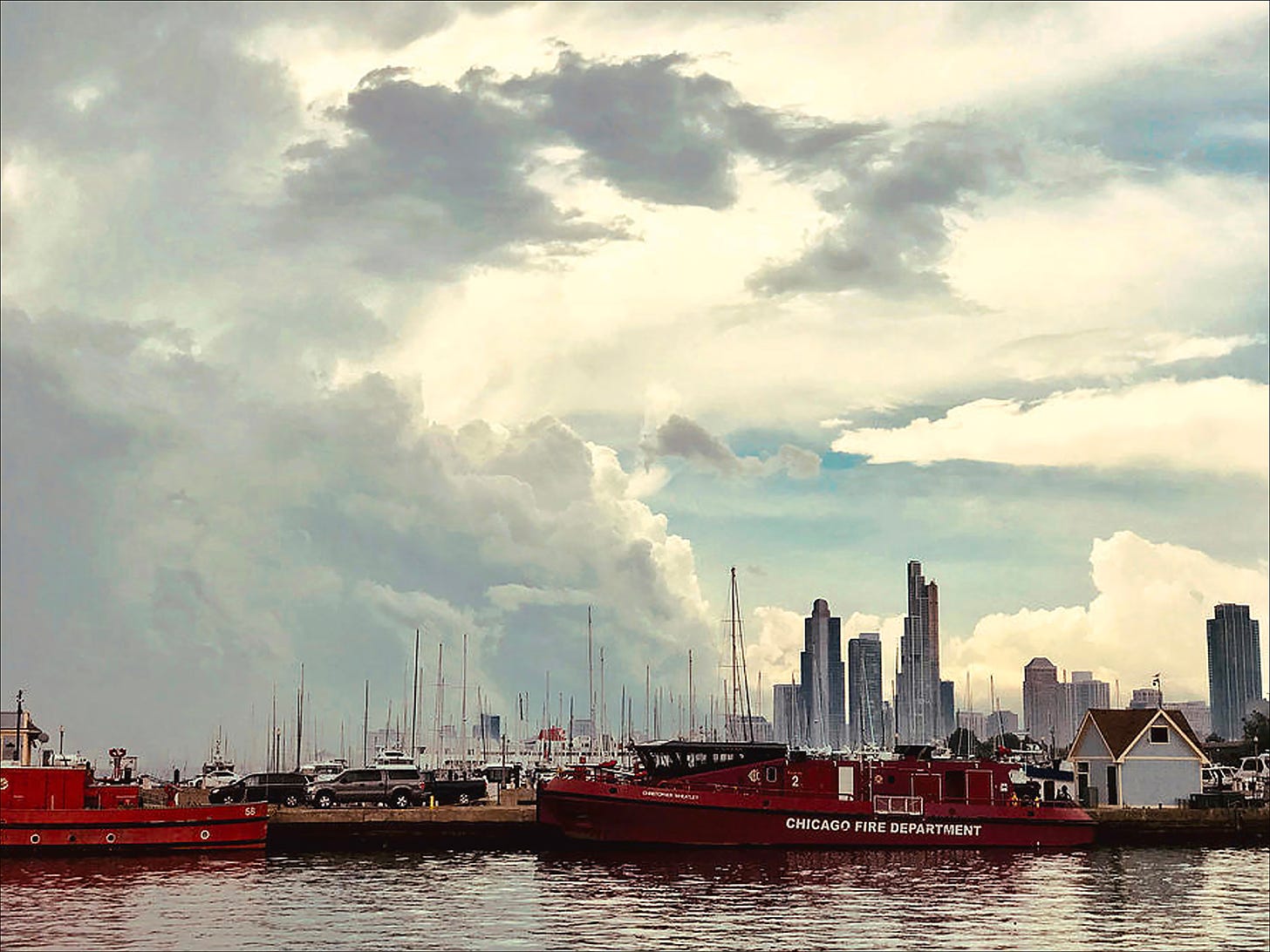
Clouds Over Chicago

Joy’s Been Detected. Could It Be We’re… Happy?

I don’t know if you’ve detected it, and if you have, I don’t know if you believe it, but it’s palpable and visceral and people are starting to talk.

Photo by Jacqueline Munguía on Unsplash

It might seem crazy what I’m about to say
Sunshine she’s here, you can take a break
I’m a hot air balloon that could go to space
With the air, like I don’t care baby by the way*

We’re feeling… what is that? It’s hopeful, optimistic, communal damn JOY. Remember that, joy?

Might be hard… it’s been a while. Certainly Election 2020 being decided for Biden came with joy (or perhaps, more honestly, relief). We’ve subsequently had some very good years with Joe, get to feel happy about his estimable list of accomplishments. But Trump clamored to announce his return from the dead only days after that 2020 decision, so we knew “winter was coming” on the heels of, and during, Joe’s run. Which injected looming dread into the joy quotient, diluting it almost beyond recognition.

Because, frankly, it’s been one long, ugly slog since Trump first slithered down that escalator in 2015 (dear God, almost ten years already!). Millions have suffered specifically, millions more have suffered tangentially, and the world was not made a better place because of this corrupt little man. In fact, it’s almost as if some dark, karmic maneuvering was at play when an unprecedented global pandemic descended upon us while this corrupt little man wobbled at the helm, as if nature felt obligated to mimic the malevolent chaos swirling around him and, therefore, us. Whatever it was, it was further “nail to the coffin” of our ability to feel things like joy, hope; optimism.

Then Joe righted the ship, got us back on course, and here we are, weeks after his graceful baton pass, weeks into the exuberant Harris/Walz campaign, and it’s seems, at this point, to be undeniable:

We are feeling JOY. It’s raw and giddy, and of course, given the gap, it’s like working an atrophied muscle, exercise that can’t help but be tempered by caution, wariness, and whispered admonitions of, “Don’t get too happy, now! Remember Comey? Remember Russia? Remember misguided polls? It could all turn on a dime!”

Here come bad news talking this and that
Yeah, well, gimme all you got and
don’t hold back
Yeah, well I should probably warn you I’ll be just fine
Yeah, no offense to you don’t waste your time
Here’s why…

Yes, here’s why we won’t hold back on that joy. This is a different time, a different team, a different zeitgeist, and a wiser electorate. We’ve learned that feeling joy, letting ourselves get happy and hopeful, is its own kind of campaign adrenaline. As Joy Reid put it on Threads, “Joy is its own form of resistance.” She’s right.

And we’re allowed, dammit! The grievance and anger based agenda of Trump and his right-wing cohorts does not resonate with the majority; does not represent the mood and tone of higher conscious people; does not inspire activism, engagement, and positive outcomes. JOY DOES.

Yes, we face serious challenges. We can take nothing for granted. We can’t count on polls, pundits, or media to assess and accurately call the heats of this race. There will be shifts and changes, unexpected breaking news; creepy “swift-boating,” threats of violence (it’s MAGA, after all), and accusations of “CHEATING!” (already happening with The Corrupt Little Man Who Projects Everything). But we’ve run against this shady cabal before. We know their playbook, their players; we know the chicanery and shenanigans they’ll put into play. But our team is fierce, staffed with some of the smartest, best people in the business, and I believe we can have faith that they’ll handily respond to any lobs from the other side.

So let’s let ourselves feel it: Happiness. Hope. Optimism. Belief. JOY.

Yes, we’ll work our asses off. Yes, we’ll stay focused and activated, keep the attention on inspiring new voters, getting people registered and to the polls, helping any online and street teams reach as far as they can. But while we’re doing that, we’ll dance in the streets, sing at the top of our our lungs, and happily clap along… because this movement, this moment, is a “room without a roof”!

Because I’m happy
Clap along if you feel like a room without a roof
Because I’m happy
Clap along if you feel like happiness is the truth
Because I’m happy
Clap along if you know what happiness is to you
Because I’m happy
Clap along if you feel like that’s what you wanna do

Happy lyrics by Pharrell L. Williams © Warner-Tamerlane Publishing Corp., EMI April Music Inc., More Water From Nazareth, Waters Of Nazareth Publishing, Universal Pictures Global Music

SIDEBAR: Back when I was sending out newsletters via Mailchimp, some of you might remember they most often focused on updates regarding my books, music, photography, etc., or on other artists, events, worthy causes, or organizations I supported. Though more recently my posts have evolved into the weekly op-ed format, I still plan to include ancillary updates from time to time, and will do so through this new “SIDEBAR” feature tagged at the end of articles.

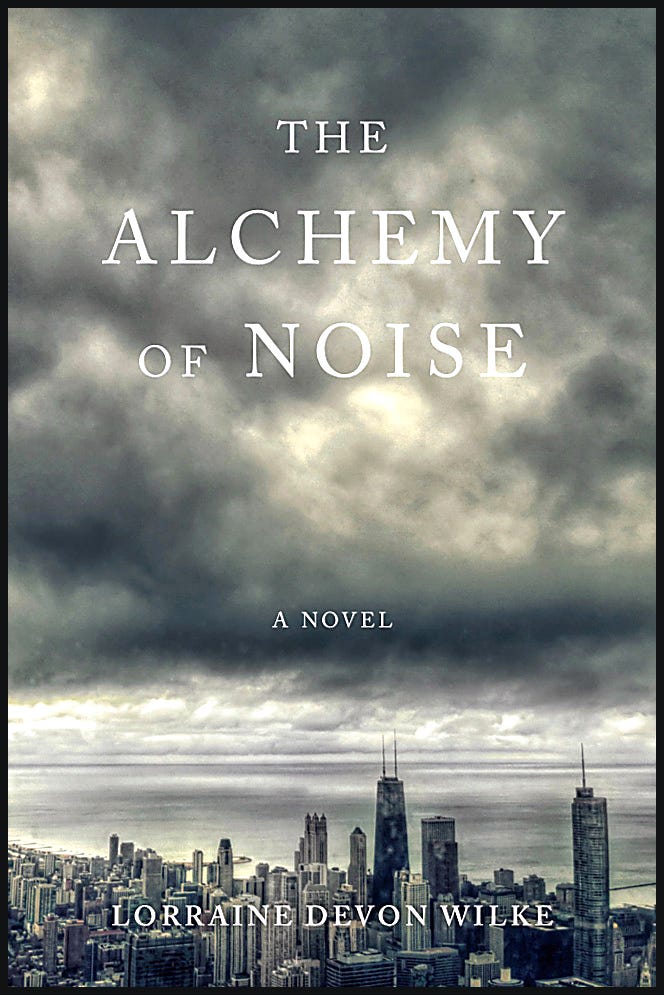
I’ll start today with some good news on the literary front: my last novel, The Alchemy of Noise, is published by a small, excellent publisher called She Writes Press, and they, just this month of August, entered into a distribution deal with the mighty Simon & Schuster, which means my book is now being distributed by that same company… which is very cool. If you’ve not yet read it, I hope you’ll trundle over to my page at their site, pick yourself up a copy, and enjoy the read.

Also, if you’re in the Chicago area: my very talented brother, Tom Amandes, is starring as “Gandalf” in The Lord of the Rings, a Musical Tale, at the Chicago Shakespeare Theater on Navy Pier. It’s getting great reviews, running until September 1st (after which it’s scheduled to go to New Zealand!), so if you can, grab some tix and immerse yourself in the magic of the Shire!


That’s it until next week… have a good one!

When Procreation Becomes Political

… tell J.D. it’s a losing position

My family. No pets allowed except turtles… but I lost one

Let me start with this: Anyone can procreate. Or, more accurately, anyone physically capable of procreating can. In fact, it’s so easy for most people that preventing procreation has made the pharmaceutical industry billions, while the need for options when procreation is considered unwise or unwanted has pushed abortion to a hot-button issue. In other words, it’s not rare, this act of human-making. It’s also not something that defines a person as either good or bad, meritorious or useless, admirable or ignoble.

Someone tell J.D. that.

I’m one of eleven children. Third oldest, third girl, then came three boys, then girl-boy-girl-boy-girl. Same two parents for all. Eleven children born over a twenty-year period. Being in that first group of three girls, growing up in an era when females were expected to be the responsible ones regardless of how many males were milling about, I was designated a “little-mommy” from an early age. Daily assisting in household tasks, family chores, occasional turtle wrangling (the only pet allowed), and the specific care of the third boy —my older sisters were likewise in charge of brothers “one” and “two,” respectively—I can say without equivocation that I know big families. Not only my own, but regular interactions with the many other big families in my small midwestern Christian/Catholic town gave me insight on a very personal level. And what I know is that big families are not the arbiter of either “it looks like so much fun!” happiness or “kill me with that many” hell on earth. They can be both. They can be one or the other. They can be neither. They can destroy a child, leave them moderately confused, or set them singing “Doe, a deer.”

I also have a child, one biological child; an event that came fairly late in my procreational window of opportunity. It took me that long to get to the decision because after the eighteen “little mommy” years of childhood, I wasn’t sure I needed further experience in the role. I’d hit the road at nineteen with a mission to live Unshackled Life like a religion, and having babies did not fit the paradigm. At all.

And let me say, those unshackled years—wild, creative; dramatic— were phenomenal. No regrets. But at some fortuitous moment I met the man I would ultimately marry, and for the first time in my life the procreational light flickered: “Oh, this is the kind of person you have children with!” I’d never met one of those before. So, madly in love and absolutely certain I was ready for the plot turn, we brought a son into the world who is and will always be my heart and soul.

But I stopped there. Just one. After growing up as I did, one was all I could mentally and emotionally manage. I knew from watching my mother struggle in her role as the “mother of many” how much not paying attention to one’s aptitude for the job could damage you. And others. So, yes: one child.

I know small families, too.

I say all this as foundation for my thoughts on the raging (enraging) pontification of a certain VP candidate who’s been spouting all kinds of Handmaid’s Tale nonsense about parenthood, framing the act of procreation as a politicized metric of human value and worth, a competition that can be judged, adjudicated; measured, and, based on participate rates, either rewarded or demonized.

In the past few weeks, Vance has come under fire for resurfaced comments attacking “childless cat ladies” as “miserable” and bad for society; claiming that childless people tend to be “deranged” and “psychotic”; and proposing giving extra voting power to parents with young children.

“We have, I believe, a civilizational crisis in this country,” Vance said at the 2021 Napa Institute event. “Even among healthy, intact families, they’re not having enough kids such that we’re going to have a long-term future in this country.”

(“Enough kids”? Sheesh. Who gets to determine that?)

Despite those views being wielded during this current political campaign, their origins sprang from a strain of theocratic nationalism that has permeated much of the Republican Party. The Slate piece quoted above—J.D. Vance Used to Be an Atheist. What He Believes Now Is Telling: He’s not an evangelical Christian. He’s a Catholic—of a very specific type— offers further insight on the particular “framework” from which J.D. now operates:

They aim to control women’s reproductive choices and individual freedoms concerning gender, sexuality, and identity; they prefer isolationist economic policies; they support unions and labor protections and oppose immigration; and they seek to elevate religious organizations’ place in their schools and civic institutions. […]

There’s a term for intellectual Catholics with a similar worldview: integralists. There’s no universally accepted platform uniting integralists; it’s more of an intellectual framework built around the idea that Catholic moral theology should govern society. Mat Schmalz, a religious studies professor at College of the Holy Cross in Worcester, Massachusetts, defined it simply as the idea of “integrating spiritual and worldly, or integrating church and state.” In other words: church before state.

(Ah, so I guess church and state would then determine what was “enough kids.” I see.)

The article’s author, Molly Olmstead, clarifies that while J.D. hasn’t fully identified as an “integralist,” some who’ve listened to him think, “Vance’s views, particularly around policing gender expression, indicate that he is at least ‘pulling from a Catholic integralist strain.’”

Which, to this former Catholic daughter from a large family who raced into independence like a starving child and believes with all my damn heart that no one—no government, no country, no religion—can impose its beliefs on any other, this viewpoint is not only regressively anti-American and terrifyingly authoritarian, it’s fucking awful, certainly when it comes to defining the worth of humans based on whether or not they’ve created other, or, even, enough, humans.

I have many friends and family members with children, many with none. I know people who’ve happily chosen not to procreate and others who’ve suffered for their inability to do so. I know those who’ve adopted, conceived by IVF, or raised other people’s kids; gay couples raising both biological and adopted children; grandparents caring for children abandoned by their parents. I know compassionate folk who’ve taken in foster kids, provided care and financial aid for children’s homes; some who volunteer for organizations focused on needy kids.

In other words, all kinds of people embodying all kinds of roles within all kinds of definitions of children, family, and care. No rules about “enough,” when, how, or why, just love, concern, and compassion.

I’m also clear that parents and caretakers can be wildly disparate in their quality of care. I know mothers and fathers who are awful people; many more who are stellar examples of the best of us. I know parents who abuse, berate, diminish, and demean, and many more who uplift, encourage, and accept unconditionally. I know childless people who can relate to and interact better with kids than some parents can. I also know childless people who, yes, do better with cats.

The point is, the choice to procreate is deeply private and personal, as is the outcome of that choice, whether it begets children or otherwise, and in what number (“enough children”… that just chafes me!). And while there are many metrics under the bubble of parenting that can indicate quality of character, community contribution, human compassion, empathy, and general “good people” qualifiers, the act alone, and the number it involves, offers no such metric.

And none of it belongs in the hands of government entities or participants, certainly not those who seek to impose their religious beliefs and tenets under the auspices of “church before state.”

Whatever memes and battle cries illustrate the contrasts of this election—which are wide and divergent—there is no denying that the Trump/Vance ticket is all about big government, invasive government; government that wants to determine every aspect of your personal life from what you read, who you love, how you identify; where you worship (or don’t), to what you do with your body, who’s allowed to care for that body, and how many other bodies your body creates. That’s not only, to repeat myself, anti-American, it’s anti-human, and it’s unacceptable.

Let’s tell J.D…. vote accordingly.


Yep… I’m a cat lady!

Visit linktr.ee/lorrainedevonwilke for links to books, music, photography & articles.

Running Like a Girl…

…with smarts, sass, and really nice shoes

Office of VP Kamala Harris, Public domain, via Wikimedia Common

When I was kid in the era of privileged mad men and women who ran things from behind the kitchen curtains, gender stereotyping was not only the norm, it was pretty much the only language we had.

Girls wore skirts to school, didn’t play “rough sports,” and were expected not to tussle with boys who were tussling with each other while sneering pejoratives like, “you fight like a girl!” or “run like a girl!” or “cry like a girl!” The theme was clear to us be-skirted ones: anything “like a girl” was dreaded status every boy I knew maneuvered hard to avoid.

Photo by Joe Pregadio on Unsplash

Yet as much as I took umbrage with the cudgel of those gender-centric insults, I oddly found perverse pleasure in comments like, “You shop like a boy,” (my dad… because I was quick about it), or “throw like a boy” (I had brothers), or, most desirously, “run like a boy” (noted by anyone who tried to keep up with me). Just as “like a girl” had currency as an insult, the reverse was considered a compliment. Why was that?

It wasn’t that I had identity or gender issues. I didn’t feel inherently less by virtue of being a girl. It wasn’t that I personally deemed girly things of no value (no one loved/loves make-up more than me). And my mother often remarked that I was “boy-crazy” from second grade on (odds are good it was first grade). It was that life regularly made clear that being on a par with boys was considered better. It had more gravitas. Carried more value. More heft.

Because boys had more agency, more power and freedom. They demanded and got more attention. Schools and towns provided for their need for athletics and clubs and social interaction far more than they did for girls. In fact, it took Title IX, a federal civil rights lawsuit enacted in 1972, to mandate that females had the right to “equal opportunity in sports in educational institutions that receive federal funds, from elementary schools to colleges and universities.” It took a damn lawsuit, for God’s sake!  

Which brings me to politics.

Why is it that a modern, global superpower like the United States of America has never elected a female president?

Well, we kinda did back in 2016 when Hillary won almost three million more votes than Trump, but given the arcane (and absurd) machinations of the Electoral College, she could not be adjudicated “the winner.” What hell that twist of fate wrought is fodder for a whole other article, but the point is: why hasn’t a woman actually won the damn thing?

Frankly, very few women have even tried. And there are reasons for that. This, from a New York Times article written shortly after the 2016 results were in, makes some astute points on the matter:

Some scholars say that European democracies may view women as more suited to high political office because their governments are known for generous social-welfare programs, something that seems maternal. In contrast, the president of the United States is primarily seen as commander in chief, which is a frame more difficult for women to fit into.

“America is still seen as the policeman of the world, the guardian of the world and we still have a very gendered version of what leadership means,” said Laura A. Liswood, secretary general of the United Nations Foundation’s Council of Women World Leaders, a network of current and former female prime ministers and presidents. “Not only do we have to be liked, we also have to be tough.”

Sue Thomas, a senior research scientist at the Pacific Institute for Research and Evaluation in Santa Cruz, Calif., said that unlike political leadership posts elsewhere, the American presidency “is seen as a very masculine institution that for historical reasons is extremely hard for a female to approach.” [Emphasis mine.]

That last line makes me want to scream, so reminiscent of girls being told not to “tussle with boys” on the playground, as if those boys were untouchable and we girls were too soft or weak.

Of course, given the deeply ingrained patriarchal foundation of the modern global superpower that is the United States of America, a place where women are paid less for equal work while charged more for materials and services, some see this discussion as a form of what we used to call “affirmative action,” but is now being sneered by the right wing as “DEI.” Trump and his Republican mouthpieces wasted no time swiping at Kamala Harris’s exuberant political ascendency as a “DEI hire,” a slur both expected and repugnant, but the most blatant ignorance of that racist/sexist invective is its contrast with truth: In fact, women are actually “more effective than men in all leadership measures.”

That’s the real headline of a recent Forbes piece that goes on to say:

Research from Leadership Circle, based on assessments with over 84,000+ leaders and 1.5 million raters (comprising boss, boss’s boss, peers, direct reports, and others), shows that female leaders show up more effectively than their male counterparts across every management level and age level. [Emphasis mine.]

Cindy Adams, President and CLO at Leadership Circle, makes the following points:

“Creative leaders’ behaviors flow from their values and purpose,” Adams said, “rather than from a set of assumptions about how leaders are supposed to behave.” Creative Competencies are highly researched and validated effective leadership competencies around the world. These include competencies that scale across five dimensions:

1.     Relating

2.     Self-awareness

3.     Authenticity

4.     Systems Awareness

5.     Achieving

Yet this very illuminating article also asserts:

Despite all the measurable benefits female leaders bring to organizations, many (organizations) still do not effectively develop and support them. [Emphasis mine.]

Certainly no “organization” is larger or more complex than the Executive Branch of the United States, which, disappointingly, fits squarely into that infuriating assessment.

So what do we do about that?

We change it. We now have a female candidate for the presidency who not only embodies every competency Cindy Adams lists (as well as others detailed in the article, which I encourage you to read), but Kamala Harris is setting the town on fire in every category essential to a successful presidential campaign: stellar fundraising, rising polls, and the enlistment of enthusiastic volunteers. She’s earning key endorsements, electrifying the electorate, pulling in the youth vote, and making people feel hopeful, optimistic, and uplifted… all those thesaurus words that have to do with FEELING LIKE WE CAN ACTUALLY SAVE OUR DEMOCRACY.  

AND with a woman.

A brilliant, accomplished, fearless woman. A woman with an infectious laugh, great dance moves, a loving husband and family, and a fierce level of energy. A woman who has tussled with every kind of man in every kind of situation without losing her footing or focus. A diplomat, an advocate, a fighter.

And, by the way, we’re taking back ”like a girl,” just as we’ve taken back the American flag back from co-opting right-wingers who somehow thought they had the franchise on patriotism. We’re redefining the phrase from a sneer of misogynistic condescension to something that signifies just what a strong, self-possessed girl really is: “…self confident, productive, optimistic, a go-getter, a fear-tackler, caring, unafraid to stand up for what one believes in, proud, unbothered by what others say or think, and true to one’s self.” [from DiscoveryMood.com]

That’s Kamala Harris, a woman who has won the necessary delegates to be the official Democratic nominee; a woman who is going to change the metrics for who gets to be leader of the free world; a woman who is, indeed, “running like a girl”… a kick-ass girl with smarts, sass, and really good shoes.

Let’s get her in the Oval Office, shall we?

LDW w glasses

Visit linktr.ee/lorrainedevonwilke for links to books, music, photography & articles.

What the Grace of a Well-Passed Baton Teaches Us

… knowing when to hold ‘em, when to fold ‘em

Those of us on the side of democracy and all things sane and human had been in an unprecedented malaise in the weeks leading up to last Sunday (and you know it was bad when I start co-opting Kenny Rogers lyrics to make a point). Watching the seething beast of the Trump machine ooze its smug certainty all over the place while Democrats scratched their heads, wrote cranky op-eds, and pondered which country to abscond to next year, one wondered if there was any reasonable answer to our seemingly endless conundrum.

Then Joe made his move.

Unexpected by most, in the quiet of his own counsel, with no grand headlines or “breaking news” hysteria, he gracefully announced he was leaving the race and changed the course of history. If ever a baton-pass had more impact on modern America, I’d like to know what it was.

My son texted with the news (I was busy housecleaning in a desperate break from media). Mind blown, I responded with something unprintable here, put down my Windex, and raced to cable news (which I hadn’t watched in so long I can’t remember how long), transfixed as breathless pundits parsed what this meant, how it had transpired, what steps would follow, etc. Then Biden trumped himself (sorry… it was a word before it was a man): he endorsed his VP, Kamala Harris, as the Democratic nominee for president.

Heads exploded around the universe, and as graceful as Joe’s words and actions were, the excitement and commotion that followed were wildly hyperbolic… but in a good way this time. It was as if the doom and gloom of previous weeks (months?) lifted, and we felt true, unassailable hope for the first time in a very long time and, damn, we were so ready to run.

That, my friends, is a mic-drop baton pass.

Because it can’t have been easy. Odds are good — based on his prior statements, his feisty turnarounds after the kill-shot of the debate; his edgy dismissals of the growing demands to move along — he did not want to step down. Not a bit. He wanted to “finish the job.”

But somewhere along the way the needle tipped. I don’t know who said what to tip it; if there was a process he internalized to get there, but he came to the moment when he got up out of mid-recovery from Covid, wrote his statement, and passed it on to the world. We can presume, after the post-debate hellscape of frenzied insults and denigrations from media, the always-slathering GOP; even certain friends and neighbors in the party, that the decision, the resolve, the action, had to have kicked his gut a little. A lot. But even so… he put aside his own needs, his hurt and disappointment, and did it, transforming Election 2024 from a mosh pit of despair into a hope-infused, ever-growing march of millions toward victory (for the Democrats; Republicans are pulling out their “How To Racist 101” manuals and trying to remember which sexist tropes they liked best from “Kamala 2019”).

But here’s the thing about baton passing: it can be tricky knowing when you should, when you must, and when you damn well get to hang onto yours. Or, as Kenny Rogers said, “know when to hold ‘em, know when to fold ‘em” (I know… I’m sorry). At a time when ageism is rampant (was it ever not?), we’re aware that cultural disdain for all things old can be conveniently disguised as a benign “for your own good shove out the door leave your keys on the table go have fun, grandpa, the younger crew is on fire and they’ve got it covered” sort of thing.

Those who find value in categorizing people along arbitrary dividing lines are easily prodded into that sort of thing, pointing fingers in reductive “generation wars” for example: Boomers ruined everything, Gen Xers are whiny slackers, Millennials and Gen Z are both lazy and entitled… no one’s sure which more than the other. But as viral as those mud-fights can get, pigeonholing based on what “generation” someone falls into is both ageist and absurd, whether applied to the old or young. Where it gets sticky, and what older people face almost exclusively, is the choreography poetically defined as “passing the baton,” or “torch, or “mantle” … whatever metaphor gets an old person out the door, whether it’s warranted, the right time, or the right action.

In Biden’s case, it clearly, ultimately, was, and kudos to that wise man for figuring it out. But sometimes it’s not. Sometimes the shove is just cold, ugly ageism at work. Sometimes the shovee not only wants to continue managing the baton but is perfectly capable of doing so. Sometimes an older baton holder can peacefully co-exist with a younger one, and nobody has to pass anything.

I had to laugh at a particular moment in the Beckham documentary series on Netflix (which I loved, by the way). In the last episode, Victoria and David are in their kitchen summarizing their journeys both individually and as a couple, musing about the priority of cherishing their family, the life they’ve built together, each other, when Victoria, standing behind David, says, “There’s an element of you passing the baton on a little; you want that for your kids, wouldn’t you say?” David takes a beat, then glances over his shoulder in her direction and very seriously responds, “I’m not ready to pass the baton on yet.”

I laughed out loud because I can’t tell you how many times I’ve said those exact words to someone suggesting some version of the same to me. As an actress trying to crack that code while racing against a clock that doesn’t like older women. As a singer/songwriter fending off purportedly well-meaning suggestions of, “You must be so ready to leave it to the young ones, right?” As a writer told to hide my age lest editors decide I’m too old to have the requisite contemporary sensibilities. At each juncture, when encouraged to accept the inevitability of obsolescence, I, too, answered, “I’m not ready to pass the baton on yet.”

That’s me, bending it like Beckham.

There was a time when older generations were automatically expected to step aside, but that was back when life expectancy was shorter, anyone past mid-40s dressed like mom and dad, and health and fitness standards were considered the realm of youth. Much has changed in recent decades and in today’s world many older Americans are not only engaged and contributing via jobs and professions, they’re still exploring, still excited about new ideas and evolving opportunities. People behave younger, look younger, and remain vital longer. They’re not planning to “wind down” once they’re past the decade that begins with five. They’re less interested in tapping into their pension than continuing to contribute to one. And they see no reason to pass the baton to some younger version of themself while still happily running with the thing.

Especially given the virtual workplace of the Internet, there’s room for every generation to not only simultaneously participate, but be valued and sought after for their particular “brand,” their level of experience and worldview. Rather than shove older generations off on the ice floe of irrelevance, we should maximize their available voices to lead, guide, educate, and inspire. We can still look to our young for freshness, innovation and culturally Zeitgeisty perspective, but there’s no good reason we can’t also tap into the well of experience, talent, and wisdom of our elders.

Before Sunday’s announcement, I was all-in on Joe continuing his campaign. I didn’t need him to step down, even after the debate. I had faith it was one bad night, and enthusiastically applauded the speeches and interviews that followed, making note of his improved vigor and delivery. I continued to respect his positive contribution, understanding that he’s an almost 82-year-old man, not expecting him to be anything else, embracing him as an elder mentoring and modeling brilliant, compassionate leadership for younger politicians following in his path. But…

When he made the decision he did, I do believe — however influenced he might have been by others — it was his decision. HIS. And that made it the right one. That made it one I could get behind. Despite my sadness for whatever pain or loss he must clearly have felt, I trusted him to know it was, in that moment, the right time for him to pass the baton and he did… graciously, wisely; respectfully, to Kamala, and BOOM! The entire landscape of the election changed, making clear it was the right time and decision.

It takes great political skill to calculate and understand that kind of timing, and it takes a great leader to not only figure it out, but act on it with strategic precision. Joe Biden gave a master class on the move: the timing (post RNC… legend!), the tone, the humble respect for the needs of a nation, the sheer selflessness at a time when politics too often operates as ego-fodder for vainglorious attention-seekers. His candid, heartfelt Oval Office speech of Wednesday asked us all the right questions, was candid in expressing his initial hopes for continuing (yes, Joe, your record did merit a second term), but was clear in his understanding of the demands of this unique, urgent juncture.

He set the standard, Joe Biden, and he will be remembered by history as a great man who knew exactly when it was time to guide himself out the door.

Baton passing with grace and dignity.

I won’t ruin the gravitas of that by quoting Kenny again.

Photo courtesy of The White House, Public domain, via Wikimedia Commons

LDW w glasses

Visit linktr.ee/lorrainedevonwilke for links to LDW’s books, music, photography, and articles.