
These are trying times.
In fact, the times have been trying for so long that many of us are exhausted from trying not to lose our fucking minds, a quest that’s sparked vigorous efforts toward that goal.
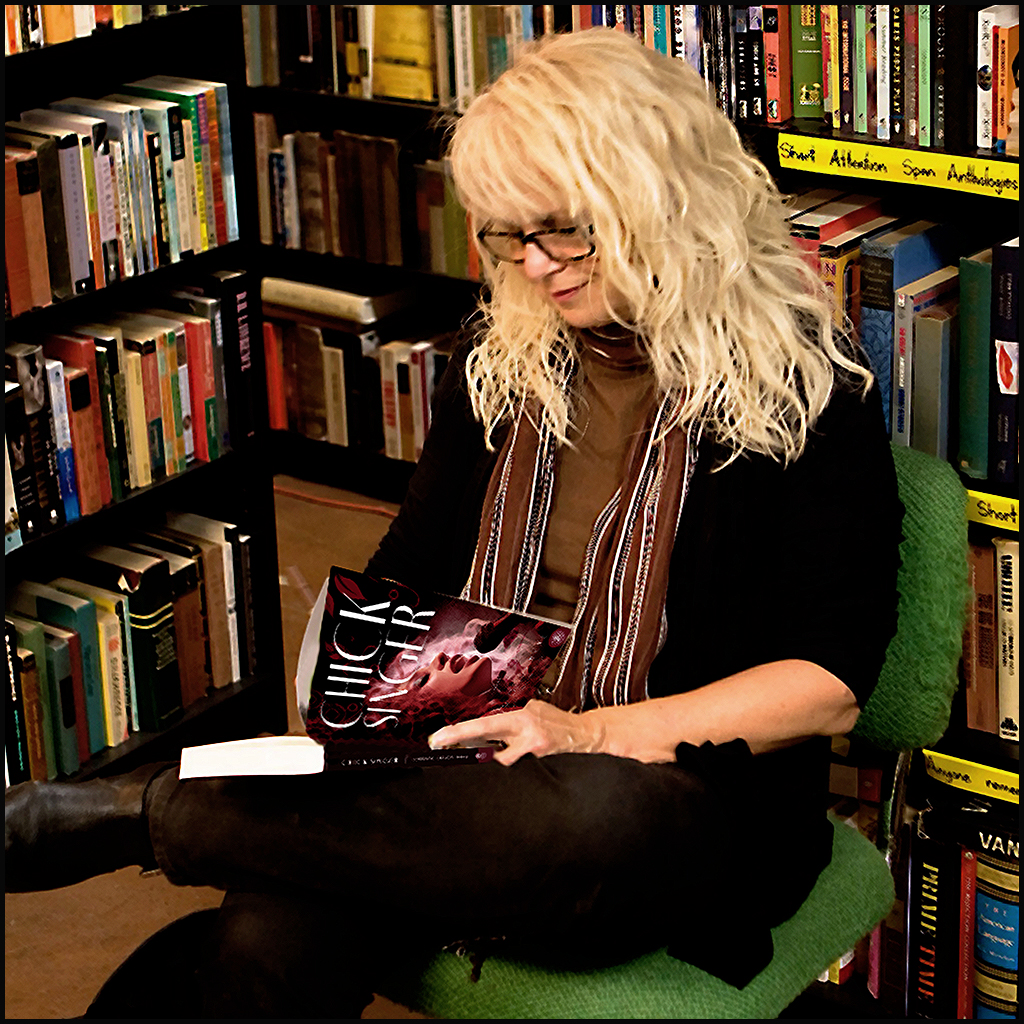
Much discussed, online and off, is the need to keep sharp and aware, alert to the detours and imminent dangers of our, well … trying times. Burgeoning cultural chaos has led to taking necessary steps to maintain mental health and a sense of connectedness even during the emotional maelstrom of 24/7 news storms. Creativity is encouraged, nature beckons; we applaud any suggestion for offsetting the toxicity of our current moment, open to new and novel ideas.
Well, speaking of “novel,” have I got good news for you: Reading fiction can can save your brain. It can make you smarter, improve empathy and critical thinking skills, and “positively affect mental health, reducing symptoms of depression, anxiety, and stress.” Who doesn’t need that right now?
It turns out this delightful act/pastime/passion (depending on how it hits you) is not only an enjoyable activity, but one that contributes to the health and welfare of our ever-essential brains.
Despite its longtime assignation as strictly a “source of entertainment,” reading fiction has the capacity to actually enhance human behavior by, yes, nurturing empathy and compassion, but also affecting declines in violence. It might be strange to consider, but it seems immersing oneself in the many different worlds, characters, and narrative experiences that fiction offers can impact and rewire the brain in a variety of positive ways, conclusions gleaned from new research published in the Journal of Experimental Psychology.
Readers of fiction can transcend the here-and-now to experience worlds, people and mental states that differ vastly from their local reality. The consequences of reading, however, extend far beyond the subjective experience of any one individual. Researchers from fields as diverse as evolutionary psychology, literary studies and anthropology have independently credited literacy as a possible explanation for such fundamental societal shifts as the decline in human violence over the past few centuries, the development of desire-based over rule-based social interactions, and the advent of ‘modern subjectivity.’ National Library of Medicine
All of which makes perfect sense to me. As one who’s been an avid reader of fiction since childhood, I can attest to the experience of fully leaping into a novel to not only feel the page-turning excitement of a good story, but the unexpected opening of one’s mind to new ideas, cultures, traditions, and human narratives otherwise unknown. I’ll never forget reading The Little Drummer Girl by John Le Carré and gaining a wider, more expansive view of the situation in the Middle East. To Kill a Mockingbird touched my young heart and soul on issues of racism and courage. There are so many novels that have impacted humanity that articles like this one exist to help us find them: 10 times fiction changed the world.
Reading fiction also impacts our mind by demanding it pay attention, page-to-page, chapter-to-chapter, to following the story and characters from beginning to end, a mental exercise that develops neural pathways that sharpen brain and memory functions, working one’s ability to remember, to hold the through line to the end. Conversely, in non-fiction you can bounce around cherry-picking what interests you without losing the overall impact of a book’s message, likely why non-fiction doesn’t provide quite the same brain benefits as fiction.
Of course, writing fiction, I’m certain, offers similar payoffs in terms of the positive effects of world-building, climbing into the mind, soul, and spirit of characters you love, hate, or may not even fully understand despite the fact that you’ve created them. I’ve often found myself so involved in the lives of people I’ve conjured up that when I’m officially done with writing, rewriting, tweaking, and rewriting some more, I feel bereft at the idea of walking away from them and their world.
The process of writing a story has also brought me greater understanding of issues and events I’ve chosen to include in the narrative. Writing my first novel, After the Sucker Punch, in which I fictionalized a difficult situation I’d had with my father, allowed me as the author, the creator of that story, to pull apart, analyze, and ultimately better understand that situation (a phenomenon my friend, Diana Stevans, cites in her lovely book, Along Came a Gardener). Fiction, it seems, is a powerful tool whether reading or writing.
“People who read a lot of fiction have better cognitive skills than people who read little or no fiction.” Neoscope
So while you’re on the high-wire act of Life in America 2025, exploring ways to keep from losing your footing and tumbling into the abyss, read fiction. Grab some of the titles off the list linked above. Intersperse novels between TV-watching and non-fiction reading. Between protest marches and walks in nature. Between calling your congressman and calling on friends. Between raising your family and raising a ruckus. Read a novel and give yourself the benefits cited. You’ll get to enjoy a good story, and your heart, soul, and brain—and humanity!—will thank you for the enhancements.
NOTE:
My latest novel, Chick Singer, is out in a few weeks (April 4th) and people are asking if/when there will be book events or other happenings related to that release … thought I’d post what’s on the roster so far.
All events at this moment are in either LA or SF, so I’m hoping peeps in those areas will put these dates on their calendars and come join us. I’ll be reaching out to set up at other places as we roll out and will keep you informed as I do.
In fact, if you have a book club you think would enjoy the book, or a favorite book store in your area you’d recommend, please let me know. I’m already planning trips to NYC, Chicago, and up the coast here in CA, so I “have book, will travel” … holler at me. Look forward to seeing you along the way!





 | Rock+Paper+Music |
You must be logged in to post a comment.