
It’s been a helluva week, hasn’t it? A roller coaster of unexpected highs, lows, and afterglow, a welcomed state we’re all reveling in. For me, the civic mood-shift offers a moment to focus my writerly attentions beyond the usual scope, reflecting on other matters that grab my interest—a sort of Substack “palate cleanser,”if you will”
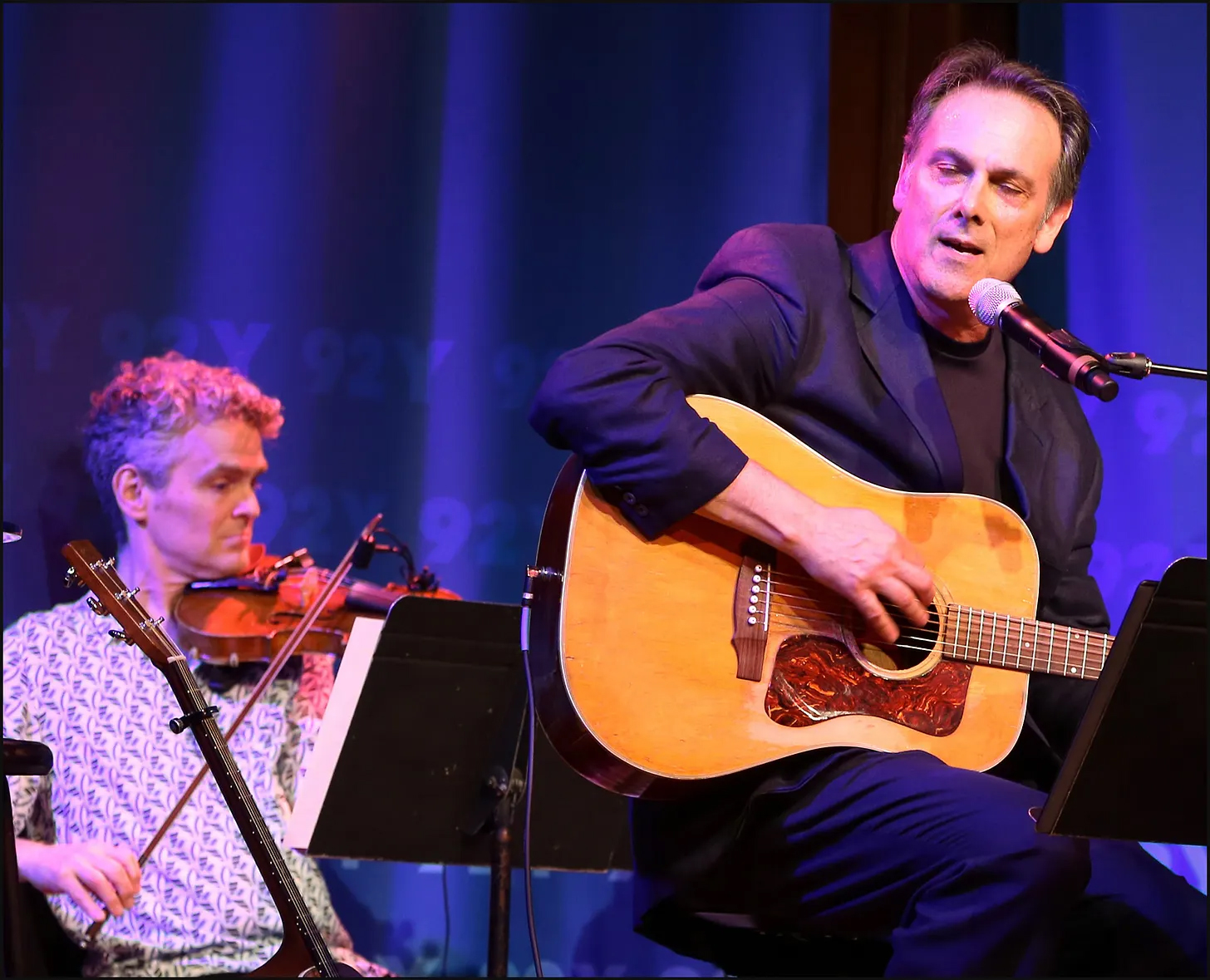
Today that means a shout-out for prolific composer, lyricist, and singer, Louis Rosen, who’s launching his new album, Life After Before, this very day.
Treated to an early copy, I found this album to be deeply, sweetly personal, with a folksiness, a gentleness to it, that’s very moving. There’s whimsy in some of the storytelling, there’s proper romantic love songs; there’s wry, sometimes melancholic reflections on those ever-confounding elements we call “life” and “time.” The musical foundation of guitars and strings, a bit of a departure from Louie’s jazzier impulses, gives it appealing grit and warmth; rich, tactile, and rooted in … well … life!
Since I always feel it’s best to give the artist the opportunity to put their own words to their creativity, their process, their inspiration, I invited Louis to jump into this conversation with me, which he has so graciously done.
• LDW: Lou, as you put out Life After Before, your 15th album, your 7th solo album, it’s clear your prolificacy as an artist and composer is an essential part of who you are. I’ve heard from other artists over these years of political and social turmoil who’ve found it hard to stay focused on their creative projects, the noise and chaos too distracting and dispiriting. Since I know you to be very aware of the state of things in the world, how do you wrangle that balance?
LOUIS: I feel most centered when I’m writing songs, or composing, or orchestrating, preparing for a recording, etc. If too much time passes when I’m not engaged in making something, I start to feel out of sorts.
My sense is that one of the delightful ironies of enjoying living in the world is that we often strive for those moments when we’re able to leave that world behind, and burrow deeply into the making of something. There’s great pleasure in getting lost in the making itself that then makes the coming up for air and re-engaging with reality more palatable, and often even stimulating. You no doubt experience this all the time, writing fiction or your Substack column (I do!). I even explore this idea of escape from a couple of angles in two songs on the new Life After Before album – “Rhythm of the Road” and “45 Minutes to Somewhere.”
(By the way, despite the fact that I’m a mediocre golfer, escaping is one of the primary things I love about playing the game. You can’t think about anything else and have a chance of playing well that day.)
So, the intense political noise and social upheaval we’ve been living in over the last decade usually doesn’t get in the way for me. Sometimes, as you know, it’s a catalyst, as was the case with my previous album, American Sunset.
But, in the interest of full disclosure, I finished a nine-month project in late August, and nothing much has been happening on the writing front since. One reason is that I need a break, another is that I’m not sure what’s next. But I must confess: The mid-term elections couldn’t have been settled soon enough.
LDW: Oh, dear lord, ain’t that the damn truth? And now that they are largely settled, precluding any “sore-loser shenanigans,” many frustrated artists feel like they can once again take a breath, sleep without anxiety, and, yes, get back to those stalled creative projects.
Certainly, Lou, you’ve addressed the “world around” in your work: Your previous album, American Sunset (Cadence Magazine Top Ten Album, 2025) very sharply and incisively focused on issues of politics, social justice, corruption, etc. So, when it’s mentioned (in the press release) that this is “perhaps his most intimate album yet,” I’m intrigued to know what inspired you to get more personal this go-around?
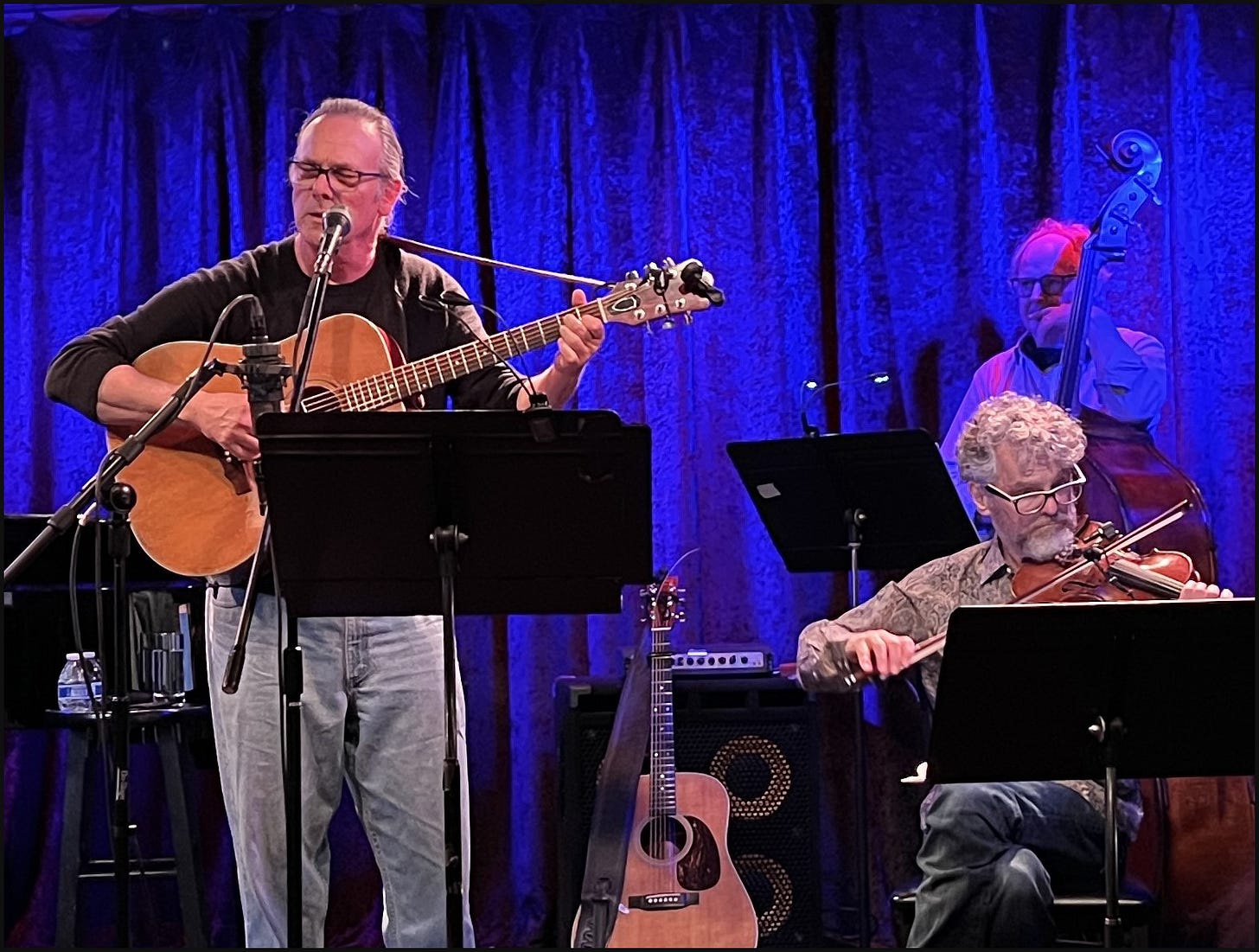
LOUIS: Everything I write is personal, even American Sunset, in that it’s an expression of my thoughts and feelings about this dangerous and crazy national moment. The new album, Life After Before, is just personal in a different way. It’s more intimate, quieter, gentler, more introspective. Personal, by the way, as you well know, shouldn’t necessarily be conflated with autobiographical. The ideas offered in a story can be personal while quite separate from the writer’s personal experience. But back to what inspired the album …
It’s May 2024, and I hadn’t written a new song, music and lyrics, in three years. I spent two of those years orchestrating and recording previously written projects, and was then consumed for over a year by all that goes into making a major move—in this case from Brooklyn (after 42 years) to the Hudson Valley—settling in to a new house and new environment. I’d jot down ideas for songs from time to time, but songwriting wasn’t on the agenda.
I was enjoying living quietly in the Hudson Valley, thrilled to be away from the endless and sometimes deafening psychological noise of the city, but the subconscious does a lot of work for a writer. One of the ideas I’d jotted down a few years earlier—a possible title, “Ghost of Desire”—reared its head, and I finally understood what it was getting at: that despite (to quote the lyric to the bridge) …
All the aches and the pains
My body’s telling me things
That I’d rather forget
There are losses and gains
In what every day brings
I still don’t see the point of
Fading out just yet
(I love that, Lou!)
“Ghost of Desire” wrote itself within a few days, and after that, as always happens, songs beget songs. There must be a dopamine rush that comes upon finishing a song you’re happy with, that you feel is fresh, because you want to quickly experience that feeling again. So, those ideas I’d jotted down over the previous three years began to come alive: the next song appeared, and the next, and the next until about eight weeks later I realized I had a new album.
When songs come out in a wave like this, they inevitably tend to share a tone and a broad point of view. Taken together, they’re akin to a snapshot of that particular moment in time for the author. In retrospect, you can surmise that I was contemplating aging, love, marriage, relationships, fatherhood, the periodic temptation to escape the present—or make sense of some aspect of the past. It’s a meditation on the sometimes puzzling process of living day to day in a complicated world with the ever-present awareness that time passes quickly, that every day we are living “life after before.”
(By the way, this writing wave continued when the American Sunset songs began arriving after the November 2024 election.)
LDW: That’s a profound description of the creative process, something that can feel magical and elusive at times, even to the artist experiencing it. As someone who’s listened to your music over decades, I’ve always loved your ability to grab those ephemeral elements of life with lyrics that capture the nuances of our mercurial existences. Your words are very relatable to me, and will be, no doubt, to all your listeners. And your music—the arrangements, the style, tone, richness—brings those lyrics to vibrant life.
As for that music, let’s talk about it for a minute: Your previous works are firmly rooted in the jazz and musical theater genres, yet this one takes, as I mentioned earlier, a beautiful detour into more folk/Americana, with “only string instruments and spare percussion” to accompany your unique, evocative vocals. Did the more intimate songs and lyrical narratives suggest that choice, or were there other influences that led you in that direction?
LOUIE: Folk-based popular music and playing a folk-based style on the acoustic guitar in folk clubs is where I began as a musician and songwriter in my mid-teens—well, at least after my middle-school years as a drummer in a basement rock band. When I was 19 or so and starting music school, my focus switched to composing on the piano, and my musical language broadened.
Then twenty years ago, I was writing my second album and feeling that I’d hit a wall regarding composing on the piano. The ideas felt stale. I picked up the guitar and the songs flowed again; and writing on the guitar naturally taps into that essential folk foundation of my style. The arrangements and harmonic language on many of my previous albums often come from a jazz, blues, and classical place, but folk music is always part of the equation. My 2013 album, Time Was, was the only previous time I went all-in on expressing this roots music foundation. Don’t know if you know that album… And my album of solo guitar pieces, Music for Guitar, comes from a hybrid folk-classical style.
(BTW: The American Sunset album songs, which are the most recent songs written, were the first songs written on piano in 20 years, which is why a folk flavor is largely absent.)
Now, the sound of Life After Before is actually based on an alternate reality premise: What if I’d written these songs in my late teens, in the early-to-mid 1970’s before I had migrated to the piano? I couldn’t have written songs of this quality or on these subjects then, but what if, in some alternate reality, I had? What would I have wanted them to sound like? I wouldn’t have arranged them with jazz or classical inflections; in fact, I wouldn’t have arranged them at all. The sound would have had to emerge in collaboration with fellow musicians. So, I called my friend, the world-renowned multi-instrumentalist David Mansfield.
David started his career as a member of Dylan’s Rolling Thunder Revue band, and has since played with far more people than I could ever possibly name. His immense talents range from being able to play most instruments that have strings, to being a gifted composer, arranger, and producer. We’d been playing and recording together since 2015, but my alternate reality premise provided the perfect vehicle for us to collaborate on a project from start to finish, as co-producers and arrangers.
We met a few times and made a general plan. Then I went ahead and worked out my guitar and piano parts, along with mapping out the bass and drum parts. But this left a lot of space for David to add his secret sauce to every song with the beautifully expressive parts he created on violin, viola, electric and acoustic guitar, mandolin, or banjo—each song getting a specific instrumental combination, color, and sound to match its particular feel and content. Alternate reality mission accomplished. And I love the way the album sounds.
LDW: I do too, Lou!
Before we wrap this up, I also wanted to share another very robust aspect of your musical career: You’ve been a long-time, and very popular, teacher: “instrumental in shaping the Music Appreciation, History, and Music Theory curriculum at the 92nd Street Y’s School of Music for over 35 years.” Many of your classes are conducted online, so if readers of this piece, or listeners of your new album, want to find out more about how to avail themselves of your classes, what’s the best link to share?
LOUIS: The main site page is at Round Table; my classes are listed here: Louis Rosen classes.
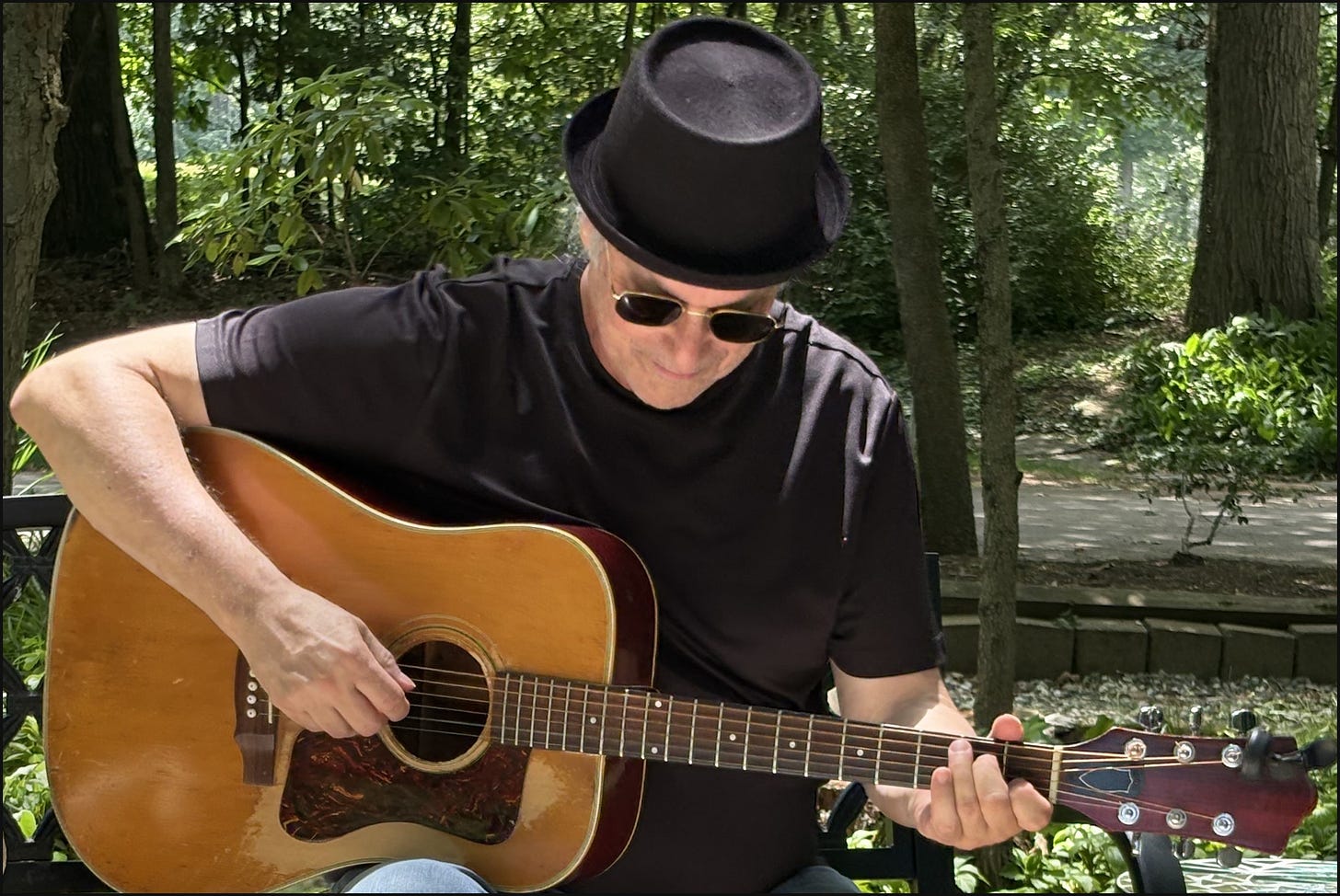
LDW: Thanks, Louie, for not only sharing specifics of this new album, but giving us a glimpse into your artistic process. It’s always an inspiring journey. Wishing you a smashing rollout!
LIFE AFTER BEFORE is available for download or as a limited-edition CD at https://louisrosencom.bandzoogle.com/life-after-before, and for downloading and streaming at all major music platforms as of today, NOVEMBER 6, 2026.
Review from Jazz Weekly: “SEPTEMBER OF HIS YEARS…Louis Rosen: Life After Before”



 I finally figured it out.
 have to be who you are, who you truly are, and if that doesn’t bring them to their feet, again, so be it. To feign something or attempt to be someone else just to match the zeitgeist in hopes of greater acceptance or more success is pure folly. It never works. You always get found out. Look at

 meeting a deadline, finishing a project, getting errands done, or managing my ever-growing list of marketing tasks all require the interruption of some light trolling on

 For example; at
 All I could think was…WTF?!?


 For me it was the creative arts. Always. I don’t know why. I could point to the lack of TV in my youth and childhood – and the books, music and art that filled the gap – but, frankly, my younger sibs who did not do without are just as artistically inclined and they were definitely Children of the TV (similar to Children of the Corn only in that their eyes are a bit large). Perhaps our penchants are pre-programmed. A carry-over from a previous life (if you believe such things). Certainly they’re influenced by parents who, in my case, were passionate about the arts, injecting them at every turn, convinced that even rearranging the living room was an expression of the creative mind. It is, Mom; I agree. And thank you, both, for your fine contribution to my artistic journey.
 So armed with my many Muses who kept me company throughout an eclectic life, I happily bandied in a bevy of mediums, even past the point when others tried to convince me to “pick one and stick with it.” Creative monogamy, so to speak. But I had arrived in LA pumped by youthful years of writing, acting and singing, poised to take it all on in this fine creative mecca, so I chafed at the notion of exclusivity. Seemed so…exclusive. Still, I was a naive and eager young lass, addicted to my ambition and ultimately easily swayed, so I threw aside my concerns and did just that; I chose acting, forsaking all others like a good, faithful spouse, convinced that by committing to only one Muse I would certainly conjure its success into being.
 Don’t get me wrong, I had loads of fun as an actress but ultimately fell out of love, particularly after it was clear that a viable career was not to be had and, it turns out, I really didn’t care all that much. Mostly I missed the other Muses. I remember telling my manager at the time, after five years of acting fidelity, that I missed music and wanted to get back to it and he literally laughed in my face. Seriously, he laughed. His perspective of me was so narrow that rather than explore a new path and its many possibilities, he presumed I was a deluded little dilettante. Big fat tipping point, that laugh. I dumped him, quit my acting class, threw out all my vapid 8×10’s and spent the next decade or so deliriously happy as a singer in a rock n’ roll band. And a writer. And a taker of pictures. All of it. Even some damn acting. My creative harem. Welcome home.

 Though you’re just meeting, I’ve actually been shooting pictures for most of my life. For whatever reason, the idea of visually chronicling the journey was as natural as blinking an eye….and this was before Smart Phones and Facebook! I had a crappy little camera I took everywhere and I have many of those pictures still. They’re amateur and silly and some are as crappy as the camera taking them, but the eye was there, the composition was good and, bottom line, they are responsible for inciting my interest. It’s only been in the last couple of decades, however, that the passion to do it well became a pull. In fact, there was some regret that I hadn’t actually taken it more seriously earlier on…damn if I didn’t find the whole darkroom ritual of lights and chemicals and magically appearing images a romantic one! In fact, if I hadn’t rushed headlong into the performing arts I’ve always said I would have either been a professional photographer or a zoologist. Seriously. Either one. Primates or pictures.
 But given my lack of aptitude for the sciences, photography, albeit peripherally, was at least able to come along on the ride – as much as possible given the limits of time and money. And though that first crappy camera held me in good stead for many years, it was when my mother-in-law bought me my first good Canon 35mm about 20 years ago that my world changed. Suddenly the pictures in my mind’s eye translated to paper. I began viewing things from the perspective of frame and light. Even when I didn’t have the camera, I was like Pam in The Office wedding episode snapping invisible pictures of perfect moments. I learned that the excitement of capturing an image of true beauty or amazing candor was as exhilarating as belting a killer song or writing that brilliant paragraph. I was hooked. And when the digital revolution exploded with all its heady possibilities, I took a leap of faith, invested in a top line Canon DLSR, a couple of stellar professional lenses and have been in a solid relationship with the Muse ever since.

 happy and represent amazing experiences in which I participated. Some depict historical places that took my breath away, some are those decisive moments in real life captured in a flash of serendipity; others are simple beauty or sweetness with no other explanation, and some are stories I wanted to tell or people who grabbed my eye. A few are even technically du
 bious but exude something unique or special in a way that won them a spot on the site despite their flaws. It’s a collection that speaks loudly to how I see the world and I happen to like what it has to say.


You must be logged in to post a comment.