Our Brains vs. AI: Why Would You Cede Your Creativity to Robots?

“Before we work on artificial intelligence, why don’t we do something about natural stupidity? ~ Steve Polyak
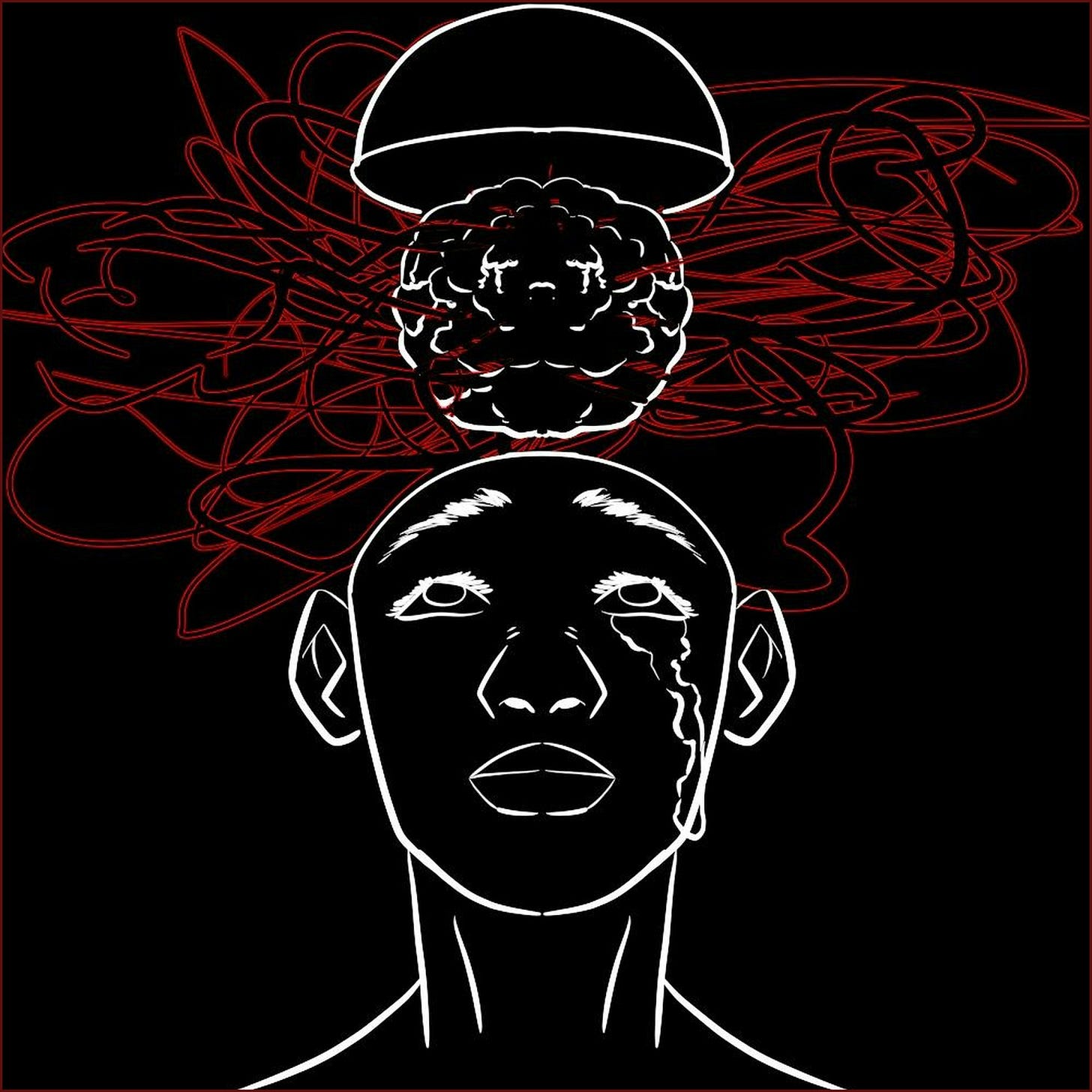
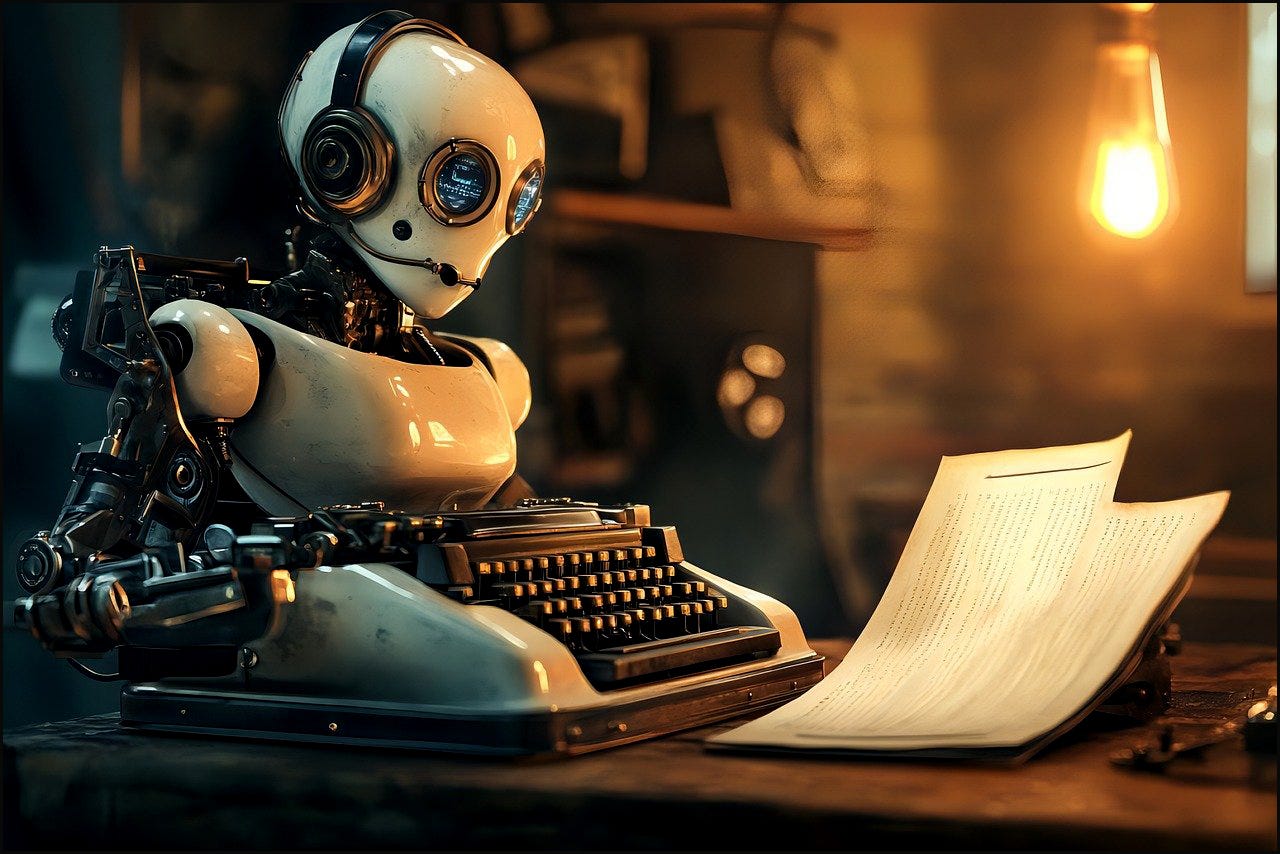
Photo by Studio KVR on Unsplash

We have now reached the stage of human evolution where the robotic sensibilities of AI have reached far beyond academic research, sensitive medical procedures, and arcane developmental conundrums of science to students asking ChatGPT to write their essays, literary groups creating certification programs to confirm, “no AI was used in this book,” publishers cancelling contracts over profligate AI incursion, and authors scrambling to date every draft so they can’t be accused of allowing AI incursion.

What the hell, H.A.L.?

I know AI has many valuable uses; I know there’s no stopping it. I’m aware that many, many people gleefully dump their questions and queries into ChatGPT or Gemini or OpenAI every single day and just love love love what they get back, but here’s my stance:

I HATE IT.

At least as it pertains to the creative activities of human brains. That will not be news to anyone reading this Substack. I previously covered my seething disdain in, “Nope. Don’t Want Robots Writing My Fiction,” and, “Then They Came After My Books…,” and still there’s more to say because every day there’s more infiltration, new twists in the metastasizing story of, “what is AI doing to our creative arts?” (I cover those simply because it’s the angle I know; there are, no doubt, many other [mis]uses of AI in many other industries.)

Here’s the question I’d put to ChatGPT or Gemini or OpenAI if I deigned to utilize their insentient services: Why on earth—at a time when so much attention is being put on matters of mental health, on protecting our brains, on stimulating our thinking and doing everything possible to avert diminishment and dementia as we age—would we cede our very thought processes, our brain work, our creative explorations and exercises to the fucking robots?? Why?

Isn’t that in direct violation of the “use it or lose it” maxim? If we continually and progressively offload our creative processes—or the ways we puzzle out problems or questions, or the best wording for a letter or a class paper—to the robots, it seems to me we’re just handing them our brains on a platter saying, “Here, eat mine. I’m not using it cuz it’s too hard to conjure up a plot outline, or a letter to my boss, or an article for my school paper,” or whatever the challenge.

To which I say: Where did our pride of creation and accomplishment go?

I’m told current generations don’t see any/much value in “wasting their time” puzzling out problems or crafting their creations when AI can git ‘er done, which, if true, is quantifiably discouraging.

“Technological progress has merely provided us with more efficient means for going backwards.” ~ Aldous Huxley

And it does feel regressive to me. When sharpening our brains and fine-tuning our abilities is overwhelmingly encouraged and prescribed to maintain mental acuity, why would we offload such activities to AI? When providing enjoyment and insight with great stories, artistic imaginings, and emotionally rendered translations of life seems the elevated goal of humankind, why are we, instead, eager to dump our most salient creative questions and challenges into the swirling eddy of robotic interpretation and perception?

Cuz it’s easy. It’s novel. It’s fun to submit a prompt, a query, a question and, like pulling the lever on a slot machine, seeing what comes out. We can then take that easily-delivered data (“no taxing of my brain at all!”) and zhuzh it up enough to pass it off as ours.

Which means it’s also lazy.

Deflective. Passive. Even plagiaristic. An abnegation of our mandate as thinking, creating humans to explore, investigate, do the work with our own minds to come up with answers and ideas.

I ponder where the brains of people immersed in AI will be after a few decades of relying on robots to generate answers to everything. Will they be atrophied with disuse? Will we see an uptick of early-onset dementia? An inability to answer even the most simple questions due to loss of brain muscle memory? An inability to conjure up even a greeting card message?

But even in this moment, what is it doing to actual original thought? Creativity? Imagination? I got into a back & forth with a fellow on social media (something I rarely, if ever, do) after someone posted the link below about a publishing contract being cancelled due to evidence the author largely used AI to “write it.” (She blames her editor. I say, “sure”🙄 … and the dog ate her homework.):

Horror Novel ‘Shy Girl’ Canceled Over Suspected A.I. Use

Its publisher, Hachette, will not release the novel in the United States and will discontinue its U.K. edition, citing its commitment to “original creative expression and storytelling.”

I like that commitment from a publisher, any publisher, and I said so on the post. A guy I don’t know commented:

“There are no original thoughts in our world anyway. It’s all generated by past generations, brick by brick.”

I had to respond: “I don’t agree with that at all. We learn and are inspired by past thinkers, creators, writers, yes, but every human being comes to this earth with their own imagination, thoughts, and creativity, and from that we get unique, individual, brilliantly expressed new ideas from those courageous enough to put them out into the world.”

He volleyed, fine-tuning his argument to something I could actually agree with: “OK, I’ll buy that, but I’d push it further — originality isn’t just unique thoughts. It is the courage to be vulnerable with them. AI can remix everything ever said, but it can’t risk anything. No skin in the game. What makes a novel powerful isn’t that ideas are ‘new’ — it’s that a real person exposed their inner world knowing they might be misunderstood. No algorithm replicates that.”

“YES. Exactly!” I shouted (in my head). “Though I continue to believe ideas can be ‘new’ because they’re generated and imagined by a new mind with a completely different set of experiences and perspectives. But your statement about AI’s remit–remixing the work & imagination of others–is correct. Courage and vulnerability are the purview of thinking, feeling humans; AI is a replicator, cold, calculating, and, utterly unoriginal.”

He wrapped up with a question to me: “Has this AI era changed how you think about what you share creatively?”

I answered: “No. AI is the morass which I avoid all together.”

We ended it there, but the conversation continues in myriad circles: authors fighting off AI media-predators trying to scam their marketing dollars, content creators seeing their work stolen by voracious AI companies looking to “train” their robots, and yes, publishers attempting to fend off the siege. Just the other day, the New York Times ran this piece:

A.I. Is Writing Fiction. Publishers Are Unprepared.

Book publishing has few safeguards in place to prevent the unwitting publication of a novel heavily generated by artificial intelligence…

It’s as though MAGA-think has seeped beyond politics and social issues to encroach on yet another thinking/feeling avenue of humanity: our creativity.

As a novelist, a writer, that reality exhausts and enrages me. It was hard enough when, in an earlier career of mine, the value of being a top-notch session vocalist who could cut a perfect track in one or two takes became irrelevant when digital manipulation replaced that human skill. Now, as a novelist, I and my fellow creators have to deal with AI not only stealing and co-opting our thoughts and words, but watching some amongst our ranks get seduced by the pull of lazy creation:

This post by another person I didn’t know struck me: “A guy just told me that if I use AI to write my first draft but then spend hours and weeks writing and revising subsequent drafts, I still can’t call myself a ‘writer,’ which I think is just bullshit. What do you guys think?”

What do I think? I think if you want to be called a writer, you write. YOU. Leave AI out of it. Challenge your own damn brain, curate your own creativity, demand more from yourself than the ease of sloughing it off to the machines. But if you do invite AI to feast at your table, make sure everyone knows your collaborator is a robot. They’ll decide, then, what to call you.

Nope. Don’t Want Robots Writing My Fiction

NaNoWriMo opens the door to AI content and all hell breaks loose.
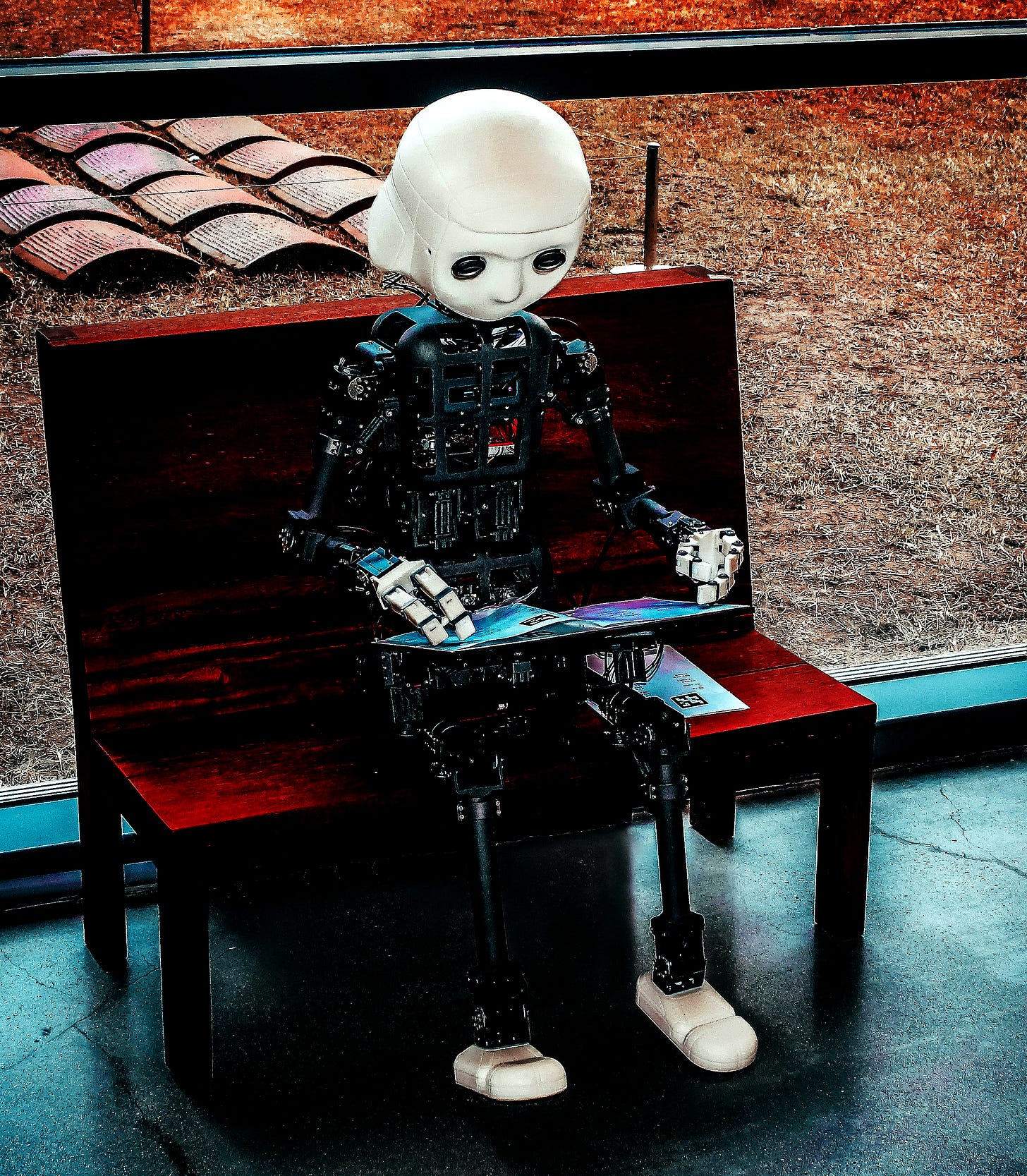
AI Generated Image by Gianluca from Pixabay

First, for the uninitiated, NaNoWriMo stands for “National Novel Writing Month,” and it’s an annual—and, I’ve heard, sacrosanct—tradition amongst a certain contingent of writer who enjoys the challenge of churning out an entire novel (or at least the first 50,000 words) during the month of November. There are no prizes, no winners; it’s done for the sheer pride and public acknowledgment of having accomplished the task. The non-profit that conducts this event has kept it running since 1999, so clearly it’s a popular one, but as a novelist myself the idea of signing up to crank out a novel in thirty days turns the creative process into timed sport, and that just ain’t my thing.

I’m sure many who’ve participated in NaNoWriMo would tout the inspirational aspects of its mandate, one that pushes reluctant writers to “finally get to that great American novel,” or whip up the discipline to produce literature on a speed-dating timetable. But none of that is really the point of this article (though it may be of another one). No, the point of this piece is that NaNoWriMo did something this time that set the writing world on fire: It changed its stance on the admissibility of AI content and the whole damn thing blew up in their face.

Prior to this year, the organization’s policy on AI, as cited in an article by The Washington Post, was as follows:

NaNoWriMo said writers were welcome to use artificial intelligence to “assist your creative process” but that utilizing AI to “write your entire novel would defeat the purpose of the challenge.”

Then, this year, they modified that stance, as WAPO lays out:

NaNoWriMo said it would “recognize and respect writers who believe that AI tools are right for them. We recognize that some members of our community stand staunchly against AI for themselves, and that’s perfectly fine. As individuals, we have the freedom to make our own decisions.”

To condemn AI, the organization said, “would be to ignore classist and ableist issues surrounding the use of the technology,” noting that issues around the use of AI “tie to questions around privilege.” The group argued that “not all writers have the financial ability to hire humans to help at certain phases of their writing,” and that for some writers, AI is a practical solution, rather than ideological.

“Not all brains have same abilities and not all writers function at the same level of education or proficiency in the language in which they are writing,” NaNoWriMo wrote. “Some brains and ability levels require outside help or accommodations to achieve certain goals.”

[Emphases mine.]

This rambling equivocation on the topic sparked the kind of backlash that I, as an artist who finds reliance on AI to be the harbinger of doom, would have expected. NaNoWriMo’s social media blew up, people stepped down from the organization, participants quit the event, outrage against the references to “privilege” and “ableism” were heated and vitriolic. There was such an outcry that just a few short days after that announcement, the organization, clearly stunned by the backlash, issued a “note to our community,” offering an “updated” statement which basically boiled down to, “We fulfill our mission by supporting the humans doing the writing.”

Whether or not their walk-back will assuage the outrage, who knows, but all of this leads to my bigger, overarching issue: what, exactly, should the role of AI be in art?

I get that robots and AI have been essential, even lifesaving, in the arenas of medicine, technology, scientific research; bomb dismantling, etc., but why are humans so willing to abdicate their own creativity, their organizational skills, imaginations, exploratory impulses, etc., to inanimate “brains.” When is it “using tools” and when does it become like the Dillon Panthers relegating their homework to the Rally Girls and being totally, ethically okay with that arrangement (yes, I am finally catching up with the very fine Friday Night Lights)? There’s something disturbing about the trend, and the terrifying thing is that it’s only going to get more ubiquitous and accepted over time. At some point we’ll probably see whole novels written by AI “authors” available on Amazon (are they there already?). Google something and the first thing that pops up is input from AI (which I do read, but honestly? I’d prefer an intelligent human’s input). My Photoshop is now all excited about its “new and improved AI features.” Even the soon-to-be-released iPhone 16 touts it’s “built-in artificial intelligence.”

Holy hell, didn’t anybody see 2001: A Space Odyssey, when one of our very first AI characters, HAL, ominously declared, “I’m sorry, Dave, I’m afraid I can’t do that,” when directed to open the pod doors? Or what about the more recent, Ex Machina? Who could forget AVA the AI (played with banal malevolence by the fabulous Alicia Vikander) seducing the naive young scientist to set her free … to murder her creator and others, and escape to the big city where she’ll/it’ll no doubt wreak havoc on society. Or write a NaNoWriMo novel. Even Taylor Swift, in her well-timed and welcomed endorsement of Kamala Harris on debate night referenced the dangers of AI in her Instagram announcement:

“Recently I was made aware that AI of ‘me’ falsely endorsing Donald Trump’s presidential run was posted to his site. It really conjured up my fears around AI, and the dangers of spreading misinformation. It brought me to the conclusion that I need to be very transparent about my actual plans for this election as a voter. The simplest way to combat misinformation is with the truth.”

[By the way, brava, Taylor, on all the points in that paragraph!]

We’ve been tip-toeing up to and around the inevitability of robots taking on more activities and roles in the lives of us meat-bodied humans, but it seems the alarm bells set off by teams of scientists who “warn of AI dangers” has had little or no impact on starry-eyed inventors, developers, and corner-cutting humans in every profession, including the arts. Learning to fine-tune, organize, edit, and sharpen one’s prose has always been (or used to be) essential elements of a writer’s skillset. Now people dump their first drafts (or even raw ideas) into ChatGPT and let ‘er rip. Is that abdication or efficiency? Some think the latter, especially younger people, but I personally want to possess and hone those skills for myself, proficiency that comes from doing the work, over and over, until you get it right. Call me old school.

The music world has been impacted by its own version of this technological abdication for some time now. When I started as a young session singer in the ‘80s, long before ProTools and auto-tune were around, we vocalists prided ourselves on getting in the booth and laying down tracks that were so spot-on in both pitch and tone that engineers didn’t have more than a note or two to “punch in” (the ancient art of re-recording notes or bars of a vocal that the engineer would skillfully punch into the original track). Yes, that sort of thing is easier to do with auto-tune, and certainly I have no argument with using it judiciously, but what evolved from the emergence of that stellar technology is the same sort of thing we’re now seeing with AI in other creative arenas. As one recording engineer who worked with many well-known young singers told me: “They cut one or two takes, wave goodbye saying, ‘I know you’ll fix it in the mix,’ then I have to auto-tune every note, I mean every single note, and add tone corrections to make it sound decent. They’re not invested in getting to that themselves.” Even live performances can be “assisted” by auto-tune mechanics.

Not much different than letting AI help you “get answers, find inspiration and be more productive,” is it?

It’s getting harder and harder to discern what’s real anymore and that’s a bug in the system. I don’t mind if AI is used and properly credited (i.e., the artwork at the top of this piece), but how often is that the case? These days far too many “photos” and memes shared on social media either look like well-done cartoons or are so graphically ridiculous there’s no doubt of their robotic origin. Can’t say I love any of that.

I know I sound like a technological curmudgeon, an AI-Luddite, but really, I’m not. I love technology; I use it enthusiastically, appreciate it immensely (Maps has changed my life), but when it comes to my art? My creativity? My imagination and the exploration of ideas? Sorry, robot; that’s all mine.


SIDEBAR: A weekly feature where I spotlight people, projects, events, and art … sometimes even my own!

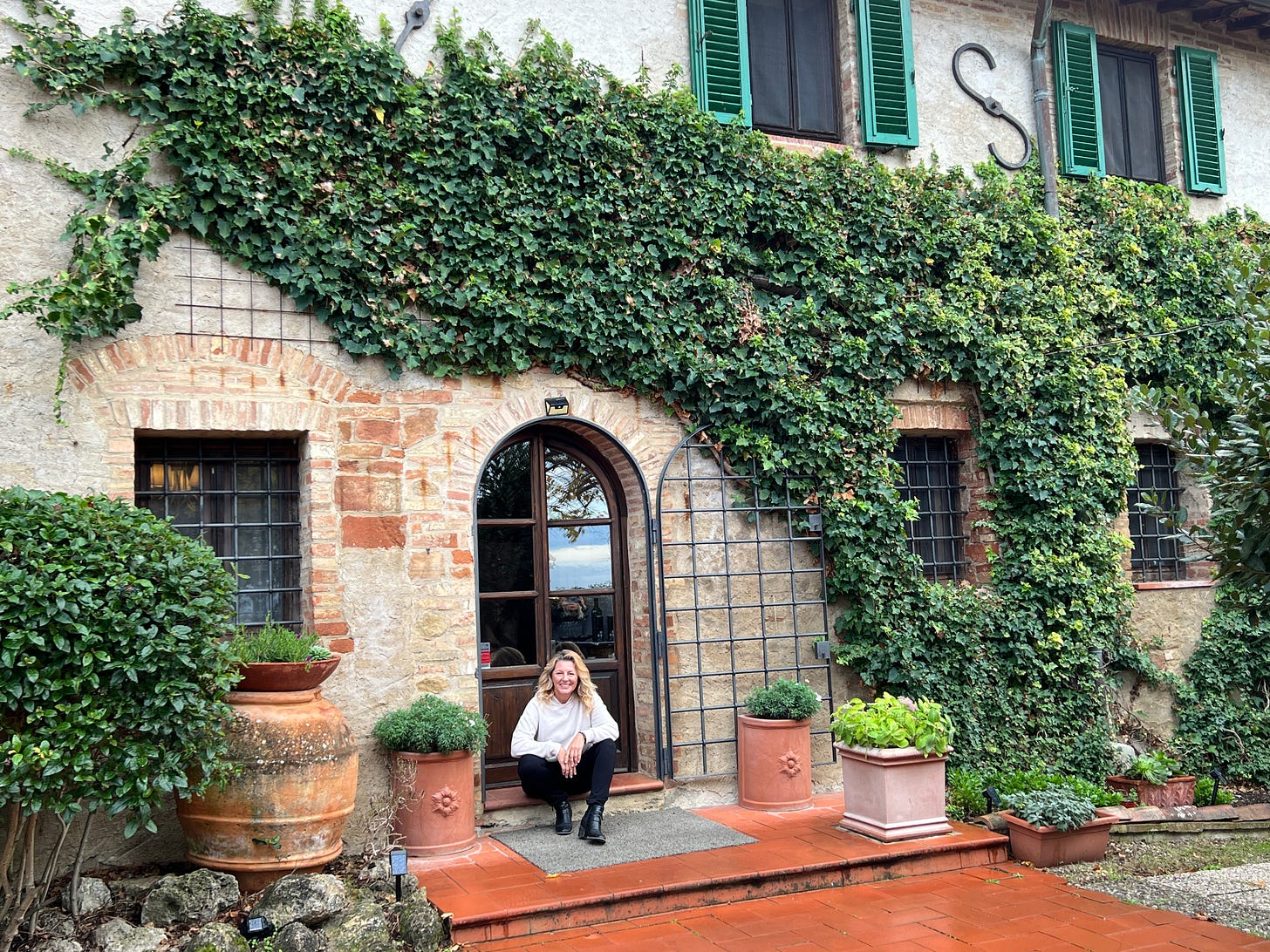
I have a friend who not only owns a stunning villa in Tuscany (where we delightfully stayed last November), but is a singular, astonishing, and highly accomplished artist, most notably in mosaics. Mia Tavonatti is the consummate creative, and I highly encourage you to click her name above to explore her work, or visit her Facebook page; even enjoy this video of the breathtaking stair project she did last year in Dana Point, CA. She hosts a slate of creative retreats throughout the year, so if the idea of exploring creativity in the stunning surrounds of Tuscany appeals to you, email her at miatav@yahoo.com for details.

ALSO: With the recent sale of one of my photographs, I was reminded of my own artwork, to which I’ve given short shrift lately as a result of my focus on literary matters. But I do love the art form, I love the work I’ve assembled on my photography site, so I want to share it with all of you. It’s an eclectic collection in various categories, so please enjoy a peruse through the galleries and don’t hesitate to let me know what jumps out at you!

Clouds Over Chicago