I Hate Social Media, I Love Social Media, I Hate It … I Love It …. I … Argh…

Our ever-maddening affair with the greatest scourge/tool of modern society.
Photo by Alexander Krivitskiy on Unsplash

If you’ve ever had a relationship with a lunatic, or, to put it more scientifically, a bipolar, narcissistic, irrational, occasionally lovely but always unpredictable asshole, then you know what it’s like to be involved with the scourge/tool that is social media.

Reject it, embrace it. Need it, refuse it. Use it, abuse it. Whatever your particular stance on this ubiquitous thing that AI (yes, A-fucking-I) refers to as “websites and applications that enable users to create and share content, as well as participate in social networking,” it is, much like relentless relatives or benign stalkers, not going away. It behooves us, then, to come to terms with it.

Sometimes “coming to terms” translates to “shut that damn app off and put the phone down!” Apparently this is becoming the modus operandi (if put more politely) of many places of education. This week the New York TimesNPR, and other media ran stories about how more and more schools are implementing “restrictions on cellphone possession and use in class” for the expressed purpose of removing distractions, encouraging students’ self-regulating skills, curtailing bullying impulses, and, of course, limiting the seductive pull of near-constant posting, updating, and commenting on the various forms of social media available to kids.

A list which is prodigious and growing. Kids are on and using platforms that we elders haven’t even heard of, and their attachment to them is all-consuming. Walk down any street on any given day at any given time and you will note that 80%-90% of the people you see—of all ages, frankly—are looking at their phones as they walk (how we don’t have more pedestrian injuries is beyond me). Given this proclivity, how on earth would anyone expect unregulated students to self-regulate when even adults can’t seem to? So, yes, schools, restrict away. It is surely for the greater good of the children we hope will be running the world someday.

But here’s the thing: This piece is not going to be a screed against social media. In fact, considering its “scourge/tool” duality, I’m going to talk some about the “tool” aspect of the equation. And before you pull a muscle rolling your eyes, hear me out.

I have friends and relatives whose antipathy toward social media is leviathan (and I’ve always wanted a reason to use the word “leviathan”). They loathe it, hate it, resent any push, pull, or prescription that suggests they avail themselves of it. Some will lurk and look at other people’s pages, threads; platforms, but they don’t want any of their own. Some ignore it completely. Many find nothing good or valuable about the whole mess, yet are stuck between a rock and a hard place because they have some business, some art, some product they’d like to market, they don’t have unlimited resources, so the obvious choice to amplify what it is they’re selling, transacting, merchandising, promoting is … yes, social media.

That means Facebook, WhatsApp, Instagram, Tik Tok, Threads, SnapChat, You Tube, Pinterest, LinkedIn, Reddit, Twitch, Discord, some even say Tumblr is making a comeback. All the most most dreaded names for those who dread the medium the most.

And I get the dread. I do. I started on Facebook in 2009, Twitter, 2010; not sure when I jumped on the others (and it’s a limited list), but somewhere around then. That’s a long time. And during those ensuing years, I’ve experienced my share of social media rage and disgust, annoyance and disdain. I’ve shaken my head many times, astonished and perplexed, at the choices people make about what to post, stunned that anyone thinks anyone wants to see their red, swollen foot, the thirtieth photo of some mundane meal they ate, or the current state of their dog’s anal glands. I’ve recoiled from the bile and hate spewed on the more political posts, the insensitivities and aggressions thrown at people in disagreement (even over bacon, FFS!); the sheer indecency that breaks the surface more often than it should. I’ve been attacked, pilloried, and trolled, sometimes so badly that friends have reached out to see if I was okay (that’s what I get for being a loudmouth!). It can be a lot, however it comes at you, so I get why some people want nothing to do with it.

But still …

What I’ve learned in my almost-seventeen years of participation in the social media experiment is how to manipulate it to be a force for good. For commerce. For fun. For the deepening of friendships and family connections. “Liked” pictures or simple comment-conversations can engender true warmth and affinity. Social media can be an outlet for creative exchange and promotion, yours and others’. I’ve seen beautiful, thoughtful, even profound posts in response to someone else’s grief, illness, loss, or disappointment. I’ve reveled in the enthusiastic sharing of historical events, political wins, record-breaking marches, and global victories. I’ve enjoyed beautiful photographs (the ones not made by AI), amazing paintings, hilarious comedy reels, gorgeous musical performances, and sweet, funny animal videos (again… the ones not conjured by AI).

I found the amazing inn we stayed in Tuscany on Facebook (thank you, Mia!); connected to musicians I’ve worked with, and gotten hired to write articles via Twitter. I’ve used social media to promote my books, sharing book events, literary awards, and good reviews. I’ve alerted followers to this Substack, my photography site; where to find my music. I’ve shared the art of artists I admire and respect, amplified the hard work of those making meaningful contributions to society, and posted important articles written by smart people covering topics of significance. Sometimes, for the sake of my sanity, I’ve even shared some truth in response to political nonsense posted by a MAGA politicians (usually on Twitter … I refuse to touch Truth Social). Conversely, I love tweeting kudos or “thanks yous” to people like Obama, Pete Buttigieg, or Jasmine Crockett.

And yes, I am still on Twitter. Because that’s where those three, and so many other great people, are. Yes, I know… Musk. I ignore him (mostly; occasionally I enjoy responding to something he posts … you can imagine!). But so many great journalists, liberal politicians, writers, artists, social activists, etc., are there—and I want access to this crowd—so I’ve made the choice to remain. I recognize that corporate overlords like Musk, Bezos, and Zuckerberg are blights, but the platforms with which they’re connected, or have created, have merit. I would never have been able to publish and sell my first books without Amazon, or promote my work without the other two. There’s a whole article to be written around that discussion—who and what we boycott or not—but I’ll postpone further comment until I write that one. Back to social media:

What I don’t do with it?

• I won’t engage with trolls, ever. I block and delete. Quickly and without notice. There is nothing whatsoever to be gained from engaging with chaos agent whose first words to you are something like, “your (sic) a libtard c**t.” Buh bye. I know a few people who actually like getting into protracted back-n-forths with trolls, but my time is too precious, and, as I’ve noticed, that decision ultimately curates your various feeds to be more of what you want and less of the ugly.

• I don’t overexpose my personal life. I keep that to a minimum or to a private family group. Members of my family have made clear they don’t want their lives displayed on social media (and with AI now making handy work of children’s photos, that’s a wise decision), and, as time has gone on, I want less of mine there, too.

• I don’t over-post … I least I hope I don’t. I pay attention to how often I rattle on about my work to avoid moving into the eye-rolling “ugh, more about her damn book” category. It’s a tricky balance, as anyone promoting on social media can attest, but I stay vigilant to being judicious and finding that balance.

• I don’t post articles or news until I make sure they’re accurate and timely. Posting an article from three years ago that’s dated and no longer applicable is pointless, and given how often mendacity passes itself off as truth, we all need to be vigilant to not contributing to the disinformation river.

There are likely other “don’ts” people can (and should) add to this list, but those are the main ones for me: both what I do and what I don’t. And what I do do is the main point I want to make to those who swim in the sea of social media antipathy:

There are good reasons—and good ways—to use and enjoy the medium. Which is why I encourage artist/business folk with social media aversions get past their twitchiness to realize just how useful the medium can be. To them. To their goals. To the success of their business, their art, the things they create. At a time when publicists cost a fortune (was there ever a time they didn’t?), and making any kind of profit from creative work is a challenge; when indie artists and entrepreneurs are left to their own devices without behemoth companies getting their books to Oprah or Reese, their music to the top music supervisors, or their restaurant to the high-profile reviewers, social media becomes a boon. A tool. A force, yes, for good.

So while we limit social media contact in schools for excellent reasons, implement a “no phones at the dinner table” rule in our homes, and prioritize real-life interactions over virtual ones, let’s also acknowledge the value of social media as a tool we can use to and for our benefit with wise and considered boundaries. And once we’ve done all that, let’s all walk down the street with our phones tucked away, our eyes alert and aware, our energy open to make contact, say hello, or offer a smile to others as we pass by.

You know, all those human things that remind us we’re not our machines and technology, but the purveyors of heart and soul.

Then They Came For My Books

… AI trolls. And some of them got ugly.
Photo by Joshua Hoehne on Unsplash

There are two strains of AI/troll activity afflicting the health and welfare of my personal book life these days. There may be others for other people, but so far the incursions into my world are relegated to the two I shall explain in this article.

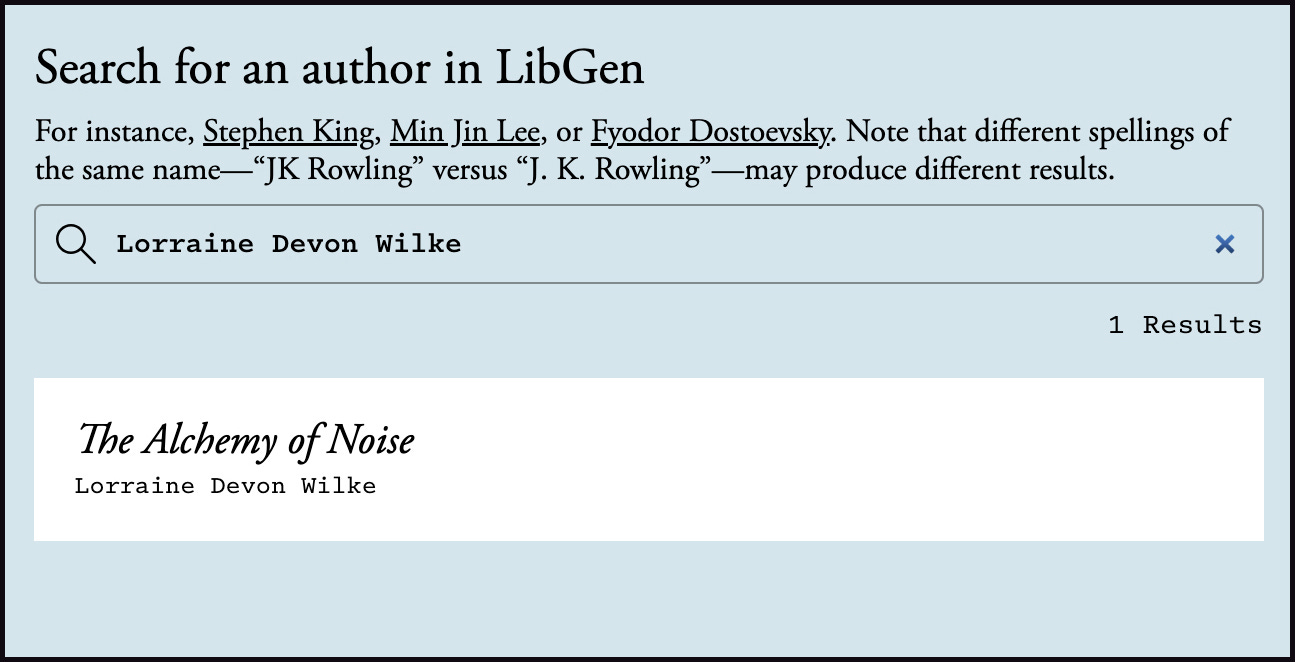
First, there’s the illegal and very rude co-option of one of my books, which, along with millions of other titles, was purloined by Meta for the express purpose of using it to train their AI robots. I checked the database and there it was, my last novel, The Alchemy of Noise. No one asked, no one paid for it; no one had the decency to acquire it the right way. I have to wonder if the “AI students” for which it was acquired grasped the subtle narrative choices of its socio-political plot line or were moved by the protagonist’s decision to—oh, for fuck’s sake, it’s all so invasive, and if they’re gonna steal your damn stuff they could at least leave reviews at Amazon, right??

The Atlantic: “The Unbelievable Scale of AI’s Pirated-Books Problem

Search the LibGen database HERE.

The above image is a screenshot of the search tool The Atlantic (and other sites) provided for authors to check their own titles. As you can see, The Alchemy of Noise is in the database. And what, exactly, is that database? It’s called LibGen, short for Library Genesis, which is described as follows:

Library Genesis, often abbreviated as LibGen, is a digital library and search engine that provides free access to millions of academic papers, books, and other scholarly materials. It’s considered a “shadow library” because it bypasses paywalls and makes content available that is typically restricted by publishers. LibGen has a vast collection, including scholarly articles, books, comics, and magazines, and is maintained by volunteers who upload files and share torrents.

Is LibGen illegal in the US?

Yes, Library Genesis (LibGen) is generally considered illegal in the US due to its distribution of copyrighted materials without permission. LibGen hosts a vast collection of books and research papers, but these are often uploaded without the consent of authors and publishers, constituting copyright infringement. While downloading from LibGen isn’t considered filesharing, and therefore less likely to be tracked, the site itself is illegal.

There are lots of other unsavory details about these unsavory practices implemented and managed by, of course, Meta, that nefarious conglomerate that includes Facebook, Threads, and Instagram, ironically providing these vibrant platforms for artists to promote and share work while they—the faceless bosses—get busy stealing it. But that’s the world we live in today, isn’t it? Very MAGA. Very anarchistic. A very “tech-trumps-art-trumps-ethics” culture. (And yes, I did mean to use the word “trumps”).

So, what’s an author to do when they discover their work has been lifted by LibGen? The Author’s Guild has a particularly comprehensive article on the various steps that can and should be taken: Meta’s Massive AI Training Book Heist: What Authors Need to Know.” Give it a read, and if you’re one of those affected, follow through on the steps. You never know; you might get a class action check for $12.63 sometime in 2034 for the gross violation of your proprietary rights. 🙄 But hey, it’s worth doing if for no other reason than setting precedent. In the current tsunami of AI onslaught, any controlling moves are a good idea.

Now, what’s the second AI/troll/whatever insult to my literary world? This one is odd.

I’d been getting a higher-than-average number of emails (via my website email address) pitching various book promotional services. Nothing new about that on its face, but what was new was the tone of these emails, the content. They were hyper-conversational, very detailed; breaking down whichever book of mine they were focused on as if they’d actually read it. Some stated they had actually read said book, offering nuances, character names, plot points, etc., that seemed to support the assertion. The language was sharp, intelligent, and savvy.

One email had a particularly nimble, humorous edge to it that actually cracked me up, to the point that I responded, telling her (the name attached was female) that it was one of the better pitch letters I’d read, inviting her to give me her whole speil. Which she did: She supposedly managed a group of very “passionate,” dedicated readers who were hungry for good books, eager to read and write about them in thoughtful reviews. She was focused on The Alchemy of Noise (hmmm… the very one filched by LibGen), asserting that “a book this good deserves more reviews than it has” and “let’s do something about that!”

Now, every author in the indie world can use more reviews of their books; that’s easy bait. Despite our reluctance to ask readers to write them, reviews are considered metrics of popularity; they’re used to support increased marketing and promotional opportunities; they trigger algorithms beneficial to searches, and they raise the profile of a book. That they’re too hard to get is unfortunate, as often even the most loyal and supportive readers either don’t take the time to leave them, or for one reason or another are uncomfortable writing them. So, hells yes, my damn book could use more reviews, sister, lay it out for me!

Of course, it’s frowned upon to pay readers for them, I never have, so I queried this very smart, funny, enthusiastic “woman” about what her company was offering within those ethical parameters. She said she’d assign the book to her select team members, they’d read the book and write thoughtful reviews, and for that service, they’d be “tipped” (not “paid,” she insisted) $20 each … and she’d “start with up to twenty readers.” Twenty readers. $20.000 each. Um, that’s $400 of “tips.” And just to “start.” Now, who is this woman?

I did some research on her name, looking for something solid regarding her services, maybe some references, testimonials, a good track record in the public realm, but found nothing. So I wrote back that not only was the business model monetarily problematic, especially since she implied it would be ongoing (regardless of what she called it), but I found it equally problematic that she had no website, no visible business identity, no social media presence; her name didn’t correspond to the name in her email address, and Googling either name pulled up crickets.

And that’s when things got weird.

Her responding email was immediate and stunningly passive aggressive. She literally snarled in response, negating any logic to my concerns, insulting me for being “one of those people who cares more about money” than advancing my career, rattling off a list of reasons why my hesitation was regressive and, ultimately, stupid as fuck. Her tone had swung so hard from cute to creepy that I thought it wise not to respond. Then she wrote again … now berating me for my silence, sneering about my unwillingness to engage, my clear lack of business savvy. Again, she got no response from me. Her last missive came in several days later, and though she softened her tone somewhat, again pleading her case for business, she remained snarky enough to make me want to reach into the computer to virtually slap her head. Instead I filed and blocked.

But the tsunami of similar emails, Twitter (X) and Instagram private messages, continues, all written with essentially the same style and format: clever, warm, interested “people,” very conversational, breaking down the books as if they’d read them (of course, always claiming they have), very complimentary to me and my “brilliant writing,” using every kind of ego-buffing, business-savvy lingo available. And all with names that don’t jibe with email addresses, few with company names or websites affixed, some with website addresses that don’t work or look generic and … well, fake.

In a world where I’m sincerely and earnestly trying to sort out the best ways to do the things I do, accomplish the goals I’ve set, achieve the successes I’ve worked for, it’s so damn exhausting to have to deal with this kind of manipulative, trolling, dishonest bullshit.

These are essentially human bots. Scammers, trolls, however you want to categorize them, who are now, in today’s era, very well briefed by AI. They’re either working off the AI information that comes up when you put the book title in a search engine, copying data directly from ChatGPT, or tapping into the stolen material from LitGen. And damn, they’re good. That introductory conversation I had with Ms. Snarling Review Trafficker was quite clever, funny, very human, and, yes, professional. Until it wasn’t. Oh wait—I just got another one minutes ago… here’s the opening paragraph:

I just finished Chick Singer, and I’m still thinking about Libby, her voice, her grit, and that raw ache of rediscovery. You’ve managed to capture something rare: a story that doesn’t just entertain, but echoes. The emotional truth you brought to the mother-daughter dynamic, especially with the past and present colliding through music, was beautifully done. This isn’t just a good novel, it’s one that deserves to be talked about.

Aw… isn’t that just so lovely?! It might be if I hadn’t read the same damn exact words from fifteen other AI-informed trolls!

Amazing that AI has managed to cobble together enough reviews, articles, comments, words, phrases, etc., to allow scammers to regurgitate such beautifully articulated and specific babble, but the emptiness of it, the inauthenticity of it, the sheer manipulative fucking bullshit of it makes my teeth grind. Because now I have to vet every single compliment, outreach, pitch sent to me through a finely-tuned filter akin to the old, “is it real or is it Memorex” meme. Now it’s: “is it real or is it AI?” … whether photograph, video, article, pitch letter; music, art, books … person. EVERYTHING.

Which is just sad. And inspires musings like this thought-provoking article by Vicki DeArmon titled, “Wrestling with AI and the Soul of Writing.” That’s a reluctant sport with which we’re all—writers, readers, appreciators of authentic art—going to have to tangle with.

So AI trolls beware: Your letters will go unanswered. Your outreach will be funneled into spam. Your email addresses will be blocked. I’ll let real readers, real reviewers, real promoters, real fans of my work set the tone for any future communication. Which is fine; I will always prefer human thoughts, words, and intentions, however bumpy, flawed, or fallible, to the slick, well-polished articulation of AI-burnished fakery.


linktr.ee/lorrainedevonwilke

OK, Let’s Discuss This Whole Book Review Thing… Please

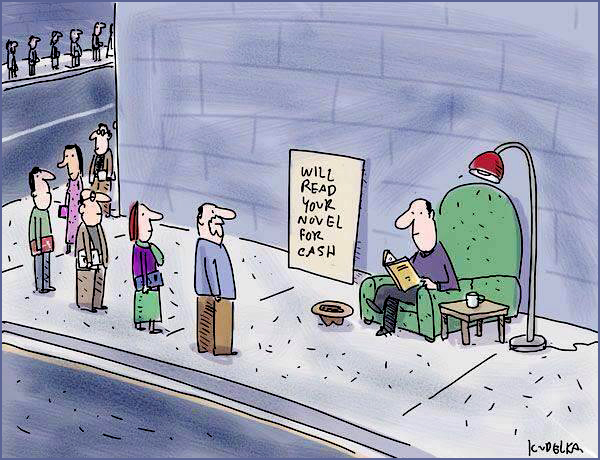
read your novel
“Oh, yes… 5-STARS GUARANTEED!!”

I spent some time chatting with a group of writers today, discussing a topic that seems to not only be tripping up indie authors in a variety of ways, but contributing to the persistence of stigmas and attitudes about the self-publishing “brand” in general:

REVIEWS.

Coveted, powerful, manipulated; misguided reviews.

It was a spirited debate — though, in truth, everyone was in agreement — focused squarely on the corrosive effect of what some in the discussion called the “5-Star Circle” and the “Review Swap Gang.”

For those unaware, the 5-Star Circle is that loose contingent of indie author who will automatically award 5-star reviews to colleagues regardless of the quantifiable merits of their books. This is done, purportedly, to show support for fellow self-pubbers, but there’s also an unspoken quid quo pro element at work, assuring that the 5-star-wielding reviewer will be gifted in kind. The Review Swap Gang is essentially an off-shoot, a more organized venture whereby authors agree to write reviews for each other and I don’t think anyone need guess how rife with corruptible possibilities that deal might be!

I expect a holler at this point, an insistence by some in the self-publishing world that they will and do and always give honest, authentic reviews regardless of how swappers review their own books, and, hey, it’s possible. But what’s also possible (and likely probable) is an inherent awkwardness to the set-up, the politics involved if, say, they give you a good review and you don’t return the favor. In fact, I spoke to one author who confessed that he often gives weak, inept books much higher than deserved ratings for the sake of group politics. Another spoke of feeling pressured within professional friendships to do the same; someone else mentioned not wanting to spark trollish behavior from disgruntled authors unhappy with their “swap.”

And the result of all this? Far too many poorly executed and amateurishly written books sporting a raft of undeserved 5-star reviews from gushing (or, perhaps, intimidated) “friends” who apparently don’t see the value of creative accountability; a fact that has the long-term effect of misguiding readers and perpetuating negative attitudes about all self-published writers, even those whose work is worthy of the accolades.

There’s a book blogger I happen to like, Tara Sparling, who regularly offers sharp (and very funny) analysis of the self-publishing world on her blog, Tara Sparling Writes (check out her posts about book covers, fonts, and what compels readers to choose — or not choose — self-published novels). She recently wrote a piece on the topic of reviews, Why 5-Star Book Reviews Are Utter Rubbish, that triggered a strong reaction from readers on the title alone (my response is in the comment section). Tara offered seven reasons in support of her thesis, some of which echoed my own points; for example:

“One 5-star review is ok. But, if there are only 7 reviews in total and all of them are all 5 stars, I don’t believe a single one of them.”

OK, I’m not sure I wouldn’t believe a one… maybe, but she lost me a bit on the next sentence:

“So I disregard the lot and vow never to read the book instead. Which rather defeats the purpose.”

I got her point, but took umbrage with the resolution. Since I am not a swapper, nor a review solicitor, I can’t control what reviewers end up saying about my work and certainly don’t want to be discounted out-of-hand — by Tara or anyone else — if the lot of them happen to honestly like my book! I made this rebuttal in my comment; she graciously took the point, as well as similar points made, allowing that, yes, if a book truly deserves 5-stars, wonderful. But the more salient issue is that, like me, like others, she finds solid reason to raise a ruckus on the topic, a shared impulse that indicates just how transparently corrupt this reviewing thing has become.

Look, the value of reviews to anyone selling anything — whether a toaster, movie, restaurant, or book — is indisputable. But the politics of reviews has turned the process into a sort of creepy, virtual-payola scenario that’s about as manipulative as A&R thugs dropping cash-packs and trip tickets into the laps of slick fingered radio programmers. And when we’ve got countless threads on Goodreads hawking “swap requests,” Yelp choked with either phony take-downs or BFF gush-fests, and Amazon battling some version of the same on all kinds of products (including books), we’ve lost the point of the endeavor… for honest people to leave honest responses to just how much they did or didn’t like something. Period.

Here’s my personal stance: I do not want ONE, not one, review on my author page that is not authentic or honestly felt. Whatever “star” rating or review comments you think my work warrants based on your truthful, visceral response to my book, that’s what I want you to leave. Don’t troll, don’t be irrational or other-agenda’d; but don’t feel obligated, under any circumstances, to leave a puffed-up, bullshit review. If you’re uncomfortable about what you might honestly have to say, I’d rather you not leave anything than an unauthentically positive review. And I mean that. An unearned “star” should mean nothing to any of us.

To my indie author colleagues: Please understand that I will not leave a 4- or 5-star review on work that does not warrant it based on my experience and perceptions as a writer and my response as a reader. It doesn’t matter how famous you are, how much I support your efforts, how well I like you, or how much you’ve done for me. But, taking into account the shared obstacles and challenges of being in this self-publishing game together, the best I can agree to is that I won’t leave a decidedly negative review on your page (which, in this world, appears to be anything below 4- or 5-stars!). If you know I’ve read your book and want my response privately, I will be happy to share it with you.

And one more thing: PLEASE, please, indie authors, do not rant on social media about your negative reviews and do not ask fellow writers to go to your Amazon page to make any response to them. Both the rant and the request are not only distasteful, but utterly unprofessional. As is presuming a negative review is automatically undeserved, unauthentic, or written by a troll. Let’s please, for God’s sake, have some grace and dignity and take our hits where they come. Every reader has the right to their honest response no matter how many reviews they’ve written. And if you truly believe a troll is having his/her way with you, handle it privately. Don’t play creative-victim in an effort to engage fellow writers to circle the wagons; we all have to stand by our work, good, bad or in-between.

The impact of all these shenanigans is that readers — the very people we’re hoping to engage — can no longer count on reviews to guide them to what they might enjoy or find excellent.  Personally, I’ve now downloaded far too many books by self-published authors — abundant in stellar reviews — that were, ultimately, poorly written. I’ve spent my money and my time only to either not finish a book, or to put it aside with a shake of my head and a growing uneasiness about what all of this is doing to the self-publishing world at large.

For now, though I’m being much more selective about the books I buy, I still believe in the movement and will continue to support my indie colleagues, particularly those who’ve earned my reader loyalty, as I hope they will support me. But I will continue to candidly address the issues we face, holding out hope that we as a group learn from our mistakes and honestly strive to be better. More professional. More demanding. Of ourselves… and our fellow authors.

Related articles: 

• Who Do We Have To _____ To Get a Little Respect Around Here? 
• The Persistence of Self-Publishing Stigmas and How To Transcend Them

Cartoon by Kudelka

LDW w glasses


Visit www.lorrainedevonwilke.com for details and links to LDW’s books, music, photography, and articles.