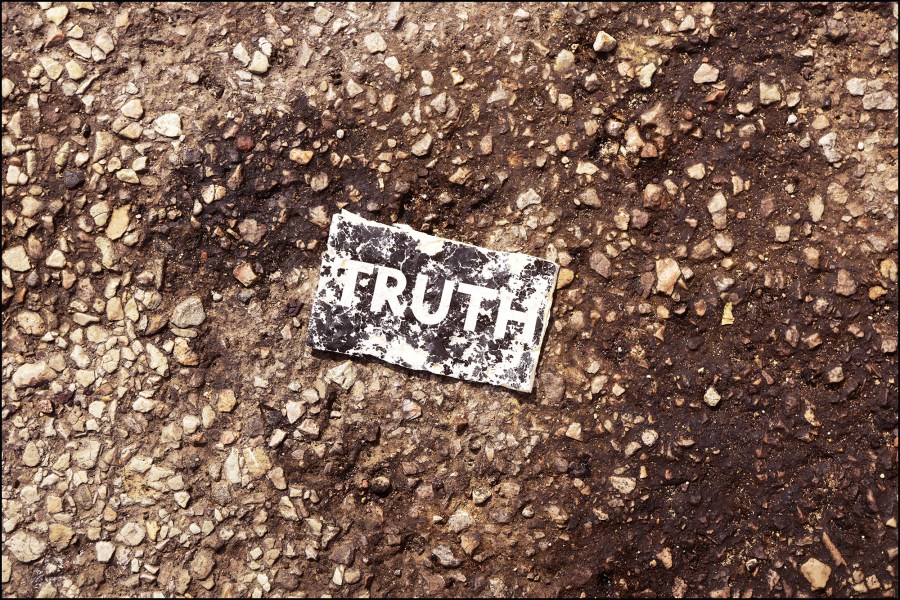
Despite Trends to the Contrary… truth and decency still matter.

It’s fucking ridiculous that this has to be said out loud, but in our blighted era of Trumpian lunacy, when corrosiveness has been normalized, and gaslighting permeates everything from media to politics to education to social issues, it seems even the most basic expectations of principled society do have to be articulated.

Photo by Michael Carruth on Unsplash

There was a debate last night between an effective, decent, successful POTUS and a twice-impeached convicted felon who’s a pathological liar, a corrupt thug, and an adjudicated rapist, and the caterwauling afterwards—from media, pundits, terrified Democrats—is that the decent, successful man needs to “step down for the sake of the country” because he had a shitty debate. He’s too old, too “feeble”; his voice was hoarse, he didn’t counter the convicted felon’s relentless lies enough, he was pale; he lacked energy.

Huh.

So, despite the biblical list of disparities between the old fella with the big heart and the convicted felon/rapist, the loudest, the literally SHOUTED, suggestion/demand by many big name columnists, top shelf politicians; panic-stricken talking heads, was to demand the former commit political seppuku if he had any dignity or concern for his constituents. Didn’t hear one word about the convicted felon “stepping down for the sake of the country,” despite the fact that he’s articulated his plan to dismantle American democracy and his getting in the White House again would literally destroy the country as we know it.

That is a deeply systemic case of collective gaslighting.

They’re a slick bunch, gaslighters. Not just these post-debate caterwaulers, but all of them, so pervasive and relentless it’s a wonder they haven’t set the entire American experiment on fire… though it seems they’re trying. They’ve insinuated themselves into every corner of life, hiding behind church pulpits and congressional desks, in school boardrooms and medical facilities; they’re embedded in media, marketing, and Republican campaigns (even some Democratic ones, it sadly seems). They’re both blatant and surreptitious, bold and mewling; hardcore and sycophantic. And they’ve successfully manipulated a good portion of the American electorate to embrace—with blind conviction, obsequious devotion, terrifying ignorance, and ugly red hats—the belief that truth, decency, kindness, heart and humanity are not only not essential, they’re harbingers of weakness, softness, “wokeness,” unnecessary and irrelevant. This truth-averse contingent prefers their idols to be bullies, strongmen. They applaud coarseness, cheer indecorum, and hail corruption as a form of fist-pumping defiance.

The worst among them—both the gaslighters and gaslightees—are the contingent called “MAGA,” and they’re doing the dark work of trying to push Donald J. Trump back into our White House.

That cannot happen.

It’s fair to ask whether Trump is responsible for ushering in this toxic era. It feels like he did, but most would agree that MAGA was already here, just hiding beneath rocks and behind enforced social decorum. They hadn’t yet coalesced, given themselves hats and a name. It was when Trump slithered down the infamous escalator that an invitation, permission, was extended to other bigoted, small-minded, hate-and-fear oriented people to emulate his crassness. To step out of the shadows to hoot and holler and insurrect in the triggering, exciting strobe of his orange beacon. They bowed and shouted, deigned him their golden calf, and he, in turn, made them feel the power of belonging to his toxic cult. It’s a metastasizing, mutually repugnant relationship, and it’s been making American sick since 2015.

Yet still … and despite trends to the contrary … decency matters. Truth matters. Not everyone within earshot of the noise fell for the falsities. There are the millions of good people, kind people; people who care about their fellow humans, who are passionate about creating racial equity in our divided society, who see immigrants as essential members of the diverse landscape; who listen and speak with consideration, respect, and civility. People who refuse to reject truth to further lies and self-serving agendas. Who parent needy children, care for the elderly, administer schools, continue to create beautiful things, research important advances, and promote environmental improvements. People who run for office because they actually want to make life better for their constituents rather than use it to enrich and aggrandize themselves, their families, and their cronies… or stay out of prison.

These people—you, we—outnumber them.

Yet in a society where clickbait rules and salaciousness gets the attention, we spend so much time reading about, listening to, recoiling at; analyzing, reacting, and responding to the despicable, heinous words and deeds of the gaslighters it’s almost impossible to believe that the good people I’m referencing exist. Even our current president—a good, compassionate, honest man—gets less favorable, illuminating reportage than the cretin running against him … certainly as evidenced by the hysterical hand-wringing about his “disastrous debate performance.”

That won’t likely change. Our culture is too immersed in the trend of tabloid titillation. Train wrecks, political scandals, and pursuing Hunter Biden will always garner more curiosity than positive news. The only way to inject balance into that equation is to make a pact to, yes, rant, rail, and act against injustice, dishonesty, and corruption as compelled to do so, but also to shine as much light as possible on the honest, productive, integrity-inspiring people who vastly outnumber the worst amongst us who do get the headlines.

We’ve got a plate-shifting choice to make in this upcoming election. And despite the cacophony of polls and headlines that seem hellbent on amplifying the terrifying agenda and campaign of the indecent failure of a man called Trump, we have the power to push, pull, articulate, and embody the trend of decency and all that comes with it. We can holler about our individual grievances, cite examples where our causes haven’t been served to our satisfaction. We can enumerate our criticisms, opine about our disagreements, threaten to not vote, to vote third party, to “protest” vote in some self-soothing but ultimately self-sabotaging way (because I promise you, anything that helps Trump win is self-sabotaging), but at the end of the day, it’s decency that demands our attention, and that we should agree on.

Because decency is what’s at risk. Our democracy is at risk. Our rights and freedoms. Our very ability to live in a country that values those things and doesn’t gaslight its people to believe that authoritarianism, intolerance, fascism, and fear of other are acceptable principles, or that corruption, criminality, and dishonesty are simply costs of doing business.

This is no small event, this election. It’s world changing. And we can’t afford to look away. Because we do have the power to keep the terrifying echoes of Nazi Germany, Russia, North Korea, and other deadly, soul-killing, freedom-destroying political blueprints and agendas from subsuming our beloved America. Despite trends to the contrary, we have the power to make sure that doesn’t happen.

Age doesn’t matter. A bad debate performance doesn’t matter. A pale face and stumbling steps don’t matter. What matters is decency, truth, and integrity. Honesty. Upholding our American democracy. Regardless of how the Democratic leadership may respond to demands that Biden “step aside for the sake of the country,” good people who care enough about America to really pay attention, to not get lost in the weeds of debate and discord, will continue to vote like our very freedoms—the freedoms of our families, our children, our future generations—depend on it.

Because they do. And decency demands we protect those freedoms for all of us, all of them.

LDW w glasses


Visit www.lorrainedevonwilke.com for details and links to LDW’s books, music, photography, and articles.

The Most Effective Form of Protest Is VOTING

“Demonstration without good legislation ends in frustration. To get good legislation you need to be in majorities. You gotta win elections.” ― Rep. Keith Ellison

Every American remotely interested in what’s going on in this country likely conducts a ritual similar to this at the beginning of their day:

They rise, get ready as needed for their particular schedule, then sit down, stand up, turn on, or pick up their media preference to scan the headlines. Some read or watch further, some don’t, but for the majority of Americans, this ritual and those headlines — at least since the current occupier of the White House has been in occupation — are a rage-inducing, gut-wrenching, anxiety-producing litany of terrible, horrible, no good, very bad news of stunning variety.

Since late-evening November 8th, 2016, we have witnessed the bulk of this country convulse through every negative emotion imaginable, with millions around the globe joining in angst as they watched, slacked-jawed, while the most powerful country in the free world handed the keys of the kingdom to the most inept, unqualified, and, as is proven daily, destructive and unethical person to ever grasp the title of “President of the United States.”

And this collective emotional turmoil is not conjecture; it’s fact: anxiety in America is up since Donald Trump became president:

“Post-election stress is real,” said Vaile Wright, director of research at the American Psychological Association. “People are really fearful about what’s going on in the country and are reporting concern about the political climate.”

On behalf of the national association, Harris Poll surveyed about 3,500 people last August in an annual survey about stress. The questionnaire asked for the first time about stress related to politics after hearing from therapists that many of their clients were anxious about the campaign. More than half said the U.S. presidential election was stressing them out.

Given what we’ve witnessed on social media, in coffee-house conversations, in the fracturing of families during dinner-time discussion, and the almost obsessive cultural fixation on “what the hell is going on with this Trump guy?” as one friend put it, the data from the American Psychological Association is not surprising, even if it is unprecedented:

“I’ve been in practice for 30 years,” said Esther Lerman Freeman, clinical psychologist at Oregon Health & Science University. “I’ve never seen people this upset about an election.”

But there was a bright spot in those early days: the Women’s March on January 21st.

It was, and remains, the best day many of us have had since that dreadful November night. An explosion of civic participation in unexpected and historic numbers, it became a communal gathering that not only made clear how tremendous the anti-Trump coalition was amongst liberal, progressive, and Democratic women (and men) throughout every state of the union (even blizzard-blown Alaska!), but around the world. The head-count was so large in some spots as to be incalculable, and observant folks were struck by the notion that there simply couldn’t be enough people who actually supported Trump to make his “win” irrefutable.

In fact, there wasn’t… because then came the Russians.

Or rather, as we recently heard from FBI Director, James Comey, the Russians came a long time ago. And I don’t mean the Cold War; I mean somewhere around July 2016, when the agency launched an investigation into possible (probable?) Trump/Russian collusion to interfere with #Election2016 and any chance of a Hillary Clinton win. Much more is to be revealed on this topic, but the critical mass of information already seems to support the suspicion that had this election been fair and square, Trump would be out hawking Slavic hotels while Hillary Clinton was busy running the country.

So, yes, LOTS of outrage to express, lots of anger and an unwillingness to acquiesce to the political status quo. People of conscience wear “pussy hats” and raise protest signs. We hashtag #Revolution, #Resistance, and #NotMyPresident every chance we get; stay vigilant on social media; write op-eds, call and email state representatives, sign petitions, organize town halls, and attend marches. WE MAKE OUR VOICES HEARD IN PROTEST.

And, yes: WE VOTE!

Right? We vote?

Turns out… not so much.

Like so much else in our recent electoral history that is surprising and self-sabotaging, it appears that far too many Americans STILL abdicate their right and responsibility to vote, one of their most effective and important civic tools. That is astonishing, particularly in this post-Trump era of outrage.

VOTE IN MIDTERMS. Elect a congressional majority willing to take on the White House, rather than behaving like quislings*.” ― Joy Reid (*quisling: a person who betrays his or her own country by aiding an invading enemy, often serving later in a puppet government; fifth columnist.)

On March 7, there was an election in Los Angeles for mayor, various judges, school board folks, and several important and impactful propositions. And yet, just a few short weeks after the streets of L.A. were packed with passionate, politically active people willing to get out on a Saturday morning to show solidarity with like-minded progressives, ONLY 11.45 PERCENT OF REGISTERED CITIZENS VOTED! Only 11.45 percent! Which means in a city of over 4 million people, just over 450,000 voted, which, depending on who you ask, is far less than showed up for the Women’s March on January 21st.

Why is that? Why are we willing to strap on a pink hat, grab a protest sign, and hit the streets to the tune of “We are women, hear us roar,” but not get out to the ballot box at some point during a 12-hour period to make our voices known in tangible, policy-and-local-government-altering ways?

Fact is, voter turnout in America has always been a conundrum. Horrible numbers. Shameful, even, in light of countries where citizens put life and limb at risk to vote. Maybe it’s the “privilege of democracy” that renders Americans civically lazy, detached from the urgency of voting. Maybe it’s the bane of imprinted American competitiveness that determines that only the most exciting, most combative elections bring out the numbers (FairVote). Certainly demographics have something to do with it: young people are notorious non-voters, which makes a clear case for stronger mentor influence and the designation of civics (let me say again) as a required subject in school curriculums.

But even though voter apathy is historically endemic, why, given the clear and vibrant political activism of that memorable January 21st day, didn’t those numbers translate into exponential attendance at the ballot box, the next logical step in the act of active activism? That question is where the political disconnect lies:

“It wasn’t a big election, like, for president or even any senators. I couldn’t figure out half the propositions. I got busy. The ballot was too confusing. I planned to vote but ran out of time. I was traveling that day. Smaller elections don’t matter that much. I have no idea who all those judges and school board and city council people were so I didn’t bother. The power mongers are going to decide everything anyway. Look at what happened with Trump; what’s the point?”

All the above were communicated to me in one way or another, and I get it: who are all those judges and other folks? And why are those propositions so damn confusing (and, really, did that many trees need to die to glut our mailboxes with contradicting mega-postcards)? And yes, not all of what’s there to be voted on by each resident affects that resident… but SO WHAT?

The civic equation, the societal formula, that desperately needs to be considered is this:

First, local laws affect the well-being of people by either attending to their needs, or by ignoring them to the point that they’re motivated to change those laws. That ability, that power — to change local laws via the electoral process — is designed to engage and inspire citizens to take responsibility for their own government. The thinking follows: if they get involved locally, they’re more likely to get involved nationally. Local voters beget national voters.

Secondly, local politicians become identified, known, as they move up the political ranks. They build loyalty while becoming effective spokespeople for their constituents. Those regional and local leaders — mayors, judges, city council and school board members, etc. — often go on to become state and national leaders; governors, congresspeople… even higher. Hence, getting to know those leaders locally puts voters ahead of the curve if/when those same people move into national positions. Voters are already invested; they already know something about that person; their voice and vote will be more educated because of that local history. Engaged local voters beget engaged national voters.

Whatever your interpretation of “all politics is local” (usually attributed to Tip O’Neil, etymologist, Barry Popik asserts that the phrase was coined by Washington AP bureau chief, Byron Price), I think we can all agree that local elections have tangible and pivotal influence in building and nurturing the foundation of all politics. So, again, why do so many people ignore them?

One popular post-mortem of election 2016 was the “exit interview” of Trump voters. Social scientists attempted to discern why they voted — sometimes against their own self-interests and often in the face of facts that should have sent them running to the hills — for a guy who couldn’t be more unlike them. The take-away, putting aside documented xenophobia, racism, and the rest, was that they felt their government leaders ignored them: “They don’t listen to us, those elites. Our needs aren’t considered. We’re invisible.” Whether or not that is quantifiably true is not the point; they believed it to be true and they believed Trump would be different. Which leads back to the chicken/egg equation: did local/state politicians drop the ball or did local citizens abdicate their own civic responsibility? Given the evidence, I’d say both the chicken and egg are guilty.

When it’s suggested that gerrymandering and voter suppression could subvert the Democrats’ ability to make gains in the 2018 midterms, shaking voters out of their entrenched apathy becomes all the more urgent. We need to engage citizens early in their political life (let me say this again: civics must become a high school requirement), getting voters of every age inspired, educated, and out to the polls. The default position should be that every election is a “big one.” Because, ultimately, that is true.

Lastly — and perhaps prosaically — there is simply no excuse not to vote; not any more; not these days. Regardless of gerrymandering, insufficient polling stations, long lines, bad weather, work conflicts, babysitting snafus, car problems, travel schedules, bad knees, simply not having enough time to get to a polling place, there’s this: 37 states allow early voting, all states will mail absentee ballots to those requesting them, and three states provide mail-in ballots for all elections. Everyone can figure out a way to vote.

The Midterm Elections of 2018 are the next major elections; many important state and city elections are unfolding as we speak, some of which may have powerful impact on turning the tide against the Trump machine. VOTE. Don’t abdicate. Don’t dismiss. Don’t listen to those who tell you it doesn’t matter. Grab a rain coat, pull on your pink hat, take your protest sign, jog from work, register for mail-in ballots; whatever it takes: VOTE. That, more than any other form of resistance and protest, has the power to change the world. If #Election2016 taught us anything, it taught us that.

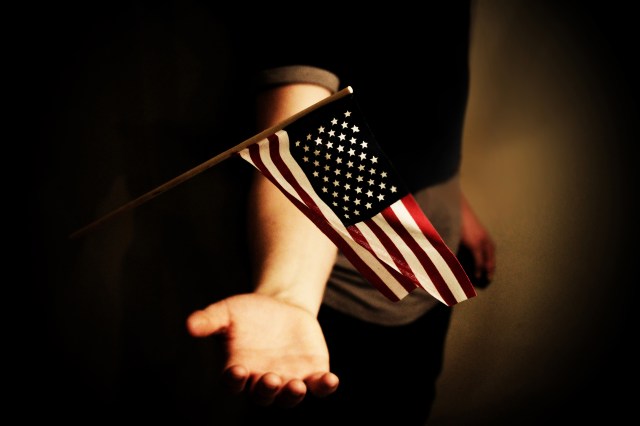
“Holding America” photo by Samuel Schneider @ Unsplash

To find out what your specific state provides in terms of early voting and mail-in ballots, check HERE.

Visit www.lorrainedevonwilke.com for details and links to LDW’s books, music, photography, and articles.

There Is Noise, Then There Is Your Voice: VOTE

vote-cartoonNothing’s perfect. Nothing meets every expectation or fulfills every wish or desire. We engage in jobs, marriages, college careers, sporting competitions, cultural challenges, parenting, etc., with a presumption of one set of results and often, very often, a different set emerges. It’s part of life; we’re taught to adjust and we do. But does that mean we don’t, then, engage in those activities once they’ve failed to meet our expectations? We eschew marriage because too many end in divorce? We don’t go to college because too many expensive educations don’t result in high paying jobs? We don’t bother with jobs at all because too many disappoint with sustainability or advancement issues? We give up on sports because our team lost or a coach failed to pull out the season? We don’t engage in activities, causes, creative endeavors, and the like because we experienced disappointments, failed candidacies, unmet financial goals, poor ticket sales? We don’t have children because… well, children…. God knows what they’ll do?!
Fact is, most of don’t give up on all those many elements of human life just because they disappointed us. We may rage, write blogs, post comments or sign petitions, but once we shake off whatever frustrations, heartaches, disappointments, and tragedies life has to offer, we climb up from the depths and jump back in. We reinvent. We try again. We give it another shot.

So why do we stop voting because we’re disappointed in politics and politicians?

All week I’ve been reading articles about voter apathy, weak turnout, low approval ratings, election shenanigans (that again!), and so on. I’ve seen posts on Facebook bemoaning the futility of voting, cries of “what’s the point?”; lots of wordy treatises (some by celebrities) on the pointlessness of choosing “one devil over the other,” and the cynicism and negativity is just breathtaking. Honestly, I want to shout “FIRST WORLD PROBLEMS, PEOPLE!” as loudly as I can and, in fact, it really is only in the First World that we so take for granted our right to vote and the ease with which we can do it.

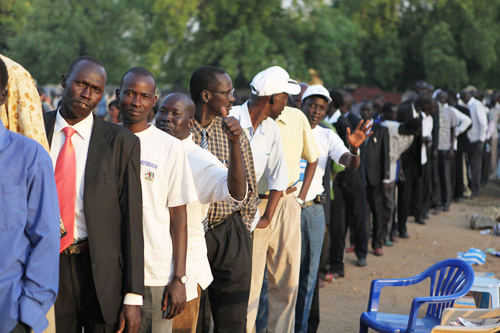
When you see lines of Muslim women in India eager to make their voices known, Iraqi voters with purple fingers, Sudanese in line for hours, and others in beleaguered countries actually putting themselves at risk to get to the ballot box, the bizarrely enervated, whiney responses of far too many American voters is gut punching.

Muslim women voting

VOTE!

Seriously… vote. Spend today and tomorrow boning up on the many propositions, compare who’s for and against, get an idea of what they’re about; look at endorsements, see if they align with your thinking, then CHOOSE. DECIDE. VOTE.

Don’t know who all those judges are? Who does? Again, check endorsements, do a little research. Some big newspapers made it easy and have done the research for you; all you have to do is decide, again, if that newspaper is generally aligned with your political sway, read a few biographies and voting records, then DECIDE.

Might you get it wrong if you make a choice and later discover the proposition was weak because it wasn’t written well or it didn’t pan out as expected by its authors? Yes. You might. So what? Right now, in this election, take the time to make the best possible choice you can based on your research and your gut… just DECIDE. If it turns out to be a failure, so what? You tried. They tried. We’ll all try again.

There’s lots to say (and, oh, so many people saying it!) about Republicans and Democrats and this guy and that gal and all the usual partisan politics about who cares about women and minorities, who doesn’t, who might win the Senate, who might not, and that’s a BIG conversation filled with lots of noise and a modicum of sense… mostly not. I don’t need to add to it. My party affiliation is clear to me, I know who I believe is more concerned about my rights as a woman, a parent, an American, and a member of this human race. I will vote accordingly. But I’m not here right now to try to sway anyone to one side or the other, browbeat any particular candidate or applaud another. That’s all being done by countless others and the noise is deafening.

All I’m here to say is: VOTE. Period.

Voting in Sudan

It may be a cliche, but if you don’t vote you have no voice in the government of the country in which you live. You have no position from which to complain, to argue, to raise a ruckus. You’ve offered no energy toward being part of and, hopefully, improving a — yes — corrupt, flawed, manipulated, and seriously pot-holed system. But it’s our current system and we ARE the government. It often doesn’t feel that way for a whole host of valid reasons, but it is our vote, each and every vote, each and every election, that shifts and changes — albeit ever so slowly — the government, the laws, the leaders, the country. Don’t abdicate the power you have to protest the power you don’t have.

VOTE.

College kids voting for the first time
Ben Sargent Voting Cartoon: Reboot Illinois
Muslim women voting: Jezebel
Iraqi voters with their purple fingers: Wikipedia
Voting in Sudan: Wikimedia Commons; Jenn Warren, USAID Africa Bureau 
College kids voting for the first time: College of New Rochelle

LDW w glasses


Visit www.lorrainedevonwilke.com for details and links to LDW’s books, music, photography, and articles.