Interview With The AWESOME GANG: Where Awesome Readers Meet Awesome Writers

Author interview
There’s a fellow named Vinny O’Hare who’s a very active member of the Goodreads and other writer/reader communities, and who has various site promoting his books, his photography, and his work as a web consultant. One of those sites is called AwesomeGang: Where Awesome Readers Meet Awesome Writers. A very on-the-nose moniker for a cool site that does just that.

Vinny’s mission statement is pretty simple:

What is your favorite part about the book blogging community? I like the way the community helps each other out. Being in the Indy publishing world I get to visit a lot of websites by people that don’t know how to make a website. I can offer them SEO advice and help them rank better for their books. I love helping authors get sales for their books. I believe it comes full circle.

And given how many opportunities he gives authors through awesomely priced book postings, awesome interviews, etc. (he admits he likes the word “awesome”!), his full circle should be… well, pretty full!

awesome gang banner

I recently participated in an AwesomeGang interview, talking about my books, my work, and what I’d take with me to a desert island, and since I know you want to partake of all that essential information, let’s start with an excerpt and go from there!

Do you have any advice for new authors?

To start with, and this is a big one, be very clear about your voice, what it is, what it wants to say, what it tells you, what your gut tells you, and then LISTEN TO THAT. Learn to trust it, humbly and with a willingness to take and implement good critique and wise input, but trust what you know is your voice. Don’t let anyone dissuade you from expressing yourself, tell you all the reasons why you should do something else, why you should say something else; knock you down with their “honesty.” There’s a lot of arbitrary “advice” people will offer and it’s essential to be clear what’s useful and what’s just… arbitrary advice.

Which leads to the second part (and this may sound contradictory, but it’s true): while and as you get clear on your own voice, be very aware of the value of what others have to share with you. Some of it will be good, essential even, and the trick is to sort out what critique, insights, suggestions to take and which to discard. It can be very challenging at times. But ultimately your work has to be YOU, and if you believe in it, have the courage of those convictions to stand by it. Even if you don’t sell a million (or whatever your goal), you’ll know your work is out there in the world exactly as you intended it. A creative legacy can be a very soulful thing!

 Click to read on….

Thank you, Vinny O’Hare, for your incredible awesomeness!

<LDW w glasses


Visit www.lorrainedevonwilke.com for details and links to LDW’s books, music, photography, and articles.

The Fact of Fiction: AFTER THE SUCKER PUNCH Keeps Readers Guessing

Ever since James Frey was publicly flayed for his bestselling “semi-fictional novel,” A Million Little Pieces, the issue of just how little fiction is allowed in memoir and how much fact peppers the typical novel has inspired endless conversations in the literary world. Frey was excoriated like no author before or since (on-air shaming by Oprah has to be the apex!) after originally releasing his book as a “memoir,” an admitted miscalculation by his publisher, Nan Talese, who readjusted after many “facts” of the book were debunked.

More recently, author Dani Shapiro took to Salon in a piece titled, “Open letter from Dani Shapiro: ‘Dear Disillusioned Reader Who Contacted Me on Facebook’” to wrist-slap an apparently irate reader who took umbrage with the degree of the “truth” in her book, Slow Motion: A True Story. In a somewhat condescending, if educational, tone, Shapiro makes her case for the differences between memoir and autobiography, in defense, one presumes, of some fudging on the veracity of her “true story.” (Of course, calling a book “a true story” does set one up for the challenge!)

Wherever you fall on this particular debate (I have to say, I – like Shapiro’s “disillusioned reader” – always presumed memoir and autobiography were interchangeable!), there’s a bit of a parlor game to sorting out just what is or isn’t true in what any writer presents to their public, even when it comes to fiction, where rules dictate that truth is not actually required.

But what if readers presume a fictional tale is true? That characters are based on real people, that plot lines follow the trajectory of a real life; that resolutions, transformations, and denouements mirror the realities of the writer? That makes for fascinating, if occasionally misguided, discussion, one I found myself party to when readers of my debut novel, After the Sucker Punch, started writing with queries like, “Is her best friend ‘Kate’ based on (fill in the blank)?” or “How come you never told me you had an alcoholic brother?” or “Aren’t you lucky to have an Aunt Joanne?” (answers to which were, respectively, “No,” “I don’t” and “I don’t actually have an aunt who’s a nun”).

I’ve discovered, as a first-time novelist who’s written a story that utilizes some elements of my own life, that readers, even those who don’t know me, are eager to ascribe truth to what I’ve consciously and creatively imagined. And that can get tricky at times, particularly when you do have brothers and none of them are alcoholics! While a mentor suggested that, “It’s a testament to the depth and detail of your novel that people assume these things are true,” sensitivity dictates that one’s real family or friends are not associatively tarnished by fictional comparisons. So when yet another reader gleefully wrote, “I bet I can guess who all these people are!” it seemed time to set at least a bit of the record straight!

For those who haven’t yet had the chance to read After the Sucker Punch, here’s a short synopsis to set the stage:

They buried her father at noon, at five she found his journals, and in the time it took to read one-and-a-half pages her world turned upside down… he thought she was a failure.   

Every child, no matter what age, wants to know their father loves them, and Tessa Curzio – thirty-six, emerging writer, ex-rocker, lapsed Catholic, defected Scientologist, and fourth in a family of eight complicated people – is no exception. But just when she thought her twitchy life was finally coming together – solid relationship, creative job; a view of the ocean – the one-two punch of her father’s death and posthumous indictment proves an existential knockout.       

She tries to “just let it go,” as her sister suggests, but life viewed through the filter of his damning words is suddenly skewed, shaking the foundation of everything from her solid relationship and winning job to the truth of her family, even her sense of self. From there, friendships strain, bad behavior ensues, new men entreat, and family drama spikes, all leading to her little-known aunt, a nun and counselor, who lovingly strong-arms Tessa onto a journey of discovery and reinvention. It’s a trip that’s not always pretty – or particularly wise – but somewhere in all the twists and turns unexpected truths are found.        

So, with those narrative bones, let me clarify certain “facts” of this fiction: My real father did write journals and, many years after his death, one was brought to my attention that was particularly focused on me in a somewhat, shall we say, critical way. I had my understandable reaction, but since I’d had a fairly distant relationship with my father throughout my adult life, his retrospective critique, while hurtful, was not, for me, particularly life shattering. It was only when I brought it up in a women’s group I was in at the time that I realized just how provocatively the incident translated to others:

The women in the group were collectively horrified; the variety and intensity of their responses was fascinating, most exclaiming that such an indictment from their father, particularly posthumously, would have left them devastated. My curiosity piqued, I then took the prompt – “how would you feel if you found your father’s journal and he said you were a failure?” – to a number of others, both men and women, and accrued a panoply of replies on all sides of the spectrum, most of which made their way into the lives of the various characters in the book.

That was the inciting incident. What, from there, was true? Really, consciously, thoughtfully, actively… none of it. I didn’t want to memorialize my life, my family; my friends. I didn’t want the obligation of truth and sensitivity; I wanted to fully create a protagonist, a family, friends, lovers; a series of events, plot, and a conclusion that evolved organically from the journey taken by these characters I’d created, truth be damned. And that’s what I did.

Yes, for a person who’s led a fairly interesting and unconventional life, it made artistic sense to imbue my protagonist with some of my characteristics, as well as challenge her with some of the events with which I was challenged throughout my life. But – and it’s a big but – giving “Tessa” and other characters some of the elements of my life and the lives of people within my circle did not make the imagined characters and their plots any less imagined. Any resemblance to truth was, in fact, wildly fictionalized.

A friend, however, challenged me on this assertion. She had graciously sent out an email promoting my book to her circle of friends and, in it, had made the statement, “Lorraine says this is fiction, but it’s really more of a memoir,” something with which I took immediate exception for all the aforementioned reasons. But she persisted, countering, “Well, you did have a father who wrote critical journals, you were a Catholic, you did sing rock & roll, and you were in Scientology, so… come on!” But here’s what I told her:

Imagine a writing exercise in which you give ten writers the following prompt: “Write a story about a young inventor –with Buddhist parents, a sister with a debilitating stutter, and friends who regularly vandalize the small town in which they live – who leaves on a journey to transcend his myopic existence.” Despite the very specific points assigned, you would get ten wildly divergent narratives from your ten different writers. It’s simply the nature of writing; characteristics and events only serve the plot, they do not necessarily define or design it.

And the only way to tell the story I wanted to tell was to create fictional characters with fictional plot lines. And I thoroughly enjoyed doing exactly that!

So to summarize: the protagonist of After the Sucker Punch is not me (in fact, my husband, after reading the book, remarked, “I can’t believe how different she is than you!). Nor are the parents, the siblings, the friends, boyfriends, employers, aunts, neighbors, or small animals the ones in my life. They are, however, very rich and hopefully endearing, maddening, compelling, and intriguing characters who will engage your interest as you make your way through their story and the very human and complex issues within.

And that’s the truth!

LDW w glasses


Visit www.lorrainedevonwilke.com for details and links to LDW’s books, music, photography, and articles.

The Kindness of Strangers… Meet Brenda Perlin

Brenda Perlin

I don’t know Brenda Perlin. We’ve never met, we’ve never spoken; we’ve never even emailed each other (except for a Kindle gift book). I’ve connected with her through sites like Goodreads or Facebook, particularly a Facebook writers group called Master Koda, and though she’s a fellow writer, so far I’ve only read one of her books (a short story for kids called “Ty the Bull,” written with K.D. Emerson and Rex Baughman). Yet, despite this seemingly peripheral relationship, no one has done more to promote and raise a ruckus about my novel, After The Sucker Punch, than this woman. Which I find both astonishing and profound.

There are some artists so focused on their own work that they rarely look outside that narrow sphere to see what others around them might be doing. I have people in my Facebook circle who show up only to post their gig notices, theater schedules, release dates of their CDs/books/films/blogs, or calls-to-action for petitions, votes, and Kickstarter campaigns, but they rarely comment on or share similar posts of others and it seems clear they’re not paying one damn bit of attention to me! 🙂 Which is fine. They don’t have to. But still… I always wonder why they’re there in the first place.

This “disinterest syndrome,” in fact, at least per countless conversations I’ve had with other artists on the topic, often extends outside social media to impact even our closer circles of family and friends. We’re all busy, certainly, but one can’t help but notice the repeatedly unopened or unanswered emails about the new site, the art opening, or the release of a new book; the forgotten promises to leave a review or share the book/CD/film/art piece with known contacts in the industry; the lack of response to queries, promotions, and candid requests to “check out my (fill in the blank).” We all have those people around us (and they tend to be the ones sending “sincere pleas” to donate to their Kickstarter campaigns!).

Then there’s Brenda Perlin.

When my book first came out, I was lucky enough to have some wonderful friends and colleagues who’d read advance copies and left reviews on the Amazon page… which helped greatly with marketing and promotion. But the very first “stranger review” came from Brenda. I didn’t know who she was; it just said “Brenda” on the Amazon page, but it was a thoughtful, impassioned, and very specific review… the kind you revel in as a writer (she even quoted lines from the book!). I later figured out she was the “Brenda Perlin” in the Master Koda writers group to which I belonged and sent her a private Facebook message in thanks. She responded with such sincere appreciation for the book that I was additionally touched.

But she wasn’t done there. She wrote another review on Goodreads, shared information about the book on Pinterest, Twitter and other sites, and within days, I stumbled upon a post from her blog titled, “After the Sucker Punch…a Novel by Lorraine Devon Wilke rocks… and then some!” in which she not only included her Amazon review, but extrapolated further on the book, using a few very clever photos with the cover embedded in random places like bus stop banners, door hangers and urban billboards… like this one:

ATSP subway_photo art by Brenda Perlin

And, to top it off, before I could barely blink an eye after I’d posted my new short story, “She Tumbled Down,” at Amazon, Brenda had already downloaded it, read it, and left a review both there and at Goodreads.

To be honest, I was just blown away. No one before or since (at least not yet!) has made that kind of unsolicited effort to push my work out into the marketplace and I have no idea why Brenda was compelled to do so for me. But beyond her expressed appreciation of my work, I’ve come to realize it’s simply who she is, her very generous and thoughtful nature. She gets it.  She knows what artists need and want in terms of response to their work and she’s gracious enough to offer it. She has the consideration to step outside of herself to provide something of value to her fellow artists. And that’s a gift.

I’ve seen her reach out to many other authors to review their work, encourage them to keep going, and promote their promotions. She must read more than anyone on earth and always takes time to leave a meaningful review that focuses on the positive aspect of whatever she reads. She seems to know when a newbie need a boost, a journeyman could use a hand, or just how and when to tweet, click, share, or comment so that prime attention gets paid in all the right places. She’s like the Johnny Appleseed of indie writers!

I have not yet had the chance to read her other books beyond the short story mentioned above, but I wanted to do something to thank her for being who she is, to acknowledge just how grateful I am for her efforts on my specific behalf. That I can do by throwing a little light her way.

So please visit, “like,” click, download, or just say hello. She’s a rare breed in this crazy world of distraction and disinterest; one of those “strangers” whose kindness changes that status much more quickly than most!

Her blog: Brooklyn and Bo Chronicles
Facebook writer’s page
Twitter: Brenda Perlin
LinkedIn: Brenda Perlin
Amazon Author’s Page: Brenda Perlin

Photo of Brenda from her Facebook page.
LDW w glasses


Visit www.lorrainedevonwilke.com for details and links to LDW’s books, music, photography, and articles.

‘She Tumbled Down’… Short Story Follows Ripples of a Hit-and-Run

She Tumbled Down
It seemed time to expand on my Amazon page and publish a new work that could accompany my debut novel, After The Sucker Punch. While currently working on a new novel, as well as a collection of essays in book form, it was my short story, “She Tumbled Down,” that jumped out as the next logical choice.

This particular narrative was inspired by a dramatic hit-and-run that occurred in my neighborhood several years ago that shook our small beach community and currently remains unsolved. My husband and I walk by the street memorial put up by the victim’s grief-stricken friends, one that is meticulously maintained to this day and is depicted in the cover photo above, and we invariably look at each other and ask, “Who could do such a thing… hit a person then drive away?” Sadly, hit-and-runs make up approximately 10% of all vehicle accidents in the United States and have become an epidemic in the city of Los Angeles. The tragedy of the act is only multiplied by statistics that indicate as few as one-out-of-five are ever solved.

“She Tumbled Down” is my imagining of one painful answer to that unanswerable question my husband and I so often ponder. It is not the story of the woman who died on the street corner we walk by, but it is written in her honor and that of other hit-and-run victims whose heartless deaths will never find justice.

The synopsis follows; I hope you’ll download a copy and be moved by the read… and certainly share any thoughts on the Amazon page, social media, or directly to my email address. I always appreciate hearing back from readers!

She Tumbled Down:

New Year’s Eve night. It’s late, well past the midnight hour. A woman looking for respite from noise, champagne, and tensions with her boyfriend steps out to clear her head. She calls out that she’ll be back shortly and heads down the quiet neighborhood street… and never comes back.

A man with too much to drink and too fast a car roars by on that same darkened street and, in a flash of motion and impact, is stunned to see the face of a startled woman smash into his windshield. When the car stops, he shakes in silence, waiting for… something.

But no one approaches, no cars go by; no inquiring lights flicker on. The noise of distant parties continues uninterrupted, as if this surreal event hadn’t just happened. He peers out the shattered glass but sees no stirring in the darkness; he cannot even see her in the gully below. And in a moment of irrational fear and panic, he makes the unfathomable decision to drive away and never look back.

“She Tumbled Down,” a short story, follows the ripple effects of this tragic hit-and-run, attempting to answer that unanswerable question, “Who could do such a thing?” From that first fateful moment through the months and years that follow, the narrative weaves through the lives of seemingly disparate characters, threading the initial event into another story, a love story, that ultimately links to the tragedy in unexpected ways.

She Tumbled Down is available in e-book format. Thank you for reading!

LDW w glasses


Visit www.lorrainedevonwilke.com for details and links to LDW’s books, music, photography, and articles.

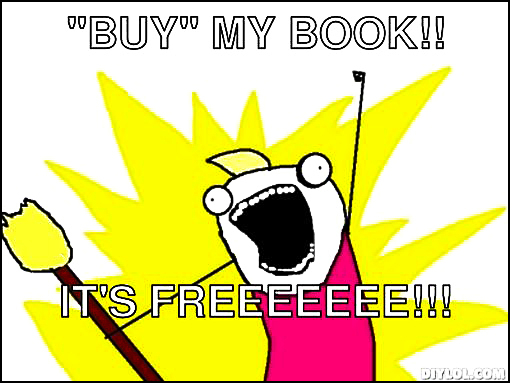
Free Book Promotions: How Good ARE They For Writers?

Buy my book it's free_r

Heard at a recent garage sale: “I always take free stuff even when I’m not sure I want it. I mean, it’s FREE; I can always throw it out!

Contemporary culture seems to have a conflicted relationship with free. People will hip-check each other to get to a neighborhood “free box” first, then get suspicious when eager salesmen dangle promotional freebies to close a sale. We all love a free meal but will still wonder what’s wrong with business that the restaurant is offering it. We can rationalize downloading music without payment, yet barely blink when art is auctioned for millions on the basis of “perceived artistic value.”

Then there are books, given away by the boatload in “free book promotions” in hopes of snagging that ever-more desirable demographic: the e-book reader. As the format surpasses all others in global book sales, the seduction of this burgeoning audience has become the mission statement of all book sellers, including indie authors, making Amazon’s brainchild promotion the Holy Grail.

To the uninitiated, the “free book promotion” is a strategy whereby writers offer their e-books free-of-charge for a number of days during their Kindle Select enrollment period. The objective is to entice readers in hopes they’ll download your book, leave a review, stir up positive word-of-mouth, then come back to buy your other books that aren’t free. This presumes, of course, that you have other books; it also presumes those planned objectives are met.

Are they?

Depends who you talk to. Some authors report getting thousands of free downloads, winning higher Amazon rankings and heightened name awareness as a result. Others tout similar stats but lament the cost of sites like BookBub and others that charge $200+ to promote those free promotions. Still others contend that the strategy’s value has peaked, as the sheer glut of free product has lowered incentive for readers to ever pay for books (despite e-books already being cheaper than other formats). Writers themselves are conflicted.

I asked indie author, Martin Crosbie, who’s had tremendous success with his books, particularly his novel, My Temporary Life, his view of the strategy:

“If I had not had the ability to offer my book for free I would not have found the readers I have. Reduced and free pricing has been the difference for me between connecting with hundreds, and sometimes thousands, of readers each month as opposed to just a handful. Hopefully some of these tried and true methods will remain effective for a little while as we all scramble to increase our readership, because really, we’re not just selling books. We’re building our reader base; that’s where our real focus is.”

Most would agree, yet some believe the proliferation of freebies has permanently altered the landscape, both in the perceived value of writers and their work and the mindset of readers who’ve become habituated to not paying for books. Literary agent, Jill Corcoran, makes that point in her piece, The Devaluation of Writers, By Writers:

“I get it, we all want our books to be read… getting your foot in the door/getting your e-book on anyone and everyone’s e-reader is the first step to [hopefully] selling these buyers your second book. BUT, if your self-pubbed book is free, and, according to bookgorilla, John Green’s THE FAULT OF OUR STARS e-book is worth $3.99, then all of us in publishing will need to downsize our houses, our food bill, our lifestyles because unless you are selling a heck of a lot of books, at $3.99 or 1/8th of $0.99 or at the golden ‘price’ of FREE, we have all just devalued ourselves to a point of below the already pitiful American minimum wage.” [Emphasis added.]

CONTINUE READING at THE HUFFINGTON POST >>

LDW w glasses


Visit www.lorrainedevonwilke.com for details and links to LDW’s books, music, photography, and articles.

Cultural Noise: Remember When It Was Quieter? It Still Is…

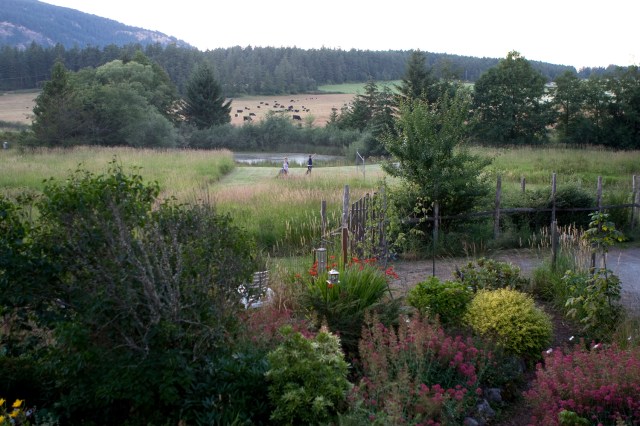
View from our deck

I just got back from a working vacation in parts of the northwestern USA that are so gorgeously bucolic and blessedly detached from the grind of urban life that one can’t help but be reminded of just how noisy things out there have gotten… and how quiet they can still be!

It is a noisy world we live in, isn’t it? Particularly when so many insist on being permanently tethered to news and media, with TV sets blaring all day, smart phones ever at the ready, the Internet in all its tabloid permutations bleating a litany of tragedies and travesties from one end of the globe to the other, those of us not living in war torn squalor, profound poverty, gangland violence, or insidious oppression, can almost feel guilty for our relatively unscathed lives. And even if we refrain from such misguided tendencies, we’re still spending too much of our time fending off anxiety, fear, worry, or seething commentary from the worst amongst us, discovering that just laying one’s head on the pillow is a trigger for loud, internal late night chatter.

I’ve seen more and more posts on social media from people bemoaning the vitriol and hissing ignorance of so many who have  somehow become “experts” on issues of the Middle East or the Ukraine. I’ve read head-shaking online conversations in which someone’s expression of gratitude for a good life is attacked by trolls who’ve decided expressing gratitude shows lack of compassion for the suffering (because trolls know all about compassion, right?). I’ve talked to people who are SO convinced that horror and dread is around every corner based on endless ticker-tape reporting of horror and dread worldwide, they can barely acknowledge a beautiful moment without waiting for the axe to fall.

Foggy Lighthouse_sm

NOISE. Noise couched in news. Noise that is so relentless that we begin to feel that war, violence, hate and poverty are all there is to the world… and that’s simply not true. It is, simply, all we hear about. Which creates the delusion of “darkness descending everywhere.” It’s not and we cannot immerse ourselves in every tragedy, every war, every historical feud, every horrifying injustice, without taking a toll on our mental and emotional health. Doing so is as unbalanced as eating nothing but dirt and expecting to be healthy.

We are now and forever so connected to the collective noise of the world-at-large that QUIET and SERENITY are almost an unfathomable concepts. But think about it: we didn’t used to have all this chatter around us. We used to be able to watch an hour or two of news, then get on with the business of living our lives. Now “living our lives” is composed of never-ending bouts of watching, reading, commenting, fearing, yelling, trolling, posting, defending, attacking and deleting, to the point that serenity and detachment is a lost art. We can blame the culture, blame the Internet, blame new technology, but it’s all about us. We have the power to turn it off and go find that lost art.

Do. Get it back. It’s essential. And it’s there to be had; you deserve to  — but WAIT, you yell! How selfish am I if I revel in my own good fortune, enjoy my own peace and serenity while people elsewhere are living in literal hell? I can’t put my head in the sand!! I have to be engaged, involved, immersed in the world around me, so I can be a good citizen or, hey, even just have enough information to be able to scream and yell on social media with other marginally informed people!!

Right. As my therapist used to say: “and is that working for you?” No.

Here’s the thing, and I’ve said this before… many times: Screaming and yelling at each other on Facebook, Twitter or Reddit is NOT activism. It’s screaming and yelling at each other. Spending countless hours watching and listening to profoundly biased anchors on cable news and talk radio is NOT getting informed; it’s being propagandized to. Stockpiling weapons, joining militia groups, being “anti-government” and stashing duct tape is NOT being pro-active; it’s being fear-based and paranoiac. Wringing hands and lying sleepless at night roiled in anxiety after endless articles on the very worst of people and the most catastrophic of life events is NOT being informed and involved; it’s being oversaturated and toxified. None, not one, of these things does one bit of good for the children in the Middle East, the Eastern Europeans in their battles with Russia, the starving children of Africa or elsewhere, or the beleaguered young women in repressive countries. None.

Sunrise On Whitefish_sm

I don’t know why any of us land where we do on this planet, how we end up in the families we do; why some of us are born in war-torn regions and others have parents with endless wealth. Depending on what you believe it’s either all random, dumb luck, or some kind of spiritual path set in motion in another realm. But whatever it is, you living in Van Nuys, California with a good job, a healthy family, a decent marriage and the chance to get out of town from time to time are NOT obligated to feel guilty, or not enjoy your abundance, because someone in Gaza is being blasted to hell by rockets. None of us knows why any of us ends up on the paths we do, but denying and negating your own is not the answer.

The answer is twofold. First: if you are so compelled, and it would be good if you were, do what you can for those for whom you feel concern by allotting appropriate attention and energy to sending money, volunteering, writing meaningful articles, doing honest due diligence upon which to base opinions, educating others, raising your consciousness, and promoting and exemplifying tolerance, peace, and sanity.

Then, when you’re done with all that, there’s the second step: go live and enjoy your good life with gratitude, acceptance, kindness and compassion. If every single person who could do that did, the positive energy swirling around this planet would surely raise the bar of humanity a notch or two… of this I’m convinced.

47a. The Blue Canoe

So in following my own prescription, my family and I take every opportunity to go to wherever we can to find stillness and beauty. To revel in peace, nature, and serenity –  “But I can’t afford it,” you holler. “Lucky you, but not everyone has that kind of time or opportunity,” you admonish.

That doesn’t hold water. Because no matter where you live or what your budget might be, every person can find some place of solitude, some corner of nature and beauty where they can lower the anxiety and feel the quiet that exists away from chattering humanity and its machines. I had a creekside oasis in my childhood hometown where I could ride my bike to climb into a tree and sing show tunes surrounded by long grass and dandelions (for some reason “Shall We Dance?” was a favorite! :). A friend of mine used to find her spot in a big city park where a grove of trees surrounded a bench where there was surprisingly little traffic, human or automotive, to disturb the sound of squirrels and swaying branches. Another friend makes it a pilgrimage to drive to the beach at every opportunity; another, to hike the Hollywood trails; yet another to prioritize funds to get out of town at least once or twice a year.

Whatever you have to do, whatever you can afford to do, find your quiet. It exists out there. I promise. It takes a willingness to detach from our addictive, mechanical informantst but, trust me… it’s worth it. There’s a beautiful, quiet, peaceful world out there just waiting to be heard.

All photographs by LDW.

LDW w glasses


Visit www.lorrainedevonwilke.com for details and links to LDW’s books, music, photography, and articles.
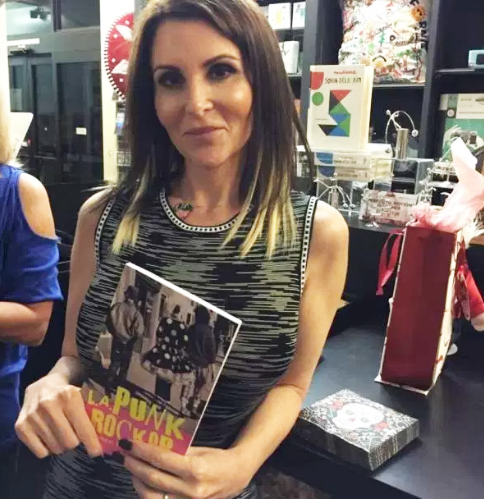
It’s Not Every Novel That Has Its Own Theme Song

Rick Hirsch & me... after writing "My Search for You"
Rick Hirsch & me… shortly after writing “My Search for You”

There’s a song in my book, After the Sucker Punch, a song that comes in the epilogue and pulls a concluding plot point off the page into downloadable form. It seemed a very cool addition to the story and it is! Quite a few people have asked me about it – how it got there, did I write it for the book, who’s performing it, etc. – so I thought I’d tell the story:

I wrote the song a while back with a wonderful guitarist named Rick M. Hirsch; it’s called “My Search for You.” With Rick’s guitar tracks to inspire me, I came up with a set of lyrics from the perspective of a woman talking to her father, written a few years after my own father’s death, with a narrative based on the struggle he and I had throughout our lives relating to each other. I’d written, at that point, ten other songs with Rick for somewhere on the way, the album we were doing together at the time, most of which had something to do with love, heartache, or relationships, and I was compelled to explore a different theme with this one. It became the song it is, “My Search for You,” and while not necessarily one of the more explosive songs on the album, it has a certain singer/songwriter quality that appealed to many listeners.

Fast forward a few years… I’m writing my novel, After the Sucker Punch, a story about a woman finding her father’s journals on the night of his funeral and discovering he thought she was a failure. Based on a kernel of truth from within my family, extrapolated into the world of fiction with all its imagined characters and plotlines, the book started and remained a story largely focused on the particular vagaries, attachments, and longings that often exist between fathers and daughters. Which is key to how the song fits in.

At some point after the first or second (or tenth) draft, as I pulled out of the fog of writing to focus for a moment on interesting marketing ideas, the notion of including the song came to me. Given that the main protagonist is a former rock & roller for whom music remains an undercurrent throughout, I had the inspired idea to somehow get an actual CD of the song included as part of the book. Brilliant, I thought!

I read through the lyrics and realized I could easily, within the framework of the story I’d already created, work certain elements of those words into the dialogue and narrative so that the song made sense. Ultimately, “My Search For You” became the epilogue of the book, the song the protagonist, Tessa, writes for her father as a culmination of the journey she experiences after his death and the discovery of the journals.

Of course, including a CD with the book was a grand idea, but only possible if the book went down the traditional road with teams of high-profile players helping to publish and market it with a budget that allowed for such novel add-ons. That, as we all know, was not the road I traveled with After the Sucker Punch, and the parameters of self-publishing were not necessary amenable to the option!

But never one to give up easily, I just had to get clever about how to include this “theme song” as a tangible part of the book. And I did.

I set up a page on SoundCloud under the character’s name, Tessa Curzio, and input the song track there. I then included that link, along with the lyrics, in the epilogue of the book (an active link the Kindle version). Readers could click over the to Soundcloud page to hear “Tessa’s song,” even click from there to iTunes to download the track. I felt it was the perfect way to bring that musical plot point off the page into the real world of the reader… and readers are listening!

So if you haven’t yet gotten a copy of the book (and I hope you will), perhaps hearing the song will inspire you to do so. Following is a link to the SoundCloud page and the lyrics. Once you’ve listened and read, you just might want to know just how this piece of music fits into the story of After The Sucker Punch….

My Search For You

You were puzzled by my need for clarity
Maybe you thought I depended on language too much
But there were volumes you didn’t say or I never heard
I know you thought the way you loved was surely enough

So elusive, I wonder if you ever figured out?
How your silence always made me feel a little loud
So convinced if I sang and danced and jumped up and down
You would see me, just me, and maybe be a little proud
And sometimes I know that you heard me
Sometimes I know that you cried

CHORUS
But you left me in early December
You loved me but we both knew our time was through
Now I stand here and try to remember
The girl I discovered in my search for you

They say love doesn’t ask for more than what it gets
So why did I always need a bigger piece of you?
In the crush of life I felt sometimes lost in the crowd
Never sure if I ever came completely into view
But somehow I learned to be stronger
And somehow I’m certain you knew

CHORUS:
But you left me in early December
You loved me But we both knew our time was through
Now I stand here and try to remember
The girl I discovered in my search for you

BRIDGE:
You gave me the passion to find my way
You gave me the eyes to dream
If we squandered the time we had
You’ve got to know
That what I searched to find in you
I finally found in me

CHORUS
You left me in early December
You loved me but we both knew our time was through
Now I stand here and surely remember
The girl I discovered in my search for you

LDW w glasses


Visit www.lorrainedevonwilke.com for details and links to LDW’s books, music, photography, and articles.

Did You Know It’s Writers And Editors Who Are Most Honored On July 4th?

Teacher: “Where was the Declaration of Independence signed?”
Student: “On the bottom.”
From Top Ten Fourth of July Jokes For Kids

Flag Waver_by Lorraine Devon Wilke

As a writer, a grammarian of sorts, and certainly someone who edits and fine-tunes everything I write within an inch of its life, the 4th of July holds special meaning to me. Which may seem surprising. Why, you may ask, does this most iconic of American holidays, one celebrated with parades, picnics, flags and fireworks in honor of our country’s glorious state of independence, resonate with a writer and editor? Simple: the day is a celebration, of sorts, of our most noble profession.

Don’t believe me? If you do even the most cursory research on exactly why we’ve come to celebrate this exact date, what you’ll likely find is a myriad of hazily similar but often inaccurate facts, with at least one that’s indisputable: what actually happened on the fourth day of July in 1776:

It was the day the writers and editors of the document finally gave a thumbs-up to the final draft of the Declaration of Independence.

It wasn’t signed that day, it wasn’t declared as law that day; it was simply (or not so simply!) the day it passed muster with a fierce group of literary and legal minds who understood its importance and wanted to be certain every word, every pause, every piece of punctuation was exactly as intended. Historical website, ConstitutionFacts.com, confirms that on July 4, 1776, the Continental Congress – after much editing, tweaking, and rewriting of previous drafts – finally approved what would be the ultimate, accepted verbiage of this momentous document. And while certainly those of us who traffic in our own versions of such literary activities find the accomplishment meritorious of a firework or two, it was not widely seen at the time as worthy of celebration. In fact, it was a frustrated John Adams who stepped up years later to pop the day into the cultural zeitgeist. Well, maybe not the day itself, but the celebration of the day. And maybe he didn’t exactly pop it, but he did have something to do with kicking it into gear.

That celebrating the 4th needed to be kicked into gear is not all that surprising once you’re aware that the signing of the Declaration of Independence, that auspicious and momentous occasion memorialized by countless fine art paintings and stentorian expressions of oratory, actually occurred on August 2nd of 1776. Almost a month later. So how, you ask, did “July 4, 1776” come to be the “day of American independence”?

Likely in honor of those writers and editors who fine-tuned the document into its final form. The date “July 4, 1776” was affixed to the original handwritten copy they completed that was then signed by our most celebrated of Founding Fathers on August 2,1776, the copy that now hangs in the National Archive in Washington, D.C. The date “July 4, 1776” was also printed on the Dunlap Broadsides, the “original printed copies of the Declaration that were circulated throughout the new nation.” For those two obvious reasons, July 4, 1776 became the official date attributed to our Declaration of Independence.

And, really, after all these years and all our “4th of July” celebrations, doesn’t “the 2nd of August” just sound feeble?

But still, no attendant celebrations occurred until many years after 1776, the country and its citizens far too distracted by the demands of burgeoning democracy to party down at the time. It seems, much like today, that partisan divides between the various political factions were fierce and unrelenting, and much of the rancor had to do with the Declaration itself. Some, the Democratic-Republicans (can you imagine a party actually combining those two disparate political assignations?), supported Thomas Jefferson and the Declaration; the Federalists on the other side thought it was a bunch of pro-French/anti-British hooey. The only things missing from this colonial melee were cable news and blowharding talk show hosts!

And with that political rumble as a backdrop, as well as the War of 1812 to contend with, who had time to think about fireworks? At least the pretty kind that blew up in the sky? But despite these many distractions, the date was an important marker for the aforementioned – and very outspoken – John Adams. In 1817, this Founding Father and well known letter-writer is said to have written a missive expressing his frustration that, by ignoring the  momentousness of its historical milestones, America seemed “uninterested in its past.” The complaint apparently struck a chord:

As post-1812 War politics shifted, the “anti-Declaration” Federalists spun into disarray and by the 1820s and 1830s, the political parties that evolved from this seismic shift came to agree on at least one thing: that all Americans were “inheritors” of what Jefferson and his party had wrought: the glorious Declaration of Independence. National pride spiked, copies went flying around the nation as evidence of America’s greatness (all dated, as noted earlier, with “July 4, 1776”), and attitudes about the date and the importance of its celebration changed. Particularly when, in what can only be seen as a confluence of epic and cosmic perfection, both men so instrumental in establishing this profound document – John Adams and Thomas Jefferson – died within hours of each other on July 4th, 1826, forever anointing the date as one of monumental significance to the United States of America.

So between his signing of the Declaration, his grumbling letter of 1817, and his eerily well-timed denouement (giving Jefferson a nod for the same!), John Adams more than played his part in helping define this day as worthy of celebration. It took Congress almost 100 years after the initial signing to codify the date into American culture, but it was declared in 1870 that the “4th of July” was, indeed, and would always be, a national holiday.

Which in every community in America translates to warm, neighborly activities, the excitement of children waving sparklers against a star-lit sky, wonderful food shared with friends and family, fireworks to “ooh” and “ahh” over, and, of most importance, the sense of enduring community and national pride based on ideals – and a very well-written and edited document – of stellar and unassailable grandeur.

John Adams would be smiling. Certainly writers and editors across the land are!

LDW w glasses


Visit www.lorrainedevonwilke.com for details and links to LDW’s books, music, photography, and articles.

From INDIES UNLIMITED: The Persistence of Self-Publishing Stigmas and How To Transcend Them

Indies Unlimited

In the world of independent writing there exists an enormous pool of resources designed to guide, educate, inform, cheerlead and help independent writers. Indies Unlimited is one of the most popular of those sites, one that works hard to provide what authors, writers, and those working with them need to move constructively forward in a constantly changing industry. I was delighted to be invited to write a “guest post” for them.

In thinking about what salient issue to cover, I decided to throw some focus on the conundrum around “the quality of self-published books,” an ongoing discussion, even debate, that rages (OK, maybe rages is too harsh; how about persists?) amongst publishers, marketers, promoters, reviewers; magazines and newspapers, certainly readers and even writers, as the self-publishing trend continues to expand.

Those of us in the category are inevitably faced with a set of preconceived ideas and opinions about what a self-published author is and what that author provides by way of their independently published book, and while many of those notions are folly — or certainly non-applicable to the better writers — they DO, unfortunately, apply to far too many. This piece offers some rethinking about how to change that reality:

The Persistence of Self-Publishing Stigmas and How To Transcend Them:

We self-published writers are like the big kids Mom and Dad left at home with the baby; there’s a list of instructions on the refrigerator but we’re basically on our own. Which means we have no choice but to step up. To meet the challenge. To make sure the “baby” that is our book flourishes as well as the one down the street with the high-priced nanny…

… yet one [writer] remarked that most self-published writers can’t afford editors and cover designers and so they “do the best they can,” their books going out “as is.” Another told me, “Readers are less picky because ebooks are so cheap”….

 Click HERE to read full article at Indies Unlimited.

LDW w glasses


Visit www.lorrainedevonwilke.com for details and links to LDW’s books, music, photography, and articles.

The Scourge of Spam: Does This Nonsense Really Work?

spammer

“What other nonsense can I send to Rock+Paper+Music?” Spammer pondered.

My little blog here is not a high-traffic site. I wish it were, but given the demand to spread my attentions across a wide swath of creative endeavors in which I’m involved, I have not had the time (nor, unfortunately, the savvy) to pump this bad boy into the virally, chewy sensation I intended.

So I do what I can: I write for it with the same fervor and focus I put into anything I do; I keep it current and contemporary, dress it up to my satisfaction, and it remains a place where I speak my mind and share my thoughts without limitation. It’s my blog. I love Rock+Paper+Music.

It seems Spammers do, too.

I use the capital “S” because this contingent of online personality is simply impossible to put into lower case. They are everywhere, as ubiquitous as the omniscient “God/god,” and evermore diligent about spreading their word with all the passion and fire of snake-charming, tent-dwelling fundamentalists. How do I know? Because I hear from them by the hundreds every single day and their missives have flooded my spam filter by over 460,000.

Yes… you read that right: almost 500K comments from Spammers!!! That’s about 497,455 more than I’ve gotten from actual readers (clearly I’m not as under-the-radar as I thought, she says drily).

Keeping this horde at bay has been left to the ministrations of my hearty spam filters — thank God for them — but still… it’s amazing, the sheer number and variety of issues submitted and disguised as faux comments or requests. I’m in awe of the creativity. There is clearly a script that various groups use, one that gets altered just enough with each missive to suggest real communication, and, of course, these always contain links and trackbacks (interesting, isn’t it, how many random readers have those? :).

I’ve been told by, oh, so many “readers” how they just “stumbled upon my blog” and are so impressed by my skill and talent they had to write. Or how “my cousin told me I had to visit your site and boy, am I glad I did!” (Me too!). There are some that just leave trackbacks, others that leave LOOOOONG lists of links to pharmaceutical drugs or designer sites or sex services (do they really think I’m going to let those get by?). There are even some who clumsily offer critique and still think their posts will pass muster, things like: “You’re not the best writer on the web and your images upload slow”…neither of which I hope is true!

The scourge of spam is like locust, cockroaches, and posts about the Kardashians: never-ending, pointless, and seemingly unstoppable. According to one survey, at least 12% of those who receive spam either through email, comments, Facebook posts; whatever, actually do respond to them, and often to their own detriment. Earlier this year TechDirt reported the story of a woman on ChristianMingle.com who was looking for love in what one would assume was certainly a right place but being taken, instead, by some Turkish scammer for $500,000 of her hard-earned cash. Frightfully unChristian and clearly a trump of my 500K spam comments, but as long as those “profits” keep coming in, in whatever percentages, they’ll keep on spamming.

There seems to be consensus (see related articles below) that this scourge is one we will have to endure like disease and earthquakes, but, as with both of those burdensome realities, we are wise to do all we can to protect ourselves in response. Which I do. In fact, I bow down to my spam filters both here at Rock+Paper+Music and at my email address, impressed by their relentless ability to ferret crap from commentary. Long may they filter.

But still… I gotta say I’m just a little wistful that my biggest audience here is those wily, unscrupulous, indefatigable Spammers who just “stumbled upon” my blog and want me to know they think I’m really, really awesome. All I can say to that is: gosh, thanks, you guys! 🙂

Related Articles:

The Spam Battle Report 2014

Why The Spammers Are Winning

Stupid users respond to spam? Survey said… (ding) 12% do!

The reasons why you should never respond to spam email

LDW w glasses


Visit www.lorrainedevonwilke.com for details and links to LDW’s books, music, photography, and articles.