
The veil between life and death feels very thin to me right now. A breath could disturb it. The slightest ruffle could reveal a familiar face right behind. A voice known so well. A look, a whisper, a remembered expression. She feels so close to me and yet the veil is stretched between us and I can’t see beyond. I want to; I look up and expect to see her, to hear her voice, but there is nothing. Only silence. Only memory. And I shake my head, unable to believe the truth that feels so raw and surreal. That someone so close, so dear, so much a part of my life and times is…gone.
There are big questions to be discussed here. Life and Death questions. The Whys and Wheres and Hows of what happened, what happens next. The urge to flail and scream and demand answers is never more sharp than in a moment like this. She was here…now she’s gone. Where did she go? Seriously. Where? Believers will have their answers; non-believers as well. I just wonder. I don’t know. I only know that she’s gone and I’m stunned. I want to remember her, to write about her, so those of you unfamiliar can know this person who touched me with her sweetness, her talent, her love and support, even her ornery edges. For those who did know her, I want you to know my Lisa, the girl I knew; a person with the full spectrum of life and personality and emotion and pain and joy and sorrow…a person so big as to deserve testimony. I’m here to testify. For my girlfriend. My sister. My Lisa Sue.
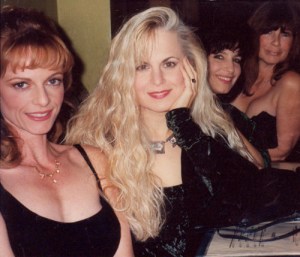 Friends made in our twenties resonate in ways that are particular to the decade; an intensity that comes with youth, so full of drive and hope and a vision of the future that is indisputable. People met in that era of such deep feelings and dreams seem to LEAP into our psyches with a ferocity that is seldom matched as we grow older. That’s where Lisa and I met, at that ferocious age.
I came to Los Angeles in 1975 and was one of the first students in a new acting class run by Bobby Lyons, a brilliant teacher who, at the time, was a familiar face to many movie and TV viewers. I was deeply embedded for the next five years and met a boatload of people who ultimately became the center of my world; some of whom, to this day, remain my closest friends. They have moved around the country, diverted to new careers, disappeared into families and jobs and different worldviews, but somehow the ties-that-bind bound us forever. Lisa was a part of that world.

She came into the acting class a year or so after I did. She walked into the doors of the Chamber Theater in Studio City, CA, stood outside the tightly knit core at the center and peered in fearlessly. Petite, gorgeous, all Southern drawl and warm smiles, she had us at “Hey, y’all” and, in awe, we never looked back.
While our earnest successes ran the gamut from “I had a good cold reading,” to “an agent liked me!” “my new head-shots are great” or “they said I’d get the part if they go blonde,” Lisa Blount arrived fully formed as a bona fide movie star. No small thing. Not only was she Hollywood-gorgeous with her platinum Prince Valiant and huge blue eyes, but damn if that girl didn’t have talent all over the place! She’d been discovered in her home state of Arkansas, cast at seventeen as a teenager obsessed with James Dean in the film 9/30/55, and by the time she got to us in the late ’70s she was knee-deep in the trajectory that led to her breakout role as Lynette Pomeroy, Debra Winger’s best friend and David Keith’s tragic love interest in the unforgettable An Officer and A Gentleman. Nominated for a Golden Globe as “the Best New Star” of 1983, her position as our personal star was cemented from there.
 Were there jealousies? No doubt. But Lisa had such an approachable, welcoming energy that it was impossible to keep her at bay for long, even on envy’s behalf. Frankly, she wouldn’t let you…embracing Lisa was just too easy a thing to do. I didn’t know her well those early years but I liked her; I was awed as the rest, and I certainly found her exotic. Besides her very appealing “Southern-ness” (fascinating to this Chicago-born Midwestern girl!) she was the only person I knew whose hair color changed as frequently as the month. Notice, in any photographic retrospective (including this one!), the swirling spectrum of reds, blondes, brunettes, browns, blacks that is her ever-revolving hair palette. There was even a brief and unfortunate green period (due to a miscalculated bottle job) that luckily slipped by the photographers! And while most of us were still in jeans and jackets, she was always wrapped in some sartorially-inspired tumble of vintage, western, and Betsy Johnson all put together on a calculated whim. Shopping with her was legendary and when I finally did make the squad, I was introduced to her impeccable eye for the “find”…she could pull 12 things off a clearance rack and conjure couture. I wouldn’t have even seen the 12 things.
 We briefly shared an agent, which had me smug for, oh, so short a period of time, as he unceremoniously dumped me after becoming a manager, deciding Lisa’s career trumped anything I might have to offer. Even then I liked her…think about that! As we ambled closer to friendship, she attached to a select few of my closest cohorts (particularly Nancy Locke Capers, Susie Singer Carter, Pat Royce, the late, beloved Taylor Johnson and Tina Romanus), and over time we bumped into each other so often that intimacy became inevitable. I remember bonding over a lengthy phone conversation in which she hilariously diatribed about a recent (and temporary) weight gain that resulted in “a stomach that is lying right here on the bed next to me, looking up, tellin’ me ‘I’m hungry, girl!” With her accent, her timing, and her willingness to poke fun at herself, she was irresistible.
 We threw ourselves into the relationship as young girls do. We shared music and bands we both loved, she’d gussy up and sit front and center at my gigs at Club Lingerie or Madame Wong’s; we’d dissect books and movies, get to the gym, and work lines for each other’s auditions. She was a passionate friend, ardent about her support and so expressive of her feelings. She could burst into tears listening to a song I’d recorded or remembering a particular passage I wrote that moved her. She did, in fact, read and edit every single thing I did write: screenplays, one-acts, even my recent 350 page novel manuscript, offering impeccable notes, mind you! When you talked to her she listened like there was no one else in the room and she paid as vivid attention to the good news as the heartache, something not everyone can do. And she really, truly wanted to hear your opinion on any one thing or another. That she wouldn’t always agree with you was a given and when she didn’t, you’d surely be the first to know. I can remember a few “mornings after” when a somber call revealed disagreement with something I’d said the night before or she’d found herself hurt by a comment made. It could be chagrining, those morning conversations, but I grew to appreciate the clarity; you never had to guess where you stood with Lisa Blount. She’d damn well let you know.
She wasn’t always easy. She was a wild child at times and often left me in the dust. She could be recalcitrant and demanding and there were episodes I found maddening. She had demons and shadows like so many of us but there was also something restless and relentless about her hunger for life and the accomplishment of the goals she set out for herself, and that sometimes exhausted both her and the people closest to her. She did everything full-bore, whether tearing up the town, delivering a kick-ass performance, or giving you the shirt off her back. That passion was both her blessing and her curse. It left her raw and vulnerable at times when she needed to be strong. It misguided her at times when wisdom should’ve trumped emotion. It hurt her at times when old pains and new ones stole her energy and attention. But when she felt good, when she was clear and on her game, that big heart and soul of hers was truly something to behold.
In the early ’90s she decided to make a big change. Her career was going in fits and starts, her marriage had ended, and she wanted to get stronger. She wanted to clean up the cobwebs, clarify the focus; start a new chapter. And so she did. Part of that “let’s get healthy” assignment translated into a workout regimen that was sometimes brutal; it was so like Lisa to leap off a cliff before testing the waters below! She liked working with a punching bag, loved the physicality of it, the visceral, high-impact smack that drained stress and gave her a place to funnel her energy and anger. It was so invigorating that she didn’t pay much attention to the details, like how high should the bag be? What was the best angle for her body? What was the suggested time limit of a good workout? Nah, not Lisa. She punched away like there was no tomorrow and, with little notice of the initial pain, tore the muscle off her right scapula in what she thought was a forgettable injury. She had no possible way of knowing that this minor moment of over-activity was going to change the rest of her life.
I got married (“Oh, Lorraine, he is just precious!”), she did TV shows (Profit, Judging Amy…), movies (Great Balls of Fire, Box of Moonlight…); we did a play together, she dated here and there, and simultaneous with all this evolving and experimenting and living, she became more and more impacted by the growing and excruciating pain in her back. The seriousness of the injury was finally determined, doctors got involved, treatments were implemented but they told her the time between injury and treatment had exacerbated the problem: scar tissue had formed between the bone and the torn muscle and the subsequent nerve damage created constant and fearsome pain.

And life was changing, quickly. We were getting older; our lives were taking a different shape. I now had my son, many friends were working full-time, married, involved in disparate creative projects, and we mourned the loss of a common cause, a class, a club where we could all gather and connect. So we started a “women’s group,” a loose, informal gathering of friends and acquaintances that got together in revolving homes once a week and, by turn, shared the bullet points of our lives for discussion and analysis. Our first meetings were so popular that over 30 women showed up and the opportunity to share with any depth was limited. But over time people fell away and before long we dwindled down to five or six, until it was just four of us: me, Lisa, Tina Romanus and Joyce Jackson. It was then that Lisa and I became sisters.
We met every week for the next ten years. Every week, bar nothing. Four to five hours of naked, soul-stripping conversation. The men in our lives shook their heads, wondering what on earth we could possibly find to talk about for that length of time. Well…them, for one thing! But it was more than girl-talk; it was about the world around us, our careers, frustrations, favorite movies, our lives, all of it, and if there’s anything women bond over, it’s the sharing of their lives. There was so much laughter, lots of tears and honest thought, and always – always – good food. The hostess would provide and, believe me, though every one of us had our culinary high-points, we always looked forward to Lisa’s turn, especially after her mother, Louise, came to town and introduced us to the Blount Family Home Cookin’ Extravaganza: baked ham, collard greens, grits (two kinds), mac n’ cheese, cornbread baked in an iron skillet, black-eyed peas with bacon, sweet (sweet) tea, and always something sinful for dessert. Lisa learned well from her Mama and before long we came to expect those dinners when it was her turn to host. And since we always made a damn big deal about each of our birthdays, when it was mine, the assignments were clear: Joyce made the chocolate cake (best ever), Tina brought the most creatively wrapped gifts, and Lisa cooked her amazing “soulful food” for me. Have had nothing like it since.
 Somewhere in there the name “Ray McKinnon” started cropping up. Lisa had done a film called Needful Things in 1993 and thus began all manner of chatter about this tall, gangly, very intriguing fellow who played Deputy Norris Ridgewick and had won her heart. In fact, we heard so much about him that we finally stood up and said, “Lisa Sue, it’s time we met this Ray McKinnon,” and so it happened. An event was organized at Lisa’s house; a gathering of poetry lovers called to listen to the current poet laureate. Ray was conveniently (and conspicuously) part of that crowd. We girls looked that man over like the sister-crones we were and came away charmed, charmed, I tell ya! Warm, funny, clearly enamored of our girl, he passed muster in a nanosecond and quickly became an invaluable, essential member of our family of friends. When Ray and
  Lisa were married in 1998, we were all there to sing the wedding song and celebrate their moment of deep, abiding happiness. That was a very, very good day.
But the story, like life, couldn’t seem to stay steady. While she and Ray flourished as a couple, Lisa’s pain became more disruptive. Jobs were lost because she wasn’t physically capable. Social events were passed on. The pain was chronic and so unrelenting that it became a syndrome unto itself. There were difficult and futile surgeries. Drug regimens. Alternative treatments. Prayers and affirmations and encouragements. She and I talked long and hard about what was going on and both did endless research on the topic. I learned more about pain than I ever wanted to and she experienced more than anyone ever should. But even in that, she refused to disengage from life. She’d get herself out of bed and keep going. When the girls  came to my family’s vacation home up on Orcas Island off the coast of Washington state, she was the one, the only one, who wanted to conquer Mt. Constitution with me. It is the highest point in the island chain; a 9+ mile round trip with a 1240-foot elevation gain and it is a good challenge for even the hearty hiker. For this wounded woman struggling with chronic pain…really? Oh, yeah. And she did it. With vigor. Even after I got us lost on the way down and ended up costing us a few more miles of walking, she completed the trek exhausted but elated. It remained, always, a sweet, private triumph for us both.
 But then life took a very interesting turn. As she would say later, “Just as one door was seemingly closing in my life, another door opened. And I only have one person to thank for that, my husband Ray McKinnon.” She and Ray had created Ginny Mule Pictures with their friend and partner, Walton Goggins, and that ambitious adventure proved a boon. With a mission statement to tell and depict Southern stories with authenticity and significance, Ginny Mule’s inaugural production was The Accountant(a farm comedy), a film short written and directed by Ray. With a script that was nurtured by Lisa’s unerring sense of nuance and logic, it starred Ray and Walton, as well as their friend and fellow actor, Eddie King, and was a brilliant piece of biting, prescient satire on the state of farming in the South. It rang with truth and wit, and audiences were bowled over. Back at the Girls’ Group, Lisa started talking about what to wear to the Oscars and we girls looked at each other with knitted brows. Positive thinking was always encouraged, mind you, but this seemed…well, this seemed too high a place to aim and we worried that she was setting herself up for some raging disappointment. But when the nominations were announced, as we all now know, there they were, on that precious, very exclusive list. We were thrilled and relieved; now she could be happy with that, right? Nope. Now we were talking about who would be up on the stage when the winner was announced – all three? Her and Ray? Ray and Walton? And once again, we looked at each other and gulped. Ever protective, we wondered, couldn’t the nomination be enough? Apparently not. And damn if on the big night it was those three – Ray, Walton, and Lisa – who walked up to accept the Oscar for Best Film Short.
 I was in a San Francisco hotel room at the time watching the show with my family and the ensuing cacophony brought phone calls and fears of intervention from the front desk. It was a communal triumph and nobody was happier than Lisa and Ray’s friends. We threw an Oscar party a few weeks later and had cake.
She is well known for many roles – obviously An Officer and a Gentleman is so iconic that one only has to say “Way to go, Paula!” to know who Lisa Blount is. But the role that will always be her defining performance, to my thinking, is her star-turn in Chrystal. 
Produced by Ginny Mule, brilliantly written and directed once again by Ray, who also stars as the venomous Snake (along with Ginny Mule partner, Walton Goggins, and Billy Bob Thornton as Lisa’s co-star), Chrystal gave Lisa a many-layered character to embody, one that not only tapped into her considerable acting (and singing) skills, but also told the story of her pain in a fictional framework. Ray says he wrote it as a “love letter”; a way to honor the daily struggle Lisa now endured, and it is exactly that.
Chrystal tells the tragic but ultimately redemptive tale of a woman who suffers not only the loss of a child due to a car accident caused by her drug-dealing husband, but the physical torment of a broken neck that leaves her in never-ending, excruciating pain. When her husband is released from prison after sixteen years, she is left to find what remains of their lives, struggling with her ability to forgive and move on. It’s a dark, painful story that depicts the sorrow of lives spiraling into despair, but offers a profound narrative turn that presents realistic hope. Lisa gives a powerful performance that is heartbreaking and sometimes almost too raw and painful to watch. It is one of the most stunning pieces of work I have ever seen – and I mean that, girlfriend or no girlfriend. I was in the theater when it premiered at the Sundance Film Festival in 2004 and the audience was literally sobbing in stunned silence by the film’s end. If you see nothing else that Lisa did in her too-short but illustrious career, please see this film. Brilliant on all accounts.
Her last major film was Ginny Mule’s Randy and the Mob, in a hilarious, deadpan performance as Charlotte Pearson, Randy’s (Ray McKinnon) wife who is chronically depressed, suffers from carpal tunnel syndrome, and is a baton-twirling instructor. I think that’s all that needs to be said. Ray is not only the titular Randy but additionally plays Randy’s gay identical brother – a turn of inspired lunacy – and Walton is the mysterious Tito. Even Burt Reynolds shows up. A Southern mob caper. It is, as they say, a hoot.
 Shortly after the completion of Randy and the Mob, Lisa and Ray moved to Little Rock. It was a move precipitated by the need for change, the need for family, and the hope that Lisa could heal in the quieter, gentler environs of her childhood. For me, it was the end of my chapter. Certainly the end of an era. I knew she had to go but I felt like I was losing a pivotal member of my family, my innermost circle. I didn’t know when I would see her again and it was, in fact, almost five years before I did. That occurred when Ray was nominated for an Independent Spirit Award for Ginny Mule’s latest co-production, That Evening Sun, starring Hal Holbrook, Ray and Walton (a brilliant, touching film…a must-see), and he and Lisa came to town for the award ceremony in the spring of this year. Though we had talked long and often in her absence, it did my heart some serious good to actually see her, because she looked beautiful, she was feeling good enough to travel, and she had hope. HOPE. That was a lot. We planned a “girls’ trip” for the fall… we’d been waiting for each of our lives to settle down and for her to feel better before we got out to Little Rock, and it seemed it was finally time.
And I did get to her house in Little Rock. Finally. This past weekend. Five days after she left this world. I walked into the house that Lisa built, with the many items and details I knew so well from her Los Angeles home, and wandered through, from room to room, imagining her pulling my arm to drag me to the next surprise; chattering away, telling me, “Now, Lorraine, I got this at a little thrift shop downtown for a dollar and don’t you think it works perfectly with this sconce?” Which it did. Of course it did, Lisa. It all worked perfectly. And in that beautiful old Southern home, surrounded and cared for by Raymond’s incredible family of women – sisters Judy and Dotty, cousin Kim, his wonderful Mama – with an eclectic but now forever-bonded group of LA friends – Walton, Eddie King, Perry Herman, Kathryn Howell, my husband Pete – and scores of other family and friends who found their way to the house – Tim Jackson, Jon & Sandra Marbaise, Chris Jones, Lorri Davis, Philip, Danny, too many to mention; all heartbroken and longing to find a way to comfort Ray and grasp some last, ephemeral sense of Lisa, we gathered and mourned.

 Each of us has our specific memories, our eras; our particular roles in her life. Some knew her from the films and TV shows they did together. Others remember her from her childhood. High school. College. Even within the Los Angeles era there were different chapters. I was lucky enough to be part of many of those. So let me come back to bookend my story:
By the end of our time together the only thing that had changed was the physical distance between us. The rest remained. She knew my secrets, I knew hers. She loved me unconditionally, as I did her. We considered our families family. She adored my boy and took every chance to cuddle with him when he was little and applaud his accomplishments as he grew older. I love her husband and she loved mine, particularly empathetic when a series of car accidents left him, too, in chronic pain (she was even sweet enough to be the costume maven for a show of his!). She celebrated my birthdays with me, all the major holidays, even some minor ones, and she and Ray were welcomed regulars at our Thanksgiving table. We grew up together, we grew older together, and we looked forward to finding our ways as crotchety old gals still kicking ass together. Yep, we had plans.
 But know this: even in all her pain and struggle, Lisa never lost faith that life would get better. And in those last months, that faith was returning the favor. She just shot a pilot for “Outlaw Country,” a new FX series with Mary Steenburgen, she spent time in Nashville recording several songs, and she was honored with the Arkansas Hall of Fame Award. She was ready to start remodeling the kitchen, she had just finished Ray’s office; she talked of planting a garden and, lo and behold, she’d once again changed her hair color. If ever there was a sign of orneriness coming to back life, that was it! As she told several people in these last months, she was ready to start saying, “Yes!”
It’s hard to distill a life down to a tribute speech, a magazine article, or a blog entry; particularly a life as colorful and accomplished as Lisa’s. I’ve only touched on some of the poignant markers we made together along the way. The ones that defined the friendship I had with this woman for over 30 years. Hopefully they’ve done her justice. Her last words to me were in an email she sent Oct. 1st. It was my 20th anniversary and I’d posted a blog article about my husband (Cowboy Strong & Poetry Sweet…Love In the Age of MTBI). She rarely emailed, so I was particularly touched to get this note from her: “Lorraine, happy anniversary to you and Pete. As you must know, you two have been and remain the truly most inspirational couple that I know. Because of my health issues, and knowing how sad, how strange it has affected my life, I have been able to look at you and know that I am not alone. That my husband is not alone. When I think back to your beginnings together, it seems like we have all grown up. A lot. Not just changed, but accepted our lives…as is and still loved. I thank you both for reminding me how precious all phases of love is. Your ole pal, Lisa.”
* * *
The veil shifts for a moment…I see Lisa walking into my house with a pan of something hot and fragrant, dressed to the nines, a gift in hand of some lovely thing she found in a consignment shop. She’s got a big wide smile on her face and when she sees me, her eyes light up and she hugs me with a warm, happy “Hey, Lorraine!” That’s my Lisa. That’s my girl. As is…and still loved.

Photo Credits:
An Officer & a Gentlemen on-set photo courtesy of www.inarkansas.com
Lisa Blount & Billy Bob Thornton, Crystal poster @ www.imdb.com
Ray McKinnon & Lisa Blount, Independent Spirit Awards @ www.zimbio.com
All other photos courtesy of Lorraine Devon Wilke

Visit www.lorrainedevonwilke.com for details and links to LDW’s books, music, photography, and articles.


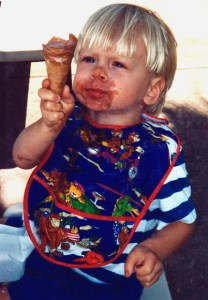 I remember when my son was about three and pretty much everything in life was a contest. Drinking juice, brushing teeth, eating an ice cream cone; he compulsively gauged his success by whether or not he got to the goal “first.” First to finish, first to spit out his toothpaste, first to crunch that cone; whatever the task, he’d puff up and holler, “I won, I’m first!” (I routinely abdicated, refusing to rush my dental hygiene or the slow enjoyment of a Häagen-Daz.) It was important to him, though, being first. Being best. Winning the prize. Cute at three and it’s a human urge, certainly, (think DWTS or American Idol) but without wisdom and humility it’s just juvenile. And this generational battle being debated in the media smacks of the same.
 First of all, they’re younger. And younger, by its very nature, means self-confident, self-focused, certainly thinner and with better skin. Regardless of which Gen we’re talking about, which sub-group of which Gen, they’re typically fixated on something youngish. Anything from getting famous, being hot, graduating college, getting jobs, designing software, starting foundations and pursuing extreme sports, to planning a wedding, buying their first condo, making babies, passing the bar, getting careers established and staying abreast of smart technology. They’re doing whatever it is people do at whatever stage of life they’re in. Why on earth does anyone think would they give a rat’s…well, care at all about being compared to Boomers who are all pretty much just…old? Trust me, THEY DON’T. They’re not even paying attention.
 Consider our growing acceptance of those aforementioned taut, plastic faces, fat-injected cheeks and frightfully puffed up lips, a look so ubiquitous these days that children must think older people are simply tightly-wound and oddly unattractive replicants of younger people. How terrifying that must be! When I was growing up, the lined, sagging, utterly human face of my beloved Grandmother with her ample (and authentic) bosom and soft bread-dough arms comforted and charmed me. I wanted to bake like her, travel the world like her; be capable like her. I loved her embroidery skills and her indefatigable sense of adventure, flying after her to climb the steps of the clackety Chicago El to cross town in search of empty lots of dandelion greens and good deals at outlying department stores. She was magical and inexhaustible and I made no judgment of her based on her soft, aging body…and this was when she was not much older than the tight, taut, oh so shiny Miz Smith!


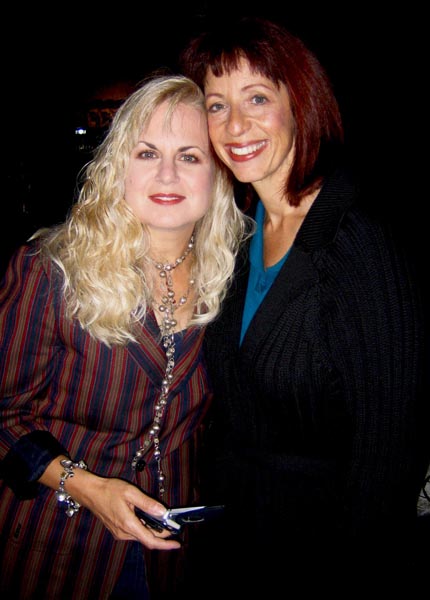 Sometimes you do a show, you have a blast, you make friends, and when the party’s over, everyone goes their various ways and you connect only when emails arrive to promote their next show. Other times you do a show, you have a blast, you make friends, a select few hover for the post-run afterglow but they, too, drift into email relationships. Then there’s those special times. You do a show, you have a blast, you make friends and…one or two stick with you. Year after year, moment after moment, until the show becomes a distant starting point to what has now blossomed into a bona fide, long-term, real life friendship. That’d be me and Susan Morgenstern.
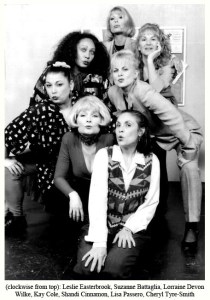 We met in 1997. I was in the show “Is It Just Me, Or Is It Hot In Here?,” a musical written by Barbara Schill and Dave MacKay, produced by Theater InSite (Michael Arabian, Suzanne Battaglia & Matt Goldsby), premiered at CBS Studios Center in Studio City, CA, continued at The Odyssey, and concluded a year and a half later at the Century City Playhouse (
 I was understudying the role originally played by the dynamic Cleo King; the role of Katherine, the successful but embittered businesswoman, terrified of growing older, who put that fear into the blues she sang. It was a great part that, after Cleo’s beautiful rendering, was wonderfully recast with
 Here’s the official theater-program bio:
 Frankly, I should have posted this weeks ago…the show opens tomorrow night (Friday, Oct. 22nd) and runs only this weekend and next. So if you’re in the area, GET OUT THERE!! This is a big, huge, fun show; the music is infectious, the story nostalgic, and it seems fitting to present it at this particular moment in time…in honor of Tom Bosley, the original Mr. Cunningham, who passed away earlier this week.
 You meet someone and there’s a thought: “He seems like a nice guy.” Not much else, not yet. Tall, handsome, in a Charlie Brown tee and cuffed jeans—yes, we laughed about that later—but the eyes were blue, the smile warm, the first impression amiable. No particular fireworks, no spiritual recognition, no sense of destiny, just a nice guy. Eight months later we were married and today we celebrate our 20th anniversary. That first impression? We’ve gotten beyond cuffed jeans and the tees have been replaced by Tommy Bahamas. The guy? Still so very nice.
 Being married is an interesting journey. You start off with a powerful cache of feeling, an idealized sense of this person you’re latching yourself to, and yet a firm grip on the point and purpose of your commitment. At least that was my experience. But learning about your mate is really the adventure, isn’t it? Pete was unlike any man I’d ever known. Quiet and laconic, like a lawyerly Gary Cooper, he was born in the Scandinavian-rich state of Minnesota (Norwegian and Swedish on respective sides of family), spent the wonder years in Southern California, Montana for that very impressionable high school era, then bounced between Washington and California for college. A major sports booster, he vacillates between team colors for UCLA and the Montana Grizzlies, and will even make note of Gonzaga on a good day.
 It seems Montana is where he found a most inherent part of his identity; the rough and tumble cowboy spirit with a love for sports and the great outdoors and all that big sky appreciation of nature and its regal beauty. Regardless of where life took him after that period, Montana was in his blood and it remains an archetype of sorts; an almost mythical ideal of the balance between man and nature. In fact, when it came time for his most recent high school reunion, he took himself into a Nashville studio and recorded an entire original album of “brown grass” country music as a gift to his classmates called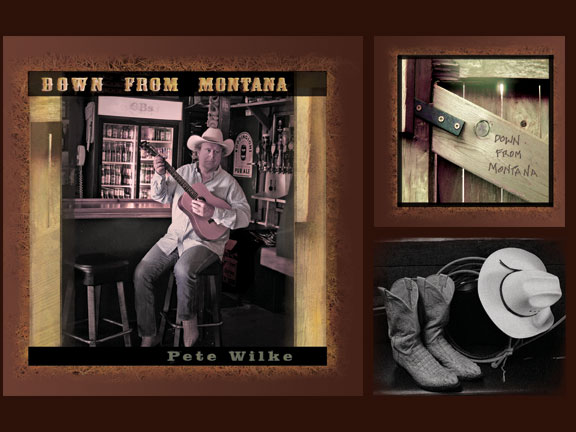
 And as a delightful bonus discovered not long into the relationship, it turns out he actually was funny. An alter-ego named “Stevie” whose take on life was simple and inanely satirical provided mirth during long car trips and late night conversations. Somewhere between music and mirth, I was discovering a whole new man behind the husband I was to marry.

 The pain level got so extreme earlier this year that he hit a full-blown crisis that resulted in him leaving home to live by himself for a couple of months in an attempt to quell the pain and noise inside his head and heart. It was a brutal experience for him, for me, for our family; one that has shaken us all to the core. In his absence I not only had to deal with my grief and the potential loss of the marriage and husband I’d known, but to confront my fears and inadequacies as “the wife of a brain damaged man.”
 But he’s here. He may be different in some ways from the man he was, but the man who is here, who is smiling at me from across the room, who loves me however he can love me and works so hard to find solutions and compensations for where he’s lacking, is still the man I love. The concept of “for better or worse” was never so poignantly felt as it has been for both of us this year, and this is when you realize what stuff your marriage is made of. Not whether he makes you laugh or has a big enough career or can still write you musical poetry. None of that ultimately matters. What matters is resilience, loyalty, commitment, empathy, compassion. What matters is remembering and re-educating. Holding on and letting go as needed. Understanding that this “tenderest union” is tough as well. Tough enough to endure and remain grounded even in the worst of situations.

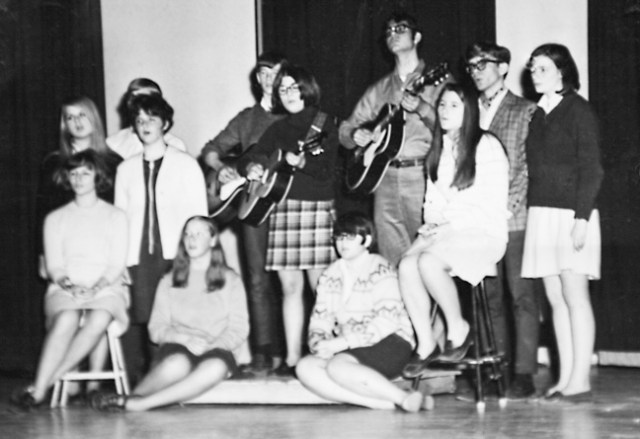
 This was not a minor question nor a minor event. Mudaco (Music Dance Comedy) was the premiere talent show of the school year and we, TOOU — The Organization of Us — viewed it as a pivotal performance to cap a year of folk singing success and that song, “Leaving On a Jet Plane,” was our signature number. To have it snatched from us moments into dress rehearsal was unfathomable. By a girl who no one in that school could possibly compete with, a girl who was a bona fide celebrity by virtue of having won the WLS “Big Break Contest” at 14, subsequently scoring a record deal, then just continuing on in high school as the gorgeous guitar slinging, singing/songwriting phenomenon with her soulful eyes and long, swinging brunette hair, and well…who could compete with that?
 Not me. Not us. We were from a another planet. Like the “Glee” geeks without the choreography. The Organization of Us, or TOOU as we were acronymically known, was just a loose band of earnest teenagers originally gathered to folk-sing along to the new and somewhat controversial “folk Mass” about to debut at St. Thomas Church in Crystal Lake, Illinois. It was the vaunted Summer of Love, 1968, with its ubiquitous mix of flower power, draft card drama and lentil-soup fueled protests against the Viet Nam war, and TOOU became safe harbor for those of us too young to fully embrace the hippie lifestyle but aware enough to rebel against…something. Launching the Folk Mass with its banging guitars, bouncing energy and unconventional repertoire would have to do. So while my oldest sister marched with political fervor in her John Lennon glasses and Janis hair, I spent that summer reveling in Summer Blonde, Sergio Mendes and my first boyfriend. But more than anything, that summer I fell in love with this eclectic group of singers and guitarists who met in the church basement to pound out folky versions of “Holy Holy Holy” and the “Our Father.” That boy I liked was one of the movers and shakers and I was lucky enough to have him and the vocal chops to move up quickly in the TOOU performing hierarchy. It was an unforgettable summer.
 Our success with the folk Mass, which ultimately became the most attended service at the church, led to a burgeoning slate of outside engagements, not least of which was our first non-secular gig at some business or school event (can’t remember). As if breaking out of church mode wasn’t heady enough, it was also our first paying gig…$50 to split between a group of 15 or so. And we were delighted. I think it was then that we realized we needed a name; we couldn’t just be the “St. Thomas folk singers.” We
  needed a moniker, something with heft and buzz. It’s my recollection that I came up with the very era-centric name of The Organization of Us. Or maybe I just came up with the rather clumsy acronym TOOU, but whatever the history, the name stuck. Before long we were performing at parties, beach gatherings, other church events, anywhere we could squeeze into a corner or a picnic table and start singing.
  TOOU became a formidable performance behemoth that sometimes included up to 25 kids, many of whom played guitars, tambourines, penny whistles and various other percussion instruments and, quite frankly, we took up so much space we simply began to require bigger venues! There were the performers from my family – sisters Peg, Mary and me and, in later incarnations, brothers Paul and Tom. There were the O’Reillys, 14 siblings, most of whom could sing like birds, all of whom were enthusiastic performers: Chris, Beau, Cecelie, Gloria, Dorothy, Beth Ann, Jamie, well…there were lots of them, some of whom joined later. Then there was our guitarist extraordinaire, Pete Swenson, who we’d force to play “Classical Gas” as often as we could because he was simply brilliant at it. His sister Patti, Ken Polnow, Andi LeBlanc, Wendy Treptow, Karen Tefft, Tom Mooney, Joe Haase, Kent Tarpley; Cris Vosti.
  Occasionally Ed Csech would show up with his rocker edge and cigarette smoke and I’d sing songs like Simon and Garfunkle’s “The Boxer” with him. He played 12 string better than anyone I ever knew, then or now. People came and went (check the many names under these photos), it was an ever-fluid line-up, with some of us — the core group — always there to anchor the show. And with our excellent musicians, clear voices, and tight harmonies that stacked up high, sweet and all Phil Spectorish wall-of-sound, we were often very, very good.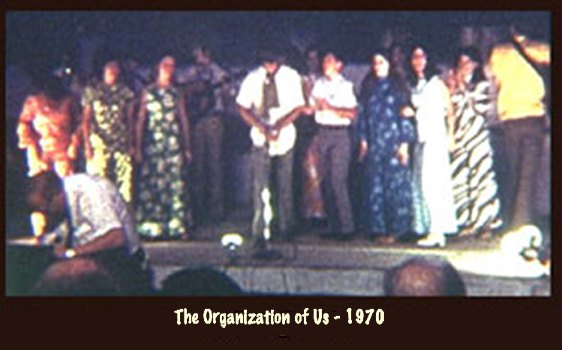
 god-awful 60’s patterned jump suits and jumpy-jittery stage moves (you should see the tape from which this picture, above, was pulled!) and on that stage, we were the stars…we snared first prize in front of a crowd of family, pig farmers, 4-H kids hugging their ribbons and our many fans from all over McHenry County. It was a seminal moment of sweet victory, one that is unmatched in its youthful, exuberant joy. For some of the group heading off to college, it was a last, perfect performance. For those of us remaining, it was a feat we would never replicate. Though we continued throughout the next year, it felt like the original incarnation had peaked and the younger kids that came in and took over ultimately formed their own version of TOOU.
 It was with these fellows that I did my first recordings, cutting two memorable tracks with the titles “Rome Didn’t Fall In a Day” and “Our Love Is Just Like an Old Pinball Machine (the Kind That It Don’t Take Much To Tilt”)…I never did get copies, which is unfortunate; I’m sure they were impressive!


 Knee-deep in the pursuit of rock and roll dreams, I faced the ’80s like so many other pavement-pounding, hair-sprayed, idealistic artists of the era: driven, sartorially questionable, and usually broke. Too many years on the road with various cover bands—covering not only the Top-40 of the day but most of the west, mid-west and southwest by car and van—left me weary of musical circles headed nowhere. It was clear the time had come to get serious about my destiny. I was to be a rock n’ roll star. I needed to get on with it. That meant an original band and a job to support it.
 one of the many hearts of Los Angeles; very casual, lunchtime menu, just cocktails at night. Small enough room, easy enough uniform, loose enough management style (i.e., lots of staff and management drinking shenanigans) and on most nights, plenty enough cash to pocket. As good as it gets. Nowadays Molly Malone’s is a bona fidedly hip music venue with an expansive stage area, an impressive dinner menu and a respectively spiffed-up decor; back then it was a smoky, scruffy, one-room pub where hardcore drinkers came to suck down Jameson shots and Black n’ Tans, and get into fist-fights that ended with sweaty man-hugs and often — to my mercenary delight — loose wads of cash knocked under sticky tables. It was a wild place filled with Irish immigrants, wannabe Irish (particularly on St. Patrick’s Day), off-duty (and occasionally on-duty) LAPD, and a contingent of rock n’ roll hipsters (a harbinger of the evolution to come).

 The largest painting was of Angela Hanlon. It hung in clear view over the entrance and depicted her in all her youthful, lovely splendor. Other paintings were of bar scenes, street scenes, but most were of the people and faces that came and went through the swinging doors of that pub; the regulars, the Molly Malone’s coterie. And everyone who walked through those doors wanted to be one of the faces Neil painted, everyone. Few were. And you had to be asked. There was no appealing to him, no requests, no hinting; no prancing around commenting on “how nice it would be to be up on these walls.” No one got up there unless Neil wanted to paint them, wanted to put them up there, and to be asked, to be chosen, was an honor like no other.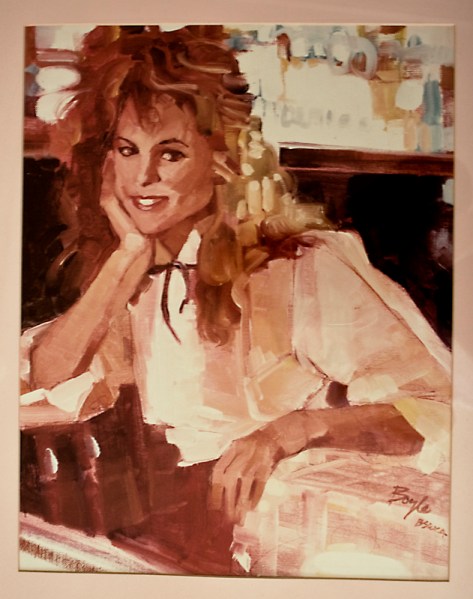


 guide that gets us through the shoals with instruction and reassurances that whatever we’re thinking/feeling/experiencing is simply part of that phase, hang on, we’re all going through it, nothing to be afraid of.
 It’s a worthy topic this time of year when yet another fresh batch of graduating 18-year-olds and their beleaguered parents are faced with this unavoidable and monumental transition. It might be instructional to break it down. Because here’s the truth: like all other phases of life, all other Rites of Passage – whether teething, teening, or reluctantly senioring – NONE of it is the same for all of us. No advice, no analysis, no remedy applies unanimously. We’re all going through our own version. Of everything. You may be gleefully booking your cruise for September or planning that first post-child remodel on the house, but I’m not. I’m dealing with the fact that I had a very cool roommate for 18 years and now he’s moving out. And I’m going to miss him.
 imply inordinate neediness on my part by making the point. No one wants him to fly more than I do. Nor is anyone more aware that it’s time to let go. Just say, “Oh, honey, I understand…you’re going to miss him… it’ll get better.” That’s all that’s needed.
 3. Try to avoid: “You’ll be surprised how nice it is when you don’t have to do his laundry or look at his messy room anymore.” That’ll be surprising? I’ve been looking forward to that for years! But, frankly, regardless of dirty clothes or the bomb site that is his room, I’ve always loved knowing he was just down the hall, ready to wake up and make me laugh, help me with my website or talk to me about his girlfriend. If you know me, you’ll understand why I might be found napping on the well-made bed in his empty room every once in a while. Don’t call the shrink… it’s my own form of therapy.
 Parenthood is one of the few relationships that comes with a certain planned obsolescence. We go into it fully knowing we’ve got to leap now and let go later. There’s no other such deal in life: we get married and the plan is till death do us part. It doesn’t always work out but that’s the idea… we aren’t typically required to give it up at a preordained time. Same with friends; we make a great friend and there is absolutely no reason to believe we can’t keep them through the dotage years. A loving pet is under our feet and in our beds until the very end.



 | Rock+Paper+Music |
You must be logged in to post a comment.