‘It’s Complicated’: Our Evolving, Exasperating Relationship with Book Reviews

Ah, reviews. The Holy Grail of every merchant, company, production, businessperson, artist, entrepreneur, and, yes, author.
Photo by Deniz Demirci on Unsplash

We need them, we want them; we pursue them, convinced they’re not only heartening to the soul but essential to the business, yet they’ve become harder to get and sometimes as vexing when received, a reality affirmed and experienced by many an author.

In the olden days, when print media was king and three networks were the sole providers of news and opinion, people were informed of everything from the latest crimes to the most recent blockbusters by those very limited media sources. There was no cable news, no social media, no internet influencers; no podcasters, bloggers, or Substackers; no Yelp, Google, or Amazon. Viewers, readers; customers were relegated to simply being the audience, the receivers of information and commerce. They were not only not burdened by the expectation to review everything from their cat sitter to their doctor to their neighborhood coffee shop, but there were no places to fulfill such obligations anyway.

Sounds kind of blissful, doesn’t it? Especially considering where we are now.

Where we are now is my insurance agent requested a review for simply providing an ID card with both my and my husband’s names (which she should have done in the first place … I didn’t write one). The guy who tinted my car windows presented his bill with a card designating their preferred review site. My dentist has a sign in the lobby with review links but still texted and emailed me on the matter. And, of course, every restaurant makes clear how much they’d appreciate something on Yelp or Google or wherever … and the list goes on and on and on. Everyone expects everyone to review everything, resulting in a growing resistance to leaving reviews for anything … including your and my books.

When my most recent novel was published (CHICK SINGER, Sibylline Press 2025), I didn’t expect an onslaught of reviews (I’m an indie writer, it’s a small press; I’m realistic) but I did expect at least as many as I’d received for my first novel, self-published in 2014. Hasn’t happened. Despite overwhelmingly positive responses, despite my requests to family, friends, fellow writers, subscribers, even those who designate themselves as “fans,” relatively few went to Amazon (or Goodreads or BookBub or B&N) and left a review. Despite my assurances that, “a couple of lines is enough, just what you sent in this email is great. You don’t have to gush; 5 stars is not required; even a short review will help me a lot,” follow-through was feeble. Even with other authors whose books I’d reviewed. Even with people to whom I’d gifted books with their agreement to leave a review. Even with readers who expressed enthusiasm about this book they’d just read. The only thing I didn’t do was beg … though the thought briefly crossed my mind.

Certainly, some indie authors get more reviews than others, and, of course, the Jodi Picoult/Jojo Moyes crowd gets thousands, but I’m hearing from other indie and self-published authors that they, too, have found scaring up reviews to be exponentially more difficult than it was in earlier years.

Why, exactly?

I put this question to Google: “Are people not reviewing books as much as they used to?” and was assailed by articles affirming that, “Yes, people are not reviewing books as frequently as they used to,” ascribing the downturn largely to reviewer fatigue (see above).There’s also the matter of Amazon getting twitchy when they suspect fake reviews and reviewers, or disproportionate family/friend onslaughts of 5-stars. And lastly, there’s the unavoidable fact that many, many people simply do not like writing reviews.

Main reasons stated?

They don’t think they’re good at writing them.
They “just don’t know what to say.”
They feel too much pressure to applaud books they didn’t love for the sake of not offending friends or colleagues.
Understandable. Writing a good review does take some thought, some analysis of what’s essential to include (honest feedback, emotional impact) and what’s not (no one needs a synopsis; they’re already provided on the sales site). It takes choosing a “star rating,” (and, sometimes, when you’re reviewing people you know, that can get tricky). It requires you go back to the site where you purchased the book, or the Amazon page the author requested, input your review in the right spot, and, if you’re really a mensch, into other sites as well (Goodreads, BookBub, etc.).

All of that takes times, takes thought; takes sitting down and doing it. Which means readers either have to be inspired enough by what they’ve read to do that work, or supportive enough of the author to just buck up and git ‘er done. Sometimes both apply, and readers still struggle on follow through. I’ve had some people—RL friends, online friends, and colleagues—confess that, “I keep meaning to do it, then I forget.” Which is frustrating, but it’s likely these good people don’t fully understand it’s not about needing our writer’s egos fed (though it’s always nice to get good feedback); it about how essential (or at least helpful) reviews can be in terms of book marketing. Too few reviews can make a book seem flatlined (even when it’s not), while more reviews trigger extra marketing on book sites like Amazon (which, say what you will, is statistically where most people purchase their books).

But let’s go back for a minute to the issue of “stars.” This has become a sticky subject amongst some writers and various writers’ groups. I had one author colleague declare that she gives 5 stars to everyone in her particular group regardless of how she actually feels about the book. There are others who say they won’t even review a book if they can’t honestly give it 5 stars. And some authors take true offense if you leave 4 stars, even if you also leave a positive response in the body of the review. Clearly the topic needs some rethinking.

Here’s the basic breakdown of the star system:

  • 5 Stars (Excellent/Loved it): Highest rating. The book was exceptional, and the reviewer highly recommends it.
  • 4 Stars (Very Good): A positive experience that exceeded expectations or was generally enjoyed, perhaps with minor flaws.
  • 3 Stars (Average/Okay): Satisfactory but not outstanding; the book was average or just met basic expectations.
  • 2 Stars (Below Average): Negative or mediocre. There were noticeable issues or poor quality.
  • 1 Star (Poor/Terrible): A very poor experience, often indicating significant problems, dissatisfaction, or a waste of time.

Now, let’s be honest: not all books are going to inspire or warrant 5-star ratings, whether written by a friend, a colleague, or even a famous person. And it’s OK to not succumb to the pressure to affix 5 stars to every book you review. You can love a book but still feel it doesn’t quite hit that top rating for you. And, come on! A 4-star says, “a positive experience that exceeded expectations” … what’s to complain about that?

In fact, having your book page packed with only 5-stars can be problematic from various points of view. As mentioned, in the early self-publishing days, people would rally friends and family to literally bombard their Amazon book pages with 5-star reviews, sometimes without even having purchased or read said book, and Amazon got wise to the ruse. Many reviews were deleted, certain perpetrators were banished (I actually know a few of those), and savvy readers resented seeing copious 5-stars on books that turned out to be sub-par. All of that ultimately created backlash for authors who had only 5-star reviews, the presumption being that most were padding from friends and family (even if they weren’t!). Articles written by wise people in the business suggested a better balance of stars was viewed as more authentic, more believable, and more credible.

I took that to heart. Though a sincere 5-star is always delightful, I’m a tad relieved when a reader or two weighs in with a 4-star for exactly those reasons!

But the issue is—I’ll say it again—tricky. I was surprised when an author I don’t know but who’s in a shared group got upset with my 4-star review that was actually very positive and complimentary. She asserted in a thread that she felt everyone in the group should give everyone else in the group 5-star reviews as a matter of principle, as a matter of showing support. I responded with some version of the two previous paragraphs, but I suspect she was unassuaged.

Wherever you fall on the matter, I believe we’ve got to approach the topic of reviews with both grace and acceptance. Our mission as authors is to write with our whole hearts and souls to create wonderful works of literary expression. Once we’ve done that, readers’ response is out of our hands, and theirs to offer. Just as with gift-giving, we do our best to deliver the best possible gift, but it behooves us to not get too bothered if our friend is less enthused about the orange sweater we thought would look amazing on them.

Though I’d certainly appreciate more reviews for any of my books for the sake of their marketing value, I always hope the ones I do get are honest, authentic, and sincere, regardless of the number of stars affixed. It means that someone read that book, which is grand; it also means someone cared enough to write about it, even grander; it means—well, it means a lot to me all around … especially given the current climate of “reviewer fatigue.” To all those reviewers I offer a hearty, “thank you.”


UK Author & Blogger E.L. Lindley Reviews AFTER THE SUCKER PUNCH

ATSP_new billboard by Brenda Perlin

There is great honor, as an author, in seeing your work strike exactly the right chords, inspire exactly the desired response; even provoke exactly the intended conversations. We each understand that the experience of art and literature is a subjective exercise, but still… when it’s reflected back just as you imagined it in your head… well, that’s golden, isn’t it? 

UK author and blogger, E.L. Lindley, provided one of those shiny, golden moments for me today. She just posted her review of After The Sucker Punch, and I was as touched by her beautiful and articulate analysis of the book as I was her consideration in posting it beyond her blog and all over the social media world. THAT is truly above and beyond, and in a world where indie authors sometimes hear the resounding echo of their solo journey, that kind of support is truly and deeply felt. Thank you, E.L., I’m delighted you enjoyed the book! 

E.L. Lindley
E.L. Lindley

After The Sucker Punch is an aptly named novel because it packs a mighty punch and raises so many questions, I was left literally reeling by the end of it. Lorraine Devon Wilke commands our attention with a splendidly dramatic opening and never lets us off the hook until the very last page.

The novel is essentially the story of Tessa Curzio, who whilst attending her father’s funeral discovers that he kept diaries for fifty years and has used them to record less than complimentary observations about his family and friends. The trauma of the death of a parent combined with the diary findings serve to cast Tessa into a spiral of self-doubt and destruction. The diaries are described as a Pandora’s Box and indeed, once they’ve been opened, the lives of Tessa and her family will never be the same again. In addition to this, the effects of the Pandora’s Box seem to extend to the reader, leaving behind some very thorny philosophical questions.

LDW shrewdly uses the third person narrative to tell her story, which invites the reader to see the bigger picture. We don’t necessarily always agree with Tessa’s version of events, especially where her siblings are concerned. Tessa has a difficult relationship with her older sister Michaela but LDW offers us a glimpse of a woman trying to juggle her life as a wife, mother and teacher, whilst stepping up to her new role as the family designated carer for her newly widowed mother. Whilst Tessa may have little sympathy for Michaela, LDW ensures that the reader does.

Tessa’s relationship with her siblings is for me the heart and soul of the novel and anybody who has siblings will recognise the petty tensions and jealousies but deep visceral love that defines the bonds they share. Tessa to a large extent has removed herself from her family in order to survive and consequently much of the to-ing and fro-ing between them is via a hilarious series of telephone conversations.

LDW offers us the Curzio family and with it the question of whether parents are responsible for their adult children’s misery. Tessa grew up with an unstable mother who is prone to extreme mood swings and a distant, aloof father, who struggled with intimacy. Despite their chaotic childhood, Tessa and all five of her siblings have grown into accomplished, successful people. Ronnie, her younger brother has lost his way but still has the potential for a good life. However, they are mired in their childhood, looking for reasons as to why their parents are like they are. Tessa’s mother bemoans the fact that she feels like a “dartboard” as her children look to blame her for their difficult childhoods.

Tessa’s family dynamics reflect a period of time that will resonate with lots of us who grew up in the 60s the 70s. Children’s needs were not particularly taken into account and as Tessa points out there was “no concept of child abuse.” Her mother freely hits her children in anger and perhaps worse, they are subjected to the fear and anxiety of her constant mood swings. In some ways the fact that her mother has the capacity for great kindness, as when she reassures Tessa she isn’t sinful, makes her relationship with her children even more complex. In her role as a writer, Tessa covers a feature about fathers and daughters and finds herself comparing her own experiences with other more tangible forms of abuse. She comes to the conclusion that pain is subjective and so can’t be comparative – “it’s as deep as you feel it.”

There’s no denying that her father’s written words have a devastating effect on Tessa and cause her much soul searching. As she rails against his words, there is clearly the kernel of fear within her that they might be true. As she is forced to confront her fears, her life implodes around her. The only constant is her friendship with Kate and Ruby even though LDW allows just enough realism to creep into their relationships. Tessa can’t help but feel reassured by Ruby’s marital problems whilst suffused with jealousy at Kate’s seemingly perfect life.

At the crux of the novel is the idea of whether we should be judged by what we write. Leo Curzio’s diary habit is made more toxic by the fact that he wanted his family to read them. The diaries serve as a metaphorical hand grenade tossed into the bosom of his family with the potential to rip lives apart. Tessa’s aunt, who acts as the conscience of the novel, asserts that maybe we should be judged on our actions rather than by what we may write. To all intents and purposes Leo Curzio was a good man, who did his best to give his children the best start in life but, for some bizarre reason felt the need to vent his bitterness and resentment on paper. Which is the more valid Leo is the puzzle that Tessa is left to figure out.

In the end there are no startling revelations or absolute answers, just a sense of peace and the idea of trying to accept people as they are, warts and all. LDW has captured the spirit of family perfectly in that there is no perfect family. Her novel is funny, warm, tense, angry and ultimately shows us that life is to be lived and there’s no point in dwelling on the past.

To visit and stay updated with E.L.’s blog, click HERE. To visit her author page on Amazon, click HERE

ATSP photo art by Brenda Perlin.

LDW w glasses


Visit www.lorrainedevonwilke.com for details and links to LDW’s books, music, photography, and articles.

Review from A Woman’s Wisdom: ‘Shorties: She Tumbled Down by Lorraine Devon Wilke’

She Tumbled Down

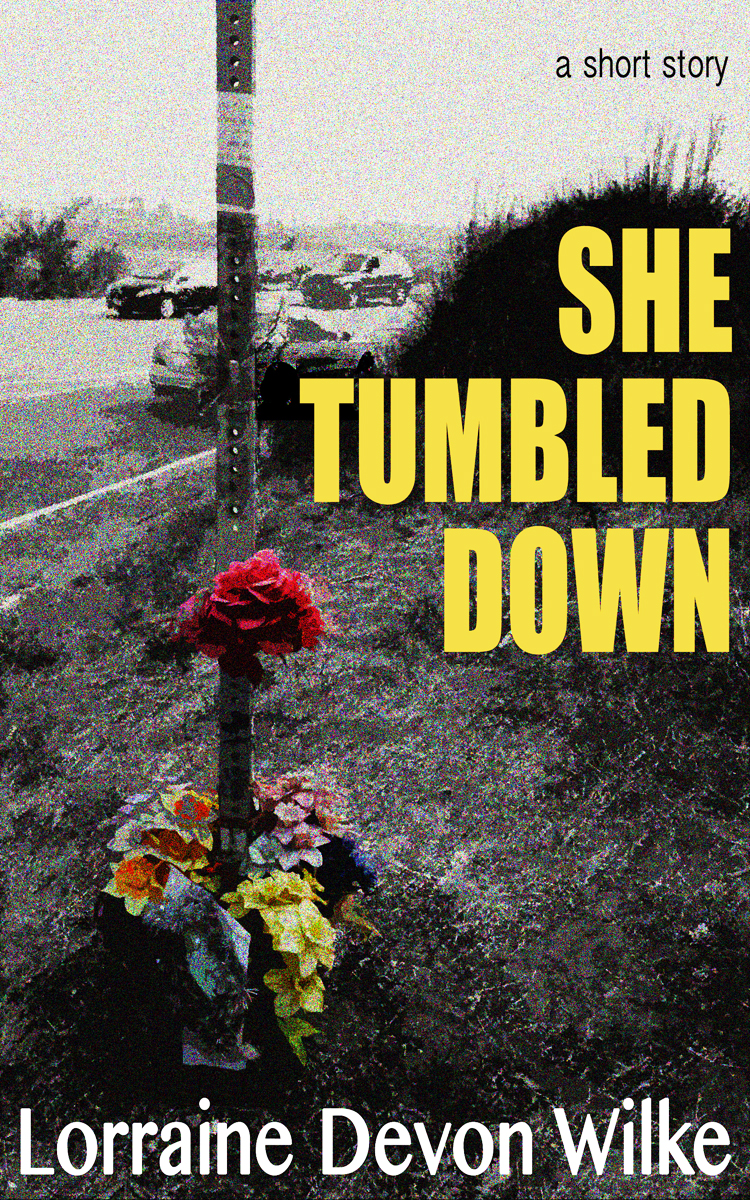
With so much recent attention focused on my just-released novel, Hysterical Love, it was lovely to read a concise, thoughtful review of my short story, “She Tumbled Down,” from UK book blogging site, A Woman’s Wisdom.

This site is aptly described as: “The Book Blog For Lovers Of The Written Word…A place to discover fabulous storytellers plus book reviews, author interviews, articles and humour.” It is written and curated by a funny, passionate, and—yes—wise woman named Ali (or “Bodicia” for those on Twitter), who says of herself:, “I am a mother, a grandmother and a woman with years of life experience. On my blog you will find reviews of books which have been a pleasure to read as well as author interviews, guest blogs, and articles.”

Ali accepts no money for reviews and maintains a very constructive, considerate philosophy about the process:

“I only review books which I would give a four or five star review to as I don’t feel it is necessary to slate a book so if it is on my blog then I genuinely found it a pleasure to read.

“I have a particular interest in Indie authors and giving attention to those books which deserve to be seen by more people. I have always had a love of books and appreciate how hard it is to get your book seen and ‘out there’. I decided I would use my blog to review books in my free time and I have discovered some fabulous authors whose work really does deserve more recognition in my opinion.”

I am always delighted by and appreciative of writers whose respect for authors and their work inspires a philosophy such as hers! Thank you, Ali, for your sharp, succinct review of my story. You cut to the core of it: 

Shorties: She Tumbled Down by Lorraine Devon Wilke.

LDW w glasses


Visit www.lorrainedevonwilke.com for details and links to LDW’s books, music, photography, and articles.

Here’s To The Ladies of the Valencia Hills Book Club

VHBC1

Being an author is a somewhat mysterious and solitary trade, regardless of how one ultimately publishes their books. When you’re self-published, however, there’s a whole other level of mystery that gets stirred into the mix, questions and opinions about why you published the way you did and what it all means in the big picture of how your value, your book’s value, is perceived.

Those outside the industry, however, the readers, generally keep their focus on the books: the stories, the covers, the draw of the narrative; the reviews, the word-of-mouth, etc. What they generally don’t think about? How or in what manner an author got their book published. Which is good. It shouldn’t matter. All anyone should give a hoot about is whether or not a book has been well-written, well-produced, grabs their interest, and, ultimately, delivers the goods.

VHBC3

Still, stigmas persist, so when you do find reviews on Amazon from total strangers expressing delight with your work, when a heretofore unknown blogger announces your book is one of the best he’s read in 2014; when a publicist plucks your work out of the ethers to declare it a “top read of the year,” you are all the more touched. Because you take none of it for granted.

And when a venerable book club that’s been around for over fifteen years chooses your book to be their March read, gathering to enthusiastically discuss that book with wit and intelligence… well, for this self-pubbed author who’s been through every kind of artistic gauntlet over a long and largely independent career, Book cover cookie1that’s GOLDEN. And not to be taken for granted.

Frankly, I wasn’t sure what to expect when my college pal, Eileen Butler (part of the group), sent a note informing me of the March selection of AFTER THE SUCKER PUNCH by the Valencia Hills Book Club, extending an invitation to attend the “discussion” gathering at her home mid-month. I wondered if a tight-knit group of women from Valencia, CA, might find my somewhat rough-edged tale a bit off-putting and unrelatable. I wondered if they’d find me a bit off-putting and unrelatable (I am not getting out that much! 🙂 ); I wondered if… hell, I had absolutely NO idea what to expect, but either way, I was honored and certainly up for it. I ordered some of my Chicago cousin’s famous book cookies, printed up some “coming soon” cards for my next book, Hysterical Love, and circled the date.

VHBC2
Eileen Butler (left) and the ladies of the Valencia Hills Book Club

And when I met the Ladies of the Valencia Hills Book Club—Linda Skvarna, Sandra D’souza Benjamin, Shelly Paolucci Coleman, Kimberly Briggs Reed, Patti Paglia, Alice Sain and Suzanne Rioux —I was more than delighted to make the acquaintance of a group of smart, funny, progressive, really interesting, and really interested women. To hear them discuss the book’s characters by name, debate covered issues of cults and religion, talk about the epilogue song, look to me for answers about my thinking on certain plot elements and story twists was like being surrounded by people talking about and discussing the finer points of my child…what “parent” wouldn’t love that?

I thoroughly enjoyed getting to know a bit about each of them: their fascinating stories and backgrounds, the kinds of books they’ve read over the years, and certainly about their late founder, a woman whom they speak of with deep respect. We shared good food (thank you, Eileen!), great conversation, and tremendous mutual interest.

I walked away from the evening imbued with a sense of having been honored. To have such an eclectic group of remarkable women give their reading time and attention to me and my book is no small thing. Certainly not something I take for granted. And regardless of how or in what manner I might choose to publish any of my books in years to come, I hope I always feel that way.

Thank you, Ladies of the Valencia Hills Book Club; you truly made my day!
LDW w glasses


Visit www.lorrainedevonwilke.com for details and links to LDW’s books, music, photography, and articles.

OK, Let’s Discuss This Whole Book Review Thing… Please

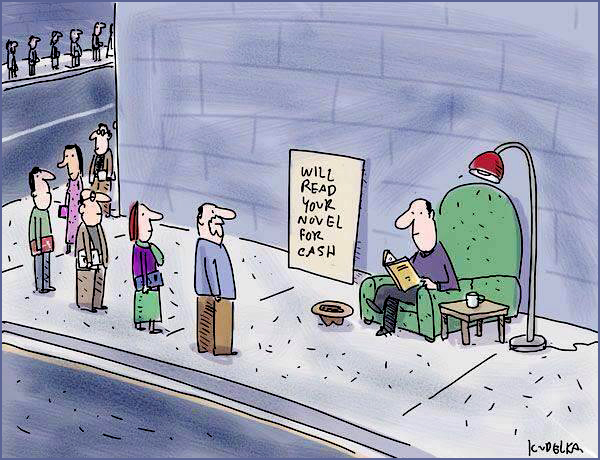
read your novel
“Oh, yes… 5-STARS GUARANTEED!!”

I spent some time chatting with a group of writers today, discussing a topic that seems to not only be tripping up indie authors in a variety of ways, but contributing to the persistence of stigmas and attitudes about the self-publishing “brand” in general:

REVIEWS.

Coveted, powerful, manipulated; misguided reviews.

It was a spirited debate — though, in truth, everyone was in agreement — focused squarely on the corrosive effect of what some in the discussion called the “5-Star Circle” and the “Review Swap Gang.”

For those unaware, the 5-Star Circle is that loose contingent of indie author who will automatically award 5-star reviews to colleagues regardless of the quantifiable merits of their books. This is done, purportedly, to show support for fellow self-pubbers, but there’s also an unspoken quid quo pro element at work, assuring that the 5-star-wielding reviewer will be gifted in kind. The Review Swap Gang is essentially an off-shoot, a more organized venture whereby authors agree to write reviews for each other and I don’t think anyone need guess how rife with corruptible possibilities that deal might be!

I expect a holler at this point, an insistence by some in the self-publishing world that they will and do and always give honest, authentic reviews regardless of how swappers review their own books, and, hey, it’s possible. But what’s also possible (and likely probable) is an inherent awkwardness to the set-up, the politics involved if, say, they give you a good review and you don’t return the favor. In fact, I spoke to one author who confessed that he often gives weak, inept books much higher than deserved ratings for the sake of group politics. Another spoke of feeling pressured within professional friendships to do the same; someone else mentioned not wanting to spark trollish behavior from disgruntled authors unhappy with their “swap.”

And the result of all this? Far too many poorly executed and amateurishly written books sporting a raft of undeserved 5-star reviews from gushing (or, perhaps, intimidated) “friends” who apparently don’t see the value of creative accountability; a fact that has the long-term effect of misguiding readers and perpetuating negative attitudes about all self-published writers, even those whose work is worthy of the accolades.

There’s a book blogger I happen to like, Tara Sparling, who regularly offers sharp (and very funny) analysis of the self-publishing world on her blog, Tara Sparling Writes (check out her posts about book covers, fonts, and what compels readers to choose — or not choose — self-published novels). She recently wrote a piece on the topic of reviews, Why 5-Star Book Reviews Are Utter Rubbish, that triggered a strong reaction from readers on the title alone (my response is in the comment section). Tara offered seven reasons in support of her thesis, some of which echoed my own points; for example:

“One 5-star review is ok. But, if there are only 7 reviews in total and all of them are all 5 stars, I don’t believe a single one of them.”

OK, I’m not sure I wouldn’t believe a one… maybe, but she lost me a bit on the next sentence:

“So I disregard the lot and vow never to read the book instead. Which rather defeats the purpose.”

I got her point, but took umbrage with the resolution. Since I am not a swapper, nor a review solicitor, I can’t control what reviewers end up saying about my work and certainly don’t want to be discounted out-of-hand — by Tara or anyone else — if the lot of them happen to honestly like my book! I made this rebuttal in my comment; she graciously took the point, as well as similar points made, allowing that, yes, if a book truly deserves 5-stars, wonderful. But the more salient issue is that, like me, like others, she finds solid reason to raise a ruckus on the topic, a shared impulse that indicates just how transparently corrupt this reviewing thing has become.

Look, the value of reviews to anyone selling anything — whether a toaster, movie, restaurant, or book — is indisputable. But the politics of reviews has turned the process into a sort of creepy, virtual-payola scenario that’s about as manipulative as A&R thugs dropping cash-packs and trip tickets into the laps of slick fingered radio programmers. And when we’ve got countless threads on Goodreads hawking “swap requests,” Yelp choked with either phony take-downs or BFF gush-fests, and Amazon battling some version of the same on all kinds of products (including books), we’ve lost the point of the endeavor… for honest people to leave honest responses to just how much they did or didn’t like something. Period.

Here’s my personal stance: I do not want ONE, not one, review on my author page that is not authentic or honestly felt. Whatever “star” rating or review comments you think my work warrants based on your truthful, visceral response to my book, that’s what I want you to leave. Don’t troll, don’t be irrational or other-agenda’d; but don’t feel obligated, under any circumstances, to leave a puffed-up, bullshit review. If you’re uncomfortable about what you might honestly have to say, I’d rather you not leave anything than an unauthentically positive review. And I mean that. An unearned “star” should mean nothing to any of us.

To my indie author colleagues: Please understand that I will not leave a 4- or 5-star review on work that does not warrant it based on my experience and perceptions as a writer and my response as a reader. It doesn’t matter how famous you are, how much I support your efforts, how well I like you, or how much you’ve done for me. But, taking into account the shared obstacles and challenges of being in this self-publishing game together, the best I can agree to is that I won’t leave a decidedly negative review on your page (which, in this world, appears to be anything below 4- or 5-stars!). If you know I’ve read your book and want my response privately, I will be happy to share it with you.

And one more thing: PLEASE, please, indie authors, do not rant on social media about your negative reviews and do not ask fellow writers to go to your Amazon page to make any response to them. Both the rant and the request are not only distasteful, but utterly unprofessional. As is presuming a negative review is automatically undeserved, unauthentic, or written by a troll. Let’s please, for God’s sake, have some grace and dignity and take our hits where they come. Every reader has the right to their honest response no matter how many reviews they’ve written. And if you truly believe a troll is having his/her way with you, handle it privately. Don’t play creative-victim in an effort to engage fellow writers to circle the wagons; we all have to stand by our work, good, bad or in-between.

The impact of all these shenanigans is that readers — the very people we’re hoping to engage — can no longer count on reviews to guide them to what they might enjoy or find excellent.  Personally, I’ve now downloaded far too many books by self-published authors — abundant in stellar reviews — that were, ultimately, poorly written. I’ve spent my money and my time only to either not finish a book, or to put it aside with a shake of my head and a growing uneasiness about what all of this is doing to the self-publishing world at large.

For now, though I’m being much more selective about the books I buy, I still believe in the movement and will continue to support my indie colleagues, particularly those who’ve earned my reader loyalty, as I hope they will support me. But I will continue to candidly address the issues we face, holding out hope that we as a group learn from our mistakes and honestly strive to be better. More professional. More demanding. Of ourselves… and our fellow authors.

Related articles: 

• Who Do We Have To _____ To Get a Little Respect Around Here? 
• The Persistence of Self-Publishing Stigmas and How To Transcend Them

Cartoon by Kudelka

LDW w glasses


Visit www.lorrainedevonwilke.com for details and links to LDW’s books, music, photography, and articles.