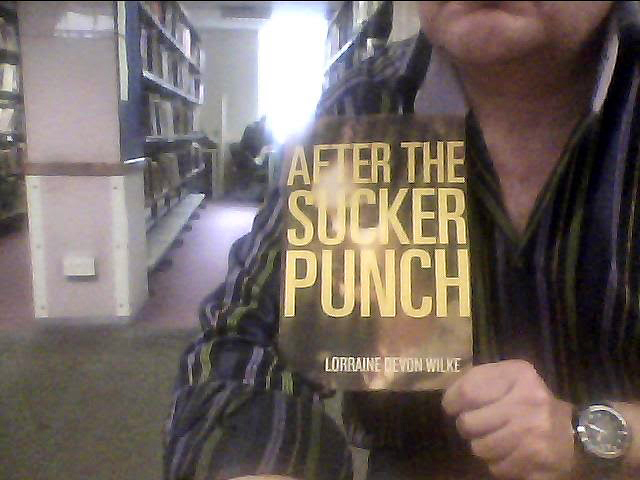
An accomplished writer in several genres of the medium, Lorraine Devon Wilke has built an eclectic library of expertly crafted work: launching her “arts + politics” blog, Rock+Paper+Music in 2010, she became a popular contributor to HuffPost and other media sites, she currently maintains a column at Medium and a popular Substack (Musings of a Creative Loudmouth). Her award-winning novels include Chick Singer (Sibylline Press, 2025), The Alchemy of Noise (She Writes Press, 2019), Hysterical Love (2015), and After the Sucker Punch (2014). Her fifth, The Weight of Fables, will publish in 2027.
Landing in Los Angeles with an early band, Devon Wilke lives with her husband, attorney/writer, Pete Wilke, where she continues to sing rock & roll with her band, Sixth & Third, take photos, and ponder the state of the world.
I was delighted to have been included in the SKY exhibit at Duncan Miller Gallery’s “one day at a time” site, YourDailyPhotograph.com. It’s considered quite a prestigious selection, and there was particular honor in being chosen by the jury curator, Paula Tognarelli of the Griffin Museum of Photography. She knows her stuff and having her recognize one of my piece, Sky Reflected, Lisbon, as exhibit-worthy was no small thing!
– Sky Reflected, Lisbon
BUT. While the 24-hour time limit is fun in a sort of “5-star food truck sending out Tweets to announce where it’ll be parked on Tuesday” kind of way, the dependable, always-open element of my photography site at Fine Art America is notable for its more sustaining presence! So I wanted to take this opportunity, to remind my readers, my viewers, that beyond writing blogs, books, articles and songs, I am also one who’s inspired by the Muse of Visual Art in the form of photography. And my work, work I love and share with love, is available for easy viewing and collecting at my site at FAA. 24/7. No Tweets required!
I’m always posting new pieces, so come by at your leisure, stroll through the many eclectic galleries, and if something resonates, feel free to leave a comment, a like, a share, or even, hallelujah, a purchase. Believe me, I love that sort of thing! 🙂
I love that you’re all here. I’ve intentionally set my page to “public” with the idea of welcoming people from all over the world with their varying opinions and perspectives, and I appreciate the diversity. I enjoy the stories you tell, pictures you post, articles you share, events you holler about, even the animal videos (I LOVE the animal videos!). I also appreciate civil thought-provocation by way of opinion pieces shared; I occasionally engage in respectful debate (though less so these days… it’s so circuitous!), and I do think it’s essential to be aware of what’s going on in the world around us.
But it’s a delicate balance, a pendulum swing between “being informed” and “being bombarded”; between “having an opinion” vs. “being an a-hole about it.” And that balance often gets out of whack and in need of fine-turning. And while, in the spirit of self-preservation and mental health, I encourage you to turn off the TV, step away from relentless news, and stop reading everything written on the disasters of the day, I also think there are some simple adjustments we can make, even in how we engage with each other on social platforms such as Facebook.
So can we try this? For the sake of NOT being part of the toxic noise about things over which we have no control, I make these few simple requests, in no particular order:
If I, say, post a piece celebrating a 1%er donating money to an important cause, supporting a good law, or pushing for a raise in the minimum wage, could you do me a favor and refrain from snarkiness about how much MORE that person could’ve donated, what else he spends his money on, why he’s an idiot, or how come he didn’t do more? He donated. He helped. He put effort toward something good. Excellent. It’s being acknowledged. Let’s leave it at that.
If a piece is posted about, say, positive efforts being made on the ebola front, please don’t respond by then sharing every single fear-stirring article about who else has been infected, how many have died, how no one is safe, etc. Read Frank Bruni’s article, Scarier Than Ebola to put things in proper perspective and go get a flu shot… or your kids vaccinated. You’re not going to get ebola. Neither are your children. The media is already working overtime to pump this evolving story into a lather; how about we “rise above” on our social media pages and stay focused on the positive, the real, the actual? If you think immersing yourself in the negative, particularly regarding issues of health and welfare, has any social, physical, mental, or emotional benefit, odds are you don’t feel good a lot of the time. I urge you to turn your thoughts to healthier perspectives. It works, I swear.
I beg you, please reconsider posting ANYTHING further about what an idiot Rush Limbaugh, Ann Coulter, Sarah Palin, Bill O’Reilly, Fox News, or any of that particular cabal are. We ALREADY KNOW. It really, truly IS better to ignore people of their ilk. Unless they’re physically setting fire to a room, standing with a knife at someone’s neck, or flying to Russia to “negotiate” with Putin (and would we put that past Palin?), they are nothing but gaseous air intended to prick public response. And when you post and share stories about them, you are doing exactly what they want you to do! Publicize them! Make them viral! Get them more attention!! They need that like vampires need moonlight and blood. So starve ’em out. Ignore them. Unless it’s Jon Stewart or Stephen Colbert skewering them, unless you’re taking actual steps to shut them down, stop feeding the beast. I’ve taken a vow to never again write, read, or share anything about any of them…. will you join me?
I get why people are mad at the police. I’ve been mighty mad at the police a few times myself, as anyone who reads my columns can attest. But in every case involving “bad cops,” including my own, it involves SOME bad cops. Only some. Not all. Not every cop is a corrupt, racist, psychotic sociopath. MOST are good people working at an incredibly, ridiculously dangerous job that has got to be draining to the heart and soul of any human being. So posting a relentless string of “bad cop” stories is, like posting bad Muslim stories, an act of propaganda. It focuses attention on a certain element, a small percentage, the extremist edge, of a much larger group, and stirs up negative feelings intended to spill onto ALL of that group. Please stop. It’s not helping; it’s fomenting. Unless you’re authentically participating in some tangible, physical action towards righting wrongs or promoting the advancement of deeply needed awareness-raising related to our racial divides, you’re only creating more divides. Don’t be that guy in the town square endlessly waving pamphlets about what’s wrong with the world. Either sign up for a community action group or focus on who and what’s improving the situation.
Let’s acknowledge this plain and simple fact: the Middle East is a quagmire. Part of why I loved The Honorable Woman was its stunning authenticity in showing just how much of a quagmire, even for those most invested and most desirous of peace. None of us here on Facebook, other than potentially having ethnic ties and certainly our opinions, have hands-on involvement in that situation, so how about we do what we can to not contribute further to the quagmire? Abstention from posting incendiary, fear-mongering, rage inducing, propagandizing pieces would be a good start. Because it doesn’t help. Amazingly intelligent and peace-focused statespeople the world over have struggled to find solutions to this relentless situation, a situation that encompasses nuances, enigmas, ancient wounds, historical precedence, and arcane, ethnic influences that we here on Facebook are not privy to. We’re not going to solve it on social media so how about we at least try to not throw verbal grenades into the public theatre? Promoting peace can be as simple as not promoting dissention.
And lastly, and certainly on a lighter note, if I post a review of something I like, a ramble about my day at the beach; share a well-written piece about the President, or exhibit my opinion about something relative to my worldview, could you do me the favor of not immediately following with a comment in disagreement? It’s not that I mind opposing views, but there’s a time, a place, and certainly worthier topics than, say, the state in which I live or a film I happen to like, with which to argue. There seems an almost knee-jerk response from some to immediately, and likely without much thought, jump on to register an opposing views as if it were their moral duty. I call it the Ego of Opposition. Know this: it’s not required. And when it’s in service to the most mundane of issues, it only serves to make you seem unfriendly, curmudgeonly, negative, egotistical and passive aggressive. So how about this: I won’t go to your page to assert my disagreement to your review of Gone Girl; I won’t jump on your thread to knock down your lovely remembrance of a place you visited that I don’t like; I won’t argue politics (because we all know that’s a rabbit hole), and if you post something incendiary that I think promotes fear or hate, I may refute but I’ll do so with reason and civility. Anything else I’ll take it to my own page. I’d appreciate it if you do the same.
I realize some of you will disagree with this list (of course! 🙂 ) Some of you believe there’s merit in posting about every bad thing in the world, spending time on social media debating (aka: screaming at each other); some of you even believe we’re obligated as good citizens to participate in these ways or we’re not engaged, informed, or involved. Okay. That’s your opinion.
Mine? This world can be a difficult place, surely it is for many, but most of us here in this Facebook circle are the fortunate ones who get to make decisions about how we live in it. And in all my years as a writer, a journalist, an observer of life, and a member of the human race, I have not seen one good thing evolve out of mindless opposition, knee-jerk contrariness, or the fanning and focusing of negativity. We have the power to promote positive action, and we should; we have the obligation to take positive action, and we must; but we also have the ability — the need — to use our words more wisely, more judiciously; more compassionately. I’d like to encourage that. Thanks.
In the always adventurous world of indie publishing, the assignment to unearth and implement as many new and innovative ways to market and promote your books is ever at the forefront of your thoughts:
You maintain a small library in the backseat of your car in case you run into someone to whom you’d like to gift a copy; you seek out indie bookstores and eclectic gift shops that might prop up one or two at the cash register or on a “local authors” bookshelf; you even chat up friends in certain writing circles hoping for fair ways to exchange creative services. It’s a tap-dance like no other and you soon discover you must not only believe in your book, but must equally enjoy the art (challenge?) of marketing and promotion if you want to keep your literary baby’s head above water until it goes viral… or at least gets in a good swim!
Then, every once in a while, a serendipitous connection leads to an unexpected opportunity. Sometimes someone introduces you to someone else who happens to be a person with their own foothold in the indie book world, and who also happens to be an enthusiastic and prolific book blogger excited to write about and promote the work of authors he likes. In my version of that scenario, the introducer would be the unflagging and always generous Brenda Perlin, e-troducing me to the very creative UK author/blogger, Mark Barry, who goes by the name Wiz Green and has a blog, The Wizard’s Cauldron, focused on books, writers, and all things literary.
The Wizard’s Cauldron is described in its headline as a Dedicated Author Interview Blog from Green Wizard Publishing of Southwell, Nottinghamshire. Publishers of the fiction of Mark Barry.
In it, you’ll find concise, witty, well-written reviews, features on books and authors, promos on Mark Barry’s prodigious library of books, and, as mentioned, interviews with authors. After meeting Wiz via Brenda, I was fortunate enough to be invited to participate in one of those interview. Given that I am always happy to chatter about my books, and the fact that Wiz asked a lot of great questions, it was fun to converse across the pond about my creative journey, indie publishing in general, my books in particular; even who I’d invite to my favorite dinner and what would be on the menu (no hints… go read!).
As an author, it’s incredibly gratifying when someone discovers your work and gets excited about it. When that someone is an author himself, knows well the journey we all take, and makes it his business to shout-out about writers and books he likes, that gratitude is multiplied.
California’s Lorraine Devon Wilke has packed an awful lot into her life and she shows no signs of stopping
The third-eldest sibling of eleven, she packed her bags and hit the road as a travelling rock singer in the big-haired eighties, carrying her camera with her, before settling down to marriage, motherhood and a life of popular bloggery, including her current stint working for the Huffington Post.
Her list of past achievements and current work is quite staggering – and she’s a delightful person too!
Lorraine is now a novelist writing (in Indie terms), that quiet, shy and vulnerable industry step-child Literary Fiction.
The genre the 101 blogs tell you to avoid like the plague and yet, it’s the one area where a reader can find really, really decent writing if you look for it. And Lorraine is a really, really decent writer.
I was introduced to her by Brenda Perlin and received both her short story and novel. The former is a cracking read, but the latter – I am twelve chapters in and I am engrossed is possibly a great book. I had to buy it in paperback.
It’s a sweeping, sassy, cynical, redeeming, tricky “Terms of Endearment” type family saga – remember those? – with dialogue so acute you can experience it, a real sense of place, and characters you can see and hear as if they were next to you, the novel deserves a wider audience.
I picked up the Wizphone and interrupted Lorraine while she tapped out her latest blog on a sunkissed veranda overlooking the Pacific Ocean. Here’s what she had to say:
I spent some time chatting with a group of writers today, discussing a topic that seems to not only be tripping up indie authors in a variety of ways, but contributing to the persistence of stigmas and attitudes about the self-publishing “brand” in general:
It was a spirited debate — though, in truth, everyone was in agreement — focused squarely on the corrosive effect of what some in the discussion called the “5-Star Circle” and the “Review Swap Gang.”
For those unaware, the 5-Star Circle is that loose contingent of indie author who will automatically award 5-star reviews to colleagues regardless of the quantifiable merits of their books. This is done, purportedly, to show support for fellow self-pubbers, but there’s also an unspoken quid quo pro element at work, assuring that the 5-star-wielding reviewer will be gifted in kind. The Review Swap Gang is essentially an off-shoot, a more organized venture whereby authors agree to write reviews for each other and I don’t think anyone need guess how rife with corruptible possibilities that deal might be!
I expect a holler at this point, an insistence by some in the self-publishing world that they will and do and always give honest, authentic reviews regardless of how swappers review their own books, and, hey, it’s possible. But what’s also possible (and likely probable) is an inherent awkwardness to the set-up, the politics involved if, say, they give you a good review and you don’t return the favor. In fact, I spoke to one author who confessed that he often gives weak, inept books much higher than deserved ratings for the sake of group politics. Another spoke of feeling pressured within professional friendships to do the same; someone else mentioned not wanting to spark trollish behavior from disgruntled authors unhappy with their “swap.”
And the result of all this? Far too many poorly executed and amateurishly written books sporting a raft of undeserved 5-star reviews from gushing (or, perhaps, intimidated) “friends” who apparently don’t see the value of creative accountability; a fact that has the long-term effect of misguiding readers and perpetuating negative attitudes about all self-published writers, even those whose work is worthy of the accolades.
There’s a book blogger I happen to like, Tara Sparling, who regularly offers sharp (and very funny) analysis of the self-publishing world on her blog, Tara Sparling Writes (check out her posts about book covers, fonts, and what compels readers to choose — or not choose — self-published novels). She recently wrote a piece on the topic of reviews, Why 5-Star Book Reviews Are Utter Rubbish, that triggered a strong reaction from readers on the title alone (my response is in the comment section). Tara offered seven reasons in support of her thesis, some of which echoed my own points; for example:
“One 5-star review is ok. But, if there are only 7 reviews in total and all of them are all 5 stars, I don’t believe a single one of them.”
OK, I’m not sure I wouldn’t believe a one… maybe, but she lost me a bit on the next sentence:
“So I disregard the lot and vow never to read the book instead. Which rather defeats the purpose.”
I got her point, but took umbrage with the resolution. Since I am not a swapper, nor a review solicitor, I can’t control what reviewers end up saying about my work and certainly don’t want to be discounted out-of-hand — by Tara or anyone else — if the lot of them happen to honestly like my book! I made this rebuttal in my comment; she graciously took the point, as well as similar points made, allowing that, yes, if a book truly deserves 5-stars, wonderful. But the more salient issue is that, like me, like others, she finds solid reason to raise a ruckus on the topic, a shared impulse that indicates just how transparently corrupt this reviewing thing has become.
Look, the value of reviews to anyone selling anything — whether a toaster, movie, restaurant, or book — is indisputable. But the politics of reviews has turned the process into a sort of creepy, virtual-payola scenario that’s about as manipulative as A&R thugs dropping cash-packs and trip tickets into the laps of slick fingered radio programmers. And when we’ve got countless threads on Goodreads hawking “swap requests,” Yelp choked with either phony take-downs or BFF gush-fests, and Amazon battling some version of the same on all kinds of products (including books), we’ve lost the point of the endeavor… for honest people to leave honest responses to just how much they did or didn’t like something. Period.
Here’s my personal stance: I do not want ONE, not one, review on my author page that is not authentic or honestly felt. Whatever “star” rating or review comments you think my work warrants based on your truthful, visceral response to my book, that’s what I want you to leave. Don’t troll, don’t be irrational or other-agenda’d; but don’t feel obligated, under any circumstances, to leave a puffed-up, bullshit review. If you’re uncomfortable about what you might honestly have to say, I’d rather you not leave anything than an unauthentically positive review. And I mean that. An unearned “star” should mean nothing to any of us.
To my indie author colleagues: Please understand that I will not leave a 4- or 5-star review on work that does not warrant it based on my experience and perceptions as a writer and my response as a reader. It doesn’t matter how famous you are, how much I support your efforts, how well I like you, or how much you’ve done for me. But, taking into account the shared obstacles and challenges of being in this self-publishing game together, the best I can agree to is that I won’t leave a decidedly negative review on your page (which, in this world, appears to be anything below 4- or 5-stars!). If you know I’ve read your book and want my response privately, I will be happy to share it with you.
And one more thing: PLEASE, please, indie authors, do not rant on social media about your negative reviews and do not ask fellow writers to go to your Amazon page to make any response to them. Both the rant and the request are not only distasteful, but utterly unprofessional. As is presuming a negative review is automatically undeserved, unauthentic, or written by a troll. Let’s please, for God’s sake, have some grace and dignity and take our hits where they come. Every reader has the right to their honest response no matter how many reviews they’ve written. And if you truly believe a troll is having his/her way with you, handle it privately. Don’t play creative-victim in an effort to engage fellow writers to circle the wagons; we all have to stand by our work, good, bad or in-between.
The impact of all these shenanigans is that readers — the very people we’re hoping to engage — can no longer count on reviews to guide them to what they might enjoy or find excellent. Personally, I’ve now downloaded far too many books by self-published authors — abundant in stellar reviews — that were, ultimately, poorly written. I’ve spent my money and my time only to either not finish a book, or to put it aside with a shake of my head and a growing uneasiness about what all of this is doing to the self-publishing world at large.
For now, though I’m being much more selective about the books I buy, I still believe in the movement and will continue to support my indie colleagues, particularly those who’ve earned my reader loyalty, as I hope they will support me. But I will continue to candidly address the issues we face, holding out hope that we as a group learn from our mistakes and honestly strive to be better. More professional. More demanding. Of ourselves… and our fellow authors.
There are a great many ways in which projects, businesses, organizations, movies, songs, and books are introduced to the world, marketed into the cultural zeitgeist. Media – in all its forms – is the medium: newspaper and magazine advertising, online press releases, repetitive social media alerts; blogs, interviews and radio spots. If the person involved is high-profile enough, or has a good enough publicity team, they appear on talk shows, do segments on news programs, or find a reason to participate in a cause… or a cooking show. 🙂
But in the specific world of movies and television, there are trailers. Those snappy, quick-cutting, eye-catching, can’t-turn-away mini-films intended to set the stage, pull you in, ensnare your interest to the point that you must watch to find out WHAT HAPPENS.
Personally, I love trailers. I love getting to the theater early enough to catch each and every one that unfurls before the main attraction, making note of those I’ll catch and those I’ll be sure to miss. Trailers – the good ones, anyway – are significant and effective as marketing tools because they show just enough visual, share just enough narrative, and cut it all together with just the right rhythm and pace to whet the appetite of the viewer, enough to make a future commitment to WATCH.
Or, in the case of book trailers, to READ.
The notion of authors and publishers using trailers to promote and market their books is a relatively new phenomenon. There’s no doubt that as e-books and the online purchasing of paperbacks, even hardcovers, came under the growing purview of online book retailers like Amazon, Barnes & Noble, and the like, the focus of book-lovers turned commensurately to online interaction. From there it was not difficult to steer their interests towards accompanying book trailers as a way to further entice their reading choices.
Brilliant! So fresh and cutting edge, trailers would surely be seen as innovation for books marketers…right?
“These are terrific diversions, but their status next to the book is a little ambiguous.”
But the trend persisted and before long, more and more authors saw trailers as tools to help pull their books out of the pack, translate synopses without a document; thrill enough to grab attention (the goal, after all!). And as time passed, what was niche became notable, if not de rigueur:
Lindsay Mead, “YA author (soon-to-be), YouTuber and Full-Time Daydreamer,” runs a blog that focuses heavily on book trailers, with an accompanying YouTube page sharing those of authors she admires. Goodreads, the uber- (and now Amazon-owned) author/reader site, features a video option on authors’ profile pages. And writers swear by their trailers; author Brian Solis, for example, posted in A Visual History of Book Trailers:
“…the tradition of book trailers not only continues, it’s become standard practice as part of the book marketing checklist. From concept to script to treatment to music, I see trailers and book marketing in general as a creative challenge to engage readers beyond text.”
I agree with him, though I do think the accessibility to trailers could use some expansion. At this point, unless an author or publicity person directs you to the YouTube or Goodreads page of that author, or is vigilant about linking the trailer to every piece of promo sent out, their ubiquity as advertising tools is not necessarily matched by their actual access. Even Amazon, which allows authors to post book videos on their author pages, hasn’t yet created the algorithm to view those videos full screen… or even larger than the teeny box they appear in off to the right (I’ve talked to them and will see what can be done about getting that changed, dammit!). Frankly, I think trailers should be right there on the authors’ individual sales pages, just like the “look inside this book” feature. Hopefully, we’ll get there.
For now, I’m delighting in the fact that the medium exists… and that I’ve got one. A good one. One artfully created, produced, and edited by my phenomenally talented brother, actor/director/writer, Tom Amandes (in addition to the gorgeous book cover created by one of my other phenomenally talented siblings, designer Grace Amandes). Tom has a remarkable resume as an actor, and in recent years directed a number of high-profile television shows as well. I am truly fortunate to be the recipient of the prodigious skill and expertise he brought to this wonderful, artistic, mini-film for After The Sucker Punch.Already I’m hearing from new readers about it!
And so, with no further ado, the book trailer for After The Sucker Punch. Enjoy it… then enjoy the book!
Oh, isn’t it just the dream of every writer to see their book up on the shelf of a real, live, brick & mortar bookstore, sitting there next to the famous writers with their famous books, looking not only like they belong in that spot but fit right in with the “big kids”?
Yep.
So given that I’m a leave-no-stone-unturned kinda dreamweaver, I decided to see just how successful I could be at getting my independently published debut novel, After The Sucker Punch, beyond Amazon and the online marketplace and actually into bookstores where perusing patrons could stumble upon it and, hallelujah, pick it up.
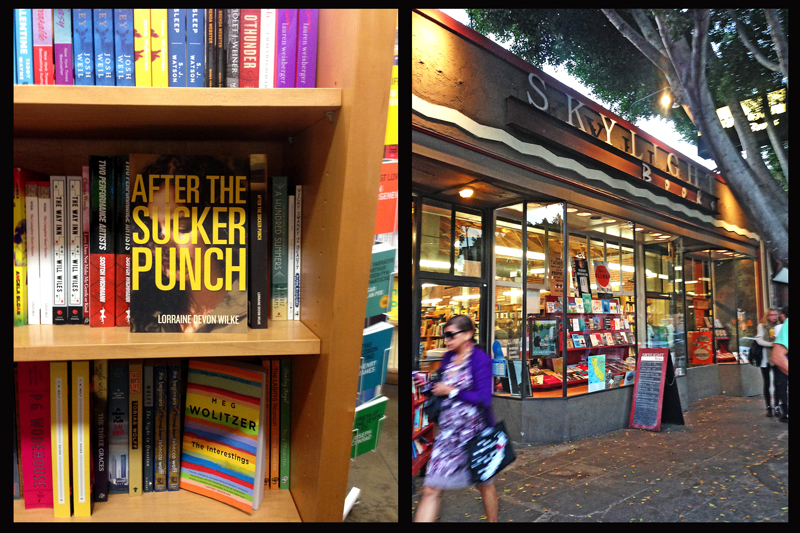
First I contacted Skylight Books in Los Angeles, “what a neighborhood bookstore should be,” to make a pitch. The contact person sent me straight to their book buyer to see if he was interested. Gulp…
He was interested! “I’d like to buy 2 copies for the store and see how it does,” said the book buyer, and off those two copies went. I visited them yesterday (see above) and they look mighty comfortable on the shelf right above Meg Wolitzer’s NYTimes Bestseller, The Interestings, don’t you think? I urge Los Angeles area book lovers to find their way into this very cool bookstore and pick up a copy (or two… there’s two, remember? :)… cuz I want to be sure “how it does” is some version of “it does really well”!
Here’s the information:
SKYLIGHT BOOKS 1818 N Vermont Ave, Los Angeles, CA 90027 (323) 660-1175
They don’t have a local authors section, so just find your way to the “W’s”… (hence, that Wolizter proximity!).
But I wasn’t about to stop there. Two books in one cool bookstore is a start, but I had to see what else I could stir up….how about Vroman’s in Pasadena?
Known as “Southern California’s Oldest & Largest Independent Bookstore,” Vroman’s is another eclectic, beloved neighborhood bookstore that has a stellar reputation amongst writers for its support of the community in all its configurations… including independent authors (which isn’t necessarily the case with everyone in the book industry; see Who Do We Have To ____ To Get a Little Respect Around Here?).
I had spent time at Vroman’s earlier this year when Karrie Ross, the author of an art/essay book in which I participated as a writer and photographer — Our Ever Changing World: Through the Eyes of Artists: What Are You Saving from Extinction? — organized a reading at the store (something I’ll do after the holidays). It’s a very nice set-up, interesting and bursting with every kind of book and book-related item you can imagine, and it’s clear they are vibrantly engaged with the world of reading.
So I got in touch and was delighted to discover they have a “Local Authors” program, which invited me to bring a total of 8 books to the store, 5 for the iconic Pasadena location, and 3 for the Hastings Ranch location, all of which should be on shelves this week. Just ask for the “local authors” section and you’ll find After The Sucker Punch there.
Here’s the information for both locations:
VROMAN’S PASADENA 695 E. Colorado Blvd Pasadena, CA 91101 626-449-5320 (Fax) 626-792-7308 email@vromansbookstore.com
VROMAN’S HASTINGS RANCH 3729 E Foothill Blvd Pasadena, CA 91107 626-351-0828 (Fax) 626-351-0798 email@vromansbookstore.com
As all book lovers know, there’s a great debate out there regarding the burgeoning industry of online book sales and the impact of that inexorable trend on the shrinking population of bookstores, particularly of the independent variety. Since I am a champion of books, writing, and reading, whatever form, format, or delivery system is involved, I want to be sure to play my part in keeping all options as alive and well as can be managed! So if you live in or are visiting Southern California, I encourage you to visit one or all of these bookstores. And when you’re at the counter to pick up your paperback copy of After The Sucker Punch, be sure to tell them I sent you! 🙂
The cheers of indie authors who’ve FINALLY found outlets for their books — whether Amazon, Smashwords, Lulu, indie bookstores; wherever — can be heard far and wide from every corner of the globe. It’s been loudly exclaimed by everyone in the know that it’s the dawn of a new day for writers everywhere. After years of dismissal and disrespect from traditional publishers and their gatekeepers across every element of the literary landscape — from query letter browbeating, ice-cold rejections, overly possessive editors, and blasé publishers with no marketing budgets — independent authors have now taken control of their destinies and ventured forth, filters, limitations and grumpy gatekeepers be damned.
Good, right?
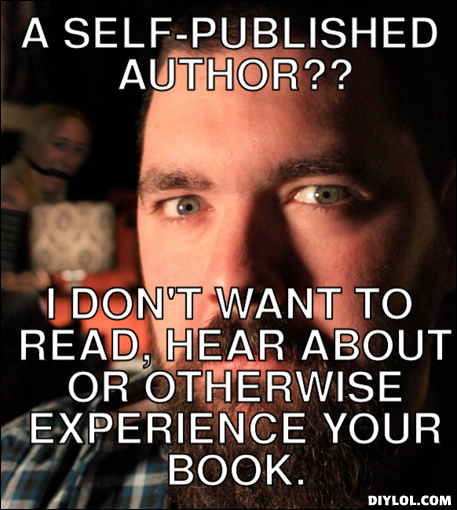
Yes, in some ways. In others, we indies are still very much the ugly stepsisters to our more vaunted and valued legacy colleagues. Don’t think so? Just today I clicked on the website of a “recommended book blogger” (whose name I will leave out for the sake of decorum) who seemed hell-bent on insulting those self-published writers who’d had the audacity to contact him for reviews. His FAQ page not only went out of its way to discuss how unreadable he found most self-pubbed books, but his hissing condescension about “amateurish” writers incapable of even understanding the word “no” led to a sneering pronouncement that he didn’t want to read, hear about, or otherwise experience the books of said authors and, therefore, please don’t waste his time by contacting him.
Sheesh. The fumes of disdain emanating from his page practically choked me.
And he’s not the only one. Media sources abound with snitty-toned announcements that they DO NOT TAKE SUBMISSIONS FROM SELF-PUBLISHED AUTHORS (caps are theirs). Review sites that cover legacy authors free-of-charge gouge self-pubbers in the hundreds of dollars. Feature writers who ooze admiration for the latest debut novelist from the Big 5 have actually figured out how to roll their eyes on Twitter over the pathetic shenanigans of indie writers trying to get their attention.
We’re definitely the “not cool” kids on the playground and this persistent — and, in many cases, undeserved — marginalization makes launching an indie book all the more difficult. When the overriding presumption is that your book is — to put it bluntly — a piece of shit (a presumption with which I personally take umbrage), you’re not only starting from zero in the world of marketing and promotion, you’re climbing from less-than-zero.
Fair? No. But let’s face it; we kinda dug our own hole, we self-published writers. Despite the fact that the industry is changing and evolving on a daily basis, with increasing numbers of options and outlets available, and more and more authors — even some from the traditional world — opting to go the self-published route, the rickety stage set early-on was built largely by anxious amateurs eager to define themselves as “authors” before availing themselves of the various elements of true professionalism. There are still far too many self-pubbed books that are amateurishly written, with poorly edited copy and covers that fairly scream “I’m a self-published writer!!!” And, unfortunately, still too many authors who relegate those necessary tasks as negotiable rather than essential — a professional blunder akin to a restaurateur opening a bistro without a qualified chef, a decent waitstaff, or a well-designed room. The resulting customer and industry response (see above) is the sad and subsequent remnant of that miscalculation.
We are all, every one of us, tarnished to some extent by the mistakes of the early (and prevailing) corner-cutters, but those mistakes are, hopefully, being mitigated by the growing number of independent authors who do approach their work, their books, and their presentation with impeccable and unassailable standards. And that growing number (of which I count myself) deserve to NOT be automatically generalized into a category of “subpar” by media, reviewers, bloggers and the like. Just as many traditionally published books (to once again put it bluntly) suck, yes… so do many self-published books. Conversely, just as many traditionally published books are profound and not-to-be-missed works of literary wonder, so, too, are many self-published books.
That the aforementioned blogger and his snarky cohorts refuse to consider that is evidence of literary shortsightedness. Like geezers who discount useful technology as “newfangled” or antiquarians who bemoan penmanship while ignoring heartfelt emails, they’re missing out. Of a gem. A “stunning debut.” A “keenly executed character study.” A really good book.
Their loss. But the unwillingness of the wider media to explore indie authors with the same open-mindedness — and vetting and reviewing protocols — implemented for those traditionally published, is creating a literary ghettoization. And the resulting deficit is felt not only by the writers being dismissed simply by virtue of being self-published, but by readers who have less access to those authors and their work because of that ignorance.
Just as self-published writers are obligated to evolve and demand of themselves the highest levels of professionalism, so, too, must accompanying media evolve away from their myopia and literary bigotry. If they do not, what is being wasted is far more than their time; also lost is the cultural embrace of much talent and many good books being written by courageously independent authors who deserve at least a look.
As I march forward in this exotic adventure called independent publishing, I find myself thrilled to discover just how passionate people remain about READING. When I was a young girl, reading was my escape, my entertainment, my world away, but as the noise and movement of ever advancing digital life has evolved, it wasn’t clear to me whether the lure of a good book (however it is delivered!) was still as powerful a draw. Seems it is. Good timing on my part, then, what with just now entering the fray with After The Sucker Punch, “She Tumbled Down,” and more to come!
So it was with great delight that I received a missive from Scottish book blogger, Fiona Mcvie (yes, with a lower case “v”!), whose site, Author Interviews, features wonderfully in-depth conversations with specific writers she reaches out to for one reason or another. She posted our “conversation” this week and I was happy to share perspective with her about books, the writing process, readers, even my favorite color! 🙂
I’ll send you over to her blog and hope you enjoy a little sit-down with two girls just chattin’ about books!
My rock & roll past is no secret. In fact, most who know me are aware of how all-encompassing music was, has been, for most of my life. It wasn’t a hobby, a little thing I did on the side; it was MY LIFE… in all caps.
I started singing professionally when I was a teenager, hit the road with a rock & roll band before I was old enough to drink in the bars we played, and I ate the LA music scene during the ’80s like it was the best damn meal out there. No matter what else I may do in my life as a creative artist, being a singer/songwriter, and being able to get up on stage or behind the mic in a recording studio with incredible musicians making magic around me is, seriously, one of the greatest highs to be had.
But rock & roll dreams tend to be built on the alchemy of youth, opportunity, contacts, and, in some case, sheer luck, and as luck (or destiny or fate or whatever it is that drives these things) would have it, and as much fun as I was having, I didn’t quite get to the mountain I had in mind. There was disappointment in that, surely, but still… what a journey!
So now, as I write my articles and books, take and share my photographs; do any of my beloved creative activities, I keep my Music Muse nearby, always ready to tap her shoulder and say, “Wanna come out and play?” And she still (I see my Music Muse as a “she”!), miraculously, does. A few months ago I was in the studio singing backups for the upcoming album of my friend, Ken O’Malley, and his new band, The Ne’er Duwels. Friend and frequent songwriting partner, Jason Brett, and I cut one of our songs this past year and will get to others when I’m in Chicago next. Occasionally people write to tell me they picked up my CD and, still and always, I sing my lungs out in the car. It may not be Madison Square Garden but damn if the acoustics aren’t good! 🙂
Then, out of the blue, a music colleague of mine shared some information from an Internet radio station called Women of Substance Radio, the music brain child of musician and entrepreneur, Bree Noble; they were looking for new music from female artists. I had not heard of the station but loved the name and mission statement:
WHAT IS A “WOMAN OF SUBSTANCE”?
Substance can be defined as “significant quality with the implication of a hidden or special significance.” Music of Substance is not just entertainment or fluff, but has an essential “core” brimming with heart, soul, and spirit.
Women of Substance are female performers who deliver high quality music that speaks to the listener through vocal excellence, depth of character and emotion, and lyrics that leave a lasting impression. This includes Label Artists, Indies and Unsigned artists alike.
Women of Substance Radio has been on the air for 7 years. We are an Internet Radio station garnering fans from all over the world. WOSRadio plays the BEST female artists, both label and Indie, in all genres. We hand-pick all of our music starting with icons of the past like Carole King, Joni Mitchell, Carly Simon, Fleetwood Mac, Heart, Tracy Chapman, Mariah Carey, No Doubt, Tori Amos, Sarah McLachlan, Jewel, Michelle Branch, Kelly Clarkson, Sara Bareilles, Colbie Caillat, Adele, Carrie Underwood, Amy Winehouse, Feist, Christina Perri, Ingrid Michaelson, and so many more.
As one who sings, loves, and – hopefully – writes the kind of music that has an “essential core,” I raised my hand without hesitation. And, lo and behold, one of the two songs I submitted, “Comfort Me,” was chosen for their new music playlist and will be put into rotation starting tomorrow (9.8). As the title says… then suddenly there’s music again!
I’d be delighted for you all to click onto the station, listen, vote, do that thing you do. The necessary information and links follows, and I sincerely thank you in advance for your ears and your support. Of course, I mostly hope you enjoy listening to my song and the music of other singing, songwriting “women of substance”!
COMFORT ME (written by Lorraine Devon Wilke, David Resnik & Rick M. Hirsch) will debut on the “What’s on my iPod” Show, our weekly new music show on WOSRadio. See the playlist HERE.
Show airs September 8-12, 2014 at 2 PM PT; same show airs every weekday this week.
You can also tune in on Mobile Devices by downloading our Mobile App. Just search for “Women of Substance” in your App Store or use these links to download:
After this week, COMFORT ME will enter heavy rotation on WOSRadio for 2 weeks. Fans are invited to vote “thumbs up” for your song by clicking the “thumbs up” icon while it is playing on our desktop player (and some Android devices).Fans can also request your song right from the desktop player top menu. Songs that receive votes and requests will remain in heavy rotation for an additional two weeks (possibly more depending on voting) and will be considered for the Top 20 which is posted on our website and linked to our player.
Who’s reading what and is self-publishing dropping?
The answers to those questions might surprise you, given the current and conventional wisdom that ebooks and self-publishing are a tsunami of change flooding every corner of the literary landscape. It turns out there’s some statistical nuances to that perception that might inspire, perhaps, a rethink, not only in how one views the publishing industry as a whole, but in how each individual writer approaches their own “industry.”
The information I’m about to share comes from an interesting post written by Ron Knight, whose site, UpAuthors.com, defines itself as follows:
UPAuthors.com is a collaborative effort, founded by marketing expert Melissa Powely and author Ron Knight. This advisor program was developed to give authors a way to share resources and provide economically priced opportunities. These opportunities arise in the ability to have an inexpensive web presence with search engine optimization, the use of social media networks, sharing of like minded contacts, and a variety of resources that can help you along the way in developing your book and your career as an author.
As as independent author open to any new and innovative ways to market and promote my work, I was interested to explore their site and see what they might have to offer someone like me. In doing so, I came upon an article Ron put up last week titled, Why did self-publishing drop 46%?
That title alone caught my attention, as I’ve been led to believe that self-published titles, particularly in ebook, are a growing market trend, with ever-increasing numbers and a burgeoning audience eager to purchase those titles. Ron’s research, it turns out, has led him to a different conclusion, one that appears to be supported by statistics:
In 2010, there were 3,844,278 self-published books. It was a time when people started going on their own to find other sources of income. They put up their own website, uploaded a book to Amazon, signed up for Facebook, and realized that publishing and marketing was cheap.
That turned out to be the problem with self-publishing…cheap.
Books were rushed and poorly written.
Publishing was rushed, which flooded the markets with first-time authors.
Marketing was rushed, producing low results.
In 2012, self-publishing dropped to 2,042,840 titles and in 2013, self-publishing dropped to 1,108,183.
I’m not great at math, but that’s about a 50% drop each year, which means by 2016, there may only be 130,000 self-published books.
Now, having only embarked upon my own self-publishing endeavor in the last few months, I cannot in any way intelligently counter these statistics, but given what I’ve already learned in that short period of time, frankly, they don’t surprise me. What I’ve found most discouraging about the self-publishing industry are the same things Ron cites as reasons for its current downtrend, particularly the quality issue. As one who holds myself and my work to the highest bar possible, it’s dispiriting when, by simple BEING a self-published author, one is automatically categorized, sight unseen, as someone whose book is “rushed and poorly written.” This translates to literary media and journals that will not take submissions from self-published writers, literary contests that exclude self-published books; review sites that will not respond to queries from self-published writers, and so on. Their rationale? Most likely the familiar meme of “books were rushed and poorly written.”
But the downtrend is about more than that, according to Ron. It’s about MARKETING. About how we self-published authors tend to market – or not market – our work:
What’s the main reason self-publishing is fading away?
[Han] Huang, [Director of Product Management for Data Licensing at Bowker] an expert in product management said that self-published books are, “Marketed almost exclusively online.”
Traditional publishing uses multiple ways to market, along with focusing on specific areas to market which is based on the author’s genre, storyline, and characters.
Self-published authors attempt to market books to the entire world via Amazon, social media, and their website.
Ain’t that the truth?!
But for a self-published author who hasn’t rushed a poorly written book into the marketplace but, instead, has a professionally produced, well-edited, and very worthy title to sell — but not a lot of money to spend on big-time marketing and promotion — what is the path to success? We might want to break out of exclusively online promotional options, but what are the affordable choices? Ron has some good suggestions:
Here’s the good news!
Every self-published author that continues on this trend [exclusively online marketing] will fade away. It’s not my opinion…it’s a fact.
For those of you that want to succeed at self-publishing, then you can succeed by following traditional marketing methods.
Here’s a list of traditional ways to market. Remember that you don’t have to do all of this at once. Mix and match, invest what you can, but this is your only way to survive and eventually sell millions of books.
~ Target Market Research (Knowing which cities would purchase your book. Also, which cities have the highest income and education rates.)
~ Book Conferences
~ Events
~ Book Signings
~ Book Clubs
~ Media Coverage
~ Advertisements (Billboards, Newspapers, Commercials, Movie Theatres)
~ Press Kits
~ Book Reviews
~ Reading Samples/Serialization
~ Speaking Engagements
The next stage should be…
~ Placement of books in big box stores
~ Placement in bookstores, both chain and local (Especially bookstores that report numbers to the Bestsellers List)
~ Placement of books on the end-caps of bookstores and big box stores
~ Film Adaptation (There are resources for film adaptation. See below.)
Some authors feel it’s great news that self-publishing is fading away. This opens the door for authors that are going to stick it out and adjust their marketing. Meanwhile, the authors that rush a book on Amazon will soon fade away.
Start a budget for marketing, even if it’s only $50 a month. This simple adjustment will propel your career, while other authors find a different career…
“There’s a big gap between you and the all-time bestselling authors in the world. Inside that gap are billions of potential readers.” ~ Ron Knight
OK, Ron. Since I intend to be one of those authors who will stick it out and, therefore, will adjust my marketing towards a goal of longterm success, I’m paying attention. And given the wide range of options listed, with assurances that one is not obligated to do it “all at once,” I’ll start making my own list of what to tackle first. I appreciate the information.
If you’d like to read the full piece, which I suggest you do, click over to Why did self-publishing drop 46%?. The UPAuthors site looks to be a very useful resource for any author looking for marketing assistance and information, so be sure to take a look at that too. I plan to avail myself of it in whatever ways I can… dammit, I ain’t gonna be one of those crashing statistics! 🙂
And to those of you new to me and my work, I hope you’ll take a moment before you leave to read through other articles at this blog, as well as acquaint yourself with my published work (After The Sucker Punch, a novel; “She Tumbled Down,” a short story), details of which can be found via my Amazon Author Page HERE.
You must be logged in to post a comment.