‘Share Stories About YOU’: Advice From a Twitter Follower

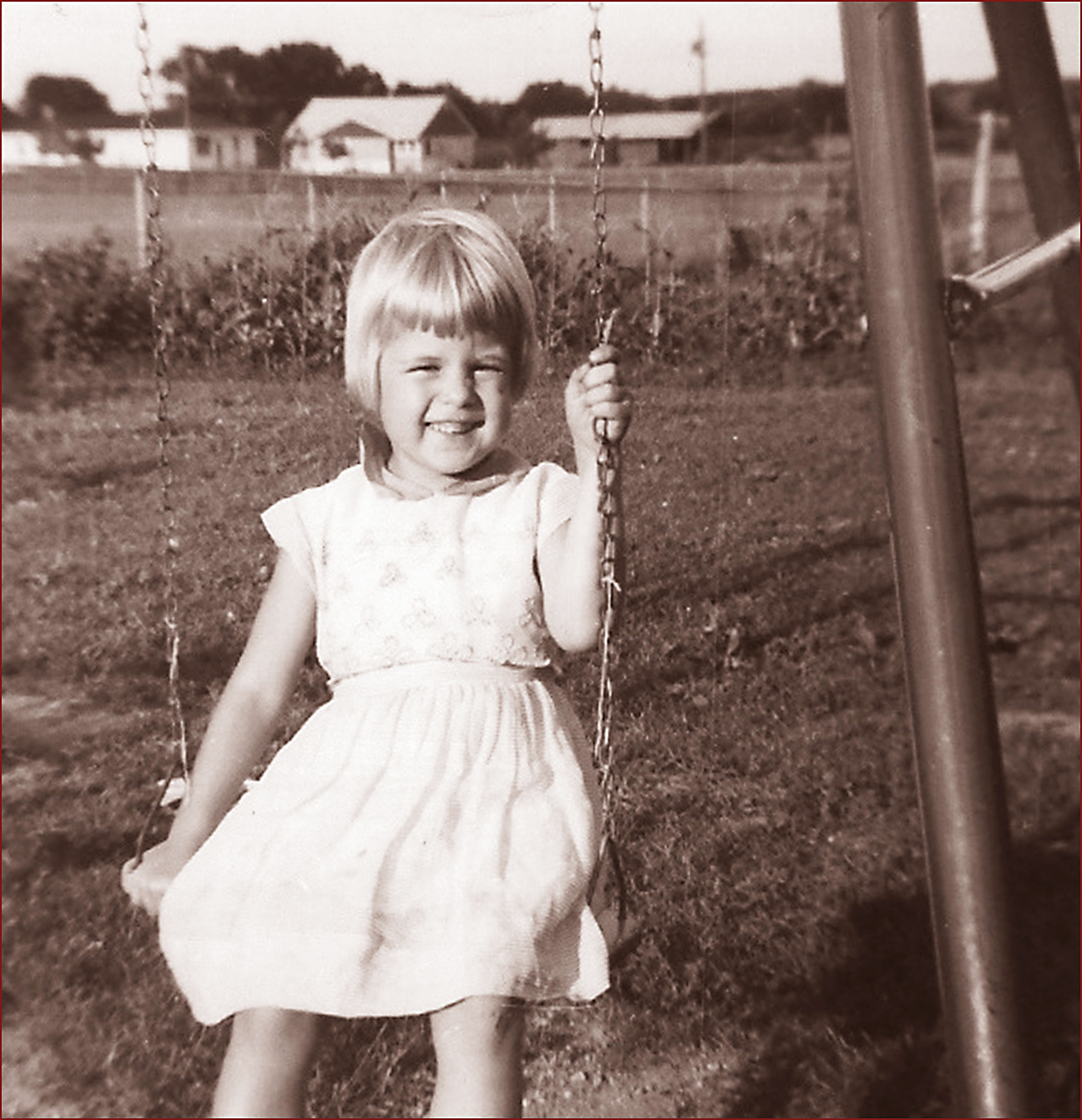
Little LDW...waiting for the cows to come home.
Little LDW…waiting for the cows to come home.

Self-promotion. It’s a crazy thing, isn’t it? 

It doesn’t matter whether you’re on Facebook, Twitter, Tumblr, or Instagram; it makes no difference if you’re famous, not famous, flinging commentary, sharing jokes; promoting books, movies, restaurants, mascara lines, or family pictures, everyone’s in on it. The rushing, churning, never-ending flow of information being pushed, shoved, bandied, and sometimes battered online. 

I regularly scroll through my Twitter feed and am amazed at the sheer volume of information rolling down the screen: this or that meant to snag my curiosity enough to make a click that leads to a link that, hopefully, compels a read, a retweet, or, most desirous, a purchase. It reminds me of those street bazaars where you wander through narrow aisles of merchandise as sellers wave items and hawk their wares in a rush of cacophony…or those scenes in movies where cars get stuck in traffic to be bombarded by rowdy street kids chattering over each other for a hand out. Frankly, it’s exhausting.

And I’m right in there with the best of ’em.

Yep, like every other self-whatever, I’m jostling along with the crowd, jumping up and down in earnest effort to grab attention for my work. Why? Well, first of all, because it’s worthy, and second of all…we have to. It’s what you gotta do to be viable in today’s world. It’s mandated by the “welcome to your self-career” handbook. 

But, despite business need and protocol, what you discover when you become part of that hand-waving, ware-hawking, book-bandying horde, is that you sometimes feel akin to a polyester-sweating used car salesman dangling bizarre freebies in hopes of closing a sale (“Buy today and we’ll throw in a toaster!!”). I know it’s part of the gig—dear God, I know it’s part of the gig—which is why I’m delighted to be working with a publicist in launching my upcoming novel, Hysterical Love. But beyond that thrilling collaboration, to the more day-to-day, “takin’-it-to-the-streets” stuff, damn if I don’t covet my own full-time carnival barker! 

Today was one of those days. So I posted this Tweet:

“Sincere question: what kind of tweets make you chk out a book? Cover? Blurb? Quote? I see so many & wonder what works. Feedback appreciated.”

And the first, almost immediate, response was:

“The WRITER! Share stories about YOU…”

Fascinating. I can’t say I’d have thought sharing stories about me was a particularly welcomed way to interest potential readers—what with our many unwelcomed narcissistic cultural trends—but I got the meaning. And it was appreciated.

Because, though I’m not shy, I do tend to steer away from anything that blares of self-trumpeting. I’d always rather talk about you than about me. And I’d certainly rather talk about the work than share personal anecdotes. When I spent my time years ago writing two-four articles a day for various publications, I figured people learned enough about me via my politics, my views, my philosophy; my take on things. Even now, I still write the selective essay that offers my perspective to anyone paying attention. But beyond what is gleaned from all that jabbering, I’m not much of a self-promoter. I’ve never taken or posted a “selfie” (and won’t); any travel pics I put up are usually bereft of images of me, and I’m not much compelled to participate in TBT. I will share special events or notable information related to my work, but, really… is there that much about ME that’s pertinent to selling my books?

Beyond my quick-commenting Tweeter, a business-savvy friend of mine says “yes.” She concurred that people want to get a sense not only of the book (movie, restaurant, mascara line) they might choose to enjoy, but of the person who created it. Which, okay, I’ll concede: considering how much I myself enjoy the interesting interview with people I find interesting, point taken.

So in a nod to my responding Tweeter, I offer this little anecdote…yes, about me! 

Though I was born in Chicago, I grew up in a tiny farm town in Illinois—Richmond (does every state have a town named Richmond?)—and when I was a little girl, my father threw out our TV and demanded we spend our free time reading books. He’d bring home boxes from the Chicago library and, despite my true annoyance at not being able to imbibe in Saturday morning cartoons and the like, getting those boxes was like a never-ending literary Christmas. It did, no doubt, have much to do with sparking my love affair with words and writing.

My favorite writer during that period? Laura Ingalls Wilder. Her books transported me to a time and place I could actually see, touch, and feel. As a young country girl surrounded by prairies myself, I became part of that big, frontier family she chronicled. It was a transformative experience. She later became an inspiration as both a tenacious female author, and one who didn’t have success until later in life, two things to which I  can relate!

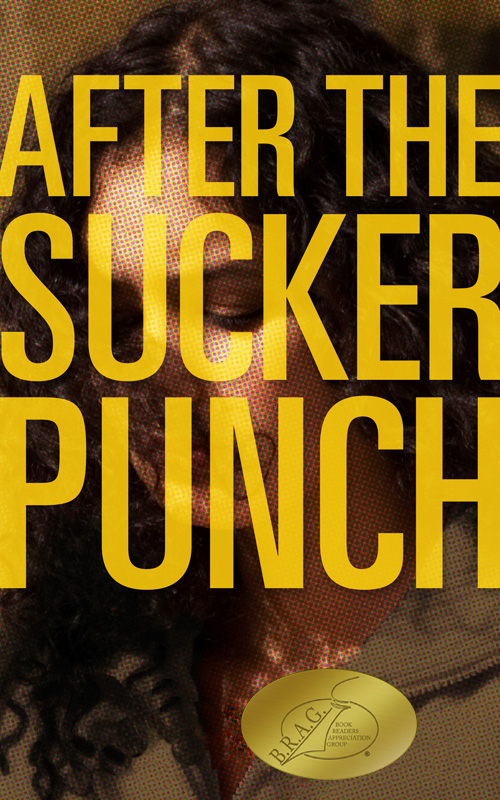
And, this last fact might intrigue you: the same father who encouraged my passion for reading was also the one whose enigmatic journals incited the story behind AFTER THE SUCKER PUNCH… 

There. How’s that? A little something about me. I hope my Tweeting friend enjoys it! And maybe I’ll try it again some time… you never know, this could be fun! 🙂

[Btw, the photo at the top is a favorite of mine from our days in Richmond; one day—either before or after that shot was taken—a cow rambled by that same swing set without much notice of me and my siblings playing in our scruffy back yard! Gotta love the country!]  
LDW w glasses


Visit www.lorrainedevonwilke.com for details and links to LDW’s books, music, photography, and articles.

Sunday Book Highlight @ Layered Pages Book Blog

Stephanie Moore Hopkins of both indieBRAG (with its coveted B.R.A.G. Medallion) and her own fine book blog, Layered Pages, has done a “Sunday Highlight” of my upcoming novel, Hysterical Love. I’m delighted to have the book featured at her site and invite you to enjoy the piece:

layeredpages's avatarLayered Pages

Hysterical Love

HYSTERICAL LOVE… a novel by Lorraine Devon Wilke

Dan McDowell, a thirty-three-year-old portrait photographer happily set to marry his beloved Jane, is stunned when a slip of the tongue about an “ex-girlfriend overlap” of years earlier throws their pending marriage into doubt and him onto the street. Or at least into the second bedroom of their next-door neighbor, Bob, where Dan is sure it won’t be long. It’s long.

His sister, Lucy, further confuses matters with her “soul mate theory” and its suggestion that Jane might not be his… soul mate, that is. But the tipping point comes when his father is struck ill, sparking a chain of events in which Dan discovers a story written by this man he doesn’t readily understand, but who, it seems, has long harbored an unrequited love from decades earlier.

Incapable of fixing his own romantic dilemma, Dan becomes fixated on finding this woman…

View original post 1,530 more words

How We Find Our Stories and What Sparked Mine: AFTER THE SUCKER PUNCH

Meeting with Readers

Do we write for ourselves or for our readers? Do we write what we think will sell, what might get us the most attention, or what we’re compelled to write? All fair questions, particularly given the challenges of marketing a book, specifically an indie book, in an ever-changing industry.

A colleague of mine, quite the brilliant writer, spoke with me recently on the topic, specifically about “fan fiction,” that ubiquitous genre that has unleashed vampires, zombies, paranormal lovers, and whip-yielding CEOs on an eager reading public. In his weariness at the uphill climb of promoting literary fiction (my genre, as well), my friend asked if I thought I could ever write a “genre” book, for no other reason than to tap into the trend and hopefully hit the mother lode. I thought about it. I mean, if you used a pseudonym, if you created an alter ego, why not?

Because I couldn’t do it. Not because I’m above such things, but because the Muse that compels me to write, to sit down at the computer and tap into something ephemeral and demanding and propulsive, has to be sparked by the Idea That Must Be Written. For me, that happens rarely and only with stories I’m moved by, stories I’d want to read myself, stories I feel contribute something of depth and value to the world. They don’t have to be dirges, certainly humor is a big part of my style, but they’ve got to tap into something meaningful. For me. Nothing against vampires—if I had a vampire story that tickled my brain to the point that I had to write it, I would—but I cannot imagine finding the mental, emotional, and creative energy to write a “trend-tap” story in hopes of going viral.

Could you? How do writers find their stories? What does move most authors to do the work, take the steps, dedicate the time to complete a novel? 

Fact is, I wasn’t sure I’d ever write a novel… of any kind! It seemed so large and looming, that process, particularly after years of writing screenplays with their 120-page formats and mandate to move the story along with just visuals and dialogue. That was certainly its own challenge and skill set, but it couldn’t approach the depth and breath of an 80K-100K+ word novel! And I never felt I had a story deep enough to compel the novel format… until After The Sucker Punch came to me.

ATSP has gone global... now being read in Greece in by Marina Terzopoulos!

Some of you are familiar with the story: a thirty-six-year-old woman—ex-rocker, lapsed Catholic, defected Scientologist, and fourth in a family of eight complicated people—finds her father’s journals on the night of his funeral and discovers he thought she was a failure. The journal she reads is ten-years-old, there are others that may offer more contemporary, less denigrating, opinions, but the impact of knowing he’d ever dismissed and mischaracterized her struggles, her successes, her relentless quest to achieve her goals, is shattering… a “sucker punch.” As the title suggests, the story follows her journey as she goes from reeling at the information to attempting to make sense of it, getting beyond it to rebuild her sense of self, her view of her family and childhood, and certainly her understanding of her father.

It was a story sparked by a real incident: My own father wrote journals and, many years after his death, one was brought to my attention that was particularly focused on me in a somewhat, shall we say, critical way. I had my understandable reaction, but since I’d had a fairly distant relationship with my father throughout my adult life, his retrospective critique, while hurtful, was not, for me, particularly life shattering. It was only when I brought it up in a women’s group I was in at the time that I realized how painfully and provocatively the incident translated to others: The women in the group were collectively horrified; the variety and intensity of their responses was fascinating, most exclaiming that such an indictment from their own fathers, particularly posthumously, would have left them devastated. Suddenly this seemed like a story worthy of novel treatment! 

My enthusiasm stirred, I then took the prompt – “how would you feel if you found your father’s journal and he said you were a failure?” – to a number of others, both men and women, and accrued a panoply of replies on all sides of the spectrum. From there, so excited about the depth and variety of what I was hearing, I began to piece my story together, dug deeper to go beyond the “inciting incident” to explore issues that resonated with many of the people I spoke to: love, relationships, religion, careers, how we frame success, how we define ourselves, etc. 

At that point I had the arc, created a plot, fleshed out characters informed by my research, and became driven to write that narrative, with those characters, and the very specific ending they all led me to. It was an exciting, exhilarating, creative process…

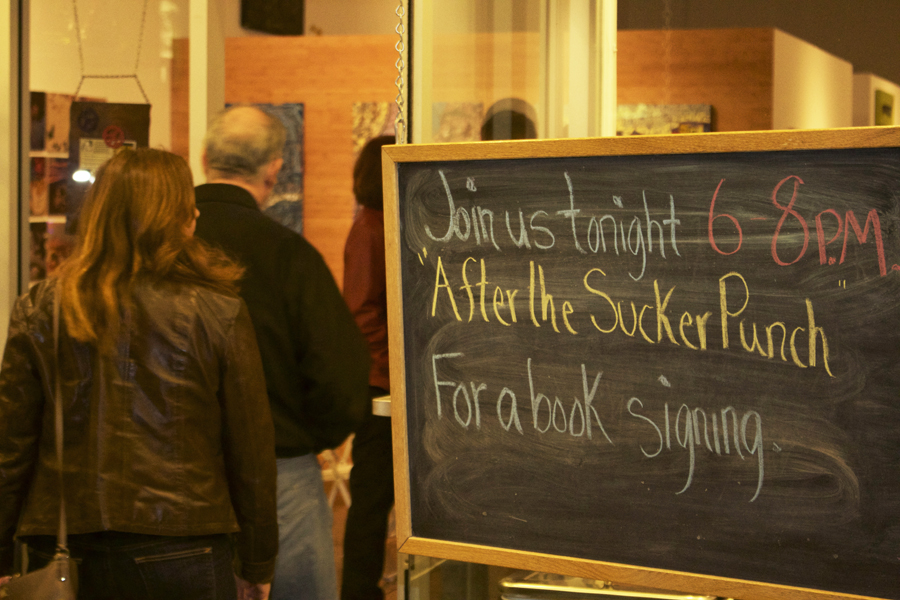
Lining up for a book signing.

… and the only way I can write a novel: relentlessly pushed by my Muse to tell that specific story. Literary fiction? Not genre? Won’t necessarily bring in the hordes,  go viral, inspire a rabid fan base? So be it. But I guarantee, whoever lines up to purchase my book, whoever clicks a buy button, whoever goes to a bookstore to find it on a shelf, will find a narrative told with passion, imbued with heart, and reflective of people and experiences that have moved me. And will, I hope, move them as well!

How do you find your stories, fellow writers?     

Reading Photographs by Tom Amandes

LDW w glasses


Visit www.lorrainedevonwilke.com for details and links to LDW’s books, music, photography, and articles.

Falling Into HYSTERICAL LOVE: the New Book Cover Makes Its Debut

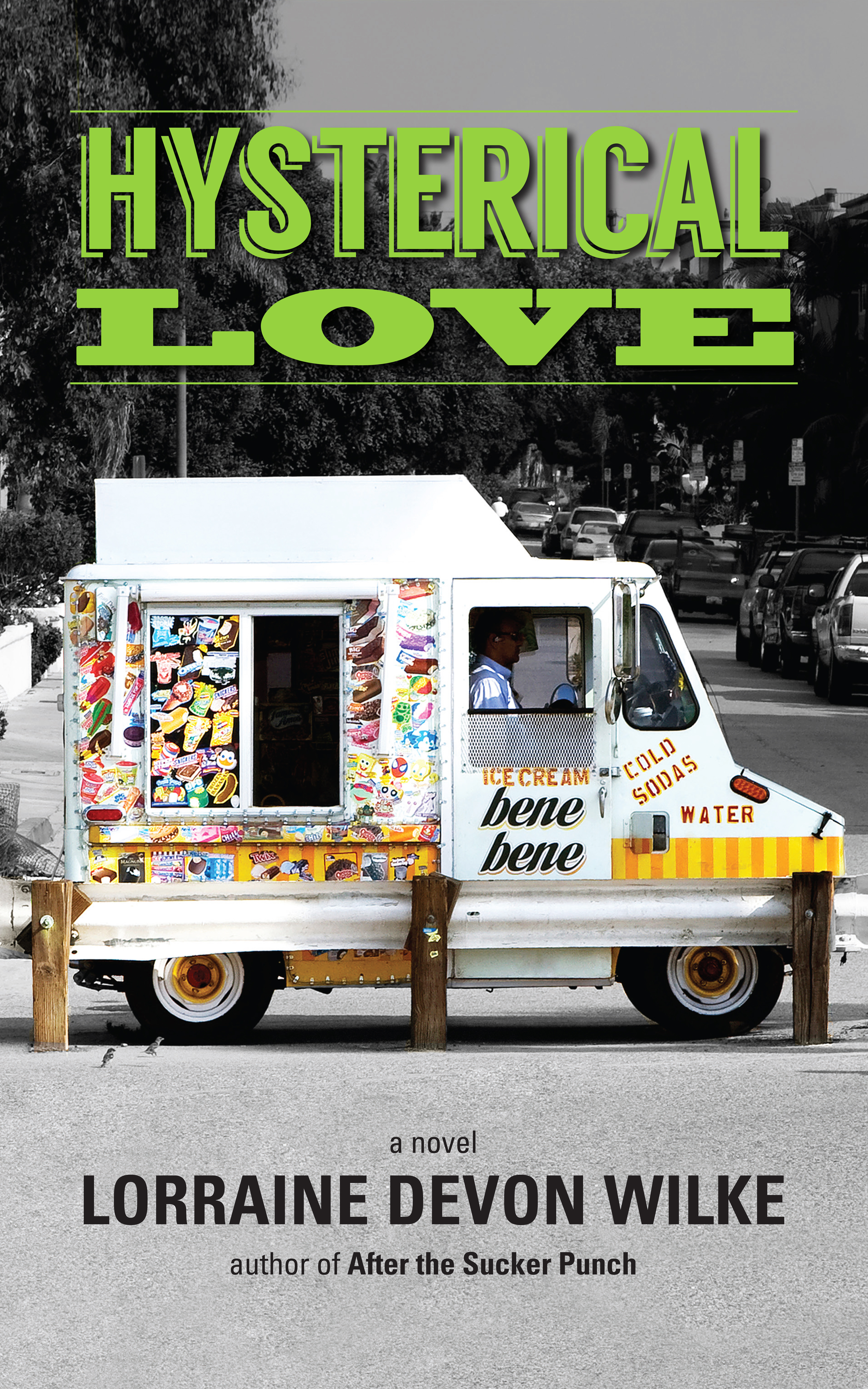
HL front cover

When you ponder the task of writing a novel, the idea alone seems to come with certain cultural longing, the sense that everyone with a love of words has had the urge to do the same. Write a novel, that is. Some talk about it, some have tried and failed, some have worked hard and succeeded; even the phrase, “the great American novel,” is an embedded part of our national lexicon. Writing a novel seems to be an almost mystical journey, a creative vision quest filled with trials and terrors, but still, and always, a goal of profound eminence.

And it is. It really is. It’s a singularly stellar experience, a creative process I seriously love, and one I’ve had the good fortune to experience twice (so far), first with my debut novel, After the Sucker Punch, and, most recently, with the completion of my latest, soon to be released, Hysterical Lovepublication date, April 7, 2015. I’m excited to introduce the book with the colorful prelude above, the cover designed by Grace Amandes, who also created the evocative cover of After The Sucker Punch.

My publicist, Julie Schoerke of JKSCommunications enjoying an advanced read!
My publicist, Julie Schoerke of JKSCommunications, enjoying an    advanced read of Hysterical Love!

I’m sharing this with you now, so many months ahead of the pub date, because this go-around I’m working with a top-notch publicity company, JKSCommunications, whose team, led by the indefatigable Julie Schoerke, is currently rolling out a robust pre-launch campaign to get this new book properly and prominently introduced, launched, and promoted. As in indie writer, it’s exciting (even comforting) to have a team of highly skilled, warmly accessible, and incredibly enthusiastic professionals getting in the trenches with me, a place that tends to be lonely for those of us publishing on the path considered “non-traditional.” I’m delighted to have their collaboration and guidance, and certainly the shared intent to make Hysterical Love a smashing success in all the ways it can be.

Towards that end, the book is currently available as a preorder at both Amazon and Smashwords; you’re all invited to jump to the front of the line to sign up for your copy! 🙂

(And for those interested, the paperback will be set up for preorders soon…stay tuned.)

Now that you’ve met the cover, the publicity team, and the preorder links, let me tell you a bit about the storyIt is, in some ways, a bookend to After The Sucker Punch: though very different stories told from very different points of view, both involve adult children reading the written words of a father and being propelled on a journey of a personal and/or transformative nature as a result. Here’s HL‘s synopsis:

Dan McDowell, a thirty-three-year-old portrait photographer happily set to marry his beloved Jane, is stunned when a slip of the tongue about an “ex-girlfriend overlap” of years earlier throws their pending marriage into doubt and him onto the street. Or at least into the second bedroom of their next-door neighbor, Bob, where Dan is sure it won’t be long.

It’s long.

His sister, Lucy, further confuses matters with her “soul mate theory” and its suggestion that Jane might not be his… soul mate, that is. But the tipping point comes when his father is struck ill, sparking a chain of events in which Dan discovers a story written by this man he doesn’t readily understand, but who, it seems, has long harbored an unrequited love from decades earlier.

Incapable of fixing his own romantic dilemma, Dan becomes fixated on finding this woman of his father’s dreams and sets off for Oakland, California, on a mission fraught with detours and semi-hilarious peril. Along the way he meets the beautiful Fiona, herbalist and flower child, who assists in his quest, while quietly and erotically shaking up his world. When, against all odds, he finds the elusive woman from the past, the ultimate discovery of how she truly fit into his father’s life leaves him staggered, as does the reality of what’s been stirred up with Fiona.

But it’s when he returns home to yet another set of unexpected truths that he’s shaken to the core, ultimately forced to face who he is and just whom he might be able to love.

Hysterical Love offers a deft mix of humor and drama in a whip-smart narrative told from the point of view of its male protagonist, exploring themes of family, commitment, balancing creativity, facing adulthood, and digging deep to understand the beating heart of true love.

More as we go…!

PREORDERSAmazon & Smashwords

LDW w glasses


Visit www.lorrainedevonwilke.com for details and links to LDW’s books, music, photography, and articles.

Caught Between a Bookstore and an Amazon Place

A view from a bookstore

I had an interesting experience recently, one that emblemized the continuing turf-wars indie writers can get unwittingly caught up in amongst factions of the publishing world: those with whom we’ve attempted to engage with little or no success (traditional publishers); those we’re seeking to involve in our independent marketing efforts (bookstores), and those who actually give us the platform and opportunity to fulfill our goals as creative writers (Amazon, Smashwords, and others). That’s a big, unwieldy bunch and it turns out you don’t need to be a big player to get buffeted by the undertow. Here’s what happened:

A friend walked me into a sweet little bookstore in a sweet little town on the northern coast of California, and this very generous friend, always a big supporter of mine, spoke to the clerk behind the desk, extolling the virtues of my book, After The Sucker Punch, asking if there was a way that I could, as I have in other places, leave a couple of copies for sale in the store. Mind you, this bookstore is one that prides itself on its support of indie writers, so it wasn’t a stretch to presume they’d at least be open to the idea.

The pleasant young woman behind the desk took a copy of my very professionally produced book to the back office — “to check with the owner” — and, moments later, a fellow with fiery eyes (really) and an undeniably passive-aggressive edge to his demeanor (terse smile but poised for battle), approached with my book in hand, asked who the author was, and then proceeded to tell me he would NOT put my book on his shelves.

Why?

Because the physical copy, the actual paperback book, had been produced by CreateSpace, a subsidiary of Amazon, and he WOULD NOT sell the work of anyone affiliated with the place that’s “putting people out of business and destroying their livelihoods.” That’s a paraphrase but pretty close. To say I was taken aback by the vehemence of his rationale would be an understatement. I mean, little old me being partnered with the destroyer of lives, and here I was just trying to hawk my damn novel! I felt immediately defensive but tried to rein it in as best I could; attempted to reason with him (“I’m my own publisher…I’ve got it in other bookstores…it’s won awards”) but he was firmly pitched on his soap box.

Waving my book around like a wet rag, he went on to itemize his (many) complaints with Amazon in general, transitioned from there to detailing the formidable complexities he’d have to deal with regarding Amazon’s bookkeeping. When I suggested I could simply give him the books to sell and he would deal directly with me — leaving Evil Amazon out of it — he sputtered around with this or that, begrudgingly said I could maybe do a reading at some point “if you want to”; I responded that “why would I do a reading in a place that won’t sell my book?” We went round and round but ultimately it was clear this was a political issue, not a logistical one. 

What an odd and ironic happenstance!

After years of attempting to get a traditional publishing deal, ultimately opting to go indie, then working my ass off to write, create, and produce a good book, spend my time, energy, and considerable sums to promote and market that book, and, yes, do much of that with the help of a company that has given indie writers like myself the means to do for ourselves what others had been unwilling to do for and with us — well, to then have a bookstore owner reject that work out-of-hand because of my connection with said company??

As my mother used to say: you can’t win for losin’. 

Look, I get it: lots of businesses, jobs, careers, ways of life, etc., have been irrevocably altered, impacted, lost to the march of changing technology. Think of print shops that used to typeset our resumes, the typewriter industry as a whole, the greeting card business, companies that make stamps… hell, even the old horse n’ buggy trade! Things change, tastes change; the way we do business changes, and anyone who wants to survive has to change as well. It can be painful, people and professions can get lost along the way, but we are all obligated to learn, adapt, grow; embrace innovation and invention. It’s always been that way: survival of the fittest, the most adaptable. That will never change.Skylight Bookstore

And bookstores? They need to adapt and change, too, as many have. Because they are valuable, sacrosanct for some. Holy places. The church of the passionate reader, the beloved local business that nurtures local writers; a community’s heart and soul thriving on that most precious of commodities: ideas, words, art, emotion.

But there’s also a bigger picture here: bookstores, small and large, even those that do welcome indie writers, are also supplied by the Big Five; those huge, fire-breathing traditional publishers who’ve long held the world of books under their thumbs and have only in more recent year lost ground to the changing tides. But while they still hold sway, and still have their allegiances within the media and marketplace, they remain the prime suppliers of what goes into bookstores: books written by the evermore exclusive cadre of authors who’ve been invited into the sanctum of the “traditional publishing deal.” These writers trade their creative and financial autonomy for the heft of a big company’s imprint and distribution, some marketing assistance (though that has deeply diminished), and the tangential glow of being considered a bona fide, traditionally published writer, something the media, the publishing marketplace, and it seems some bookstores, still see as having higher perceived value than…. well, other published writers.

And the Big 5 companies — or the bookstores themselves — set prices for those books that are much higher in stores than readers can find on sites like Amazon. So readers buy them on Amazon. Yes, this impacts stores; yes, it diminishes their customer base, but it’s economic logic: who wants to spend $25 for a book you can get elsewhere for $10? And, as a bonus, while you’re there on Amazon or Smashwords, you can find a whole slew of other reasonably priced books to consider — many of which are quite excellent — written by indie authors the Big 5 — and many bookstores — won’t give the time of day.

It’s not hard to figure why the marketplace is evolving as it is. 

There is much more to say on this turbulent, impossible to predict world of books, writers, publishers, and book sellers, but since this is a piece about a bookstore, let me wrap it up with this: 

Bookstores need to rethink their strategy. To ignore, dismiss, or reject the quality work of independent writers because those writers have had their books produced by an Amazon-affiliated company is just plain silly. And self-sabotaging. If this fellow had stocked my books, I’d have done everything I could to promote that fact, promoting his store along the way. I’d have written a blog here, maybe one at Huff Post; I’d have set up a reading and brought in interested customers who’d likely buy other books he stocked and potentially become regular customers. I’d have purchased books at his store whenever I was in the area, and there would be a general aura of good-will around his store and my book and that just leads to more good-will. He lost that opportunity, which is unfortunate.

The author_2sm

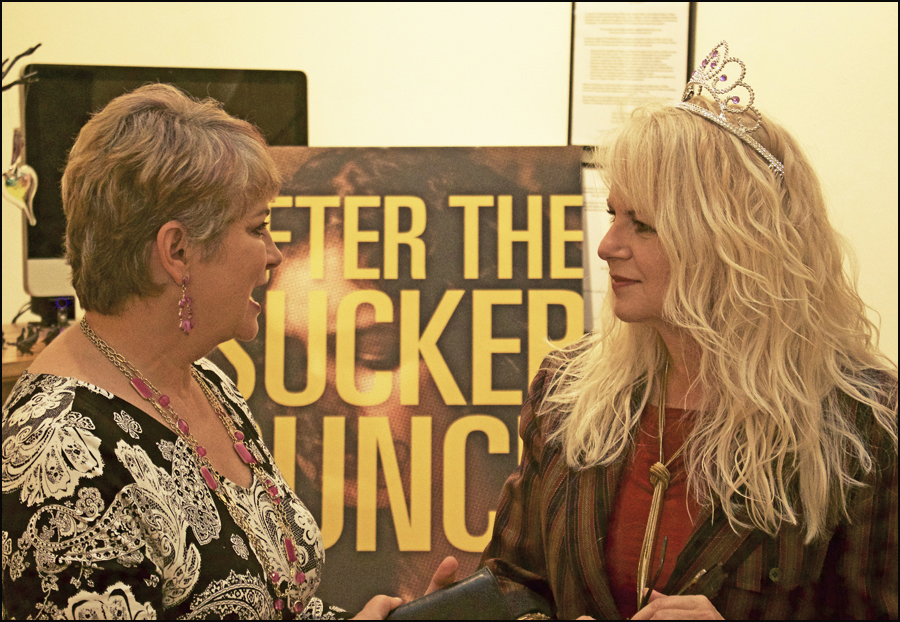
But me? I’ll just set up my wares and focus my brick & mortar attention on places that do support indie writers regardless of who printed their books. Places like Vroman’s in Pasadena, Book Soup in Hollywood, and certainly Skylight Books in Los Angeles. (Skylight, in particular, treats indie writers with marketplace respect: buying and selling without fees, without time constraints, and without fuss.) And beyond bookstores, I’ll go anywhere that’s interested in my work, that invites me to do a reading, wear a tiara, sell some books, and bring in customers, many of whom will not only buy my book, but the wares of wherever it is we may be… say, The Whole 9 Gallery (above) in Culver City.

And it’ll be fun and productive because not a one of those merchants will give a hoot where I got my paperback printed. As it should be.

Skylight bookshelf photo by Susan Morgenstern
Exterior of Skylight Bookstore photo by LDW
“After The Sucker Punch book reading at The Whole 9” photo by Tom Amandes

LDW w glasses


Visit www.lorrainedevonwilke.com for details and links to LDW’s books, music, photography, and articles.

The Weight of Words and What I’m Doing With Mine

QUIET DOWN AND THINK

I can’t write anymore.

Actually, that’s not true. I write constantly. I just finished my second novel and spent enough hours a day, over enough months, to get it done in about a third of the time I’d have expected… or it took to write my last novel. Of course, my left eye exploded in the process, making me look like a pugilist in service to my Muse, but dammit, I met the publicist’s deadline, I love what I’ve wrangled into being, and we all know burst blood vessels look way worse than they feel.

What I can’t seem to write? Articles. Opinion pieces. Analyses of the world around us.

Which is odd. Because I used to. I used to put out two to four articles a day during my Addicting Info “all politics/crime/current events all the time” phase. Now the last piece I wrote at Huff Post has been up for over two months (although it is a very cool piece about Lisa Schultz of The Peace Project!) and even here I barely manage more than one or two posts a month (if I’m lucky!).

What gives?

Clearly some of this has to do with getting the aforementioned novel to its deadline. But, to be completely honest, that wasn’t it. The real reason: I lost my jones. And I had an epiphany.

I used to be compelled to write articles. Things would happen in the world, in my life, and I had to say something for my own sanity; I had to organize my swirling thoughts on the topic to help me frame it, make it make more sense to me, then try to make it make more sense to readers. It was a form of therapy. I also felt like I was providing a service, “giving voice,” as one reader said, to things others felt and believed but couldn’t put into words. I felt like a thought crusader, noble, in a way.

Then it changed. I started feeling less like a thought crusader and more like part of the screaming mob at the gladiator pit. A fist-pumping, blood-lusting, click-baiting mouthpiece for the worst of the world. Not pretty. And I never looked good in togas.

pitchforksThe process of throwing in on stories already being written about, talked about, screamed about by millions of voices—social media users, pundits, talk show hosts, cable news anchors, commenters, your next door neighbor, newspaper writers, web journalists, bloggers, that guy on the corner, and everyone in your Facebook circle—simply lost its glow. Our 2.0 world of “all media of all kinds at all times” has, yes, democratized commentary and opinion writing across the board—meaning anyone anywhere has access and a platform to share their own…and pretty much everyone does. Which has led to a media crush of biblical proportion. It’s also led to redundancy and oversaturation, misinformation and ugliness, and loads of ALL CAPS and exclamation points (!!!!!), often drowning out, or at least neutralizing, the best of opinion and commentary from our most seasoned, experienced writers.

And I admire the best of those writers, figuring Nicholas Kristof, Michael Tomasky, Frank Bruni, and others doing the job with aplomb have got it covered. I’m not needed. There’s too much noise anyway.

Maybe it’s because I’m one of eleven children, but I learned early on that jumping up and down, screaming and waving your hands to be heard over the din is not necessarily effective or particularly useful. When things get too cacophonous and out of control, it’s sometimes better to go off to your own stillness to sort out how best to get a point across or affect change where you believe change is needed. That’s where I am… in my stillness. It’s quiet in here, there are no screaming commenters, and it’s amazing how much more insight and direction one finds with the news off.

Certainly I’m flattered that readers have commented that “we miss your voice,” or have written asking when/if I might write about Ferguson, grand juries, racial politics, NYC cops, Charlie Hedbo, Nigeria, Keystone, Mitt Romney, even Bill Cosby. But this is where the second part comes in. My epiphany.

Beyond losing my jones, beyond figuring there were enough voices already covering the news, I simply stopped wanting to focus my readers’ attention on the darkest corners of our world, whether events, people, or bad behavior. Instead, I wanted to focus their attention in another direction. Towards positive thought and action. Which is not easy. Not as interesting. Not as buzzworthy. Not as virally. But still, epiphanies are rare and not to be ignored.

See, about eighteen months ago I realized I needed to reassess my life, my priorities, the ways in which I framed my world. I went off by myself for six weeks and spent a great deal of time exploring, researching, reading, meditating; did a workshop, learned about forgiveness, talked to wise people and insightful guides, and one of them asked me, out of the blue, without even knowing I was a writer: “What are you going to write about? What do you want to write about? Ponder that. See it as change.” And that struck me.

I had already decided to pull out of the click-bait world of sensationalized political reporting, but this seemed to push me even further. I began exploring the subject of how what we think and verbalize tangibly impacts our lives, and that brought me to something I already knew but had forgotten in more recent years:

The World We SeeThoughts matter. Particularly persistent thoughts. Words matter. The words we think, the words we say, the words we read and share publicly, both verbally and in writing. We create the world (certainly our own world) by how and where we focus our attention, by what we consistently think about and talk about; by what we believe, hold on to, and put forth about ourselves, our lives, and the world in which we live. And I realized that by spending so much of my time on the negative—skewering, critiquing, exposing, and analyzing the very worst of the world, the very least admirable people, the most egregious crimes and misdemeanors—I was adding energy to a great many things, events, and people I did not want to add energy to. And I was putting my readers’ attention on those very same things.

I didn’t want to do that anymore. So I stopped.

You can say that’s all a bunch of new-agey hooey; you can accuse me of going soft, of abdicating responsibility to illuminate the dark corners of humanity; you can even dismiss me as an “old woman who just doesn’t want to deal with conflict,” as one pissant writer I used to edit said to me. You can say whatever you want about me and my perspective, that’s okay. You’re free to think, do, have your own experiences, even about me. But my life—particularly in the last eighteen months—has unequivocally demonstrated to me that I’m on to something.

When I see people with their cable news on all day, see them spending hours in scream fests on Facebook, immersed in the recyling click-bait of the moment, it’s clear to me that modern society has been fed a bill of goods about the value of “staying informed.” It’s been misled by the way media “illuminates the dark corners of humanity.” Media is doing that, certainly, but why do we think we need that? Why have we been led to believe that being a responsible, caring, proactive citizen requires this immersion? Especially when news all too often skews reality rather than just reports it. When it misinforms, distorts, propagandizes, repeats to the point of indoctrination, and regularly spins life in its most despairing of hues. We can barely breath for the day-to-day onslaught of horrific events, fear and anxiety are mongered in epidemic doses, and the primitive, teeth-gnashing battlegrounds of those who take to the threads to “debate” have become positively neanderthal. Yet, what most us don’t realize (or believe) is that by putting our attention, our thoughts, our words, so firmly on the very things we don’t want in our lives, in our world, we are participating in keeping them energized into being.
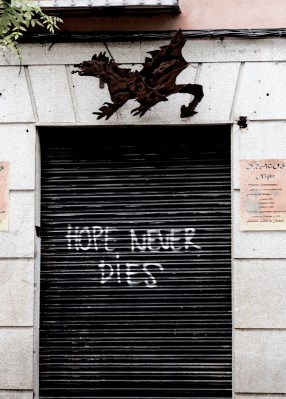
Hope Never DiesI can feel some rolling their eyes. I can hear others hollering that “activism is sparked by rage!!” (someone’s justification to me for, both, the Ferguson riots and the tendency of people to scream at each other on social media). I can imagine some claiming righteous indignation at the notion that righteous indignation may not, actually, be all that effective… or righteous. I’ve lost “friends” and readers because I’ve chosen to climb out of the mosh pit and put my attention elsewhere. All of which is fine. We each gotta do what we gotta do. But if I’m going to spend the precious time of my life doing something, it better be of true value, of considerable use, and I’ve come to believe that consistently focusing on, verbalizing about, and angsting over the worst of life is counterproductive. At least for me. And likely for you, too. Noise is not always power. Sometimes, as Francis Bacon said, “Silence is the sleep that nourishes wisdom.”

So what do we do instead, those of us who care about what’s happening, who want to see the world and the people in it become better, more evolved, less hateful? It’s a fair question. Because the ubiquity and ease with which we receive horrifying news has created a painful conundrum for compassionate people. It’s caused us to hear and know about some of the most egregious acts humans can commit upon one another, while having very little real, true power to do much about it. Once we’ve signed our petitions, written the letters we might, marched when and where we can, joined whatever groups make sense, or decided where we’ll put our charitable giving, there is a limit to our power to intervene in matters beyond our control. So what do we do?

We embody and exemplify what we want the world to be. We become the best versions of ourselves. We make every single thing we do, think, intend, create, touch, say in this world a moment, a creation, of grace and enlightenment. As parents, we do our best to exude love and exemplify honor, raising smart, loving, compassionate, tolerant children. As artists, we seek to inspire, reflect, provoke thought, and share meaning, passion and joy. As family members and friends, we allow others to have their own experiences without judgment and interference, being there and getting involved as invited, as is compassionate, and when we can. As members of our communities, our towns, our countries, our human race, we embody ethics and ideals that hold to the highest standards of human behavior, and we apply that ancient—yet completely perfect—Golden Rule: do unto others as we’d have them do unto us. We live good lives, think good thoughts, intend good things and, even while making note of the many tragedies around us, keep our attention focused on positive forward motion in the lives we each are living.

As for me, when I pondered what I wanted to write about, as I was asked to do, I made the decision to write about what inspires and interests me, click-bait be damned. I consider it part of my job to stay optimistic and uplifted, even in the midst of madness, because I can. Because I’ve discovered life gets better when I do that. And my energy, my thoughts, and my creativity, are best used toward that goal: making life better. Activism comes in a great many varieties… that’s one of mine. I hope you’ll turn off the news and find your own.

Feel free to let me know in the comments your own thoughts on these matters.

Photos by Lorraine Devon Wilke

LDW w glasses


Visit www.lorrainedevonwilke.com for details and links to LDW’s books, music, photography, and articles.

My Early Christmas Present: the B.R.A.G. Medallion For After The Sucker Punch

All gussied up with a B.R.A.G. Medallion!

One of the most challenging aspects of being an indie author is the sheer volume of tasks related to marketing your own book. What traditionally published authors look to their publishers to offer, or at least implement, in terms of promotion and marketing, indie authors do all by their lonesome, unless they are fortunate enough to be able to work with a publicist (which I’ll be doing on my next book!). And given the staggering number of books flooding the self-publishing marketplace (reportedly 500,000 in just the US in 2013), finding ways to get your book pulled out of the rumbling pack is a tug-of-war like no other!

So when you get a boost from a group, an organization, that is not only well-regarded in the publishing industry, deeply involved in promoting self-published authors, and very selective about the books it chooses to award their prestigious B.R.A.G. Medallion, you feel a little bit like Christmas came early. Which is how I felt when I got the news this week that my debut novel, After The Sucker Punch, has been selected for a Medallion.

IndieBRAG was founded by Founder and President, Geraldine Clouston, with a mission statement to “to recognize quality on the part of authors who self-publish both print and digital books.” From author Alison Morton’s interview with Ms. Clouston at Roma Nova:

One fearsome, but in a way reassuring, statistic is that IndieBRAG rejects 90% of books that it considers. Not quite two years old, it already has an excellent reputation as a serious “Guardian at the Gate”. At the recent Self-Published Book Expo in New York, IndieBRAG presented an authoritative report on self-publishing and was the only panel out of 17 filmed by C-SPAN’s Book TV

What is the background to you starting IndieBRAG?
Several years ago my husband and I attended the Self-Publishing Book Expo in New York City for the first time. We were, of course, not surprised to find many self-published authors at the Expo who were looking for help. However, we were surprised to discover that after these authors had published their books very few of them knew what to do next. We quickly realized that with the explosion of self-publishing, it is very hard for an indie author to get any attention for their book. And more to the point, given that much of what is self-published is not worth a reader’s time or money, it is a major challenge for a good self-published book to rise above the rest.

Tell us about your process for evaluating self-published work.
After a book is nominated through our website it is subjected to a rigorous selection process. This entails an initial screening to ensure that the author’s work meets certain minimum standards of quality and content. If it passes this preliminary assessment it is then read by members drawn from our reader group. We have over 150 readers in 11 countries who regularly read self-published books for us. They judge the merits of the book based on a comprehensive list of criteria, the most important of which is whether or not they would recommend it to their best friend. If a book meets our high standards, we award it our B.R.A.G. Medallion and present it on our website.

There are two important things to note about our process- First, we are not agents, literary experts, or publishers. We are simply ordinary people who are passionate about reading books; the same people who buy books. And second, we do not permit any contact between our readers and authors, or other readers. This gives the reader an opportunity to make a decision without any undue influence from anyone.

[To read the read of the interview, click here.]

I’m not only deeply honored to have my book in such good company, I’m delighted to be part of a “family” so passionately focused on independent authors putting out excellent work and raising the bar on what can be expected from artists working outside the traditional publishing paradigm. It’s encouraging to me as an individual author and it’s empowering to the entire indie movement. Suffice it to say, I’m thrilled!

I encourage you to go to the IndieBRAG site not only to check out my page, but to view and explore the work of the many other  authors who’ve been selected for this distinguished honor. I know many of you are avid readers always looking for the best in books  to add to your libraries; IndieBRAG is a great place to find titles that have been carefully vetted and selected with the highest standards in mind.

Thank you, IndieBRAG, for honoring my book. A very Merry Christmas to you too!

LDW w glasses


Visit www.lorrainedevonwilke.com for details and links to LDW’s books, music, photography, and articles.

Are YOU a Propagandist?

The Smarter You Get

Those old enough to have ever watched a World War II movie are likely to remember the infamous Tokyo Rose, the name given to any number of Japanese women (though largely ascribed to Japanese American Iva Toguri D’Aquino) whose role was to get on the radio to croon Japanese propaganda to the American military, offered with the intent of crushing morale. Given the outcome of that war, it’s safe to say the endgame didn’t quite meet the mission, but propaganda has long been a useful tool in pushing agendas and designing how the world and culture-at-large receives and perceives information.

Certainly it played a major role in the Cold War (how many kids were uniformly terrified of Russian spies or nuclear bombs hitting their grade schools?); it’s been an essential tool in how religion mesmerizes its masses, and, without a doubt, it is the machinery that foments discord between partisan politicians and their opponents. Yet even as heinous and manipulative as it is, propaganda has become so insinuated into the fibers of day-to-day American discourse that we barely notice it anymore; certainly we don’t seem to realize how affected we are by it or how we tend to use it ourselves to promote our own agendas and beliefs. In fact, we’ll raise a fist in objection to propaganda on one side of the divide while actively bandying our own version of the same. Social media has, in many ways, become a breeding ground for propaganda and I wonder if culture wouldn’t be better served if we rethought how we use it.

Constitutional scholar, Jonathan Turley, argues that the word itself, propaganda, translates literally to mean “the spreading of ideas, information, or rumor for the purpose of helping or injuring an institution, a cause, or a person.” Helping or injuring. Yet we seldom think of propaganda in the “helping” column, it’s so often used to divide more than bring together.  Even Turley acknowledges that the almost totally negative connotation of the word has sprung from its cultural use as a “value loaded” activity, one that uses selective language and cherry-picked ideas to manipulate people toward one thought or another.

Manipulation is hardly viewed as a positive force, and that is, in fact, how most people view propaganda: as manipulation. The taking of facts and using them selectively, disproportionately, even untruthfully, and often at the expense and exclusion of balancing information as counterpoint. We see that every day on Fox News, on partisan talk radio, cable news and websites on both sides of the political divide. We see it on social media, translated through what photographs, articles, and memes are posted and shared, what words are used to introduce those images; how headlines are focused and spun. Propaganda is everywhere and, to some extent, if you partake in sharing its messages, you’re a party to it.

Don’t think so?

Well, here’s a thought: propaganda is an equation that works with the energy of thought. The more you think something, the more you say something, the more you breathe life into that idea by your thoughts, words and actions, the more a thing IS. It’s just a matter of physics. Propaganda uses that equation for its own purposes: Think it + Focus on it + Say it + Talk about it + Share supporting information + Discard countering information + Argue it + Denigrate disagreement + Be relentless in promoting it = More of IT in the world.

Racism? That’s a big topic these days, one in which propaganda is being flung around every which way, and while it authentically remains a substantial and important issue in our society, the way we discuss it, frame it, and propagandize about it is exactly how it will remain manifested in our world. Scream and yell every generality, every inflamed accusation; attack on both sides with hyperbole and viciousness, and that’s what we’ll keep manifesting.That’s just the way it works. We can’t inspire change when we’re too focused on kicking the crap out of each other.

Don’t get me wrong; shining light where it is needed is a good thing. Pulling racists and racism out from the closet or from under the rug, the basement, or from behind a robe or computer screen is necessary. Honestly confronting the issues we cringe from is essential to productive conversation and practical progress. And certainly many of these steps occur in explosive ways after events like the Rodney King beating, Trayvon Martin’s death, or the more recent Ferguson case. But wise people understand that rage and demands for justice have to be channeled judiciously and with utter candor and openness, clear that each of these cases (and others) is individual, not necessarily comparable, with specific and differentiated facts and meanings. And despite the incendiary nature of all these events, none of them mean ALL of America is broken, or race relations have all gone to hell, or civil rights have no meaning in this country. None of these are true. Elements of each are true in specific cases, but the sweeping generalities being spewed like so many litanies are not only not true, they’re propaganda, and they’re demoralizing and damaging to productive forward motion.

Remember that equation? Now, think about what your goal is as a person communicating in the world, a person sharing information and engaging in conversation. If your goal is to promote peace and bring honest, tangible change to the world; to educate, uplift, inspire, challenge, reach out, and bridge divides, you’ll communicate with equanimity, fairness, specificity, intelligence, truth, compassion, and a willingness to listen and hear new information.

If, on the other hand, your goal is to relentlessly vent and call it activism; attack and insult and call it “debate”; promote greater divides between the races, or to push the meme that racism is utterly hopeless and unstoppable, do this instead:

• Keep talking about how all whites/all blacks are all fill in the blank.
• Create and promote as many false equivalencies as possible.
• Spin the news so that only the part that supports racism is featured.
• Post as many stories as you can find about bad cops and prosecutors.
• Generalize heavily and focus on the very worst of humanity.
• Comment and promote the idea that all whites “don’t value black lives.”
• Generalize widely that all black men are criminals/victims/innocent/guilty
• Ferret out and share stories that support that all cops are vicious.
• Keep pounding the drum that ALL of America is broken/unfair/insensitive/racist.
• Look for and share media that promotes that all politicians hate people of color.
• Support the notion that all who disagree with Obama are racists.
• Make it clear by what you say and post that in all tangles between cops and people of color, the cops are always wrong;
• And be sure to only post stories that promote all of the above.

If you do all that – as many, many people are doing online these days – you are being a propagandist. And you are not helping to educate, heal, or raise the consciousness of this country. You are, instead, publicly promoting your own anger and outrage, potentially at the expense of positive change. You are promoting thoughts and ideas that focus energy and agreement on the very worst of society. And the more the very worst is agreed upon, the more it is accepted, the more it is envisioned, the more it is tweeted, posted, shared, argued about, etc., the more it will continue to become, to grow and metastasize.

That’s just the way it works. And we don’t want that.

Without propaganda, without all this fire-stoking, people would be left to their own devices to analyze, adjudicate, and form their own opinions of current (even past) events. We’d be obligated to get beyond the caterwauling of others to smartly weight pros and cons, do our own research to ascertain what’s true and what’s hyperbole. We’d not accept sensationalism on face value, but would be open to ideas that might fly in the face of what we’d held as fact. We might even have the magnanimity to change a viewpoint or embrace an ideal that had previously eluded us. We’d talk openly and civilly share our, perhaps, contrary opinions without fear of attack or ridicule. We’d boldly allow for the option to not agree with propaganda, but instead promote notions of equilibrium, personal responsibility, and each and everyone’s obligation to take control of their own actions. From there we would likely have a better chance at bringing real change to the problems that harm us as a culture.

I’m all for that. By the way, he was too.

MLK_love not hate
MLK poster from OurTimeOrg

LDW w glasses


Visit www.lorrainedevonwilke.com for details and links to LDW’s books, music, photography, and articles.

There Is Noise, Then There Is Your Voice: VOTE

vote-cartoonNothing’s perfect. Nothing meets every expectation or fulfills every wish or desire. We engage in jobs, marriages, college careers, sporting competitions, cultural challenges, parenting, etc., with a presumption of one set of results and often, very often, a different set emerges. It’s part of life; we’re taught to adjust and we do. But does that mean we don’t, then, engage in those activities once they’ve failed to meet our expectations? We eschew marriage because too many end in divorce? We don’t go to college because too many expensive educations don’t result in high paying jobs? We don’t bother with jobs at all because too many disappoint with sustainability or advancement issues? We give up on sports because our team lost or a coach failed to pull out the season? We don’t engage in activities, causes, creative endeavors, and the like because we experienced disappointments, failed candidacies, unmet financial goals, poor ticket sales? We don’t have children because… well, children…. God knows what they’ll do?!

Fact is, most of don’t give up on all those many elements of human life just because they disappointed us. We may rage, write blogs, post comments or sign petitions, but once we shake off whatever frustrations, heartaches, disappointments, and tragedies life has to offer, we climb up from the depths and jump back in. We reinvent. We try again. We give it another shot.

So why do we stop voting because we’re disappointed in politics and politicians?

All week I’ve been reading articles about voter apathy, weak turnout, low approval ratings, election shenanigans (that again!), and so on. I’ve seen posts on Facebook bemoaning the futility of voting, cries of “what’s the point?”; lots of wordy treatises (some by celebrities) on the pointlessness of choosing “one devil over the other,” and the cynicism and negativity is just breathtaking. Honestly, I want to shout “FIRST WORLD PROBLEMS, PEOPLE!” as loudly as I can and, in fact, it really is only in the First World that we so take for granted our right to vote and the ease with which we can do it.

When you see lines of Muslim women in India eager to make their voices known, Iraqi voters with purple fingers, Sudanese in line for hours, and others in beleaguered countries actually putting themselves at risk to get to the ballot box, the bizarrely enervated, whiney responses of far too many American voters is gut punching.

Muslim women voting

VOTE!

Seriously… vote. Spend today and tomorrow boning up on the many propositions, compare who’s for and against, get an idea of what they’re about; look at endorsements, see if they align with your thinking, then CHOOSE. DECIDE. VOTE.

Don’t know who all those judges are? Who does? Again, check endorsements, do a little research. Some big newspapers made it easy and have done the research for you; all you have to do is decide, again, if that newspaper is generally aligned with your political sway, read a few biographies and voting records, then DECIDE.

Might you get it wrong if you make a choice and later discover the proposition was weak because it wasn’t written well or it didn’t pan out as expected by its authors? Yes. You might. So what? Right now, in this election, take the time to make the best possible choice you can based on your research and your gut… just DECIDE. If it turns out to be a failure, so what? You tried. They tried. We’ll all try again.

There’s lots to say (and, oh, so many people saying it!) about Republicans and Democrats and this guy and that gal and all the usual partisan politics about who cares about women and minorities, who doesn’t, who might win the Senate, who might not, and that’s a BIG conversation filled with lots of noise and a modicum of sense… mostly not. I don’t need to add to it. My party affiliation is clear to me, I know who I believe is more concerned about my rights as a woman, a parent, an American, and a member of this human race. I will vote accordingly. But I’m not here right now to try to sway anyone to one side or the other, browbeat any particular candidate or applaud another. That’s all being done by countless others and the noise is deafening.

All I’m here to say is: VOTE. Period.

Voting in Sudan

It may be a cliche, but if you don’t vote you have no voice in the government of the country in which you live. You have no position from which to complain, to argue, to raise a ruckus. You’ve offered no energy toward being part of and, hopefully, improving a — yes — corrupt, flawed, manipulated, and seriously pot-holed system. But it’s our current system and we ARE the government. It often doesn’t feel that way for a whole host of valid reasons, but it is our vote, each and every vote, each and every election, that shifts and changes — albeit ever so slowly — the government, the laws, the leaders, the country. Don’t abdicate the power you have to protest the power you don’t have.

VOTE.

College kids voting for the first time
Ben Sargent Voting Cartoon: Reboot Illinois
Muslim women voting: Jezebel
Iraqi voters with their purple fingers: Wikipedia
Voting in Sudan: Wikimedia Commons; Jenn Warren, USAID Africa Bureau 
College kids voting for the first time: College of New Rochelle

LDW w glasses


Visit www.lorrainedevonwilke.com for details and links to LDW’s books, music, photography, and articles.

Mark Barry of Green Wizard Publishing Has Some Words About AFTER THE SUCKER PUNCH

GW publishing

When I cyber-met Mark Barry, UK author/blogger/publisher @ Green Wizard Publishing, via another very thoughtful writer I shared some appreciation for in The Kindness of Strangers… Meet Brenda Perlin. I had no idea I was meeting one of the most enthusiastic and passionate lovers of the written word to be found on this planet. But this quickly became evident, particularly after he invited me to participate in an interview for his dedicated author/interview site, The Wizard’s Cauldron, and I had the pleasure of corresponding with him across the pond and over a very fun and thorough set of questions (A Whizbang Interview with Author and Book Blogger Wiz Green).

At the time he was in the midst of reading my short story, “She Tumbled Down,” and promised to get to my novel, After The Sucker Punch, as soon as he was able. Which was delightfully soon, considering how busy this guy is. I say “delightfully” because Mark did that thing every writer loves when someone’s reading their book: he sent emails during and throughout his read, exclaiming over bits he liked, sharing thoughts on various characters and plot twists, assuring me that, when he was done, he would write a proper review. He and I did share some thoughts about the review conundrum (bracingly discussed in OK, Let’s Discuss This Whole Book Review Thing… Please), and I made him swear on a stack of indie novels that whatever he wrote, it would be his authentic opinion, good, bad, or in-between (I made the pact in return, given his status as a fellow author whose books I’ll read).

Of course, this sort of promise is always a dicey thing, something every reader of indie novels (and even some traditional novels) knows. You pick up the book of someone you’ve met in a writer’s group, a book club, online, or at a convention, and you do so with a certain gnawing fear that you’ll discover, sentences into the thing, that writing a review is either going to be a painful process or something you’ll eschew all together for the sake of the friendship. So when you make that pact with someone directly, well… there’s no turning back, is there?

So when I got the news today that Mark’s review had posted, I approached it with bracing fortitude, hoping for the best but, mostly, wanting Mark to have felt comfortable enough to stay true to his word, no matter how the reading experience transpired. And I couldn’t have been more thrilled, pleased, delighted, honored, and really touched by what he had to say.

I’m leaving the whole review here, because I loved the depth with which he analyzed the narrative and shared his perspective. However, I have left the links to his sites above and below, so you can check them from time-to-time for his ongoing reviews and updates about his own work.

Thank you, Mark Barry, for being such an unabashed supporter of the literary arts… and those of us who love painting our creative pictures with them!

ASTP Nottingham Library Lorraine
Wiz Green and ATSP at the Nottingham Library

After The Sucker Punch: A Review

After The Sucker Punch (ATSP) is a fantastic novel.

I’m writing this because I know most of my readers are always on the lookout for a good book – and ATSP is a very, very good book.

The Context

I met the novel’s author, Lorraine Devon Wilke, two weeks ago through a lovely friend of mine, Orange County’s Brenda Perlin. A resident of LA, Lorraine came around the interview Cauldron to widen her exposure to a UK audience.

Out of respect, Lorraine made a gift to me of both her novel and short story “She Tumbled Down” and while I loved the short story, the novel is something else entirely.

An Indie novel, it is definitely in the top ten of the books (Trad or Indie), I have read (which is a fair number) since I started Green Wizard.

After reading twelve chapters on Kindle, I immediately logged on to Amazon and like some literary Victor Kiam, I bought the paperback.

I am glad I did. It is a magnificent paperback indeed.

The Paperback

I teach the odd hour of Creative Writing and Self Publishing, and last night, I took the paperback of ATSP to our latest group to demonstrate how to structure dialogue.

The group I teach are professionals, experienced diarists, bloggers, report writers who wish to learn about e-publishing and between them, they read 100-200 books a year.

Not one of them could tell that this was a self-published book.

Printed by Createspace and professionally edited, it is a beautiful piece of work to hold in your hand. ATSP would not be out of place in Waterstones (and, without getting political, it makes a total nonsense of the idea that self-published work is somehow inferior. Saying so would be an insult to this novel and its creative team).

The Review

ATSP is a family saga. Tessa, a dreamy, thirty-something, sometime artist/writer/drifter with aspirations to something better than her current humdrum life, attends the funeral of her father, Leo.

After the Wake, and while staying at her mother’s house, she reads one of his many journals.

What Leo wrote is so shocking, it changes Tessa’s life and the lives of everyone in her extended family.

Four factors mark Lorraine’s brilliant debut as something special.

Firstly, her characters. Each so individual, so distinctive and so well defined, you can tell who is talking without the character being named. That’s no mean feat. Secondly, the dialogue is crisp, sassy and real, patter so realistic, you can hear it taking place. Thirdly, the way Lorraine links and merges the historical comments Tessa reads in the journal into the real time narrative is shrewd and repays rereading.

Then, finally, there is Tessa herself, the novel’s protagonist. You may not like her – two days after completing the novel, I am completely ambivalent about her * – but she is real and you can follow her train of reasoning at all times.

None of her behaviour is extranormal and you can imagine doing the same things she does (and that’s not a necessarily recommendation).

You watch her progress and change. You understand her one minute, then you can’t comprehend what she’s up to the next. Then immediately after, you want to reach into the pages of the book and wag your finger at her. You live her deliberations and you can feel her confusion on your fingertips as you turn the page.

At no time does Tessa lapse into stereotype. She constantly surprises you and – whether you like her or not, you cannot stop following her trials and tribulations for a second.

The supporting cast is excellent. Her family, particularly the harassed Micheala, and the alcoholic brother, Ronnie, are similarly absorbing. Tessa’s long suffering boyfriend, the corporate sportswear schill David, struggles manfully to accommodate Tessa’s whys and wherefores before being completely overwhelmed by them in some of the novel’s saddest scenes.

Her relationship with best friends Katie and Ruby would satisfy any fan of chicklit, (and I quite fancied the hapless, heartbroken Ruby, in a Sir Lancelot kind of way), but it is Aunt Joanne who steals the show.

The Catholic Nun-cum-Therapist helps Tessa deal with the aftermath of the revelations unleashed by Leo’s journal and becomes by far the strongest foil for her increasingly self-destructive angst.

You long for her to reappear in the narrative – perhaps because she is the only person strong enough – and brave enough – to confront Tessa, whose self-absorption is relentless.

Contemporary Drama

Like the best contemporary fiction, nothing extraordinary happens.

People talk on the telephone (which happens a lot in this novel). Conversations take place in cars, in coffee bars, around the water cooler, on sofas, in the still life of the marital bed, the post-coital cigarette smoke still swirling between the blades of the fan rotating overhead.

There is virtually no action – just like real life.

The sheer joy of the ATSP is its very ordinariness. These are ordinary people going about their business, all of them affected to one degree or another by the portentous, unhinged rantings of Leo Curzio.

The richness of the everyday needs no explosions, because the revelations are the explosions.

A Christmas Conclusion

If you like contemporary work, I strongly recommend After The Sucker Punch.

Forget the e-book for once: Treat yourself to an early Christmas present and buy the paperback for seven quid or so. It is lustrous, with its cream pages, one and a half line spacing and comforting, airport-shelf heft.

It is a book which is written for paperback and meant to be read in bed; absorbed, over time, savoured by lamplight.

*Maybe its a man thing. 😀

UK readers buy ATSP here
US readers buy ATSP (in paperback) here.

_ _ _ _ _ _ _ _ _ _ _ _ _ _ _ _ _ _ _ _ _ _ _

Click here to access Green Wizard Publishing
Click here to access The Wizard’s Cauldron

LDW w glasses


Visit www.lorrainedevonwilke.com for details and links to LDW’s books, music, photography, and articles.