
I can’t write anymore.
Actually, that’s not true. I write constantly. I just finished my second novel and spent enough hours a day, over enough months, to get it done in about a third of the time I’d have expected… or it took to write my last novel. Of course, my left eye exploded in the process, making me look like a pugilist in service to my Muse, but dammit, I met the publicist’s deadline, I love what I’ve wrangled into being, and we all know burst blood vessels look way worse than they feel.
What I can’t seem to write? Articles. Opinion pieces. Analyses of the world around us.
Which is odd. Because I used to. I used to put out two to four articles a day during my Addicting Info “all politics/crime/current events all the time” phase. Now the last piece I wrote at Huff Post has been up for over two months (although it is a very cool piece about Lisa Schultz of The Peace Project!) and even here I barely manage more than one or two posts a month (if I’m lucky!).
What gives?
Clearly some of this has to do with getting the aforementioned novel to its deadline. But, to be completely honest, that wasn’t it. The real reason: I lost my jones. And I had an epiphany.
I used to be compelled to write articles. Things would happen in the world, in my life, and I had to say something for my own sanity; I had to organize my swirling thoughts on the topic to help me frame it, make it make more sense to me, then try to make it make more sense to readers. It was a form of therapy. I also felt like I was providing a service, “giving voice,” as one reader said, to things others felt and believed but couldn’t put into words. I felt like a thought crusader, noble, in a way.
Then it changed. I started feeling less like a thought crusader and more like part of the screaming mob at the gladiator pit. A fist-pumping, blood-lusting, click-baiting mouthpiece for the worst of the world. Not pretty. And I never looked good in togas.
 The process of throwing in on stories already being written about, talked about, screamed about by millions of voices—social media users, pundits, talk show hosts, cable news anchors, commenters, your next door neighbor, newspaper writers, web journalists, bloggers, that guy on the corner, and everyone in your Facebook circle—simply lost its glow. Our 2.0 world of “all media of all kinds at all times” has, yes, democratized commentary and opinion writing across the board—meaning anyone anywhere has access and a platform to share their own…and pretty much everyone does. Which has led to a media crush of biblical proportion. It’s also led to redundancy and oversaturation, misinformation and ugliness, and loads of ALL CAPS and exclamation points (!!!!!), often drowning out, or at least neutralizing, the best of opinion and commentary from our most seasoned, experienced writers.
And I admire the best of those writers, figuring Nicholas Kristof, Michael Tomasky, Frank Bruni, and others doing the job with aplomb have got it covered. I’m not needed. There’s too much noise anyway.
Maybe it’s because I’m one of eleven children, but I learned early on that jumping up and down, screaming and waving your hands to be heard over the din is not necessarily effective or particularly useful. When things get too cacophonous and out of control, it’s sometimes better to go off to your own stillness to sort out how best to get a point across or affect change where you believe change is needed. That’s where I am… in my stillness. It’s quiet in here, there are no screaming commenters, and it’s amazing how much more insight and direction one finds with the news off.
Certainly I’m flattered that readers have commented that “we miss your voice,” or have written asking when/if I might write about Ferguson, grand juries, racial politics, NYC cops, Charlie Hedbo, Nigeria, Keystone, Mitt Romney, even Bill Cosby. But this is where the second part comes in. My epiphany.
Beyond losing my jones, beyond figuring there were enough voices already covering the news, I simply stopped wanting to focus my readers’ attention on the darkest corners of our world, whether events, people, or bad behavior. Instead, I wanted to focus their attention in another direction. Towards positive thought and action. Which is not easy. Not as interesting. Not as buzzworthy. Not as virally. But still, epiphanies are rare and not to be ignored.
See, about eighteen months ago I realized I needed to reassess my life, my priorities, the ways in which I framed my world. I went off by myself for six weeks and spent a great deal of time exploring, researching, reading, meditating; did a workshop, learned about forgiveness, talked to wise people and insightful guides, and one of them asked me, out of the blue, without even knowing I was a writer: “What are you going to write about? What do you want to write about? Ponder that. See it as change.” And that struck me.
I had already decided to pull out of the click-bait world of sensationalized political reporting, but this seemed to push me even further. I began exploring the subject of how what we think and verbalize tangibly impacts our lives, and that brought me to something I already knew but had forgotten in more recent years:
 Thoughts matter. Particularly persistent thoughts. Words matter. The words we think, the words we say, the words we read and share publicly, both verbally and in writing. We create the world (certainly our own world) by how and where we focus our attention, by what we consistently think about and talk about; by what we believe, hold on to, and put forth about ourselves, our lives, and the world in which we live. And I realized that by spending so much of my time on the negative—skewering, critiquing, exposing, and analyzing the very worst of the world, the very least admirable people, the most egregious crimes and misdemeanors—I was adding energy to a great many things, events, and people I did not want to add energy to. And I was putting my readers’ attention on those very same things.
I didn’t want to do that anymore. So I stopped.
You can say that’s all a bunch of new-agey hooey; you can accuse me of going soft, of abdicating responsibility to illuminate the dark corners of humanity; you can even dismiss me as an “old woman who just doesn’t want to deal with conflict,” as one pissant writer I used to edit said to me. You can say whatever you want about me and my perspective, that’s okay. You’re free to think, do, have your own experiences, even about me. But my life—particularly in the last eighteen months—has unequivocally demonstrated to me that I’m on to something.
When I see people with their cable news on all day, see them spending hours in scream fests on Facebook, immersed in the recyling click-bait of the moment, it’s clear to me that modern society has been fed a bill of goods about the value of “staying informed.” It’s been misled by the way media “illuminates the dark corners of humanity.” Media is doing that, certainly, but why do we think we need that? Why have we been led to believe that being a responsible, caring, proactive citizen requires this immersion? Especially when news all too often skews reality rather than just reports it. When it misinforms, distorts, propagandizes, repeats to the point of indoctrination, and regularly spins life in its most despairing of hues. We can barely breath for the day-to-day onslaught of horrific events, fear and anxiety are mongered in epidemic doses, and the primitive, teeth-gnashing battlegrounds of those who take to the threads to “debate” have become positively neanderthal. Yet, what most us don’t realize (or believe) is that by putting our attention, our thoughts, our words, so firmly on the very things we don’t want in our lives, in our world, we are participating in keeping them energized into being.
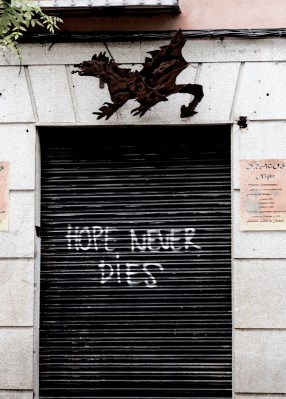 I can feel some rolling their eyes. I can hear others hollering that “activism is sparked by rage!!” (someone’s justification to me for, both, the Ferguson riots and the tendency of people to scream at each other on social media). I can imagine some claiming righteous indignation at the notion that righteous indignation may not, actually, be all that effective… or righteous. I’ve lost “friends” and readers because I’ve chosen to climb out of the mosh pit and put my attention elsewhere. All of which is fine. We each gotta do what we gotta do. But if I’m going to spend the precious time of my life doing something, it better be of true value, of considerable use, and I’ve come to believe that consistently focusing on, verbalizing about, and angsting over the worst of life is counterproductive. At least for me. And likely for you, too. Noise is not always power. Sometimes, as Francis Bacon said, “Silence is the sleep that nourishes wisdom.”
So what do we do instead, those of us who care about what’s happening, who want to see the world and the people in it become better, more evolved, less hateful? It’s a fair question. Because the ubiquity and ease with which we receive horrifying news has created a painful conundrum for compassionate people. It’s caused us to hear and know about some of the most egregious acts humans can commit upon one another, while having very little real, true power to do much about it. Once we’ve signed our petitions, written the letters we might, marched when and where we can, joined whatever groups make sense, or decided where we’ll put our charitable giving, there is a limit to our power to intervene in matters beyond our control. So what do we do?
We embody and exemplify what we want the world to be. We become the best versions of ourselves. We make every single thing we do, think, intend, create, touch, say in this world a moment, a creation, of grace and enlightenment. As parents, we do our best to exude love and exemplify honor, raising smart, loving, compassionate, tolerant children. As artists, we seek to inspire, reflect, provoke thought, and share meaning, passion and joy. As family members and friends, we allow others to have their own experiences without judgment and interference, being there and getting involved as invited, as is compassionate, and when we can. As members of our communities, our towns, our countries, our human race, we embody ethics and ideals that hold to the highest standards of human behavior, and we apply that ancient—yet completely perfect—Golden Rule: do unto others as we’d have them do unto us. We live good lives, think good thoughts, intend good things and, even while making note of the many tragedies around us, keep our attention focused on positive forward motion in the lives we each are living.
As for me, when I pondered what I wanted to write about, as I was asked to do, I made the decision to write about what inspires and interests me, click-bait be damned. I consider it part of my job to stay optimistic and uplifted, even in the midst of madness, because I can. Because I’ve discovered life gets better when I do that. And my energy, my thoughts, and my creativity, are best used toward that goal: making life better. Activism comes in a great many varieties… that’s one of mine. I hope you’ll turn off the news and find your own.
Feel free to let me know in the comments your own thoughts on these matters.
Photos by Lorraine Devon Wilke

Visit www.lorrainedevonwilke.com for details and links to LDW’s books, music, photography, and articles.












 The fact is, yes: while everyone has been a non-parent at some point in their life, no one who has not had children can know what it feels like to have children. Fact; not judgment. Just as I cannot know what it feels like to climb Mt. Everest, go hand-gliding, or bungie jump off a bridge. People can tell me the attendant exhilaration is like no other, and I believe them; but I wouldn’t know. That they’ve had that experience does not make them superior; it just means they’ve had an experience I have not.

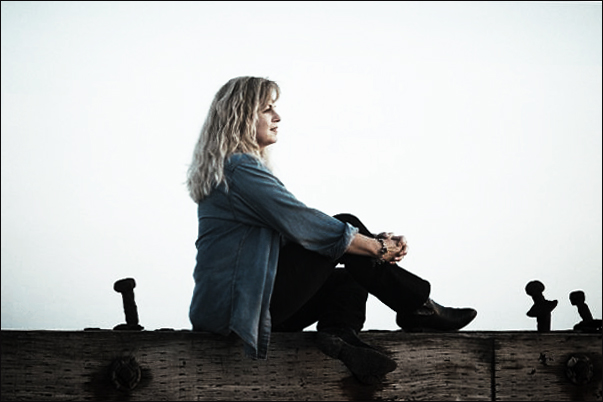
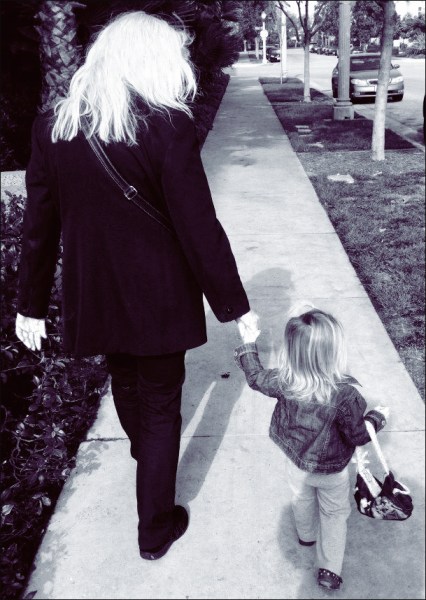 But where I have arrived? At that other side of my life, my personal life. A place that for many years was a struggle for me, both internally and within the realm of relationships: partner, wife, friend, mother, daughter, aunt, cousin, mentor; lady next door. There I have arrived.







 Nothing’s perfect. Nothing meets every expectation or fulfills every wish or desire. We engage in jobs, marriages, college careers, sporting competitions, cultural challenges, parenting, etc., with a presumption of one set of results and often, very often, a different set emerges. It’s part of life; we’re taught to adjust and we do. But does that mean we don’t, then, engage in those activities once they’ve failed to meet our expectations? We eschew marriage because too many end in divorce? We don’t go to college because too many expensive educations don’t result in high paying jobs? We don’t bother with jobs at all because too many disappoint with sustainability or advancement issues? We give up on sports because our team lost or a coach failed to pull out the season? We don’t engage in activities, causes, creative endeavors, and the like because we experienced disappointments, failed candidacies, unmet financial goals, poor ticket sales? We don’t have children because… well, children…. God knows what they’ll do?!


You must be logged in to post a comment.