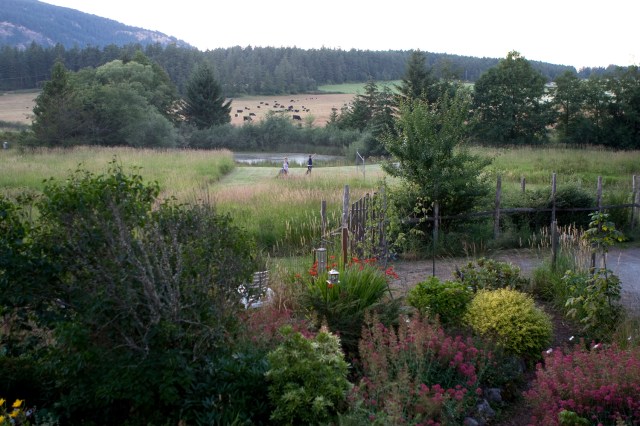
I just got back from a working vacation in parts of the northwestern USA that are so gorgeously bucolic and blessedly detached from the grind of urban life that one can’t help but be reminded of just how noisy things out there have gotten… and how quiet they can still be!
It is a noisy world we live in, isn’t it? Particularly when so many insist on being permanently tethered to news and media, with TV sets blaring all day, smart phones ever at the ready, the Internet in all its tabloid permutations bleating a litany of tragedies and travesties from one end of the globe to the other, those of us not living in war torn squalor, profound poverty, gangland violence, or insidious oppression, can almost feel guilty for our relatively unscathed lives. And even if we refrain from such misguided tendencies, we’re still spending too much of our time fending off anxiety, fear, worry, or seething commentary from the worst amongst us, discovering that just laying one’s head on the pillow is a trigger for loud, internal late night chatter.
I’ve seen more and more posts on social media from people bemoaning the vitriol and hissing ignorance of so many who have somehow become “experts” on issues of the Middle East or the Ukraine. I’ve read head-shaking online conversations in which someone’s expression of gratitude for a good life is attacked by trolls who’ve decided expressing gratitude shows lack of compassion for the suffering (because trolls know all about compassion, right?). I’ve talked to people who are SO convinced that horror and dread is around every corner based on endless ticker-tape reporting of horror and dread worldwide, they can barely acknowledge a beautiful moment without waiting for the axe to fall.
NOISE. Noise couched in news. Noise that is so relentless that we begin to feel that war, violence, hate and poverty are all there is to the world… and that’s simply not true. It is, simply, all we hear about. Which creates the delusion of “darkness descending everywhere.” It’s not and we cannot immerse ourselves in every tragedy, every war, every historical feud, every horrifying injustice, without taking a toll on our mental and emotional health. Doing so is as unbalanced as eating nothing but dirt and expecting to be healthy.
We are now and forever so connected to the collective noise of the world-at-large that QUIET and SERENITY are almost an unfathomable concepts. But think about it: we didn’t used to have all this chatter around us. We used to be able to watch an hour or two of news, then get on with the business of living our lives. Now “living our lives” is composed of never-ending bouts of watching, reading, commenting, fearing, yelling, trolling, posting, defending, attacking and deleting, to the point that serenity and detachment is a lost art. We can blame the culture, blame the Internet, blame new technology, but it’s all about us. We have the power to turn it off and go find that lost art.
Do. Get it back. It’s essential. And it’s there to be had; you deserve to — but WAIT, you yell! How selfish am I if I revel in my own good fortune, enjoy my own peace and serenity while people elsewhere are living in literal hell? I can’t put my head in the sand!! I have to be engaged, involved, immersed in the world around me, so I can be a good citizen or, hey, even just have enough information to be able to scream and yell on social media with other marginally informed people!!
Right. As my therapist used to say: “and is that working for you?” No.
Here’s the thing, and I’ve said this before… many times: Screaming and yelling at each other on Facebook, Twitter or Reddit is NOT activism. It’s screaming and yelling at each other. Spending countless hours watching and listening to profoundly biased anchors on cable news and talk radio is NOT getting informed; it’s being propagandized to. Stockpiling weapons, joining militia groups, being “anti-government” and stashing duct tape is NOT being pro-active; it’s being fear-based and paranoiac. Wringing hands and lying sleepless at night roiled in anxiety after endless articles on the very worst of people and the most catastrophic of life events is NOT being informed and involved; it’s being oversaturated and toxified. None, not one, of these things does one bit of good for the children in the Middle East, the Eastern Europeans in their battles with Russia, the starving children of Africa or elsewhere, or the beleaguered young women in repressive countries. None.
I don’t know why any of us land where we do on this planet, how we end up in the families we do; why some of us are born in war-torn regions and others have parents with endless wealth. Depending on what you believe it’s either all random, dumb luck, or some kind of spiritual path set in motion in another realm. But whatever it is, you living in Van Nuys, California with a good job, a healthy family, a decent marriage and the chance to get out of town from time to time are NOT obligated to feel guilty, or not enjoy your abundance, because someone in Gaza is being blasted to hell by rockets. None of us knows why any of us ends up on the paths we do, but denying and negating your own is not the answer.
The answer is twofold. First: if you are so compelled, and it would be good if you were, do what you can for those for whom you feel concern by allotting appropriate attention and energy to sending money, volunteering, writing meaningful articles, doing honest due diligence upon which to base opinions, educating others, raising your consciousness, and promoting and exemplifying tolerance, peace, and sanity.
Then, when you’re done with all that, there’s the second step: go live and enjoy your good life with gratitude, acceptance, kindness and compassion. If every single person who could do that did, the positive energy swirling around this planet would surely raise the bar of humanity a notch or two… of this I’m convinced.
So in following my own prescription, my family and I take every opportunity to go to wherever we can to find stillness and beauty. To revel in peace, nature, and serenity – “But I can’t afford it,” you holler. “Lucky you, but not everyone has that kind of time or opportunity,” you admonish.
That doesn’t hold water. Because no matter where you live or what your budget might be, every person can find some place of solitude, some corner of nature and beauty where they can lower the anxiety and feel the quiet that exists away from chattering humanity and its machines. I had a creekside oasis in my childhood hometown where I could ride my bike to climb into a tree and sing show tunes surrounded by long grass and dandelions (for some reason “Shall We Dance?” was a favorite! :). A friend of mine used to find her spot in a big city park where a grove of trees surrounded a bench where there was surprisingly little traffic, human or automotive, to disturb the sound of squirrels and swaying branches. Another friend makes it a pilgrimage to drive to the beach at every opportunity; another, to hike the Hollywood trails; yet another to prioritize funds to get out of town at least once or twice a year.
Whatever you have to do, whatever you can afford to do, find your quiet. It exists out there. I promise. It takes a willingness to detach from our addictive, mechanical informantst but, trust me… it’s worth it. There’s a beautiful, quiet, peaceful world out there just waiting to be heard.
Teacher: “Where was the Declaration of Independence signed?” Student: “On the bottom.” From Top Ten Fourth of July Jokes For Kids
As a writer, a grammarian of sorts, and certainly someone who edits and fine-tunes everything I write within an inch of its life, the 4th of July holds special meaning to me. Which may seem surprising. Why, you may ask, does this most iconic of American holidays, one celebrated with parades, picnics, flags and fireworks in honor of our country’s glorious state of independence, resonate with a writer and editor? Simple: the day is a celebration, of sorts, of our most noble profession.
Don’t believe me? If you do even the most cursory research on exactly why we’ve come to celebrate this exact date, what you’ll likely find is a myriad of hazily similar but often inaccurate facts, with at least one that’s indisputable: what actually happened on the fourth day of July in 1776:
It was the day the writers and editors of the document finally gave a thumbs-up to the final draft of the Declaration of Independence.
It wasn’t signed that day, it wasn’t declared as law that day; it was simply (or not so simply!) the day it passed muster with a fierce group of literary and legal minds who understood its importance and wanted to be certain every word, every pause, every piece of punctuation was exactly as intended. Historical website, ConstitutionFacts.com, confirms that on July 4, 1776, the Continental Congress – after much editing, tweaking, and rewriting of previous drafts – finally approved what would be the ultimate, accepted verbiage of this momentous document. And while certainly those of us who traffic in our own versions of such literary activities find the accomplishment meritorious of a firework or two, it was not widely seen at the time as worthy of celebration. In fact, it was a frustrated John Adams who stepped up years later to pop the day into the cultural zeitgeist. Well, maybe not the day itself, but the celebration of the day. And maybe he didn’t exactly pop it, but he did have something to do with kicking it into gear.
That celebrating the 4th needed to be kicked into gear is not all that surprising once you’re aware that the signing of the Declaration of Independence, that auspicious and momentous occasion memorialized by countless fine art paintings and stentorian expressions of oratory, actually occurred on August 2nd of 1776. Almost a month later. So how, you ask, did “July 4, 1776” come to be the “day of American independence”?
Likely in honor of those writers and editors who fine-tuned the document into its final form. The date “July 4, 1776” was affixed to the original handwritten copy they completed that was then signed by our most celebrated of Founding Fathers on August 2,1776, the copy that now hangs in the National Archive in Washington, D.C. The date “July 4, 1776” was also printed on the Dunlap Broadsides, the “original printed copies of the Declaration that were circulated throughout the new nation.” For those two obvious reasons, July 4, 1776 became the official date attributed to our Declaration of Independence.
And, really, after all these years and all our “4th of July” celebrations, doesn’t “the 2nd of August” just sound feeble?
But still, no attendant celebrations occurred until many years after 1776, the country and its citizens far too distracted by the demands of burgeoning democracy to party down at the time. It seems, much like today, that partisan divides between the various political factions were fierce and unrelenting, and much of the rancor had to do with the Declaration itself. Some, the Democratic-Republicans (can you imagine a party actually combining those two disparate political assignations?), supported Thomas Jefferson and the Declaration; the Federalists on the other side thought it was a bunch of pro-French/anti-British hooey. The only things missing from this colonial melee were cable news and blowharding talk show hosts!
And with that political rumble as a backdrop, as well as the War of 1812 to contend with, who had time to think about fireworks? At least the pretty kind that blew up in the sky? But despite these many distractions, the date was an important marker for the aforementioned – and very outspoken – John Adams. In 1817, this Founding Father and well known letter-writer is said to have written a missive expressing his frustration that, by ignoring the momentousness of its historical milestones, America seemed “uninterested in its past.” The complaint apparently struck a chord:
As post-1812 War politics shifted, the “anti-Declaration” Federalists spun into disarray and by the 1820s and 1830s, the political parties that evolved from this seismic shift came to agree on at least one thing: that all Americans were “inheritors” of what Jefferson and his party had wrought: the glorious Declaration of Independence. National pride spiked, copies went flying around the nation as evidence of America’s greatness (all dated, as noted earlier, with “July 4, 1776”), and attitudes about the date and the importance of its celebration changed. Particularly when, in what can only be seen as a confluence of epic and cosmic perfection, both men so instrumental in establishing this profound document – John Adams and Thomas Jefferson – died within hours of each other on July 4th, 1826, forever anointing the date as one of monumental significance to the United States of America.
So between his signing of the Declaration, his grumbling letter of 1817, and his eerily well-timed denouement (giving Jefferson a nod for the same!), John Adams more than played his part in helping define this day as worthy of celebration. It took Congress almost 100 years after the initial signing to codify the date into American culture, but it was declared in 1870 that the “4th of July” was, indeed, and would always be, a national holiday.
Which in every community in America translates to warm, neighborly activities, the excitement of children waving sparklers against a star-lit sky, wonderful food shared with friends and family, fireworks to “ooh” and “ahh” over, and, of most importance, the sense of enduring community and national pride based on ideals – and a very well-written and edited document – of stellar and unassailable grandeur.
John Adams would be smiling. Certainly writers and editors across the land are!
“What other nonsense can I send to Rock+Paper+Music?” Spammer pondered.
My little blog here is not a high-traffic site. I wish it were, but given the demand to spread my attentions across a wide swath of creative endeavors in which I’m involved, I have not had the time (nor, unfortunately, the savvy) to pump this bad boy into the virally, chewy sensation I intended.
So I do what I can: I write for it with the same fervor and focus I put into anything I do; I keep it current and contemporary, dress it up to my satisfaction, and it remains a place where I speak my mind and share my thoughts without limitation. It’s my blog. I love Rock+Paper+Music.
It seems Spammers do, too.
I use the capital “S” because this contingent of online personality is simply impossible to put into lower case. They are everywhere, as ubiquitous as the omniscient “God/god,” and evermore diligent about spreading their word with all the passion and fire of snake-charming, tent-dwelling fundamentalists. How do I know? Because I hear from them by the hundreds every single day and their missives have flooded my spam filter by over 460,000.
Yes… you read that right: almost 500K comments from Spammers!!! That’s about 497,455 more than I’ve gotten from actual readers (clearly I’m not as under-the-radar as I thought, she says drily).
Keeping this horde at bay has been left to the ministrations of my hearty spam filters — thank God for them — but still… it’s amazing, the sheer number and variety of issues submitted and disguised as faux comments or requests. I’m in awe of the creativity. There is clearly a script that various groups use, one that gets altered just enough with each missive to suggest real communication, and, of course, these always contain links and trackbacks (interesting, isn’t it, how many random readers have those? :).
I’ve been told by, oh, so many “readers” how they just “stumbled upon my blog” and are so impressed by my skill and talent they had to write. Or how “my cousin told me I had to visit your site and boy, am I glad I did!” (Me too!). There are some that just leave trackbacks, others that leave LOOOOONG lists of links to pharmaceutical drugs or designer sites or sex services (do they really think I’m going to let those get by?). There are even some who clumsily offer critique and still think their posts will pass muster, things like: “You’re not the best writer on the web and your images upload slow”…neither of which I hope is true!
The scourge of spam is like locust, cockroaches, and posts about the Kardashians: never-ending, pointless, and seemingly unstoppable. According to one survey, at least 12% of those who receive spam either through email, comments, Facebook posts; whatever, actually do respond to them, and often to their own detriment. Earlier this year TechDirt reported the story of a woman on ChristianMingle.com who was looking for love in what one would assume was certainly a right place but being taken, instead, by some Turkish scammer for $500,000 of her hard-earned cash. Frightfully unChristian and clearly a trump of my 500K spam comments, but as long as those “profits” keep coming in, in whatever percentages, they’ll keep on spamming.
There seems to be consensus (see related articles below) that this scourge is one we will have to endure like disease and earthquakes, but, as with both of those burdensome realities, we are wise to do all we can to protect ourselves in response. Which I do. In fact, I bow down to my spam filters both here at Rock+Paper+Music and at my email address, impressed by their relentless ability to ferret crap from commentary. Long may they filter.
But still… I gotta say I’m just a little wistful that my biggest audience here is those wily, unscrupulous, indefatigable Spammers who just “stumbled upon” my blog and want me to know they think I’m really, really awesome. All I can say to that is: gosh, thanks, you guys! 🙂
“If cookies be the food of love…munch on.” -Dame Judi Dench
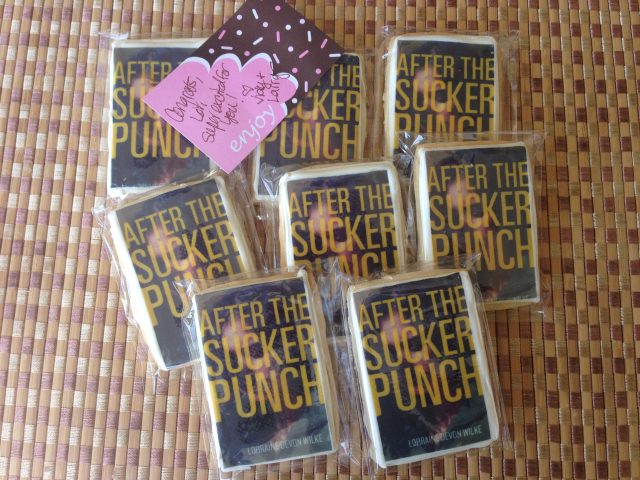
There are three things about the above quote that I adore: Dame Judi Dench, love and… cookies. If one combines cookies with love, well, that’s an explosion of wonderfulness that could only be topped by adding Dame Judi. Barring that option (and one assumes that’s a given), the combination of cookies and love is a mighty potent mix in itself. And today I had occasion to be the recipient of that marvelous brew:
This is a cookie… a very delicious (yes, I ate one) shortbread cookie designed with the cover of my book as the frosting top. I ask you: WHAT COULD BE BETTER THAN THAT??!
Not much.
The cookie came in a box of identical cookies, all of which were designed, made, and sent by my cousin in Chicago, Vicky Sarris Blanas, who, with her husband, Larry Blanas, owns the Lawrence Deans Bake Shop in Wilmette, Illinois, a close neighborhood of Chicago. (A little history about them and their bakery can be found in a Chicago Tribune story titled, It Started With Biscotti.)
What is utterly amazing about this unexpected and incredibly touching gift is that it comes from a member of my family whom I only recently met and rarely get to visit, what with her in Chicago and me in LA. But my blood ties with Vicky go way back and are attached to some of the sweetest memories of my childhood:
My grandmother; photo shot by Mary Amandes on 3.11.79
When I was a little girl visiting my grandmother in Chicago (though the city of my birth, my family moved to a small farm town in northern Illinois when I was three), my sister, Mary, and I often spent time with various combinations of our many Greek relatives. Two who completely captured our little-girl imaginations were women whose names I’ll never forget: Sia and Helen. They were incredibly beautiful young Greek women who couldn’t help but appear particularly glamorous next to our dear but rather classic Greek immigrant grandmother! Their names were always said with Sia’s first: “Sia and Helen.” I can’t remember anyone ever saying, “Helen and Sia.” Don’t know why. Sia and Helen’s mother, Victoria, was the half-sister of my grandmother. And Sia’s daughter is Vicky Sarris Blanas, the baker of my cookies.
I met Vicky and her family during the summer of 2011 when in Chicago for an event, and found their very hip, just-opened bakery on Green Bay Road to be as warm and inviting as a good bakery should be. We later connected on Facebook, particularly in a private family group, and have “liked” and Facebook commented on various posts over the last three years. But, to be honest, I didn’t know she was particularly aware of my book and I certainly didn’t expect her to take the time, and put her creative skills to work, to memorialize it in such a unique and thoughtful way!
But she did… and I am so touched. We will enjoy “munching on” them, as Dame Judi suggests, but I will keep at least two as mementos of not only the launch of my first book, but the love and incredibly sweet consideration of my dear cousin Vicky.
Wasn’t he just leaving for his first day of grade school, all sweet and tidy in his new uniform, backpack on and lunch box firmly in hand? Honestly, it seems like just yesterday his teenage self was longboarding down the Strand, heading to town for milkshakes and Magic with his buds. And didn’t I just vacuum his bedroom after he left for that first year at college, the one that inspired my introductory bout of Empty Nest Syndrome? Yes… and yet here we are, closing the campus house and discussing just how nice the weather was on graduation day at Humboldt State University. HOW DID THAT HAPPEN?!
Like everything else in life happens: in the blink of those flashing, fleeting, sometimes unnoticeable moments in which our existence unfolds in all its transformational glory. LIFE. SPACE. TIME. Those upper case continuums that are so common as to be everyday, yet so profound they elude even the wisest of minds, and certainly rattle my own if I think too hard on the topic! Time… I just want to grab it sometimes and holler, “Wait! Slow down! Can’t I have that one a moment longer??”
I can look at pictures of my son at two or three and remember each tactile sensation of his soft little being at each era of his life: his sweet smell, the weight of his body, the stickiness of his fingers, the cherubic face looking at me with wide blue eyes and a smile that made me feel like the most important person in the world. I can hear the sound of his voice saying, “Hi, mama,” as I walked through a room, the urgency of his hugs when he felt nervous or unsettled; the warmth and gush of his love when we’d go through our “good night” ritual with its songs and stories. Even the moment pictured above — him, thrilled to be off to Valley View Elementary — brings back such poignant, tangible memories that the moment may as well be standing right next to me, so sensorial, immediate, and remembered.
And yet, standing right next to me, next to his proud father, with his mortar board and green sash (signifying his pledge to “explore and take into account the social and environmental consequences of any job I consider”… gotta love Humboldt State!), is the version of this person that exists today: a tall, slender man with darker hair, stronger arms, but still a smile that touches me like no other. Our grown son. Who graduated from college this weekend with a Bachelor of Science Degree in Environmental Resources Engineering; accomplished, brilliant, and ready for the next chapter.
Well… almost.
He says it feels a bit premature, and it is somewhat of a preemptive chapter change in that he’ll be returning for one concluding semester after the summer. His major is a specialized science degree that typically requires five years to complete, given both the demands of the degree and the availability of open seats in a small university. He, however, was able to manage it in four-and-a-half… hence, the one more semester after this one. But his class is the class of 2014 and so he appropriately walked with his classmates: cap, gown, diploma, and proud parents, all. Once he wraps in December, our boy will be an official “adult,” one with a college degree, the need for a job, and a life unencumbered by school schedules and campus housing demands. Hooray and… yikes?
He’ll once again be in that bedroom I vacuumed so many years ago, landing there until he finds solid, employed ground under his newly-adult feet. Back in the nest, the home, the family circle, and we’ll be so happy to have him for as long as it takes to launch. I don’t expect it to be long; he’s clear-headed, intelligent; likable, ambitious and focused, and will, no doubt, land something of merit quickly enough that my next chapter will be, “Empty Nest Pt. 6: OK, Now He’s Really Leaving Home.” And that will feel similarly life-changing and gut-wrenching, and still so full of pride and admiration that I’ll cry with that weird mix of sorrow and elation; you know the one.
Until that chapter, we’ll relish the time together and celebrate this big, proud, tremendous accomplishment. Congratulations, sweetheart, on a successful college career. Let’s enjoy the summer; you’ll get back and wrap it up, then we’ll be off to what’s next. Isn’t life an adventure?
To read the entire Empty Nest series, click links below:
Would you? Just sit back and take this in, this image above: a New York City bus stop with its large poster in bright, living color. What’s on that poster? The book cover image of After the Sucker Punch with its intriguing face tucked behind those bold, enticing letters.
I see it… don’t you?
For details and links to who created this image and why, hop on over to AfterTheSuckerPunch.com and find your way to reader and writer, Brenda Perlin, who not only took the time to read my book, but shared a few insightful thoughts about it… for which I am deeply grateful.
But don’t click over there just yet.
Take one more moment to visualize this with me… and… very nice. We’ll end with an amen of “so be it and so it is.”
How many of you have heard of “Blog Hops”? If you haven’t, here’s a good definition from Boomer Lit Friday:
Blog hops are events where a group of authors band together (usually around a theme) to offer readers some sort of incentive to go to their blogs and read their work. There is one central site where the participating authors are listed and readers (hoppers) can click through to the various blogs to…read samples of the authors’ work.
I love this idea and was delighted to be invited by a Sandra Harvey, a writer to whom I’m connected on Twitter, to participate in “The Writing Process Blog Hop,” which she joined after being “tagged” by Renee Gian, who was invited by Tracy Barrett, and so on and so on…you get the point!
A special thanks to author Sandra Harvey for inviting me to the Hop… be sure to check out her blog, Drowning in the Idea of Love.
The Writing Process Hop came with four questions which every writer is answering on their own blog; be sure hop to and from each writer’s site (links above and below) to see the specific ways in which they answered the questions. My answers follow:
1. What am I working on?
Beyond my usual Huffington Post articles, my various columns, and this blog here at Rock+Paper+Music, I have just finished the process of publishing my novel, After the Sucker Punch. Now, there’s an adventure! My book falls into the literary fiction category, my favorite category to both read and write, and after the several years of writing, rewriting, editing, rewriting, more editing – well, you know the drill! – I finally began the process of “what’s next?” in earnest. My initial plan was to go the “traditional” route, which meant querying more literary agents over more time than I’d like to admit, with the ultimate result being a sort of “you can’t get there from here” message from the gatekeepers. So, believing in my book and not to be deterred, my plan then evolved into the decision to pursue independent publishing. I was guided by many who’ve gone before, particularly author Martin Crosbie, whose book, How I Sold 30,000 eBooks On Amazon’s Kindle proved profoundly useful and, once the decision was made, I actually found it exhilarating: gathering the necessary professionals (cover artist, editors, formatters, etc.) to help me create exactly the book I wanted to deliver. It has just launched at Amazon, in both ebook and print versions (print version to be posted this week), and I’m excited to see just how far I can take this new adventure. I hope you’ll pick up your own copy, because I’m convinced you will enjoy it! Click here: After the Sucker Punch.Really… I’ll be so pleased! 🙂
2. How does my work differ from others in its genre?
Beyond style and genre, I think the way in which every writer’s work differs from another’s is simply… their voice. The way they see things, the way they’ve experienced life, and how that experience and perspective informs what they find important to put on the page. With literary fiction, as opposed to genre fiction, there are no parameters, no expected elements, formulas, or “types” of storylines. The landscape is wide open and the goal is to tell a story with richness, depth, and a love for how words can convey feelings, images, thoughts, and ideas; how they can move the plot along and bring characters alive to the reader. My work differs from anyone else’s simply because I employ my specific voice, one uniquely formed by the life I’ve lived, the way I see things, and what stands out to me as important to tell in creative storytelling. And since my life has been a particularly eclectic and interesting one (as least from my own perspective!), just imagine how interesting and eclectic my work is? 🙂
3. Why do I write what I do?
Firstly, because I love STORY. And though I enjoy science fiction or fantasy from time to time, my particular wheelhouse, both a reader and writer, is real life, real people; real circumstances. It’s always been that way. When I was young I listened to folk singers because their songs had lyrics that told stories and conveyed feelings I could relate to. I read books that followed the adventures of life on the prairie (Little House…) or growing up in the south (To Kill a Mockingbird) because losing myself in narrative and character that felt real and grounded in life as it exists (or existed) was transporting. I love street photography as a visual statement because it captures moments of human interaction and the stories they tell. I relish good real-life drama in films and television and can binge-watch a well-written series without a speck of guilt! And as an adult reader and writer, I’m drawn to literary fiction for those same reasons: the exploration of life, real life, with its millions of nuances, characters, and narratives. Even in my journalistic and essay work, I’m compelled to infuse whatever story or news event I’m covering with as much of the life involved as possible. And so it follows that I’d write along those same lines: I write what I love to read, end of story. Or… beginning!
4. How does my writing process work?
This an interesting question so, forgive me; I’m going to take a little time with the answer. I’ve been wanting to say some of this out loud for a while now because I think it’s important:
As a younger writer, I would hear teachers and mentors say things like, “a writer MUST write every day” or “if you’re not working on something, anything, then you’re not being a writer,” and I’d feel such pressure to be whatever kind of writer they described as opposed to the writer I was. As an older, more experienced, writer, I know why: THERE ARE NO RULES. No blood has to be shed (forgive my gif!:). There is no one process that works for everyone, that defines what a writer is or isn’t, or even produces the desired result for every single person. It doesn’t matter if you write one book or twenty; if you write a thousand articles or five; if you write every day or once a week, even once a month. If you are a writer, you are a writer. And anyone who tells you otherwise is wrong. I’ve seen young writers (even older writers) stopped in their tracks by this kind of nonsense and so it has to be said!
I don’t write every day; never have. Then other days I write all day and sometimes all night. Sometimes I’ve got something I’m “working on,” other times I have no particular ideas percolating. And yet… I’m still a writer! I didn’t lose my credentials; no one can point their finger and say, “YOU’RE NOT A REAL WRITER!!” Because if they did I’d tell them to shut the f**k up.
My process is this: I write when I’m moved to write; I don’t subscribe to the “blank page theory” (i.e., sitting in front of a blank page in hopes inspiration will come). Never worked for me. I’m lucky; I can honestly say I’ve never had writer’s block, even when deadlines loomed. Because if I don’t have an idea tickling my brain and I want one, it’s simple: I strap on my iPod and go for a power walk with some kind of mesmerizing, beat-oriented music playing to both create a good walking vibe and give my brain room to swirl. And when I get to that physical/meditative state that my walking+music formula incites, ideas come. And when I have those ideas – whether for an article, a blog, a song, a book – I get home, kick off my shoes, and sit down at my computer (I cannot handwrite a damn thing, not even a greeting card!); I place my hands on the keys, open the Muse Portal (every artist knows what that is) and let it flow. I get out of the way. I don’t think while I’m writing; I let it flow from whatever that inspirational channel is, through my fingers, through the keys, and onto the page. If I’m writing dialogue, I let the characters tell me what they want to say; I never tell them. I follow a plot thread as if I’m scurrying to keep up and see where it takes me. When I’m done with a chapter or a paragraph, I open myself up to what’s next; there’s a sense of it, a natural next step that always makes itself known. It’s almost magical, it’s certainly mystical, and that process is one I find truly exhilarating.
And when I’m done writing, I edit. I read everything I write out loud to make sure the rhythm and flow of the words works (it’s also easier to find mistakes that way). Frankly, there’s not a word in a piece I’ve written that’s accidental. I’ll change a “the” to “a” if it flows better or makes more sense. Once I’m done with my edits, my rewrites, I read it all out loud again and when it feels done, it’s done. I don’t do much second-guessing and I’m one of those artists who happens to like my own work so I’m not distracted or detoured by artistic self-loathing. This is useful, because when you write for yourself, follow your own Muse, write on spec; independently publish, you might ultimately be one of only few who reads your work, so you better like it! (Though, really, nowadays with blogs and so many online writing sites, it’s rare that a good writer will end up being only one of few who reads their work. But still!)
And when I’m done/done on my end, I share my longer work (books) with readers and writing colleagues whom I trust and know share my instincts and sensibilities about writing and storytelling. It’s a selective group of experienced, talented people who, I’ve learned over the years, have quite a grasp of what works specifically for my style and sensibilities. I do get the reasoning behind beta readers; they can certainly offer perspective that’s helpful, but I’ve learned throughout my long career that listening to too many voices – all of whom have opinions and their own sense of things – can sometimes muddy up the works, confuse the issue, and shake your own knowingness about your work in a way that’s distracting or overwhelming. Or they can help a lot; it can go either way. But while it’s important to get feedback, opinions and perspective, it’s equally – if not more – important to listen loudest to the voice that’s your own. A good writer trusts their own work, their own instincts, and knows when to implement the notes and edits of another person and when to say, without arrogance and only after honestly reviewing and assessing those opinions, “this is the story I wrote. You might write it another way, but this is what I want to say and how I want to say it.” That resolve may mean you don’t get an agent, sell as many books, or win any awards… or it may mean that you’re absolutely spot-on and doing the exact right thing by sticking to your guns. That’s something every writer has to sort out. It’s your work, the legacy you leave as an artist. Ultimately, it has to be what you want it to be.
And that’s it. My process. I hope you will pick up a copy of After the Sucker Punch and, if so moved, get back to me with your thoughts (info@lorrainedevonwilke.com). I’m always delighted to hear from people for whom the work resonates!
Next up on the Writing Process Blog Hop… authors Saralee Rosenberg and Andrea Frazer. Click over to their blogs (linked below) on May 12th to see how these two talented writers answered the same questions!
Saralee Rosenberg is the author of four high-spirited novels including A LITTLE HELP FROM ABOVE, CLAIRE VOYANT, FATE AND MS. FORTUNE and DEAR NEIGHBOR, DROP DEAD (Avon/HarperCollins). She has just written her first novel for younger readers, THE MIDDLE SCHOOL MEDIUM. Saralee is also a nationally-known public speaker and writing instructor. Check her website for details and information, and click over to her blog on May 12th for her own answers to these questions!
Andrea Frazer is a published TV, magazine, newspaper and national blog writer (Good Housekeeping/BabyCenter). She’s currently working onsite for Spark Network as their in-house blog and article writer for their faith website Believe.com. While she loves writing about theology, movies and books, her biggest leap of faith involved writing her memoir, Happily Ticked Off. Based on her blog of the same name, Happily Ticked Off follows her journey from despair to hope as she comes to terms with her son’s Tourette Syndrome diagnosis. It’s in the hand of a producer, currently, as she shops agents. (Wish her luck!) Frazer wrote this book as a love letter to other mamas. She’s adamant that the fearful woman learn to focus on her child’s gifts, not an unexpected diagnosis. It’s not what we’re handed, but how we deal with it, that makes all the difference. (And coffee. Who doesn’t need that? Frazer does, and she makes no apologies about it.) Stop by www.happilytickedoff.com on May 12th and see what she has to offer in response to the Blog Hop Writers Process questions!
Woman praying for… excellent book sales? Lotsa “likes”? Good reviews?
Self-promotion. Ugh.
To the creative soul awash in inspiration, artfulness, and flights of fancy, there is nothing more antithetical to the Muse than blowing one’s own damn horn. “Shameless self-promotion,” as a friend of mine puts it, which comes replete with discomfort and the awkwardness of braggadocio. But still… it seems we must.
Back in the day – or if you have the sort of career in which these characters appear – publicists, marketing and promotion specialists, managers, agents, handlers, etc., did the heavy lifting when it came to the strutting of stuff. The artist was protected from this crass commercial cacophony by virtue of having a team, a cadre, a crowd of enthusiasts who knew just what to say, when and to whom, to get that artist a front cover, a high-profile radio interview, the best book tour, all the right appearances at all the right places. Now? That cadre? That team? It’s you.
Well, it’s you if you are one of the growing number of independent artists who revel in the passion of creativity but wearied of shuffling behind velvet ropes held tight by the gatekeepers. Or, in simpler terms: damn, it’s hard these days to get an agent, publisher, manager, publicist, any of those folks!!
So what’s an artist to do; an artist who trusts their own voice and is willing to walk their own road even if those gate won’t open? Well, those artists are doing it for themselves. Just like the sisters.
Musicians made the leap first. When big labels tumbled into the swirling eddy of the digital revolution and no one understood how to proceed when all previously held paradigms blew into bits, musicians, bands, and singer/songwriters figured out how to transcend; how to get into those Pro-Tools studios and get the job done with a level of excellence that used to drain bank accounts but could now be covered by Mom, Dad and your freelance fees. And when they had their records recorded, mixed and mastered exactly as they wanted, without interference from bean-counters and suits with no idea of artistry, they got busy promoting the living hell out of those records, creating viable, accessible, impossible-to-pigeonhole careers as independent musicians. Which meant lots of teeth-gritting but ultimately necessary – and often quite effective – self-promotion. Entire careers have been built on that.
Now it’s the writers’ turn. The writing/publishing industry is/has been going through a similar upheaval and the pain is starting to show. While the Big Six publishing houses (some say it’s now the Big Five) have struggled against the turbulence of changing tastes, trends, and delivery systems for the written word, companies like Amazon have rewritten the book, so to speak, on how books are sold, writers are advanced, and readers are supplied. Money in traditional publishing has become unpredictable and unsustainable, which has led to gatekeepers selecting only a few who are predicted to fit the mold, meet the formulas, and overcome the changing tides. Which left out the other talented folk who, heretofore, would have been amongst the chosen. Have you seen the new Noah movie yet? Picture the bulk of writers as those left behind on terra firma as Russell Crowe battened down the hatches and floated off with his handpicked horde.
So those of us left outside have taken a cue from the indie musicians. Courtesy of Amazon and other sites, independent writers have been given the power to move forward despite closed door. The demand remains for excellent, extraordinary, really good work; for brilliant stories, goose-bumping prose, and unforgettable characters. But, lo and behold, it appears a great many writers who were not let in the gates can and do provide that standard of literature. How lovely that the industry has evolved to the point that these outliers now have a portal, a support system, a facility with which to publish their own work! It’s quite brilliant. But…
Back to self-promotion. Because even though Amazon and affiliates do quite a good job at the various and creative ways in which they promote their authors – clearly a win/win situation – there’s no getting around the fact that independent writers MUST blow their own horns. Which means a great many things, not least of which is asking readers who’ve read their books to leave their – hopefully – positive reviews on their Amazon page… or wherever else such things matter, like Goodreads or Shelfari or other book sites. Reviews are not requested for the sake of ego; they’re requested for the sake of algorithms that rank a book by many things, including the number of reviews those books elicit.
So when a writer asks you to leave a review, understand that they are being a good, independent artist, taking very seriously their commitment to do right by their work, their art; their business. And if you can, if you are so inclined, if you are interested in supporting that artist, and, in a bigger sense, the independent publishing industry, you will be happy to leave one.
I want to introduce you to a young writer whose perspective on his generation is well worth sharing, particularly with those convinced “nothing good happened after (fill in the blank)”… usually the years they grew up!
We are a world that loves to categorize its inhabitants… by ethnicity, nationality, politics, sexual orientation, age; even the years in which we were born. “Generations” are given actual names and defining characteristics and we rumble like Sharks and Jets over which one did what to the next and who gets to be called “the greatest” and it’s silliness, really. Whether aggrandizing or bashing a generic group based on their birth year (God knows I hate the never-ending anti-Boomer screeds!), the absurdity is in the fact that any group’s commonalities can be contradicted by its many exceptions. But still…
There’s no denying that all of us are – were – influenced by the life and times in which we grew up. We can’t help but be. The air we breath, the events we experience, the sense and sensibilities of the world we encounter affects us in those general, generational ways and, frankly, it behooves us all to pay attention to – and attempt to understand – the influences of those who came before and after.
Meet Jessiah Mellott. He’s 22-years-old, a smart, articulate English major with strong family ties who stands in sharp contrast to many of the curmudgeonly opinions of “kids today.” The Millennials – Jessiah’s generation – get everything from, “they’re all apathetic, lazy tech-addicts” to “they wouldn’t know good music if it hit them on their pot-addled heads,” but as with every cliché of every generation there are, oh, so many exceptions. Jessiah is certainly one of them.
Most of us tend to pay attention to our own peer groups, seldom extending that interest to what younger people have to say about life as they see it. Which is to our detriment. So when I read Jessiah’s very compelling essay about his Millennial era, one which he nicknames “the Silver Generation” for reasons he explains, I was so impressed by his sharp, analytical perspective I thought it would be educational – certainly illuminating – to share it with my readers, most of whom are a good deal older than Jessiah.
Because it’s one thing to allow media to define a generation; it’s another to get beyond stereotypes and preconceived ideas to avail oneself of the actual words and unfiltered views of someone from that generation. So take a few moments, if you would, to read the very thoughtful, humble, and insightful views of one young man who represents the best of what his generation has to offer:
My Generation: Postmodernism, Grey Morality and the Internet Age
–by Jessiah Mellott
Grey is the most self-conscious color. It doesn’t know if it wants to absorb all the colors of the world or reject them completely. Grey is the color of indecision. My generation is the grey generation. Actually, we’re the Silver Generation. Silver’s more reflective. My generation is full of reflective indecision. Or indecisive reflection… Or. Whatever. We still speak in absolutes and hyperbole, like totally, but we are the most self-conscious generation in the history of the world. Trust me; I’m 22, I know everything. Or nothing. What did Socrates say again?
The Internet age and social media has taught us that there is no right and wrong, no good and bad. YouTube videos filled with cuddly kittens get thousands of “dislikes” and people like Soulja Boy and Lil B actually have fans. It’s not that my generation is stupid. Well… maybe a little. But every generation has bitter pundits and bad musicians. The difference is that they’re all visible now. Everyone gets to experience and voice their opinion on everything. The Internet age has forced the perspective of the subjective on us. Even writing this, I’m getting an uncomfortable self-conscious itch. What if somebody who reads this actually likes Soulja Boy? Why do I think his music sucks? Who am I to judge? I guess I need to be more open-minded.
My generation depends on this insecurity because we grew up in a world where postmodernism was already established. In order to understand my generation, we need to talk about its dependence on the generations that came before it. Our grandparents were the Baby Boomers, the most entitled, consumer-crazy generation in history. They grew up in a world full of change, and their modern Renaissance attitudes made it happen. But the Boomer’s growth went unchecked; they were too sure of themselves. They brought the world magical ATM’s and cell phones, and an unhealthy dose of technological dependency and mass pollution. Generation X, as my parents have been called, developed a conscience. They started to realize that what is right for the individual might not be right for the world. Once they questioned this whole notion of the progress of civilization, then the postmodern discourse really came into effect.
There’s no alternative for the Silvers. We are the combination of egocentric and self-conscious that our families raised us to be. We question everything, because everything is subjective. An advertisement selling us “The Perfect Shave” or an “Insanely Healthy Energy Drink” makes us laugh. We scorn the kid who comes out of the movie theater saying simply, “It was good.” Nothing is ever black or white in our world anymore. I saw Inception in theatres and came out thinking that it might be my second favorite movie of all time, and I didn’t give myself ten seconds to enjoy it. All I could do was pick at its flaws. Was it really good enough to deserve that much excitement?
If we are the generation of the self-conscious, the insecure, the postmodern, and the grey, then I think we’re also the generation of the empathetic. This is a tough argument to make, unfortunately. A lot of the Boomers and Xers would say the opposite. All our slacktivism and smiley face emoticons are cute, but they don’t actually involve real face-to-face emotional connections. We get mad when people call us when they could have just texted and we break up over Facebook because we’re too awkward to do it in person. This is a valid argument and I’m not going to deny that a small chunk of my generation is somewhat hopeless. One reason I’m studying to be an English teacher is my frustration at how socially acceptable semi-literacy has become. Outside of a college campus, reading a book has become a strange activity. We’re wasting the information superhighway on memes and Angry Birds, and our attention spans can only tolerate two and a half seconds of video buffering.
On the other hand, being globally connected has its benefits. The Silver Generation can’t help but be citizens of the world. Our grandparents were nationalists, and now we’re globalists. We travel more, consume more world culture, learn more about different lifestyles. My uncle emailed me about an African rap group (Daara J) and I got to check them out instantly. We are more accepting of race, religion, and sexual preference. We were a huge factor in getting the first black president elected, twice. According to USA Today, young people are volunteering for organizations like Teach For America and The Peace Corps in record numbers (Walton). We look at stories from multiple sources with the click of a button. We are in the middle of the golden age of documentary and there is not a single important global discourse that we don’t have access to (O’Hagan). The best part, though, is that whatever we do well, we’re still young and dumb and the odds are we’ll only get better.
What do we do with all this supposed empathy though? What does a self-conscious young person like myself mean to the rest of the postmodern world? Who knows really, but I would like to think that me and the rest of the Silver Generation are going to make the world a better place. This is a problem, though, in itself. “Better” has become a complicated idea. We’re too self-conscious to decide what’s good for the world anymore. Does this mean we’re all wasting our time with the self-reflection and grey areas? I’d like to argue that, no; we’re not. Terry Eagleton said it best:
“We all agree that it is a bad idea to roast babies over fires, but we cannot agree on why we agree on this. And we probably never will. As long as we don’t roast babies over fires, however, this may not matter too much.”
What Eagleton is implying here is that we may never recover from the moral relativism that postmodernism has led us to, but as long as we have empathy, it’s going to be okay. In other words, we may never be able to call anything absolutely good or absolutely evil again, but as long as we can keep a virtuous discourse going, and learn to understand why we each see things the way we do, then we will thrive as a people.
This is a good sign for the Silver Generation. We don’t need morality as long as we have empathy, and empathy is what we’re good at. Why we’re good at this is an interesting question. I have already argued that we are citizens of the world, but I think it goes deeper than that. The reason I believe we are the empathetic generation is because we consume so much media. I can hear everyone over the age of 30 scoffing and huffing at me, but I believe the same thing our generation is most criticized for might be the source of our biggest asset. We are constantly hooked-up to a world of entertainment and information. These connections build a lot of things; some good, some bad, but I think empathy is the most important. It’s why we consume in the first place. Movies, music, television, podcasts, Twitter, magazines, YouTube, blogs, advertisements; Facebook (and, to a lesser extent, book books). Every free moment we have is filled with smartphones, tablets, televisions, and laptops. Sometimes we watch two or three screens at a time. We use our gadgets in the bathroom, on the phone, in the car. It’s incredible, and my parents, for one, think it’s terrifying.
There’s something creepy about it, sure; but the reason I think it works for my generation is because we were born into this world of crazy instant media and postmodernism has trained us to live in it. There are certainly still people out there trying to trick us, trying to sell us a product, manipulate our vote (cough, Fox); steal our money, waste our time, or get us addicted, but we’re too smart for that now (most of the time.) We’re too cautious, self-conscious, and critical to be duped by the media. We have too much information and too many sources to be lied to for very long. Best of all, we were raised just in time to be comfortable in the world of computers and smartphones, while also remembering a time before they existed. We understand the power we’ve been given.
It isn’t just the Silver Generation adapting to the world of media either. The media is adapting to us. Now, it would be naive of me to pretend that postmodern art is new and exclusive to my generation. Joseph Conrad wrote Heart of Darkness 50 years before postmodernism even became a serious discourse and Duchamp turned a urinal upside down 18 years after that. The world of art and literature has been postmodern for decades now. But my generation is attracting, even demanding, a wave of postmodern entertainment on a different level. It’s movies without villains, TV without truth, books without heroes. It’s entertainment without morals.
There are dozens of amazing examples of this new wave of postmodern Silver Generation entertainment and I’m addicted to most of them. The epic fantasy series by George R.R. Martin, A Song of Ice and Fire, which has been adapted into the equally brilliant HBO series Game of Thrones, features dozens of deeply developed characters with overlapping plot lines and no central protagonist. Even the most despicable characters have their moments of virtue, and even the most noble characters can be weak and defeated. In fact, the most beloved characters have a tendency to get their heads chopped off and the most hated have come out on top (so far). Even more extreme in its ambiguity is the Dexter series by Jeff Lindsay, which was also adapted into a fantastic television show. The series’ “protagonist” is a serial killer who only murders other murderers. While the anti-hero has a history in literature, Dexter toes the line of moral ambiguity more than anything I’ve ever experienced. The Swedish Millennium Trilogy, more commonly associated with its first book, The Girl with the Dragon Tattoo, is a brilliant mystery thriller centered on a “punk rock” girl who gets entangled in a murder plot. For the most part, readers are expected to sympathize with the lead character, but we also witness her tie up and revenge-rape a man, burn her father alive and treat the other “good” characters with childish contempt. Naturally, it’s been adapted into two movie trilogies already. AMC’s three most popular shows, Mad Men, Breaking Bad, and The Walking Dead have all become some of the most celebrated and morally unstable shows on television. I don’t think I even have to explain how shows built around a womanizing ad man, a chemistry teacher turned meth lord, and a zombie apocalypse might attract a lot of morally ambiguous characters and situations.
Stepping back a bit, Plato believed that fiction leads to falsehood and that poetry is dangerous because it is twice removed from the truth. Aristotle proposed that humans are actually capable of understanding universal truths and that entertainment can help us express them. This concept of universal truths, along with Horace’s belief that entertainment should teach and delight, combined to form the spirit of entertainment that is, for the most part, still prevalent today. While I’m simplifying the story, the resulting several thousand years of books, plays, and poetry have followed these very specific patterns. Art has attempted to teach universal truths and moral lessons; it has focused on heroes and villains, and it has attempted to generate catharsis. Moral lessons are, of course, thrown out the window with postmodernism, as are the good hero and the evil villain. This leaves catharsis — which is essentially empathy through art — as the primary vehicle for postmodern entertainment.
If I tried to explain this to a few people my age, most of them would just stare at me blankly. This is not because my generation is stupid (seriously, I swear). It’s because, again, there is no alternative for us. The empathetic consumption of art is self-evident to us. That is why the Silver Generation loves the new generation of media; we’ve always been empathetic participants in our entertainment and all this ambiguity makes empathy so muchfun.
The key is that the characters are flawed. And to be flawed is to be human. I don’t mean just a little flawed either. It’s amazing how many of even the most famous characters in literary history suffer from a sort of hollow depth. Historically, the “complex” hero has a couple of cosmetic personality defects that are only in place to be bravely conquered, while the “complex” villain is a simple obstacle for the hero to overcome, with one or two redeeming qualities that give their final downfall a little suspense. Previous generations are used to having someone to love and someone to hate, and are bitterly disappointed if things don’t end happily ever after. Truly human characters – that is, those with real flaws who are not always saved by the narrative or justified in the end – are much harder to come by in the canon than it would seem.
These morally ambiguous, realistic characters allow us to empathize better than hollow characters ever could. When they are making their decisions based on realistic emotions and human conflicts we can’t help but use their experience to reflect on ourselves and try to understand other points of view. Capturing these internal struggles of our individual conscience is impossible with a character who knows nothing but good, or who can’t fail. Sometimes failure is the best way to teach us the right way of doing something. Or at least, the right way for us. Compare one of the shows I mentioned earlier to any of the 637 Crime Scene Investigation (CSI) clones that are constantly being rerun. It always goes something like this: Cheeky cops build a list of suspects for a quirky murder. They strike the first one off the list (duh, we haven’t even gotten to the second commercial break yet!). Then they discover a crucial piece of evidence, analyze it with some nifty magic analysis machine, and take down the perp who vaguely tries to rationalize before getting put in the cop car. David Caruso puts on his shades, The Who start yelling, and the credits roll. There’s NO intrigue there. Who are we supposed to relate to? The bad guy gets what he deserves and the good guys are never in question. Sure, the characters show emotion, but it’s too simplistic. We don’t actually sympathize because you can’t create a realistic character with shorthand. The Silver Generation is far too self-conscious to enjoy something that cut-and-dry. By the way, the median age of a CSI: NY watcher in 2012? 63-years-old (Consoli).
It’s a shame that literature is the one branch of media the Silver Generation isn’t on top of. I’m biased as an English major, but it’s clearly the most important. If we are going to truly be the self-conscious generation I am predicting (praying) we have become, then we will have to find time away from our gadgets to read a good book. I think M.H. Abrams sums up the importance of literature nicely:
“It expands you in every way. It illuminates what you’re doing. It shows you possibilities you haven’t thought of. It enables you to live the lives of other people than yourself. It broadens you, it makes you more human.”
If we can do that, become more human, remain self-conscious, and promote a discourse of empathy and understanding, then we will find our own postmodern version of something approaching pure virtue. We’re going to need to, too. The Silver Generation is at the edge of a cliff in a lot of ways. I’m not just talking about the fiscal cliff either. We are at the precipice of a technological golden era, the breaking point of a global economy, the rise of global warming, the beginning of a water crisis, the carrying capacity of the world’s population; the end of the age of fossil fuels. Every generation seems to think they’re the most important, that they’re the ones approaching a turning point or doomsday. I don’t want to predict any kind of future; maybe we’ll be okay. But I do think we Silvers are in for some interesting and challenging surprises. We are going to need to be the most critical, empathetic, and forward-thinking generation ever.
As long as we stay away from Soulja Boy, I’m not too worried.
Cite:
Walton, Beth. “Volunteer Rates Hit Record Numbers.” USATODAY.com. N.p., 07 July 2006. Web. 13 Dec. 2012.
O’Hagan, Sean. “Camera, Laptop, Action: The New Golden Age of Documentary.” The Observer Guardian News and Media, 06 Nov. 2010.
Eagleton, Terry. “The Nature of Evil.” Tikkun Jan. 2011: 80-94. Web.
Consoli, John. “Median Age for Primetime Viewing Is Up?” Broadcasting & Cable. Web.
Abrams, M.H. “Built to Last.” New York Times 23 Aug. 2012: Web.
– Millennials in action
Jessiah Mellott is from Mendocino, California. He is about to receive his degree in English from Humboldt State University. Post graduation he plans on teaching in South Korea for a period of time, after which he’ll return home to earn his teaching certificate. His plan beyond that is to teach high school English, coach basketball, and follow in his dad’s footsteps by being the kind of teacher who inspires young people to work towards becoming better every day.
I love cameras. I’ve had one most of my life and have always appreciated its facility in chronicling my best adventures in pictures, some of which I’ve had since childhood. Now as a professional photographer viewing the art and craft of photography from an even more analytical perspective, I feel as attached to my beloved Canon as anyone could to any inanimate object. Its weight, its glass, its technical ease and brilliance that captures what my eye sees in ways that can take even my own breath away. I’ve traveled the world with it and regardless of time, place, or rugged terrain, it’s slung around my neck, at the ready to grab something unmissable. The wonders of photography are many and never-ending.
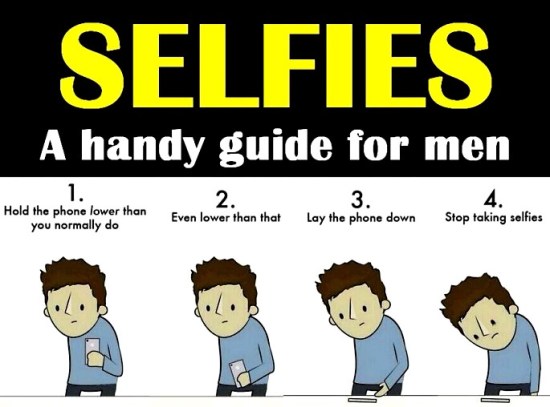
Then there’s phone cameras. Camera phones. Cell cameras. Whatever. Which have spawned the selfie. Those damned, ubiquitous selfies. The constant shooting and posting of phone photos taken from that oh-so-familiar “hand up in the air” POV that does odd things to most faces, is almost always horribly lit, and creates a visual world where everyone’s perspective ends at the length of their arm. Selfies have a certain detached, unconnected look about them (as opposed to photos in which a photographer and subject are communicating with each other), that often makes them soulless and self-conscious. Certainly they have their place (Ellen’s Oscar selfie that broke the Internet was all in good fun), but beyond the “fun” aspect, there’s something narcissistic about the incessant posting and reposting of these images, to the point that it seems no one exists and nothing can happen without someone slapping it up on Facebook. Or maybe that is the fear: did it happen, do I exist, am I pretty enough, am I even seen much less pretty enough if my selfie, my profile pics, my endless supply of face-shots, are not posted on social media? It’s exhausting being young sometimes…
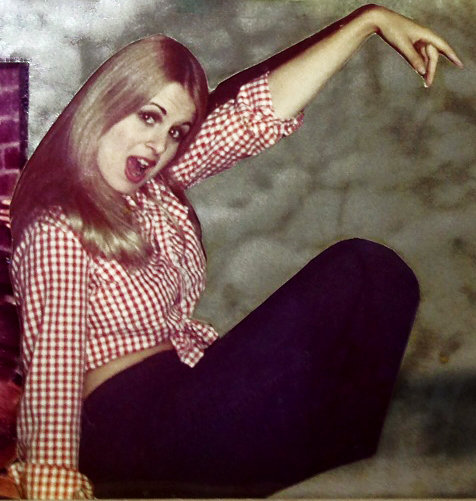
I remember having a similar youthful fixation on my looks, my hair, my clothes, my ass; always ready to catch a glimpse in a mirror or window, checking the status of various body parts and sartorial accoutrement as I walked into a room or down a street sure that everyone was profoundly interested in ME… what I looked like, how cute I was, if I was flirt-worthy. Of course, back when I was that kind of young we didn’t have phone cameras (thank God!) and the idea of taking pictures of oneself with a small 35mm was ridiculous. Unless you meant to be ridiculous or you were taking a self-portrait in lieu of new head shots you couldn’t afford (of course that never worked). Youth, presumably because of its evolutionary urge to procreate, is fixated on appearing and being seen as attractive, so the fundamental need to exert oneself in putting forth that image, and making sure everyone else notices, is understandable. If we’d had Facebook and Instagram back when I was a kid I might have found reason to post myself all over the place, too. Or maybe not… there’s still something about the narcissism angle that gets me (though you wouldn’t guess that from the pic below of me at 20!).
But beyond selfies and youth is the more general etiquette of taking and posting pictures of anyone online. This has become an issue fraught with some misguided principles, enough so that I’d like to suggest a few pertinent guidelines that apply to every age group, in every circumstance. Pay heed and you’ll find fewer people scrambling when you walk into a room with your phone!
Top 5 Rules of Phone Camera/Social Media Posting Etiquette:
1. BE AWARE THAT NOT EVERYONE WANTS THEIR PICTURE TAKEN.
Particularly on a bad day, in bad lighting, after weight’s been gained, or just because, well, they don’t want their picture taken. Don’t assume it’s your God-given right to take another person’s picture just because you want to. Don’t do the “oh, come on, you look great!!” routine when Aunt Helen really isn’t feeling up to it. Any good photographer knows the best posed pictures happen when people have acquiesced rather than been browbeaten… and, once they’ve acquiesced, are given the time to fix their hair, freshen their lipstick, suck in their gut, or get out of the shadowed light. If they still don’t want their picture taken after all that, DON’T TAKE IT. Period.
2. REALIZE NOT EVERYONE WANTS THEIR PICTURE POSTED ON SOCIAL MEDIA.
Even if someone agrees to pose for a picture – alone, with a group, with you – that doesn’t automatically mean they want said picture plastered all over social media. It’s become so routine to post every single picture taken that the people doing the snapping and posting don’t always consider the privacy preferences of their subjects. ASK. If you want to post a group shot, check with everyone before you part ways to make sure they’re okay with that. A quick, “If I get some good shots here I’ll probably post a few on Facebook… everyone OK with that?” works. Typically people are, but show them the courtesy of asking. Particularly people who aren’t young, aren’t necessarily enamored with their looks, and aren’t accustomed to posting selfies all over the place!
3. DON’T POST PICTURES THAT MAKE PEOPLE LOOK BAD.
This should be a given but I’m always surprised at the carelessness of what some people post online. As a photographer (and a subject!), I know the self-consciousness that many feel about having their picture taken and I also know how affirming it can be when a good shot is achieved. In fact, a good photo can boost someone’s self-esteem as much as a bad one can drop it. Be aware that most phone cameras – even the good ones – don’t do well in low light indoors; if you are not a photographer and don’t know how to use Photoshop or other post-production software to enhance or improve a shot, don’t use it. But if you do decide to post your phone pics of other people “as-is,” you are obligated by etiquette to take the time to choose the very best one. Post whatever you want of yourself, but when you’re putting up photos of others, don’t put up that one that was shot in deeply shadowed light, glaring sun, or too dark a room. Don’t put up the one where the subject looks bad because they blinked, their hair was weird, or the angle was unattractive. Don’t choose to post a group shot where you look great but everyone else looks horrible. Have some consideration, some empathy, and realize NO ONE WANTS A CRAPPY PICTURE OF THEMSELVES ON THE INTERNET!!
4. NOT EVERY EVENT NEEDS TO BE MEMORIALIZED BY YOUR PHONE CAMERA.
It used to be you could meet a few friends for lunch, grab a movie with former colleagues, go over to your Mom’s for dinner and no one felt compelled to whip out a camera to “grab the moment.” Somehow we all managed to hold onto memories of lesser moments in life (versus bigger ones like weddings, birthdays, christenings, etc.) without having to collect a bunch of (usually crappy) photos that someone is sure to post online. One could say it’s curmudgeonly to complain about anyone wanting to capture camaraderie and companionship with a camera, but goddammit, sometimes you just want to eat your Niçoise without someone snapping away while you’re chewing tuna. Personally, I could do with fewer of those, thank you.
5. CONSIDER POSTING MORE OF YOUR ACCOMPLISHMENTS AND FEWER OF YOUR SELFIES.
It’s no small wonder we live in a culture obsessed with youth, beauty, cosmetic surgery, thinness, sexual voracity, and so on. It’s we the people who are driving that train! We can complain all we want about what “the media” and the “entertainment business” have done to perpetuate certain unrealistic standards, but if you really analyze the chicken/egg aspect, it’s hard to find the line when even every-day folk are obsessed with their beauty, youthfulness, thinness, etc. How many times do we see mostly women, but some men, too, cycle and recycle their profile pics, while friends do their part by exclaiming with each picture change, “You’re SO gorgeous!”… “What a hottie!”… “You’ve never been more beautiful!”… “Hubba hubba!” (all comments I’ve seen online!)? It’s great to occasionally get a compliment on your looks – who doesn’t appreciate that? – and sometimes you have, in fact, just innocently changed your picture, it posts on the Newsfeed, and friends comment without any intent on your part to elicit that response. But in far too many cases it is about the attention, the requisite comments that feed the need. And we get it; you’re hot, you’re beautiful, you’re sexy. But tell me, was there anything you created or accomplished today that might trump that shot of you in a bikini? Yes, you look great, but I’d be more interested in hearing about the grant you wrote, that song you finished, the Little League team you’re coaching…
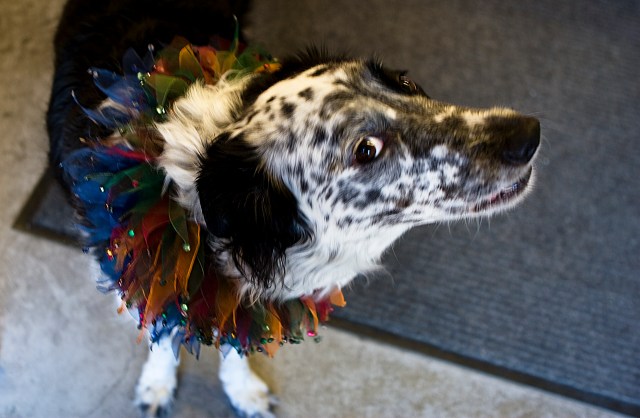
Now, don’t get me wrong; there are categories of posted photos I always love. People’s travel pics, fine art photography, baby pictures, family shots, even that dog with the frilly collar. Gorgeous road trips, the weekend at the recording studio, that last location of your indie shoot are all seriously post-worthy. Your Hawaiian hike, that tour of historical architecture in Venice, the shots of your urban neighborhood will likely enchant me. I’m less interested in your lunch or whatever you mixed up at the wet bar, but if there is something creative in either of these, post away.
The point is: Think about it. Don’t just shoot and post. The fact that everyone now has a camera in their hands demands that we be more thoughtful and considerate about how we approach the matter of taking and posting pictures. Get creative, look beyond the reach of your arm, and have both empathy and consideration. I promise I will never post a crappy picture of you and I’m expecting you to extend the same courtesy to me… because, believe me; that promise gets more important as we get older and facial symmetry gets less and less dependable! 🙂







 I met Vicky and her family during the summer of 2011 when in Chicago for an event, and found their very hip, just-opened bakery on Green Bay Road to be as warm and inviting as a good bakery should be. We later connected on Facebook, particularly in a private family group, and have “liked” and Facebook commented on various posts over the last three years. But, to be honest, I didn’t know she was particularly aware of my book and I certainly didn’t expect her to take the time, and put her creative skills to work, to memorialize it in such a unique and thoughtful way!

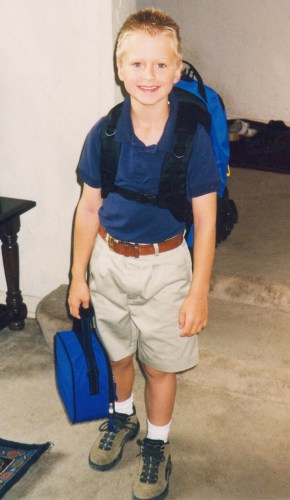 Wasn’t he just leaving for his first day of grade school, all sweet and tidy in his new uniform, backpack on and lunch box firmly in hand? Honestly, it seems like just yesterday his teenage self was longboarding down the Strand, heading to town for milkshakes and Magic with his buds. And didn’t I just vacuum his bedroom after he left for that first year at college, the one that inspired my introductory bout of
 And yet, standing right next to me, next to his proud father, with his mortar board and green sash (signifying his pledge to “explore and take into account the social and environmental consequences of any job I consider”… gotta love Humboldt State!), is the version of this person that exists today: a tall, slender man with darker hair, stronger arms, but still a smile that touches me like no other. Our grown son. Who graduated from college this weekend with a Bachelor of Science Degree in Environmental Resources Engineering; accomplished, brilliant, and ready for the next chapter.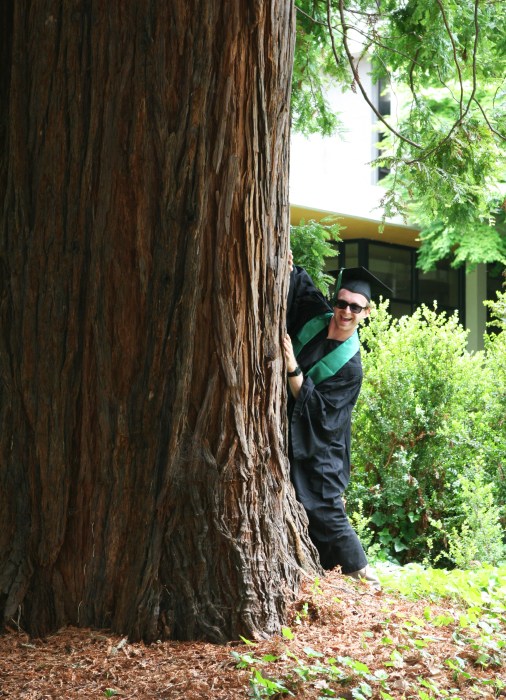




 | Rock+Paper+Music |
You must be logged in to post a comment.